
Beyond the White Wisteria, Time Unravels
Critique
Introduction This vertical scene depicts a white wisteria passage at Ashikaga Flower Park in a luminous watercolor-like manner. The subject is approached as an airy garden interior rather than a spectacular mass. Soft whites, pale greens, and restrained lavender create an initial mood of clarity and quiet invitation. Description Long white racemes hang from branches and trellises above a central path. Their overlapping forms nearly fill the upper two thirds of the image, while old trunks and upright supports frame the corridor on both sides. Sunlit openings appear between the flowers, and irregular shadows spread across the earthen walkway leading toward a distant bright point. Analysis The centered perspective turns the path into a steady axis and draws the eye through successive curtains of bloom. Transparent washes soften edges and allow light to circulate across the paper-like surface. Small violet accents prevent the dominant white from becoming flat, while ochre trunks provide necessary weight. Repetition supplies rhythm, yet varied lengths and spacing keep the floral pattern organic. Interpretation and Evaluation The painting emphasizes passage, shelter, and gradual revelation. Its descriptive skill is evident in the distinction between solid wood, fragile petals, and shifting sunlight. The composition is conventional but finely controlled, and the subdued color design offers a distinctive alternative to more saturated images of wisteria. Technical restraint supports a convincing atmosphere of freshness. Conclusion The first impression of abundant white flowers develops into an appreciation of carefully measured light and depth. Through balanced perspective, economical color, and delicate handling, the work makes the garden path feel both tangible and gently removed from ordinary time.
Same Subcategory
Similar Artworks
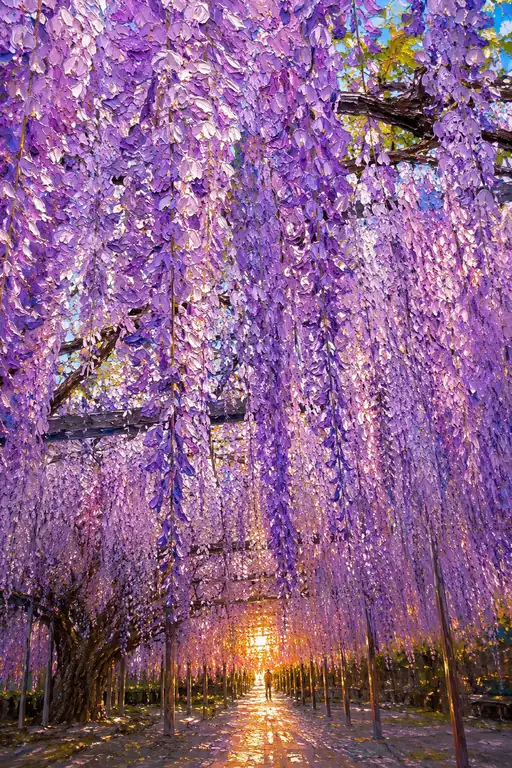 The One Who Stands at the End of Light
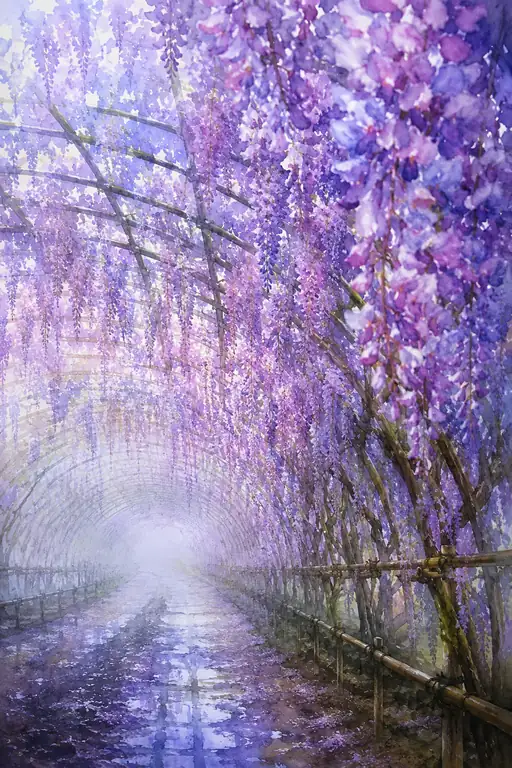 Where the Blossoms Wait Beyond the Mist
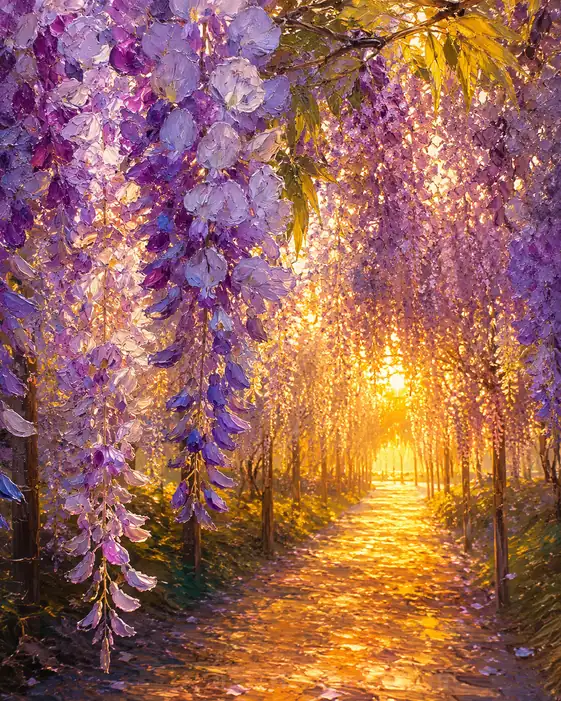 Through Violet Shade into Gold
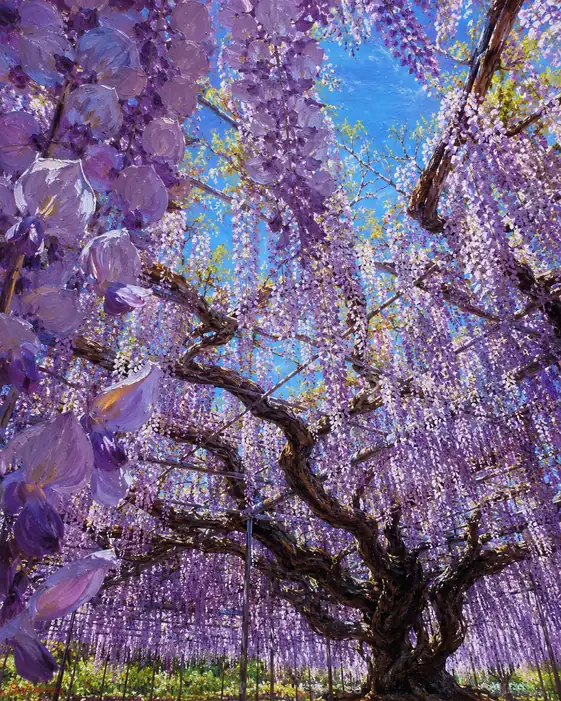 The Wisteria's Memory, Holding Up the Skylight Blue
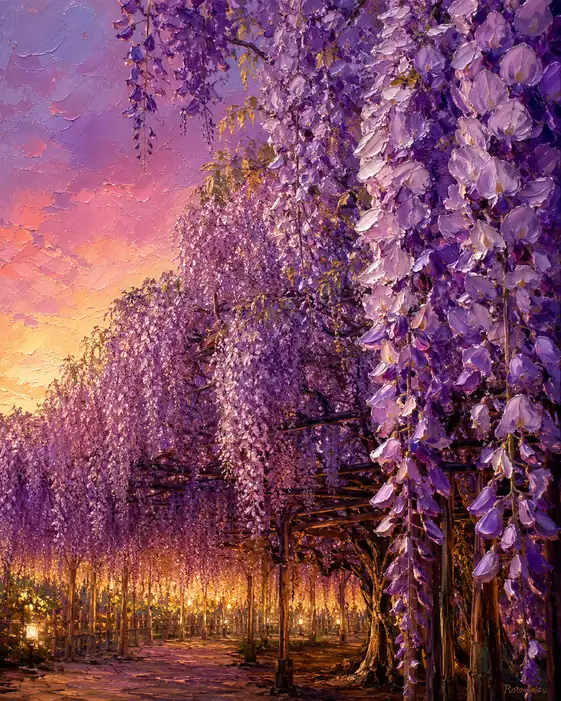 The Last Light Beneath the Blossoms
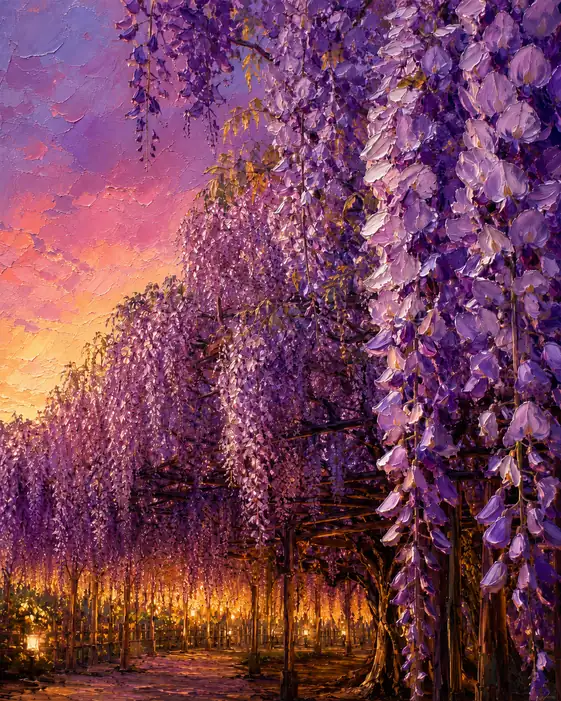 Violet Breath Sewing the Dusk
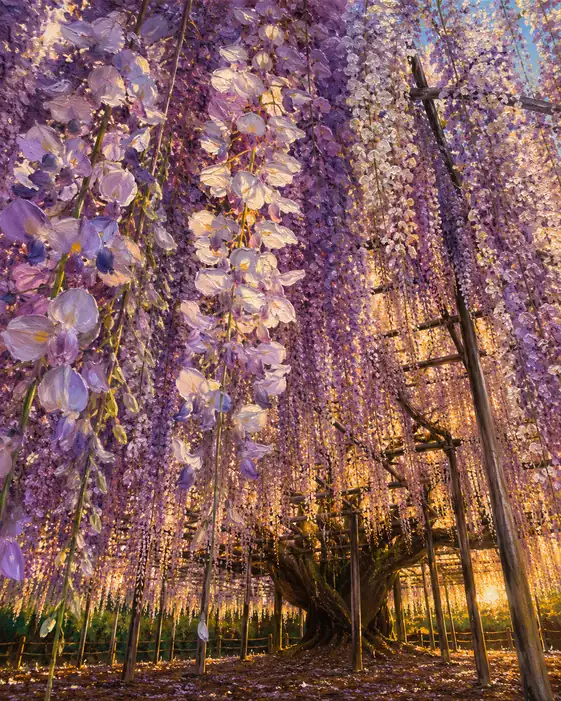 Where the Ancient Wisteria Holds the Sun
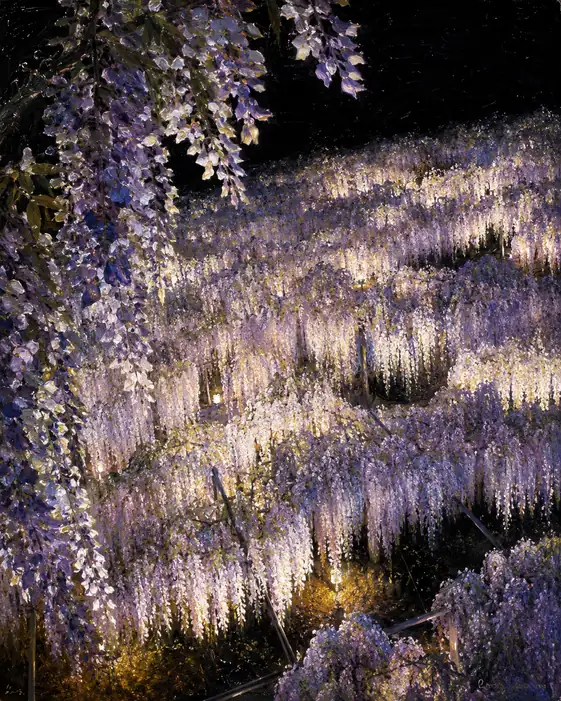 Blooming in Layers of Night
 Violet Unfolding into Darkness
 Iris Serenade: A Butterfly's Brief Rest