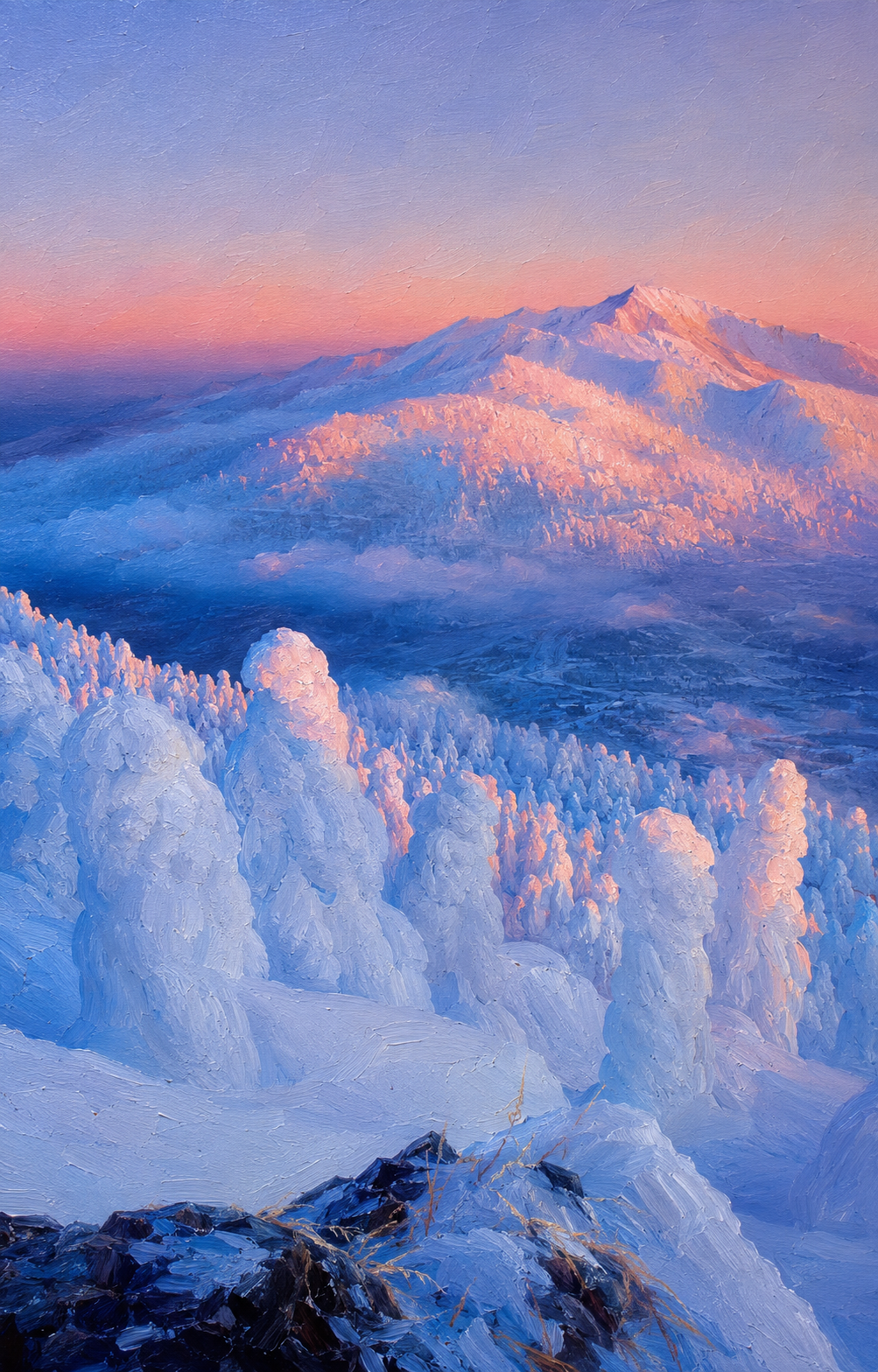
When the Frozen Forest Wears the Dawn
Critique
Introduction This vertical landscape painting depicts frost-covered trees descending toward a distant mountain under pink dawn light. The scene is organized around the meeting of severe winter mass and brief warmth. Tactile brushwork gives the frozen forest a sculptural presence while preserving broad distance. Description Dark rocks and a few dry grasses anchor the lower edge. Above them, large rounded snow forms occupy the foreground, followed by countless smaller frost-coated trees across the valley. Mist separates the middle ground from the mountain, whose upper ridges receive coral light beneath a smooth blue-violet sky. Analysis The composition advances through repeated upright forms that diminish steadily toward the horizon. Cool blue and white dominate, while pink illumination moves selectively across exposed edges and the distant summit. Thick, directional strokes describe accumulated ice, whereas softer transitions in the valley and sky create atmospheric recession. The dark foreground rock provides tonal weight and prevents the luminous snow from becoming visually uniform. Interpretation and Evaluation The work presents dawn as a gradual transformation rather than a sudden event. Warm light does not dissolve winter; it briefly reveals the individuality of forms within its immense field. Repetition is handled with sufficient variation to avoid monotony, and the color structure remains coherent across a complex surface. Strong spatial organization, controlled complementary color, and convincing material texture support the painting's dramatic effect without excessive emphasis. Conclusion The first impression is one of cold abundance, but longer viewing reveals a carefully measured passage from shadow to illumination. Near and distant forms participate in the same slow change of light. The painting's disciplined rhythm and tactile technique make the winter landscape both monumental and temporally specific.
Same Subcategory
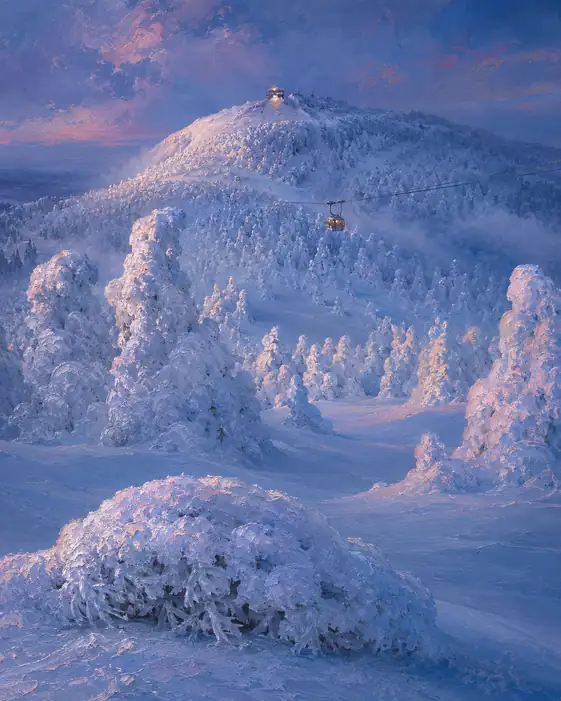 A Small Light Crossing the Snow Kingdom
Similar Artworks
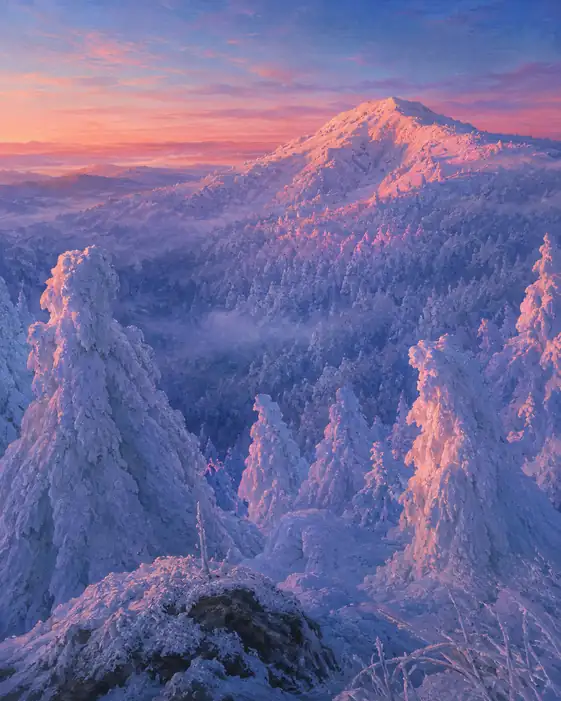 When Winter Blushed
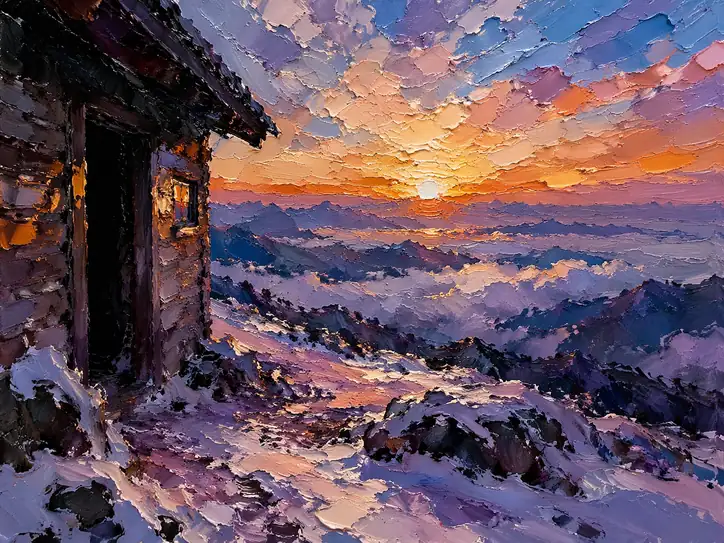 Sanctuary Above the Clouds
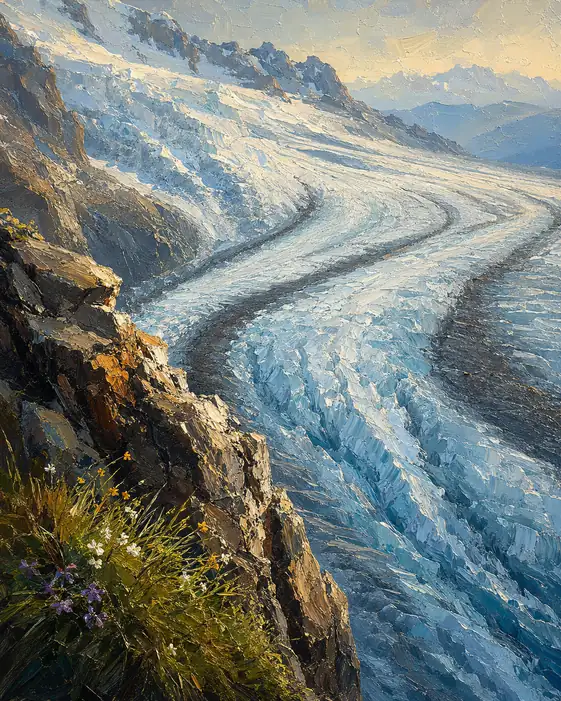 Spring Whispering on the Glacier's Edge
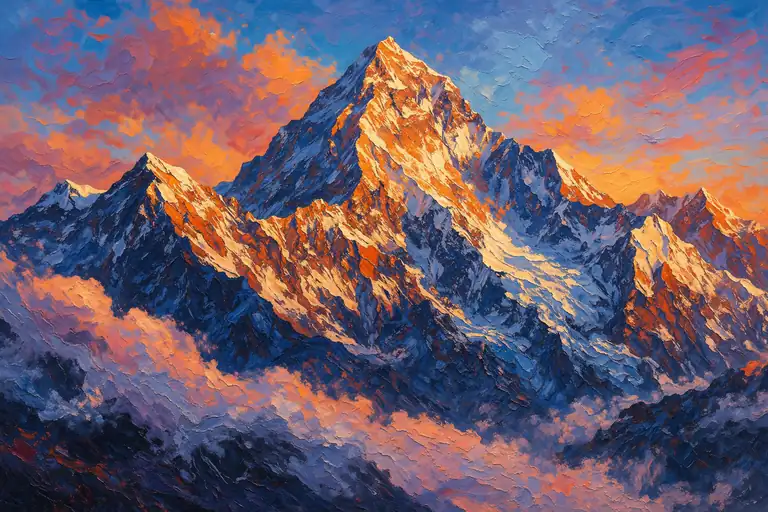 Golden Summit Above the Clouds
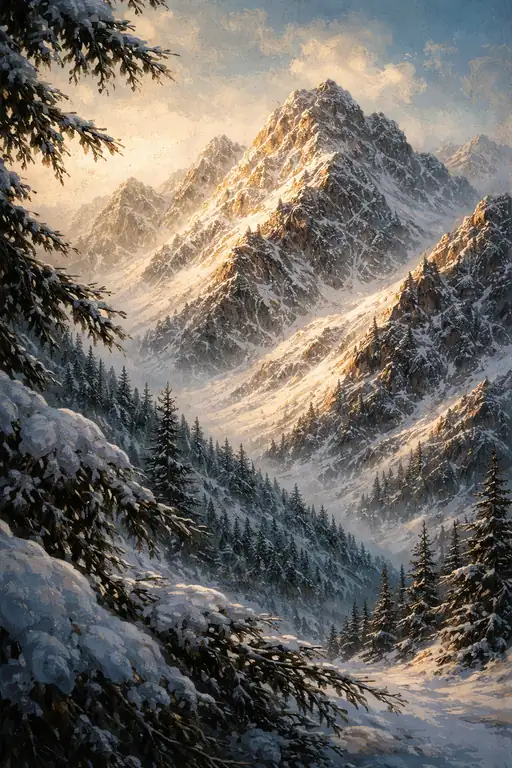 Alpenglow: The Summit's Golden Silence
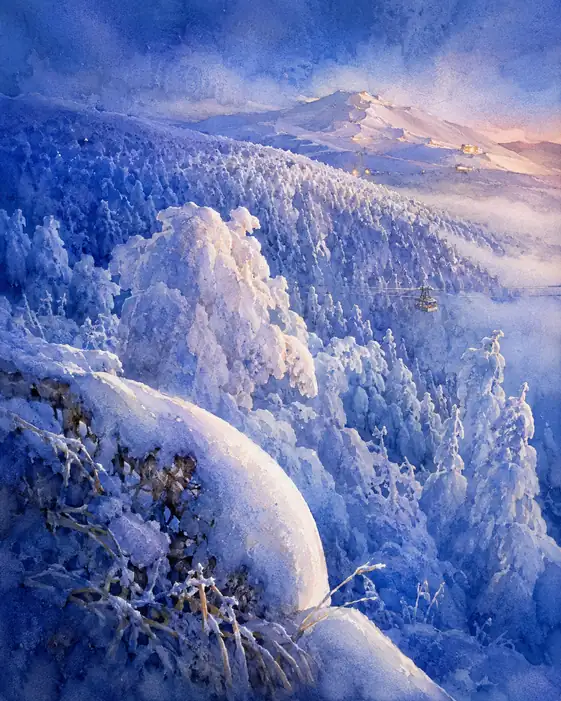 A Lantern Crossing the Frozen Silence
 Among the Sleeping Snow Giants
 Where the Frozen Light Awakens
 Whisper of Life in the Frozen Silence
 The Chiseled Summit of Rosy Dawn