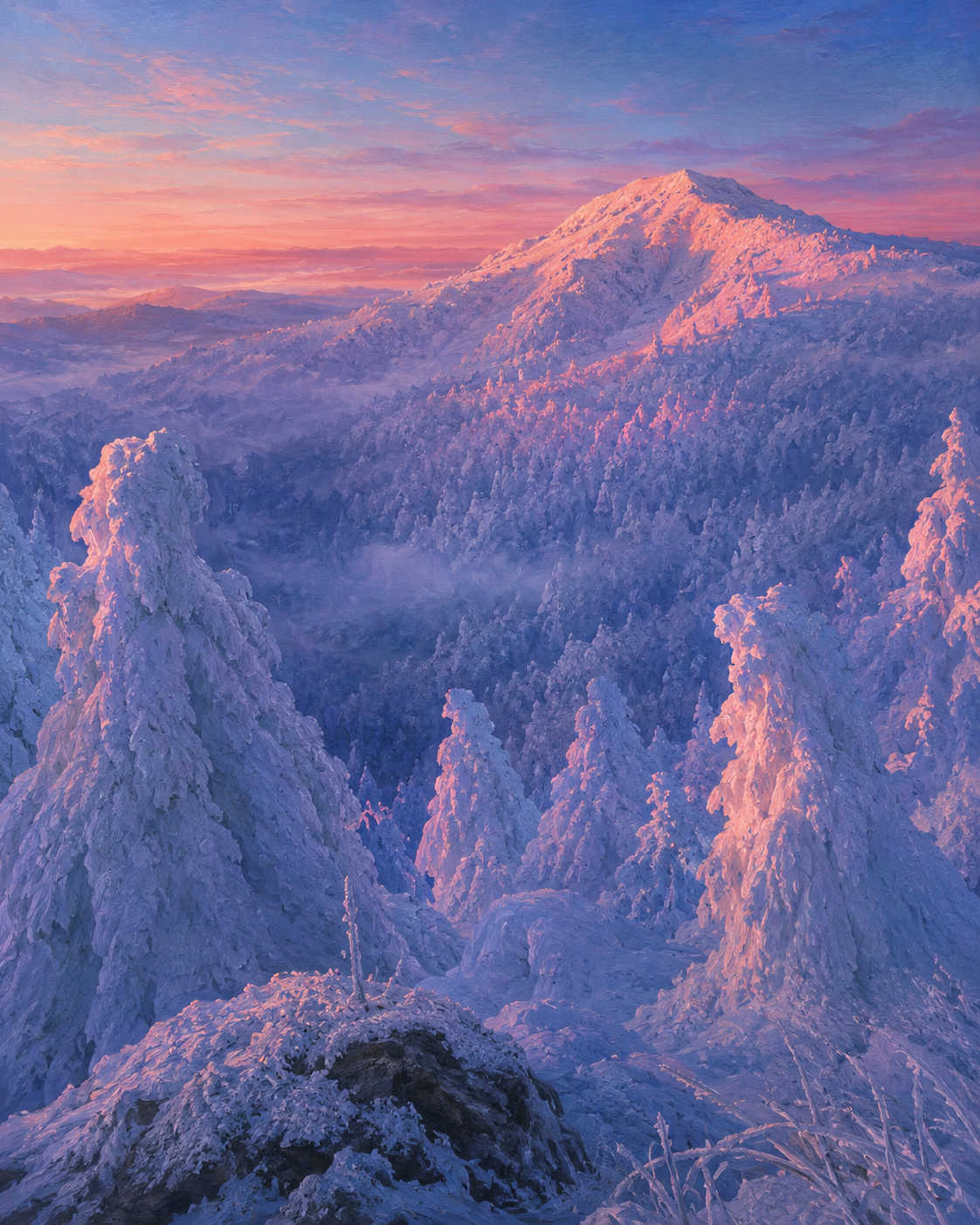
When Winter Blushed
Critique
Introduction This vertical watercolor centers on a frost-coated forest and a snow mountain catching dawn light. The main motif and its surroundings communicate spatial breadth and passing time. Careful observation and translucent washes present the depth of cold and the transition of dawn in a measured register. Description Within the image, snow-laden trees enclose the foreground valley, dense frost forms continue up the slope, and only the summit catches pink light. Shapes become smaller and edges softer toward the distance, moving the eye naturally to the principal subject. Reflections, foliage, waves, mist, or small structures establish scale. Analysis The composition uses diagonals, repetition, and framing forms to construct depth across the tall format. The palette is based on blue-violet, white, and pink, with the lightest passage or strongest complementary note providing emphasis. Layered washes, dry-brush marks, and preserved paper highlights distinguish solid matter from atmosphere and water. Precise description remains subordinate to broad tonal organization. Interpretation and Evaluation The scene can be interpreted as placing a brief warmth within the massive presence of winter. Light, weather, and seasonal change suggest duration rather than merely recording a place. The composition is stable, the colors coherent, and textures differentiated. Its originality lies in treating countless frost-covered trees as a sculptural repetition, while large color masses keep abundant detail legible. Conclusion The first impression is dominated by color and setting, but sustained viewing reveals relationships between nature and construction, stillness and motion, and near and far. Coordinating these elements gives the work clarity without sacrificing atmosphere. Its transparent technique and disciplined structure make the depth of cold and the transition of dawn rewarding over time.
Same Subcategory
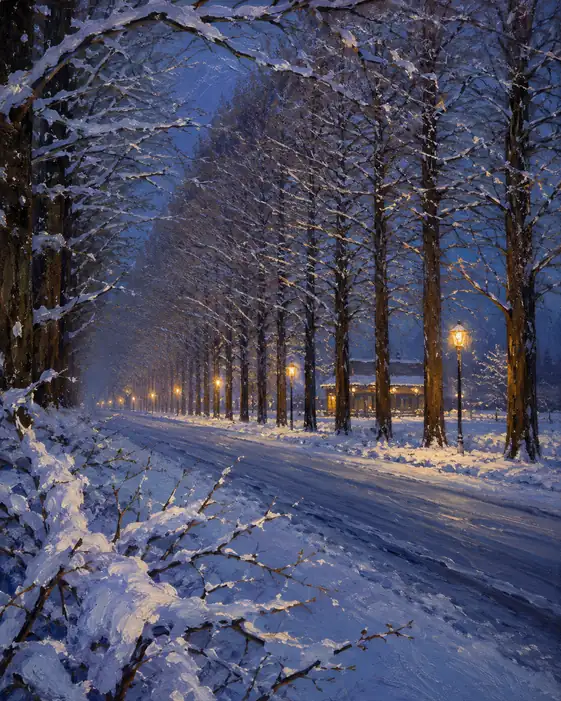 Winter Lights the Way Home
Similar Artworks
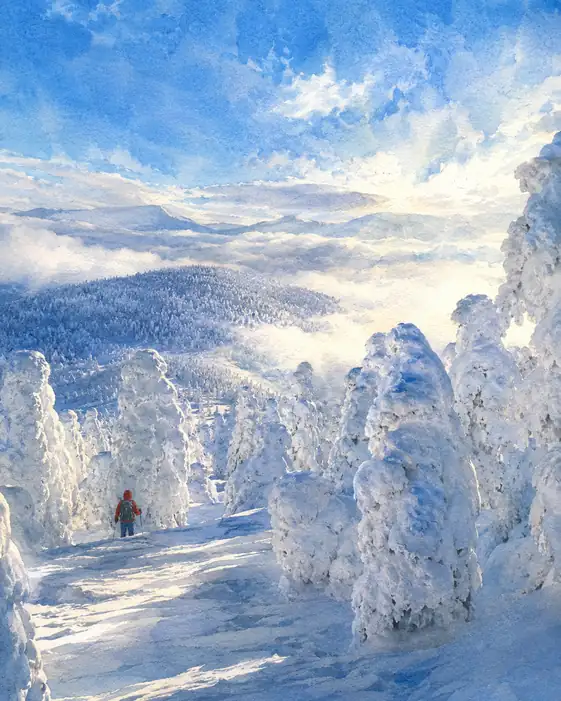 Among the Sleeping Snow Giants
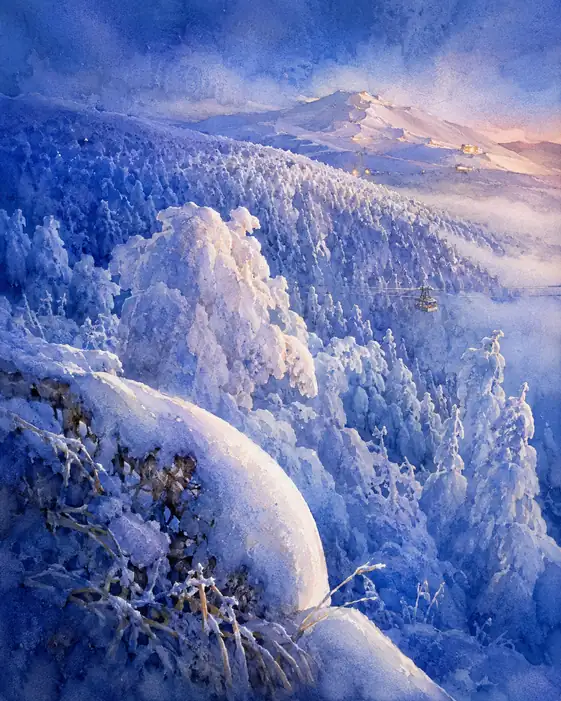 A Lantern Crossing the Frozen Silence
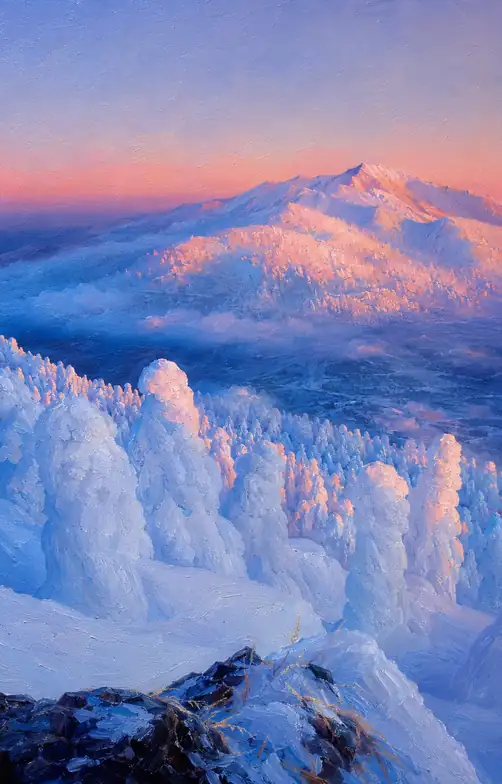 When the Frozen Forest Wears the Dawn
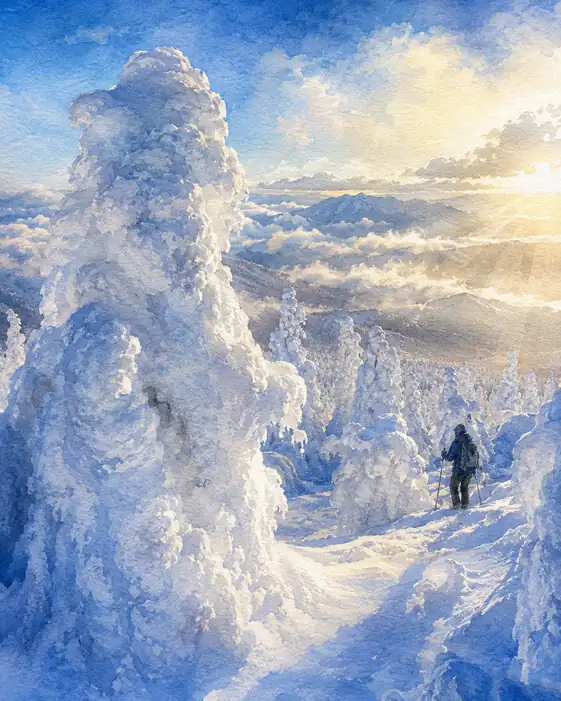 Among the Snow-Born Giants
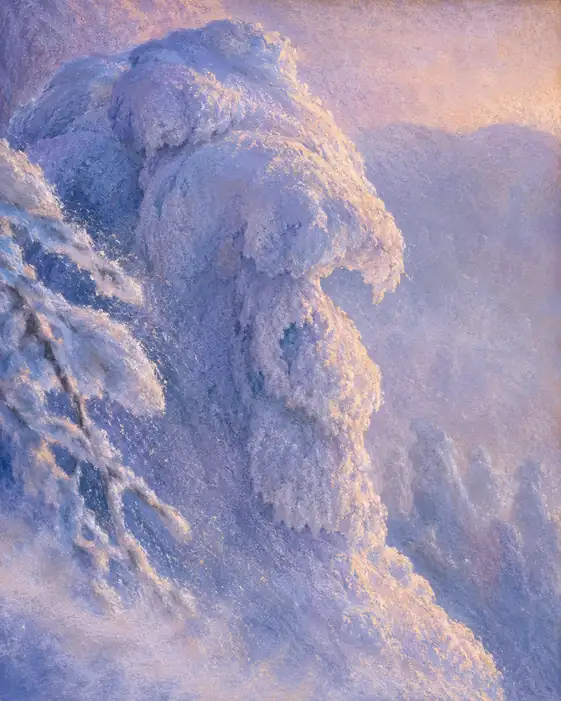 Silent Breath in the Frozen Dusk
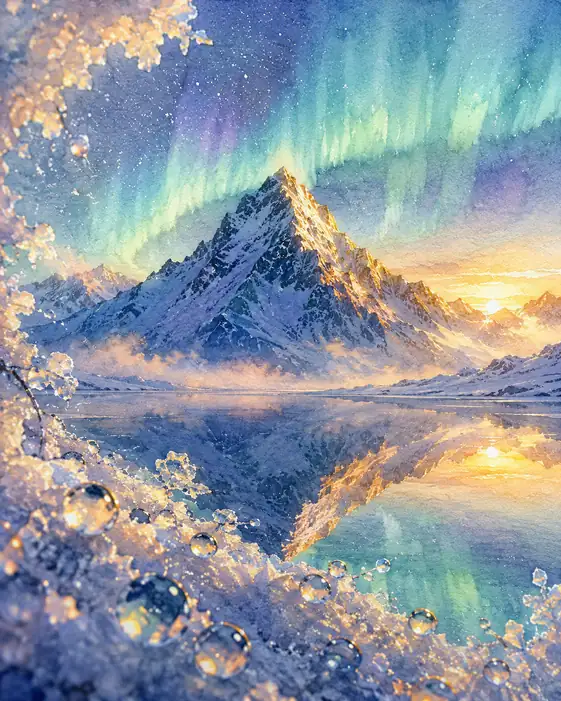 Aurora Dancing over the Frozen Peak
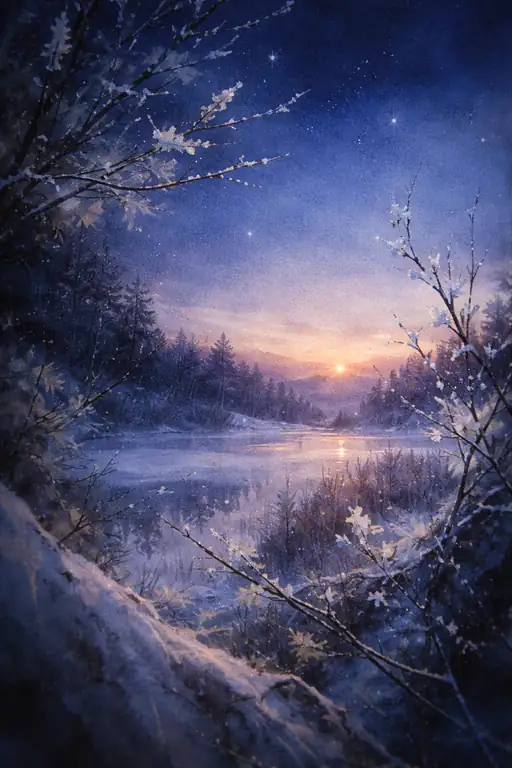 A Starlit Slumber Beneath the Ice
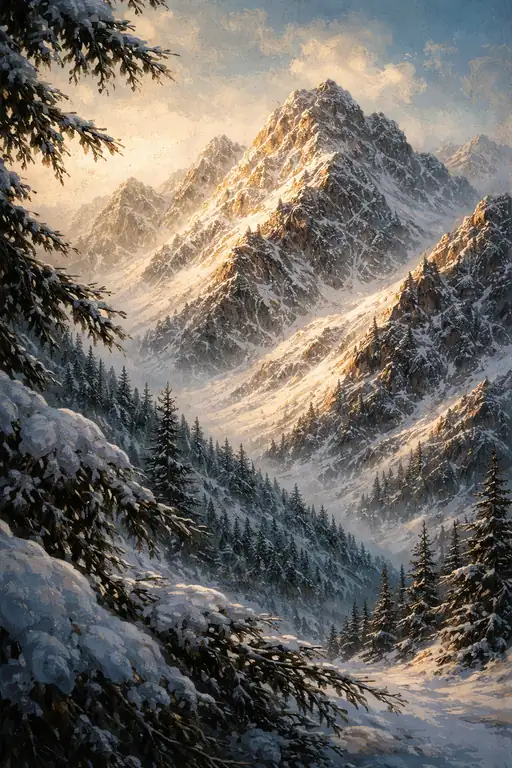 Alpenglow: The Summit's Golden Silence
 The Mountain Dreamed Itself in Flowers
 Trace of Hope in the Silent Snow