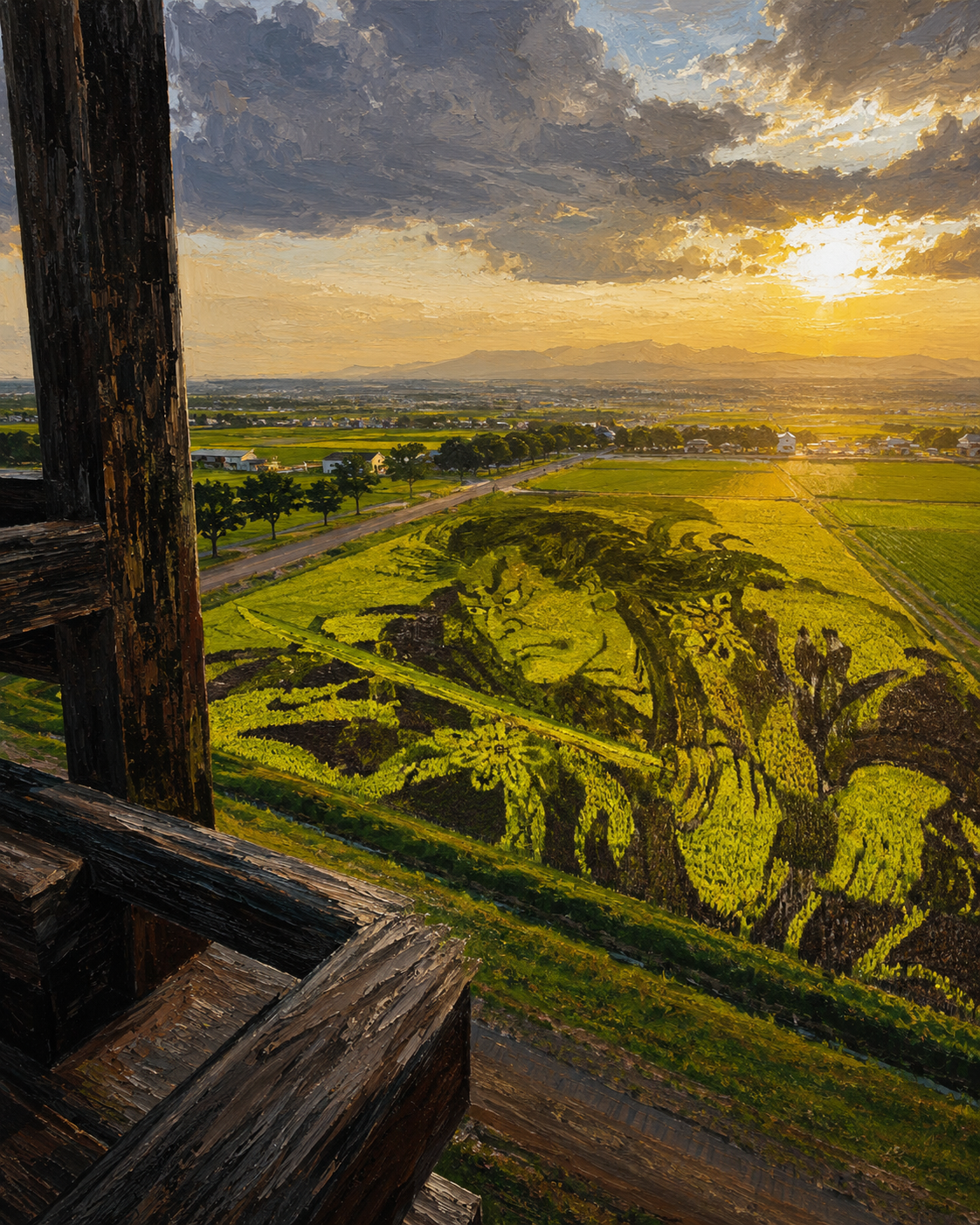
A Warrior Sown into the Earth
Critique
Introduction This vertical watercolor centers on a monumental field image and sunset viewed from a wooden lookout. The main motif and its surroundings communicate spatial breadth and passing time. Careful observation and translucent washes present the double identity of land and image in a measured register. Description Within the image, dark timber frames the foreground, a figure drawn across the fields occupies the center, and a settlement and mountains extend beyond. Shapes become smaller and edges softer toward the distance, moving the eye naturally to the principal subject. Reflections, foliage, waves, mist, or small structures establish scale. Analysis The composition uses diagonals, repetition, and framing forms to construct depth across the tall format. The palette is based on yellow-green, charred brown, and sunset gold, with the lightest passage or strongest complementary note providing emphasis. Layered washes, dry-brush marks, and preserved paper highlights distinguish solid matter from atmosphere and water. Precise description remains subordinate to broad tonal organization. Interpretation and Evaluation The scene can be interpreted as understanding cultivated land as a collectively made picture. Light, weather, and seasonal change suggest duration rather than merely recording a place. The composition is stable, the colors coherent, and textures differentiated. Its originality lies in including the viewing platform itself within the composition, while large color masses keep abundant detail legible. Conclusion The first impression is dominated by color and setting, but sustained viewing reveals relationships between nature and construction, stillness and motion, and near and far. Coordinating these elements gives the work clarity without sacrificing atmosphere. Its transparent technique and disciplined structure make the double identity of land and image rewarding over time.
Same Subcategory
 The Warrior Sleeps Beneath the Harvest
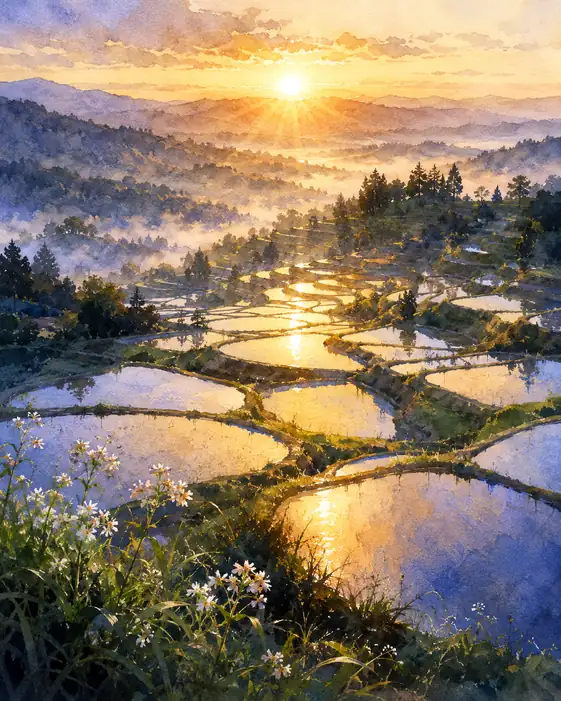 As Stars Fade, the Mountain Mirrors Embrace the Rising Sun
Similar Artworks
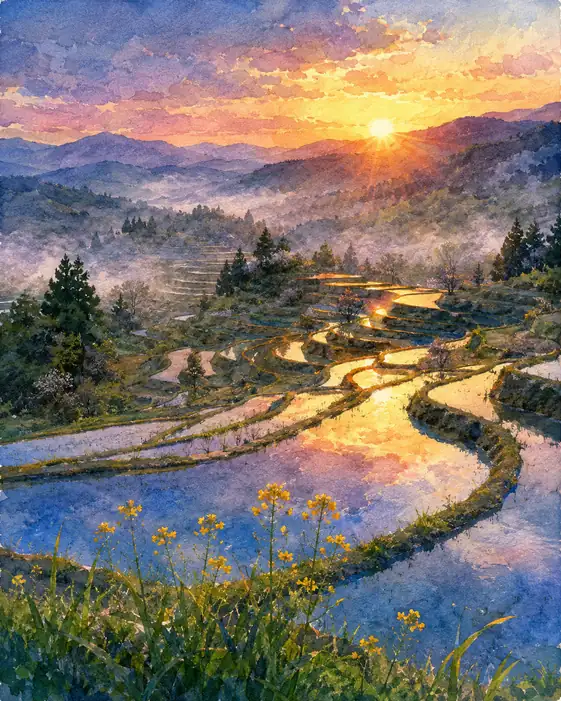 Sunset Flows through the Rice Terraces
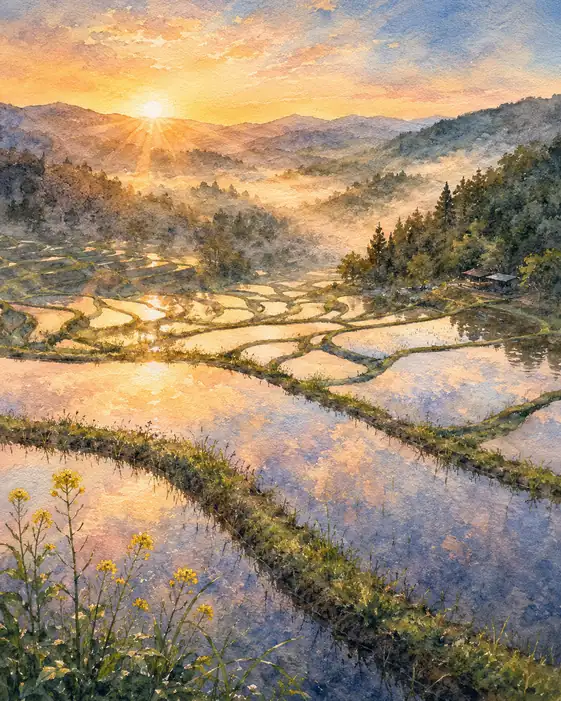 Dawn Sleeps in a Thousand Fields
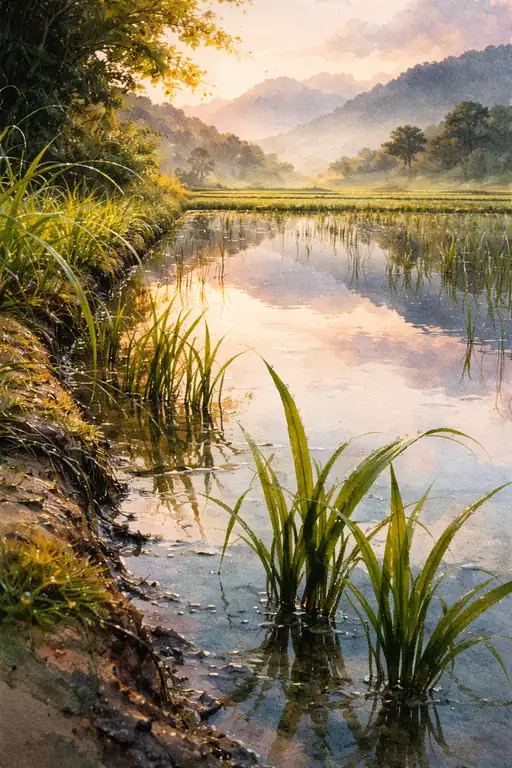 Golden Dawn's Reflection
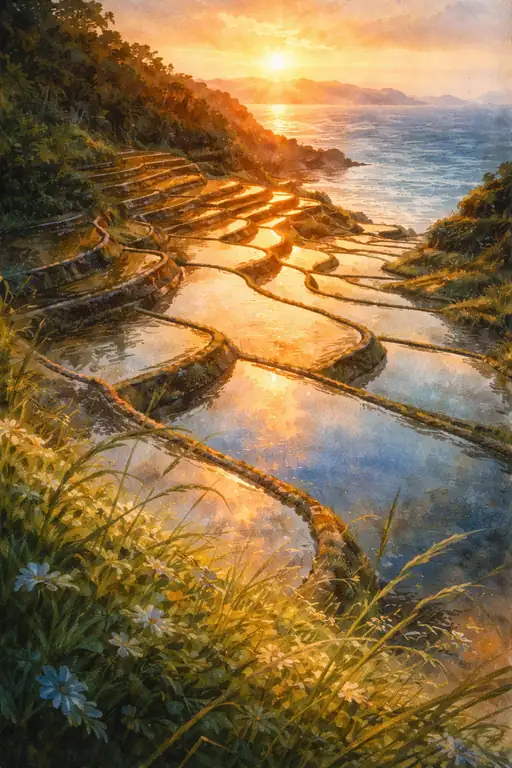 The Golden Mirror of the Hills
 Woven Earth: Tracks to the Future
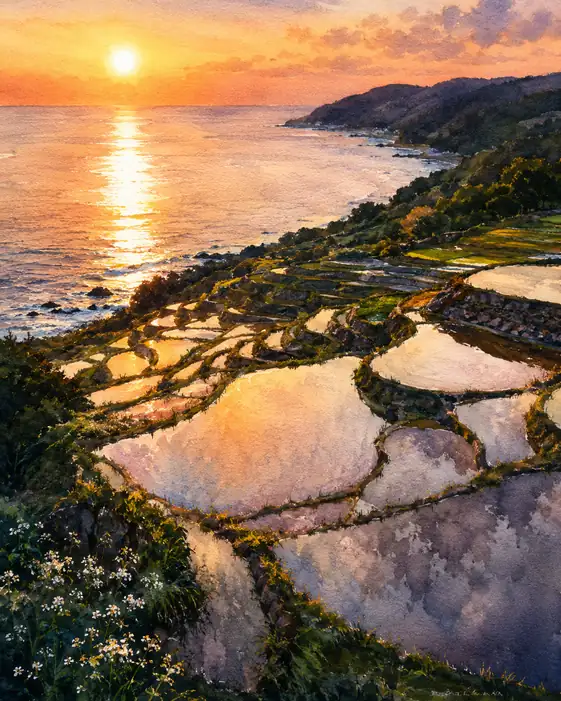 Sunset Fills the Fields One Mirror at a Time
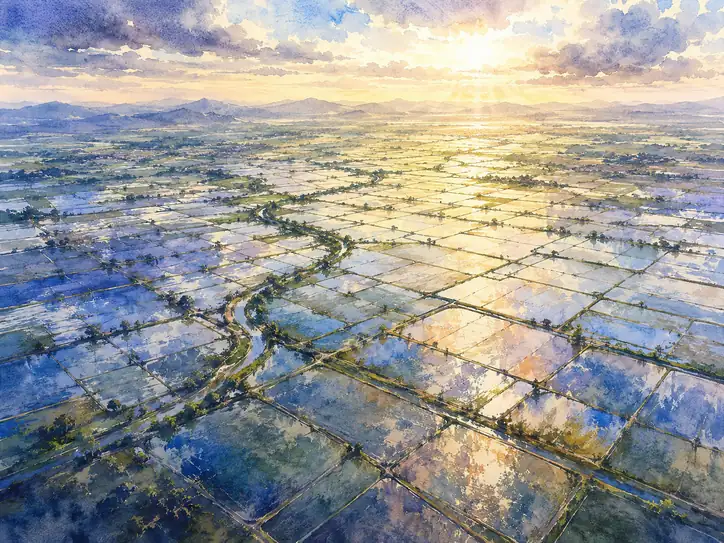 The Quiet Mirror of the Earth
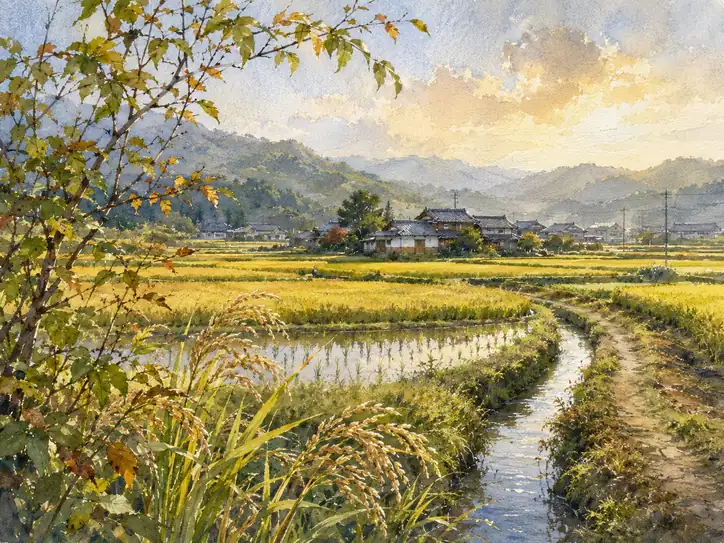 Returning Home to the Golden Light
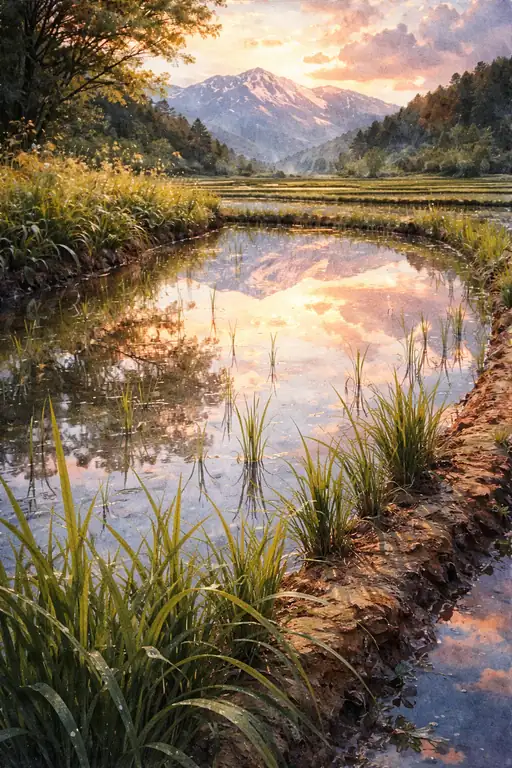 Heaven Mirroring the Harvest
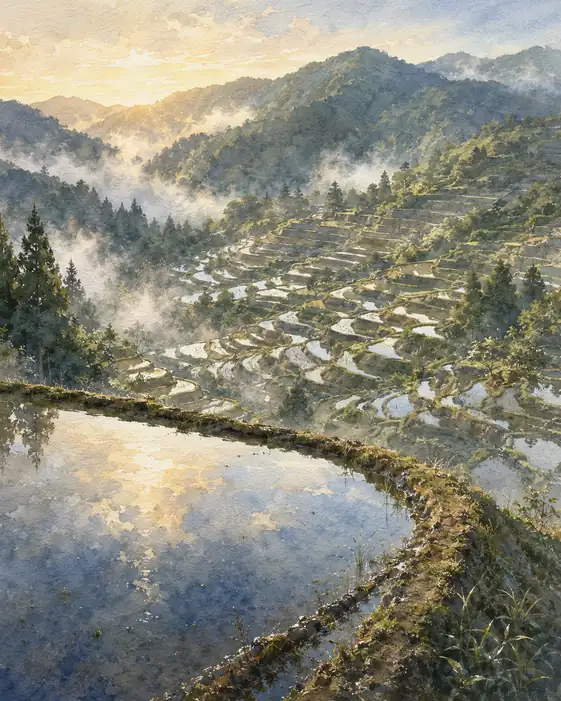 A Thousand Skies Sown on the Mountain