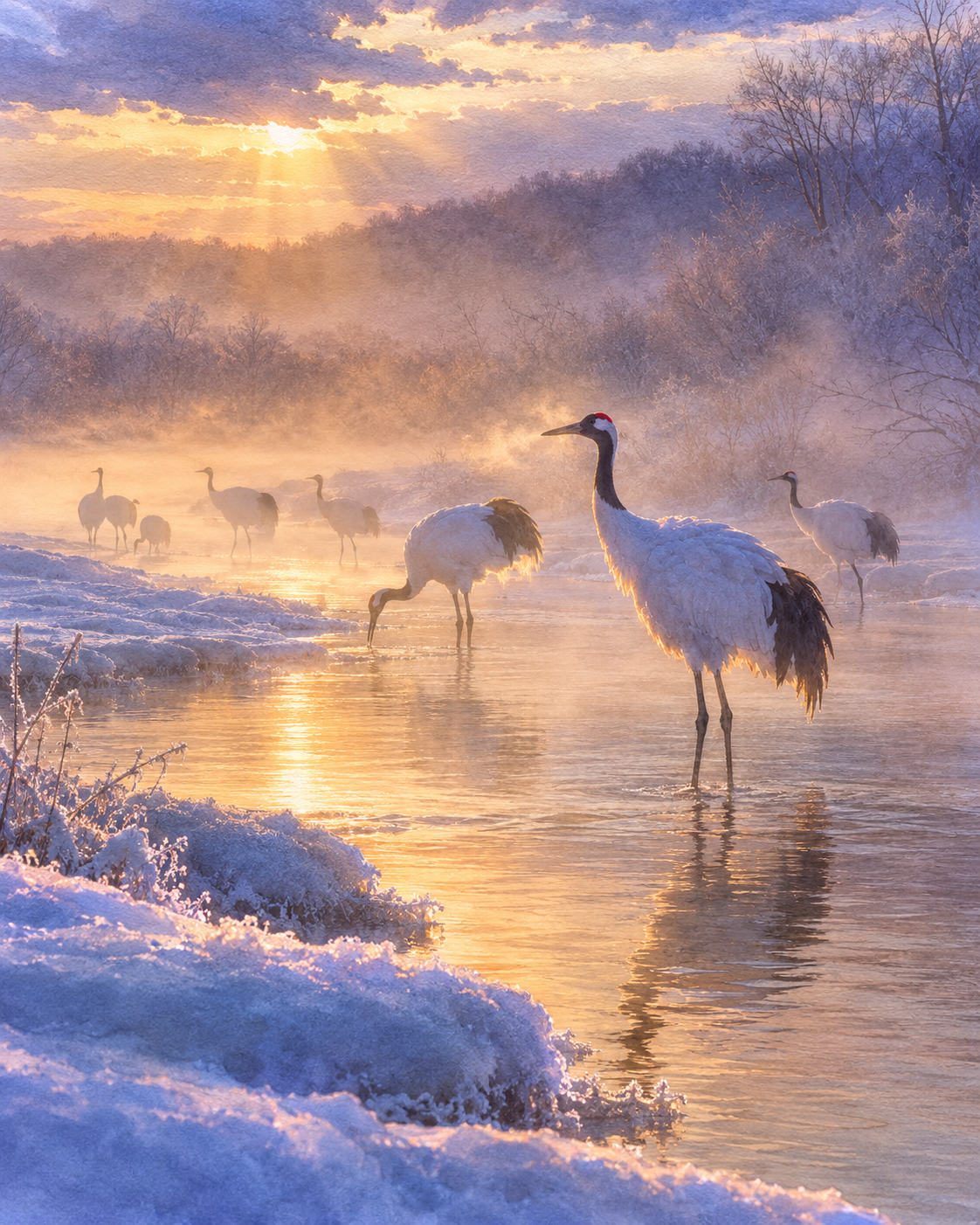
The First Crane Holds the Dawn
Critique
Introduction This vertical landscape painting presents red-crowned cranes crossing a gold-lit winter river. The foreground crane and scattered flock establishes the subject, while shifts of light and distance enlarge the setting. The work treats the view as a study of individual presence emerging from and returning to a community. Description In the foreground, snow and violet shadow slope toward the water. Across the middle distance, one large bird stands before smaller cranes in warm mist. Farther back, bare trees disappear into a radiant horizon. The palette moves through cream gold, snow white, violet, gray, and red. Sharp nearby edges and soft distant boundaries clarify the recession. Analysis The composition is organized by a strong foreground vertical set against a receding horizontal flock. Firm drawing gives weight to feathers, snow, and reed edges, while broader, more transparent passages soften water, haze, and backlight. Directional marks carry the eye toward the principal motif and keep the vertical format balanced. Interpretation and Evaluation The meeting of natural change and enduring form suggests individual presence emerging from and returning to a community. Descriptive details remain subordinate to a stable tonal design, so atmosphere never dissolves the structure. Controlled color, assured drawing, and varied surface handling give the scene clarity, while the chosen viewpoint supplies a distinct sense of place. Conclusion The foreground crane and scattered flock brings the major planes into a coherent sequence. What first appears to be a majestic crane portrait gradually becomes an examination of scale and distance turning a flock into a social landscape. The measured light and disciplined composition sustain visual richness without losing emotional restraint.
Same Subcategory
Similar Artworks
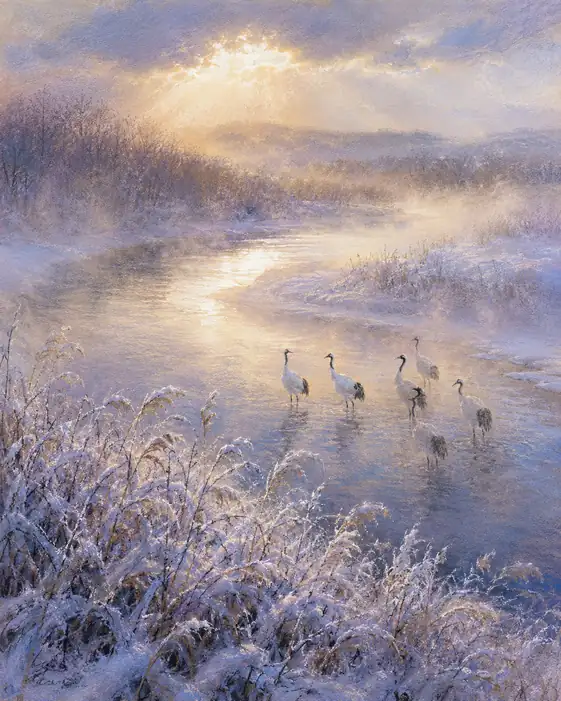 Morning Stands on Silver Legs
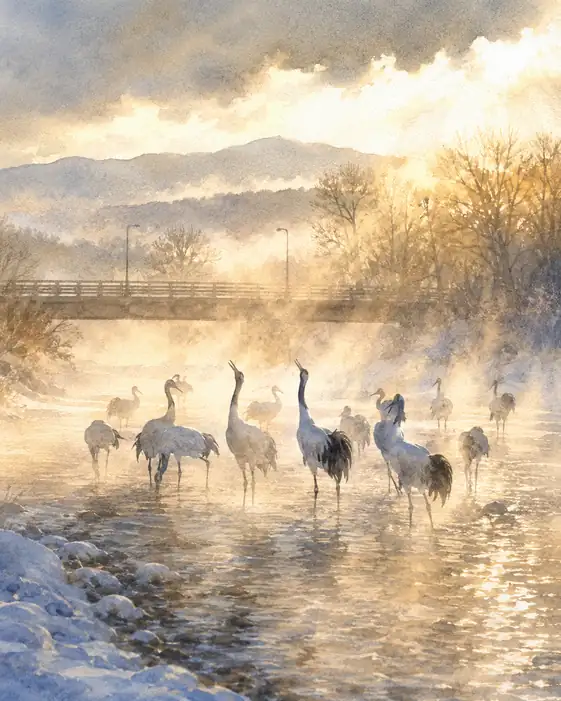 Voices Rise From the Winter Mist
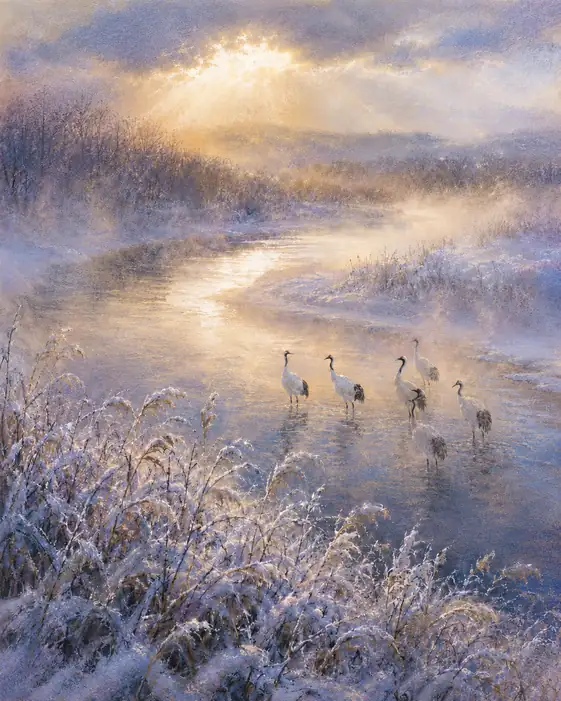 Cranes Waiting in the Golden Cold
 The Golden Voyage Home
 The River Gathers the Dying Rose
 Rhythmic Pink on Silent Waters
 The River Writes the Sunset Home
 Blue Holds the Mountain's Afterglow
 Where Swans Dream in Golden Dawn
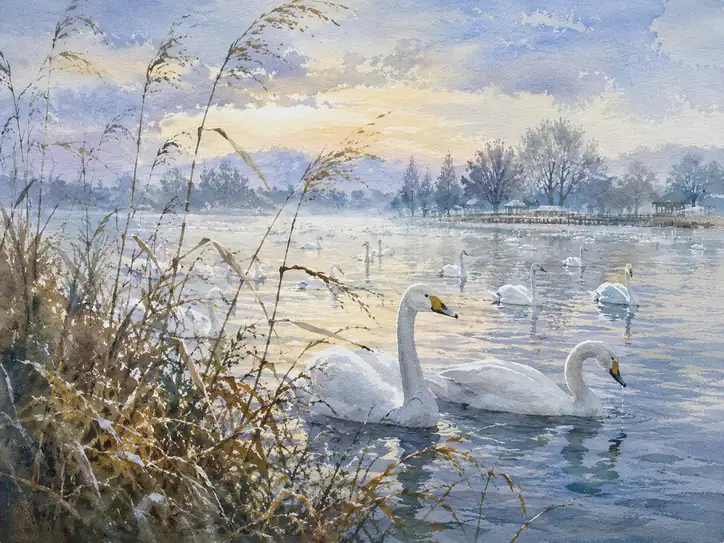 Ethereal Dawn on the Silent Lake