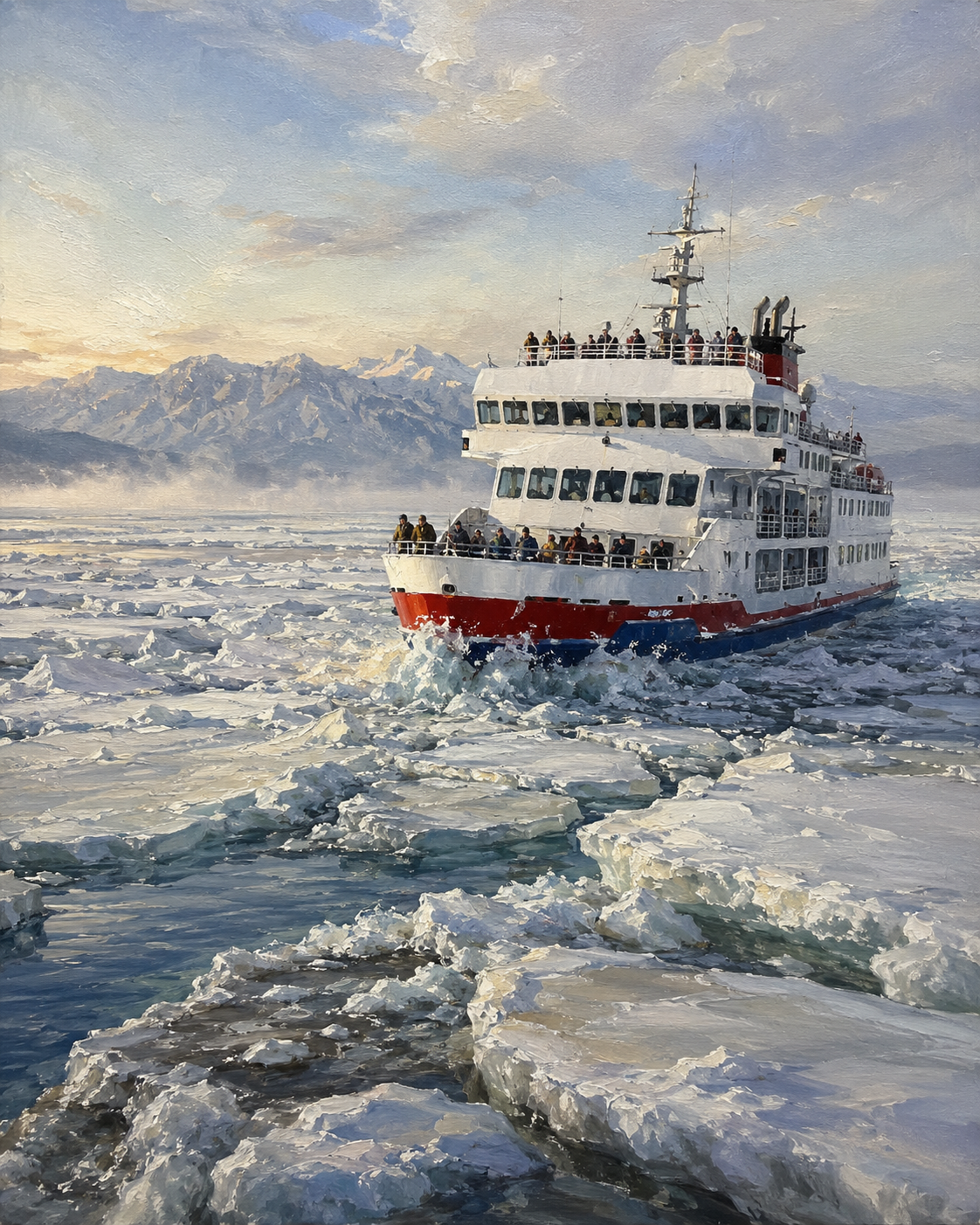
Breaking the White Silence
Critique
Introduction This vertical landscape painting presents an icebreaker advancing through drift ice off Abashiri. The red-hulled vessel establishes the subject, while shifts of light and distance enlarge the setting. The work treats the view as a study of mechanical passage forcing a temporary route through a mobile surface. Description In the foreground, fractured ice plates open a rough channel from the lower edge. Across the middle distance, the ship pushes forward with passengers visible on its decks. Farther back, snowy mountains extend beneath a broad winter sky. The palette moves through ice white, cold gray, sea blue, and signal red. Sharp nearby edges and soft distant boundaries clarify the recession. Analysis The composition is organized by a centered advancing wedge reinforced by the broken channel. Firm drawing gives weight to ship plates, railings, and jagged ice, while broader, more transparent passages soften sky, distant mountains, and open water. Directional marks carry the eye toward the principal motif and keep the vertical format balanced. Interpretation and Evaluation The meeting of natural change and enduring form suggests mechanical passage forcing a temporary route through a mobile surface. Descriptive details remain subordinate to a stable tonal design, so atmosphere never dissolves the structure. Controlled color, assured drawing, and varied surface handling give the scene clarity, while the chosen viewpoint supplies a distinct sense of place. Conclusion The red-hulled vessel brings the major planes into a coherent sequence. What first appears to be an energetic polar voyage gradually becomes an examination of the negotiation between human momentum and an environment that immediately closes behind it. The measured light and disciplined composition sustain visual richness without losing emotional restraint.
Same Subcategory
Similar Artworks
 The Sea Opens a Winter Road
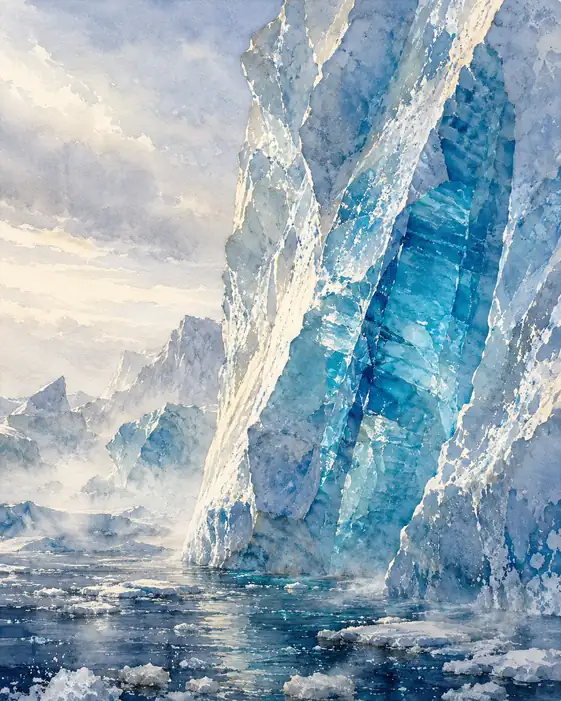 The Blue Silence of the Glacier
 The Moment the Frozen Silence Cracks
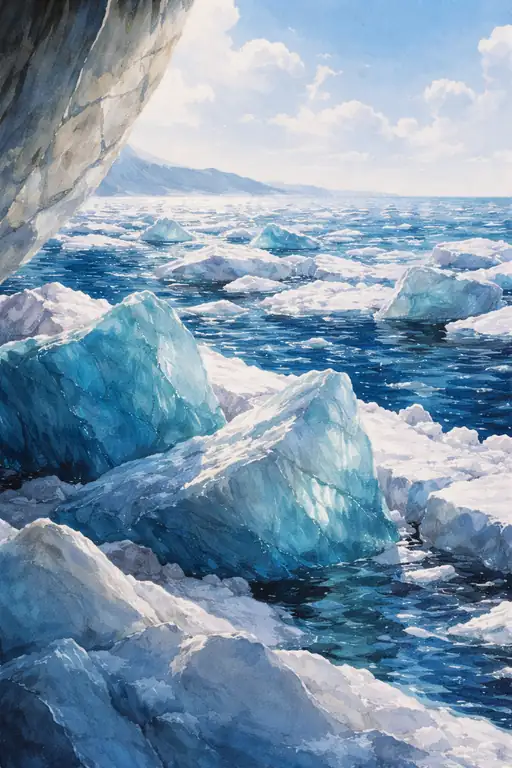 Silence of the Sleeping Glaciers
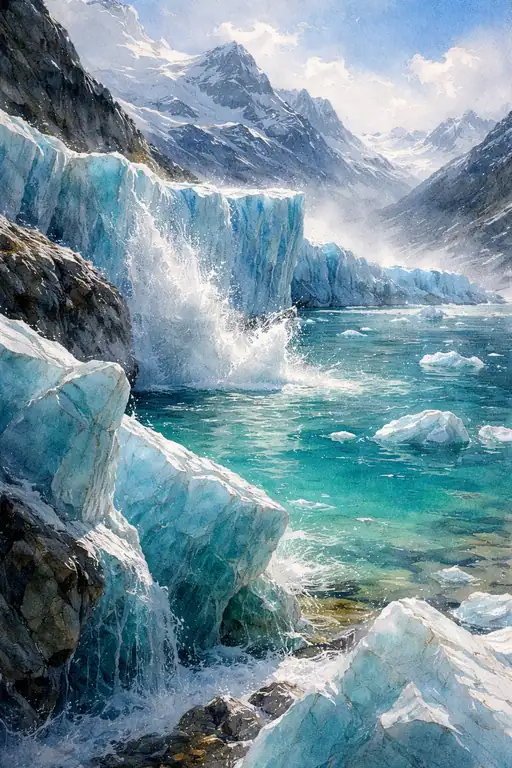 The Great Release: Echoes of the Blue Giant
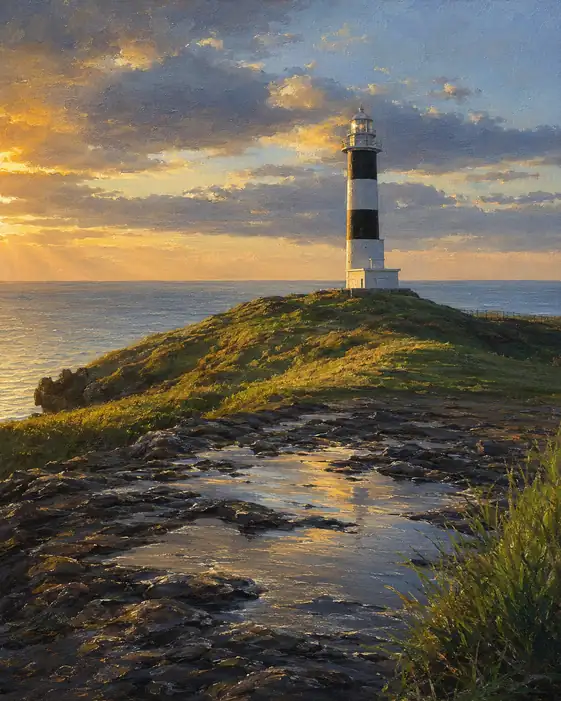 The Beacon at the Edge of Gold
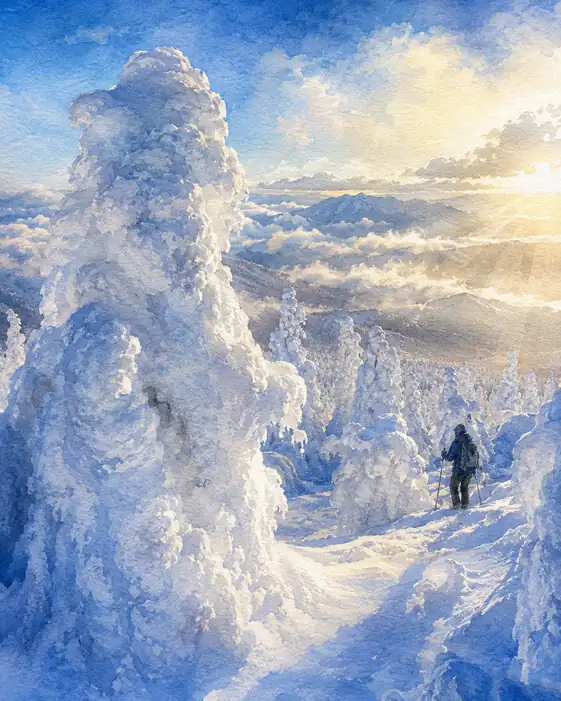 Among the Snow-Born Giants
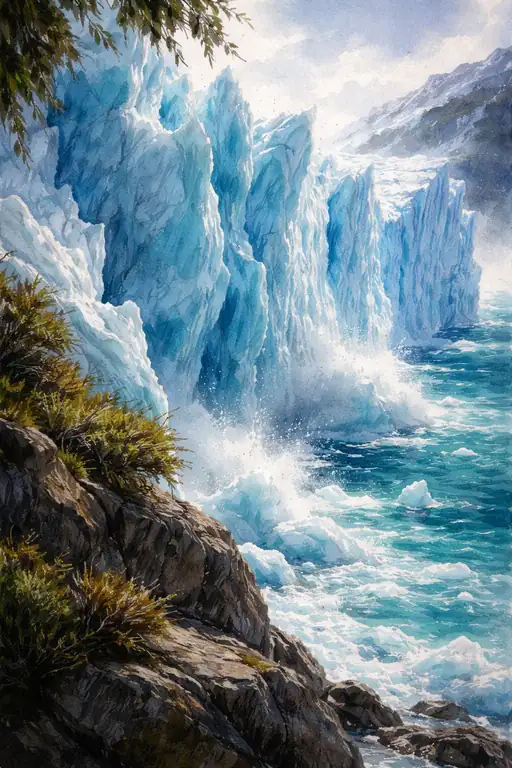 Perito Moreno's Icy Wrath: The Churning Ocean Meets the Glacial Giant
 Crimson Sails Defying the Silence
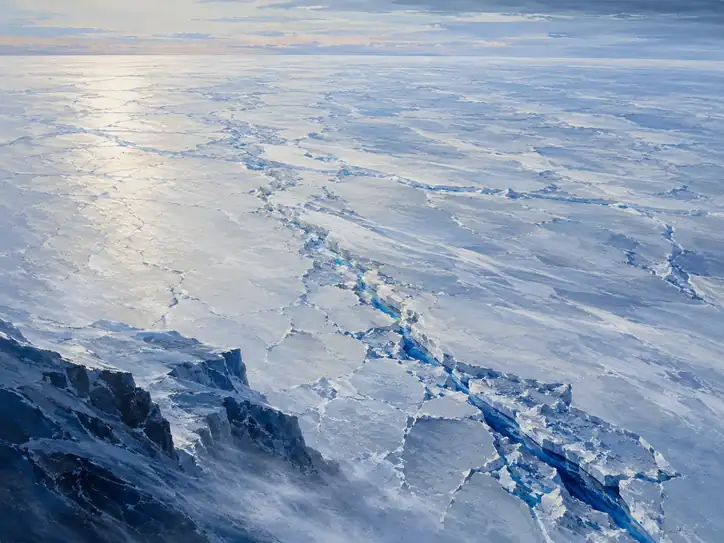 The Blue Veins of the Silent Sea