
The River Gathers the Dying Rose
Critique
Introduction This vertical landscape painting presents the Kushiro Wetland at sunset from an elevated overlook. The winding river and distant mountain establishes the subject, while shifts of light and distance enlarge the setting. The work treats the view as a study of slow natural movement continuing across an apparently still plain. Description In the foreground, a dark rock and dry grasses anchor the lower edge. Across the middle distance, shallow water divides the russet marsh into long ribbons. Farther back, a broad mountain receives the last rose-colored light. The palette moves through rose, lavender, burnt umber, and reflective silver. Sharp nearby edges and soft distant boundaries clarify the recession. Analysis The composition is organized by the river's repeated S-curves leading from foreground to mountain. Firm drawing gives weight to dry grass, rock, and marsh banks, while broader, more transparent passages soften water, haze, and evening sky. Directional marks carry the eye toward the principal motif and keep the vertical format balanced. Interpretation and Evaluation The meeting of natural change and enduring form suggests slow natural movement continuing across an apparently still plain. Descriptive details remain subordinate to a stable tonal design, so atmosphere never dissolves the structure. Controlled color, assured drawing, and varied surface handling give the scene clarity, while the chosen viewpoint supplies a distinct sense of place. Conclusion The winding river and distant mountain brings the major planes into a coherent sequence. What first appears to be a tranquil sunset wetland gradually becomes an examination of the river as a record of time written through open land. The measured light and disciplined composition sustain visual richness without losing emotional restraint.
Same Subcategory
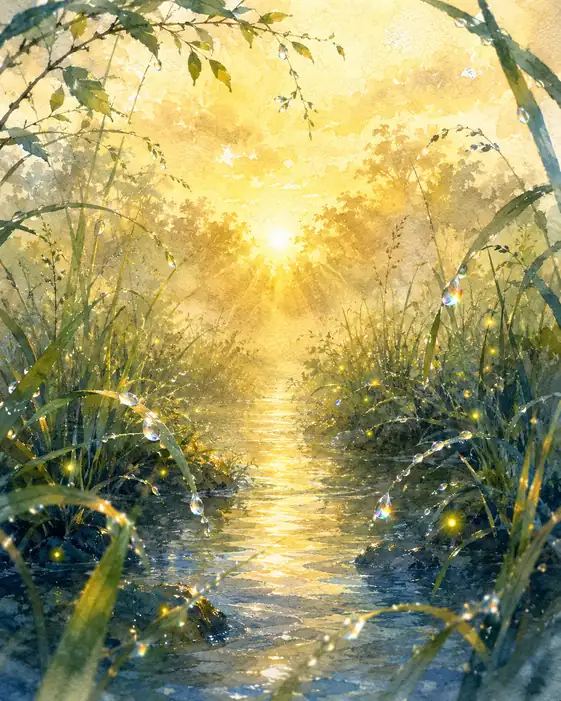 Golden Waterway Glistening through Dewy Grass
Similar Artworks
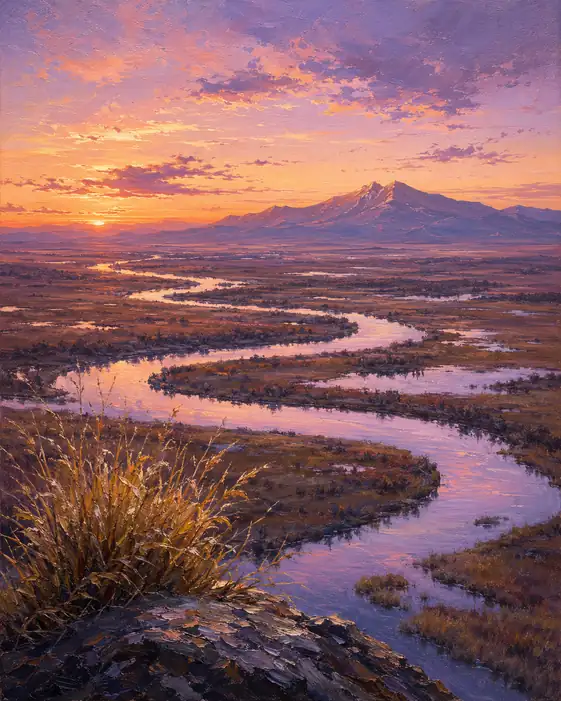 The River Writes the Sunset Home
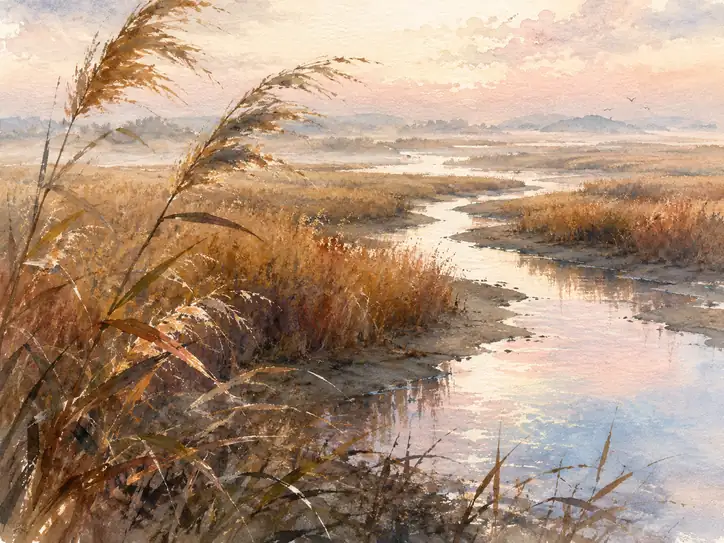 Where the River Dreams in Gold
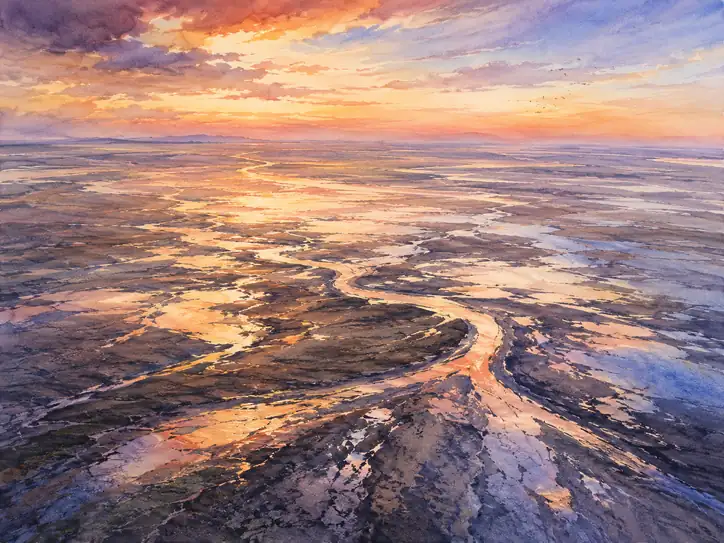 Veins of the Golden Twilight
 Flight into the Amber Twilight
 Blue Holds the Mountain's Afterglow
 The Boardwalk Outlives the Trees
 The Fiery River of Earth's Pulse
 The Golden Pulse of the River
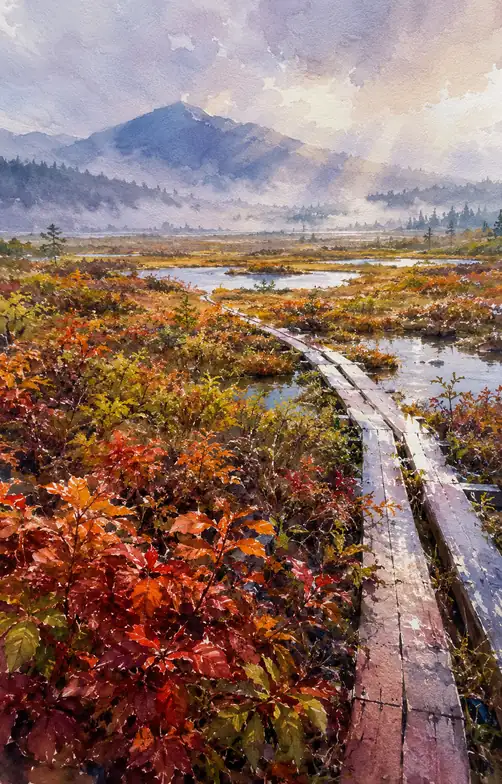 Autumn Lays a Path Across the Marsh
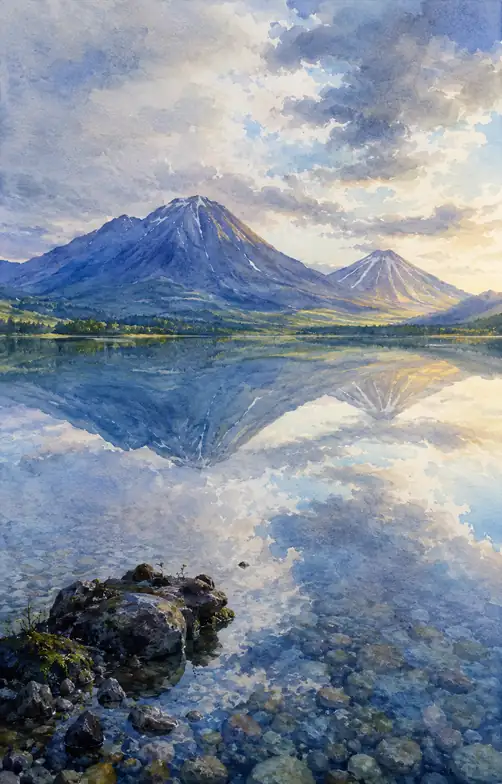 Two Mountains, One Quiet Sky