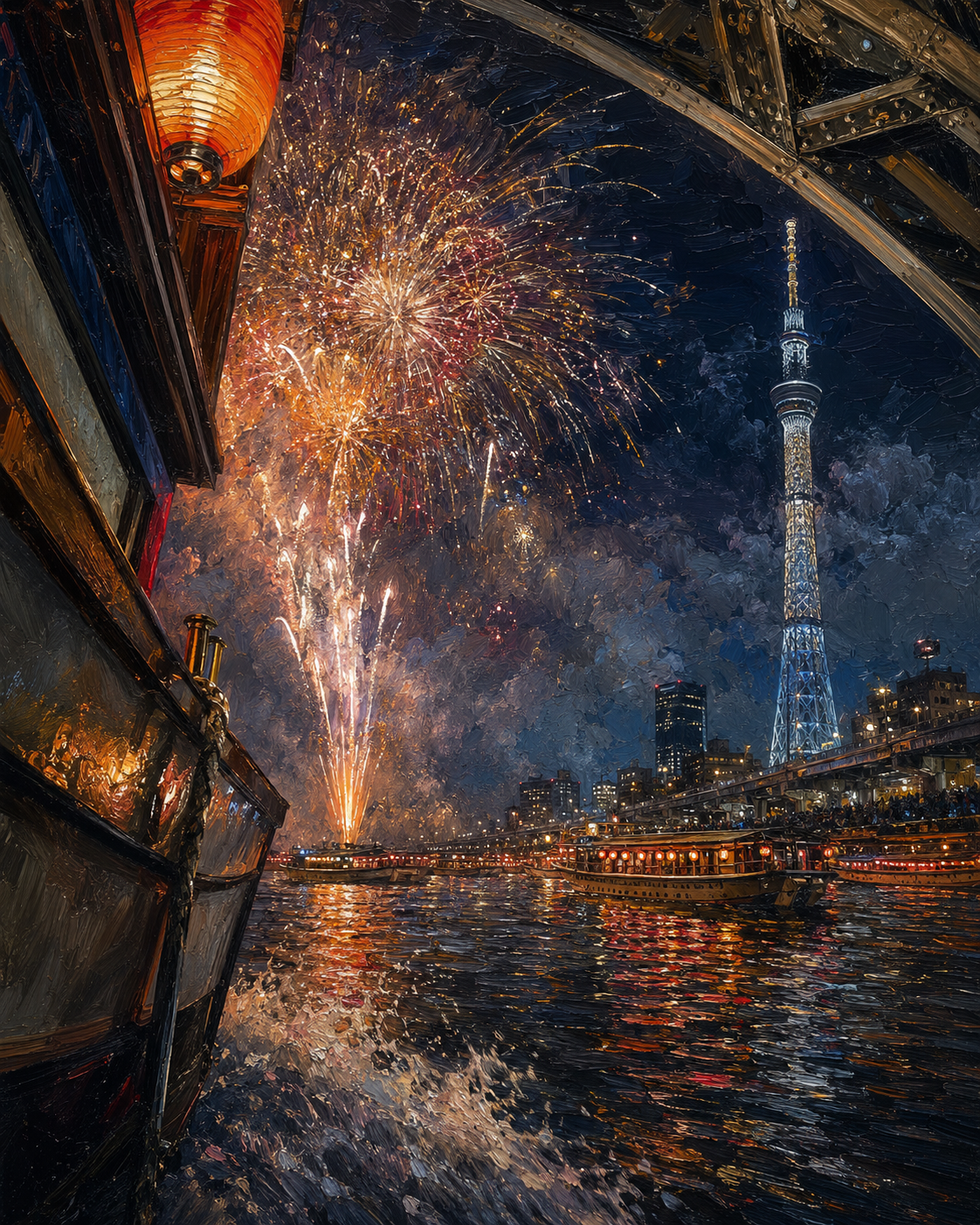
Before the Sparks Can Fall, We Pass
Critique
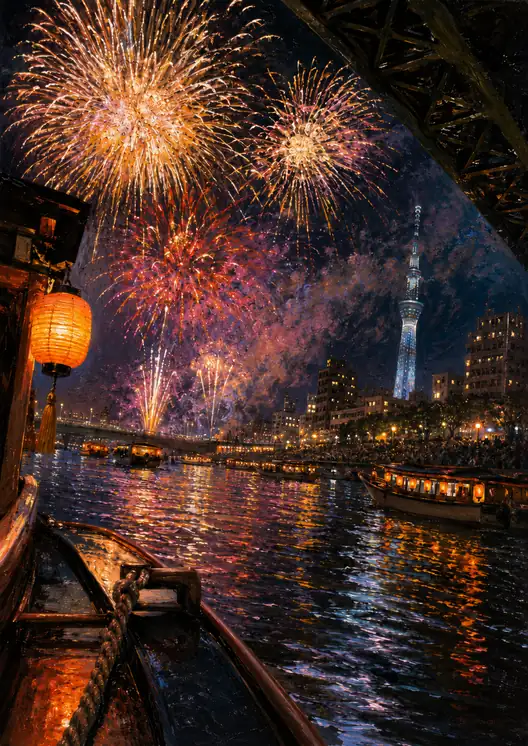
1. Introduction This painting presents the Sumida River Fireworks as a nocturnal spectacle observed from the side of a boat passing beneath a steel bridge. Fireworks, river traffic, bridges, and the illuminated tower retain distinct visual roles. The festival becomes both a public gathering and an encounter with transient light. 2. Description The composition includes a red lantern glows above the dark hull, pleasure boats cross the distance, and the tower stands at right. Above them, a loose field of gold sparks rises from a bright vertical fountain. Below, orange and red reflections disrupted by a foaming wake. 3. Analysis The picture is organized through textured impasto and muscular diagonal strokes. Dark architecture and deep blue tones ground the warmer flashes, while reflections extend the fireworks through the lower half. Changes of scale between nearby structures, boats, and skyline create depth. In particular, bridge girders, boat side, and wake create an unusually forceful sense of speed. 4. Interpretation and Evaluation The scene presents familiar urban space in temporary transformation. Careful drawing keeps the tower, vessels, and bridges legible, while freer marks convey smoke, glare, and unstable water. The composition balances crowded detail with directional movement, and its color design unifies artificial illumination with reflected fire. Making the viewpoint part of the event gives the work an individual character. 5. Conclusion At first the fireworks command attention through size and brilliance, but sustained viewing reveals how strongly the river architecture shapes their effect. Controlled structure, vivid color, and responsive handling turn a momentary display into a coherent image of collective memory.
Same Subcategory
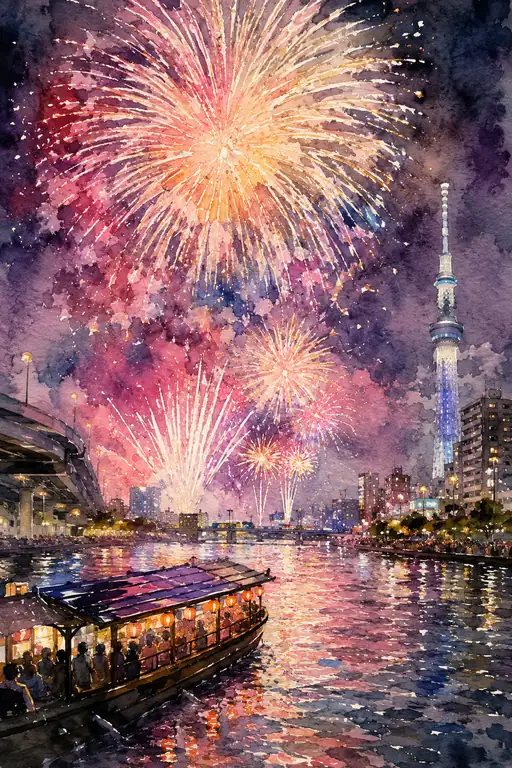 The River Wore the Color of Dawn
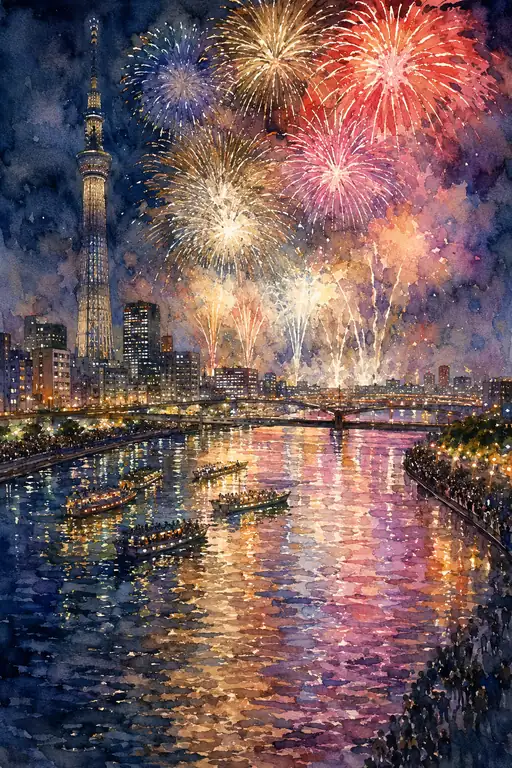 All of Sumida Became a Sky
Similar Artworks
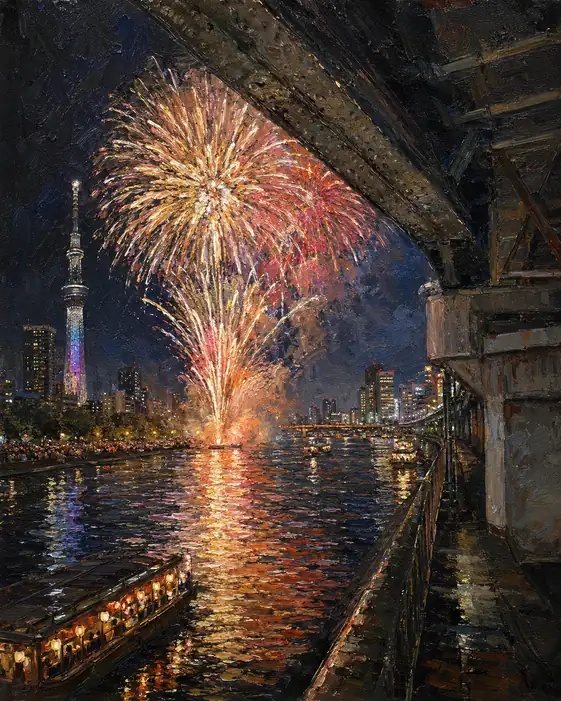 At the End of Iron, a Flower of Light
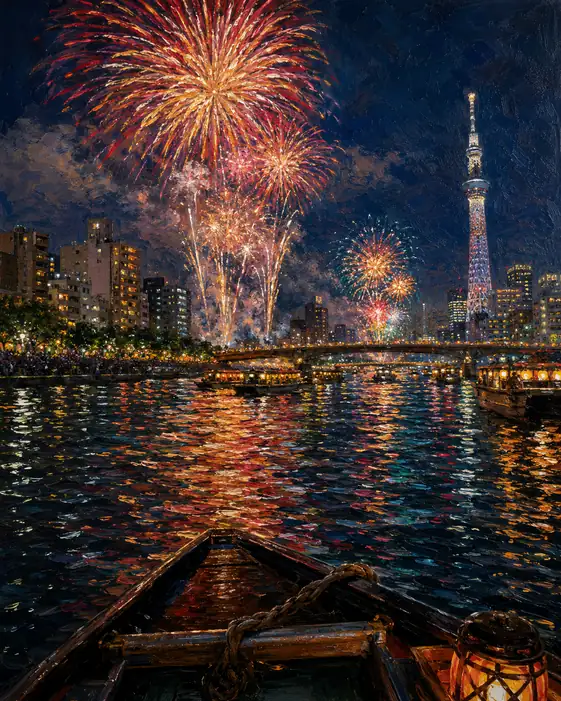 A Small Lantern Sails Toward the Heavens
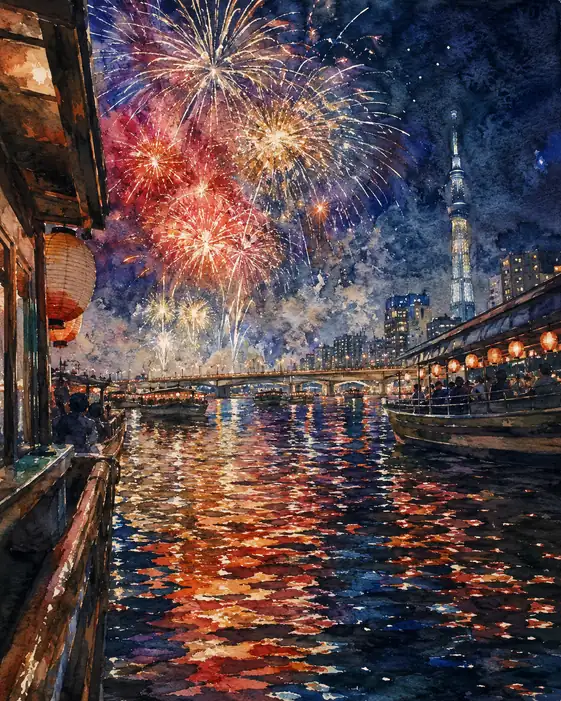 After the Thunder, Colors Remain
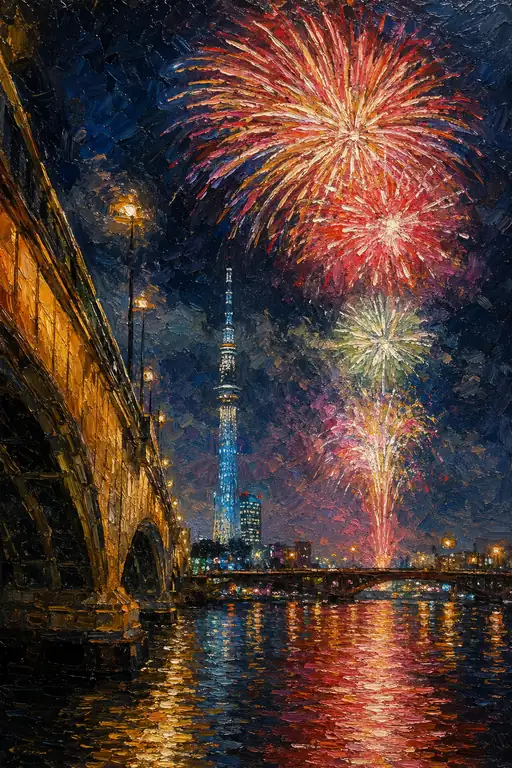 Red Blossoms Above the City’s Shadow
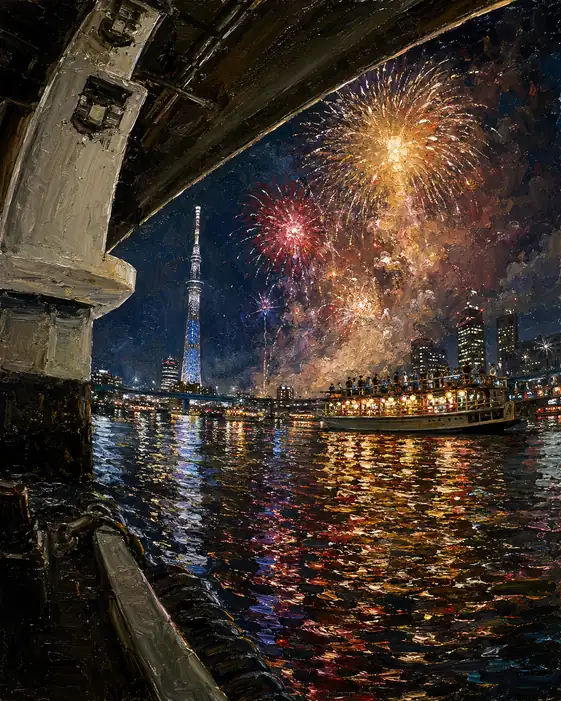 Beyond the Weight of Iron, Light
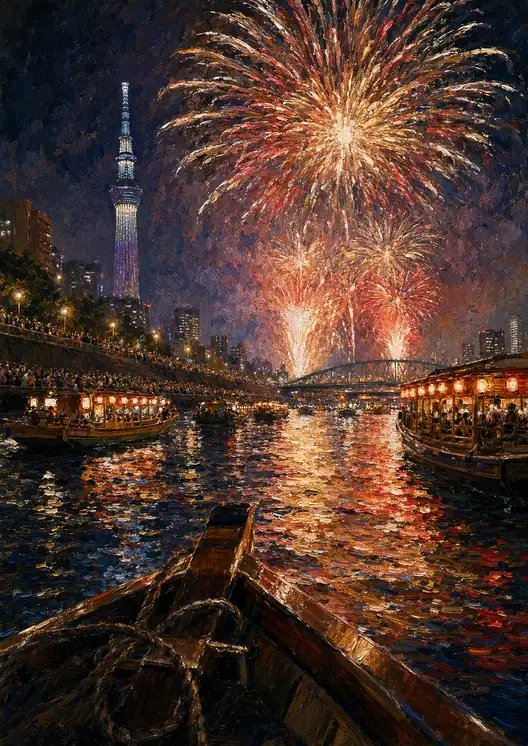 The River Made a Road of Gold
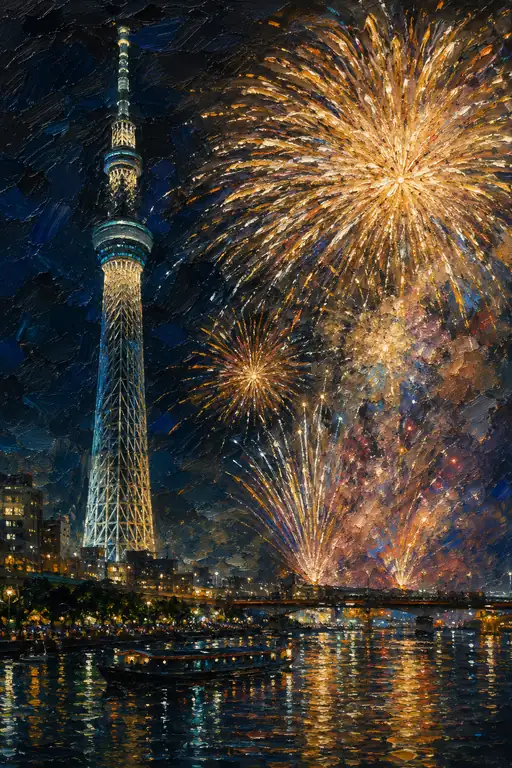 The Night Raised Two Monuments
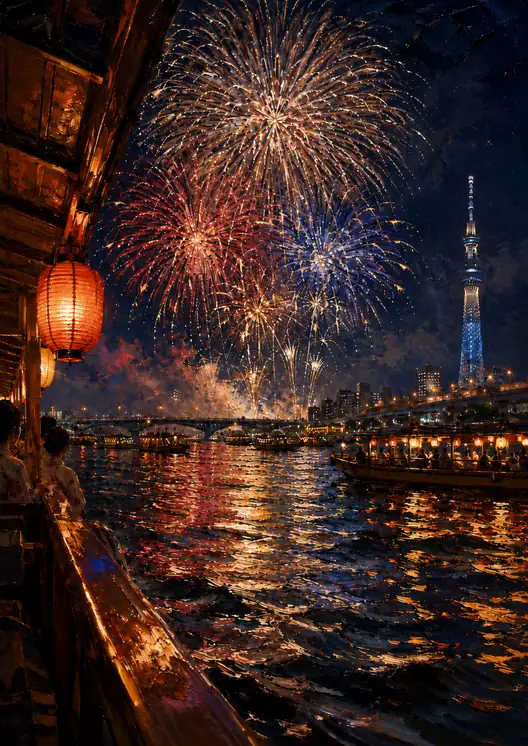 We Sat at the Edge of a Burning Sky
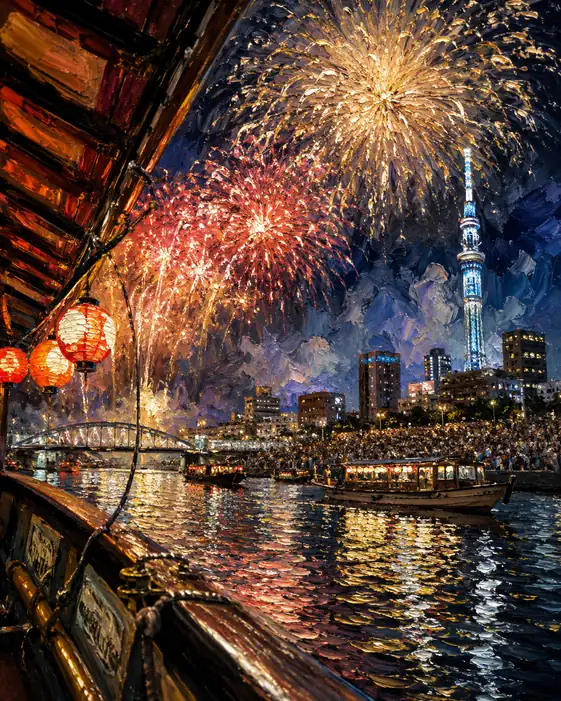 So Close the Sky Touches the Lanterns
 Beneath Iron, the River Dreams in Fire