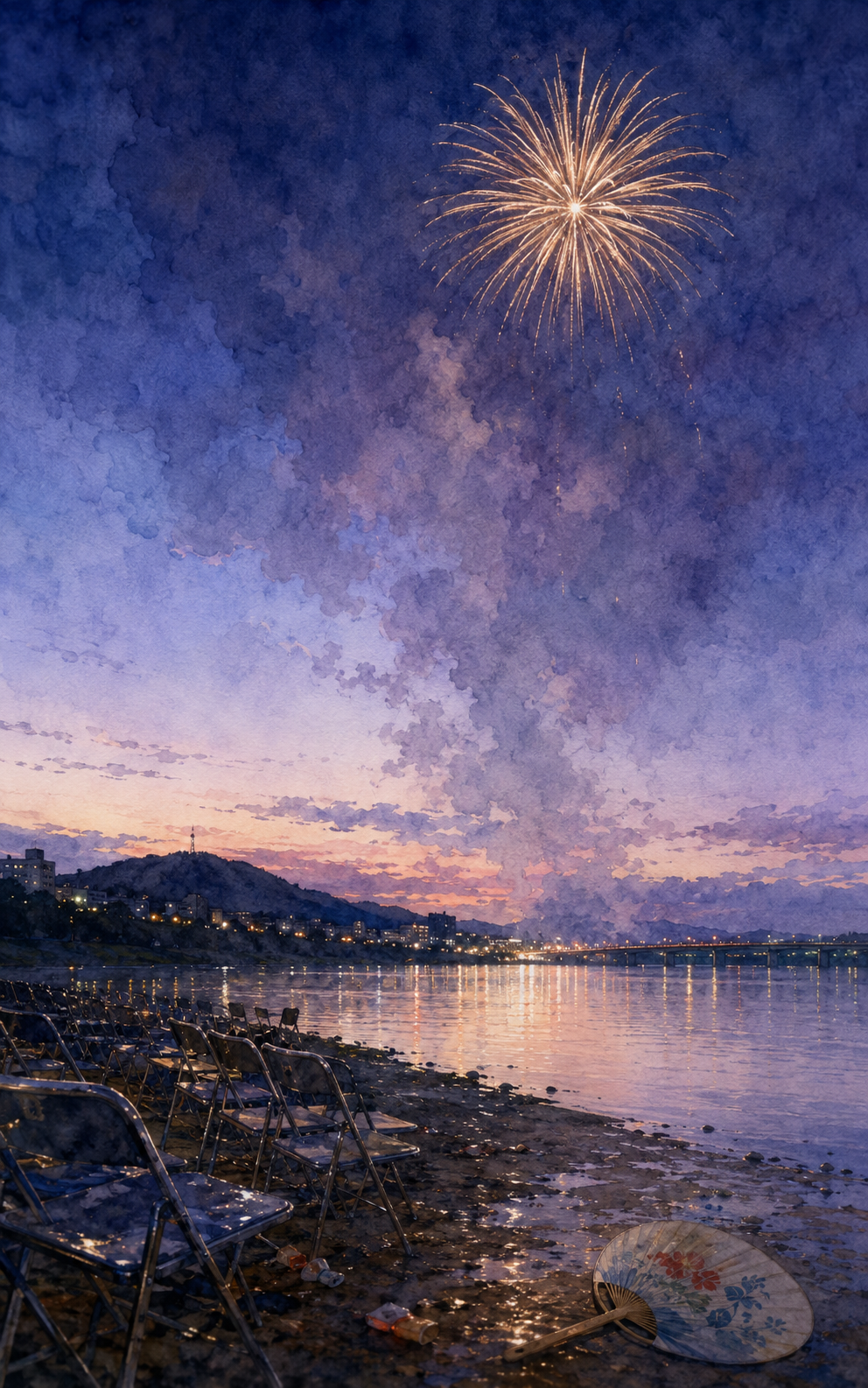
One Last Flower for Summer
Critique
Introduction This painting presents a small firework lingering above a lakeshore at dusk as a carefully staged encounter between spectacle and stillness. Rather than depending on narrative detail, it establishes its subject through a small burst in a broad violet sky above a quiet shore. Description The principal forms are a small burst in a broad violet sky above a quiet shore. Around them, a faint reflection and distant mountains provide a quieter setting and prevent the focal motif from becoming isolated decoration. The palette is built from violet, pale pink, and blue gray. Analysis The composition relies on broad negative space and a low horizon, which guides the eye before it returns to the brightest area. Repeated marks and broken edges create a lively surface, while broader passages of color hold the scene together. Light is treated structurally: highlights define depth, reflections or shadows extend the main forms, and darker zones preserve visual rest. Painterly texture remains visible. Interpretation and Evaluation The work can be read as a study of a brief event made durable through painting. Its strongest achievement lies in the balance between immediate visual pleasure and measured organization. The drawing remains legible, the color relationships are controlled, and the composition gives the subject a distinct rhythm. Although the motif is familiar, the selected viewpoint and atmospheric treatment lend it individuality without forcing a fixed story. Conclusion At first glance, the painting is dominated by its luminous subject, but sustained viewing reveals how carefully the surrounding space regulates that brilliance. Its descriptive skill, color design, and confident technique turn a recognizable scene into a concentrated reflection on light, duration, and perception.
Same Subcategory
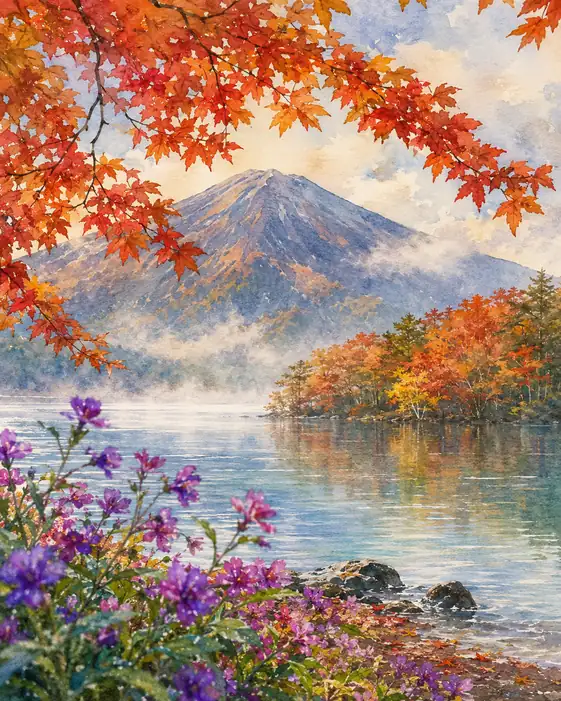 Autumn Beyond the Water Mirror
Similar Artworks
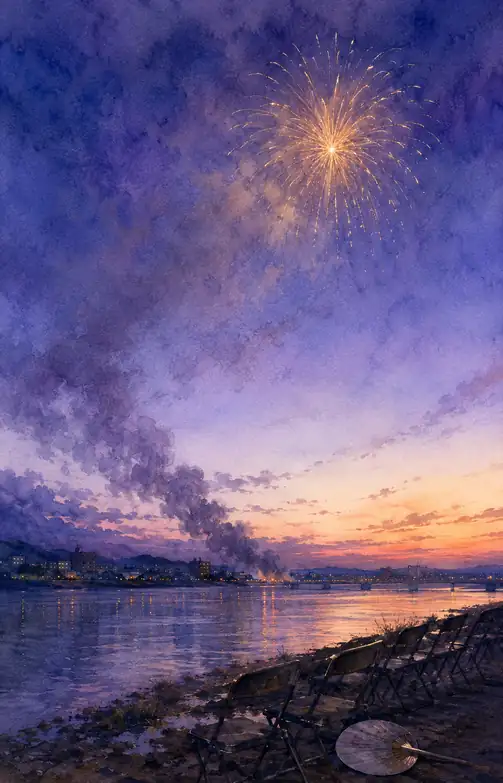 After Everyone Went Home
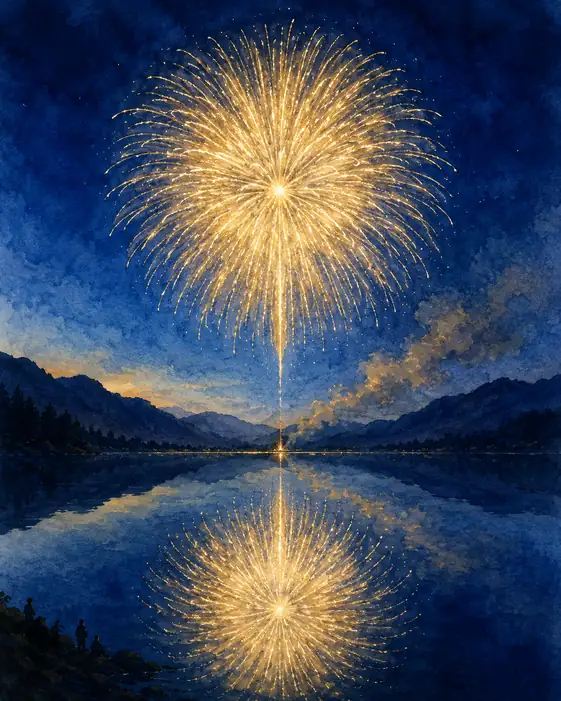 Where the Sky Remembers Its Light
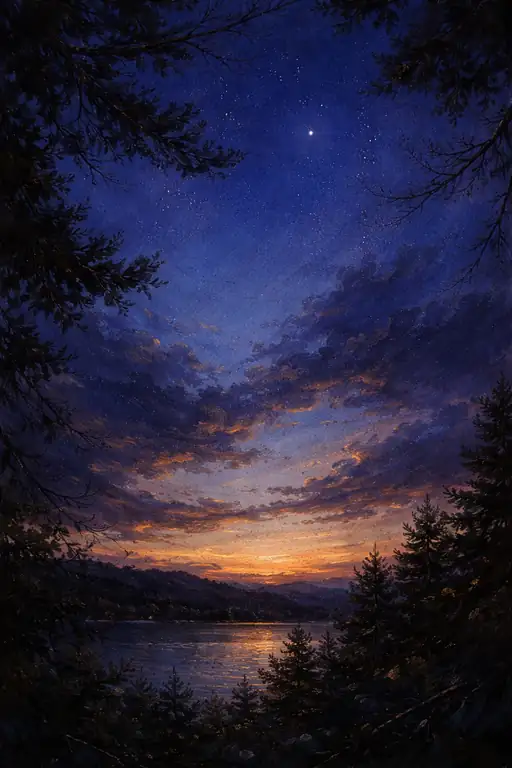 Whispers of the Twilight Lake
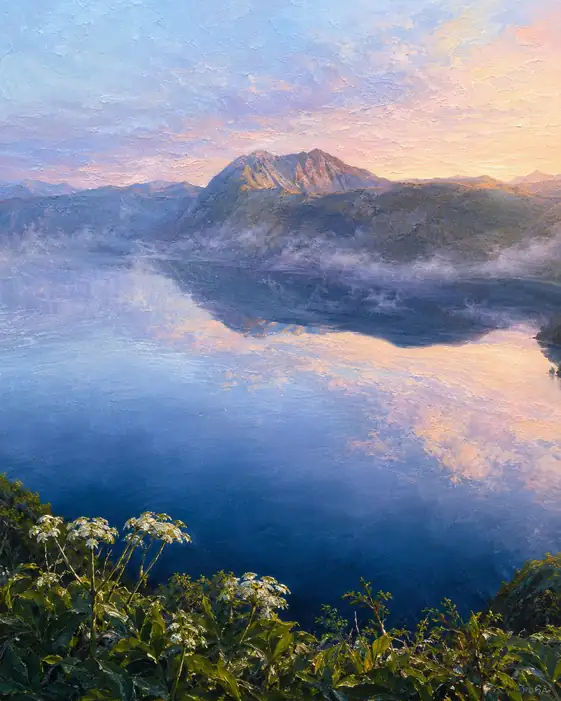 Blue Holds the Mountain's Afterglow
 One Flower Against the End of Day
 Sun Pillar Reaching the Ocean of Stars
 Reserved for the Wind
 The Transparent Audience
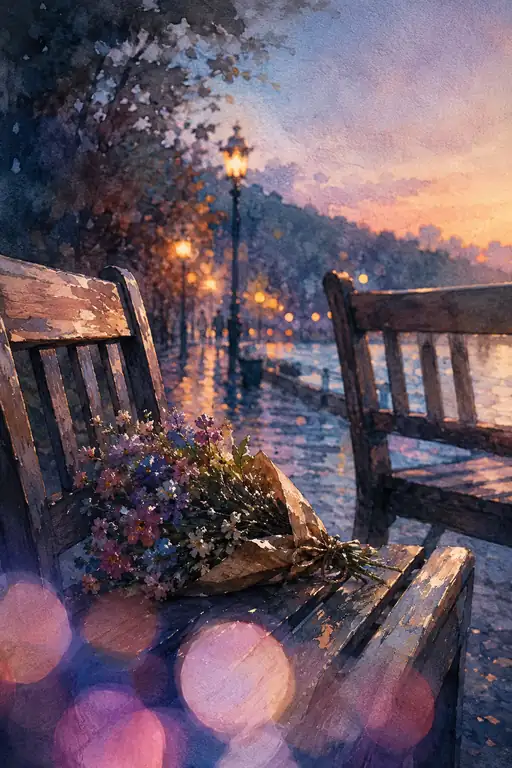 Flowers for Your Empty Bench
 The Heart's Nocturne in Shades of Blue