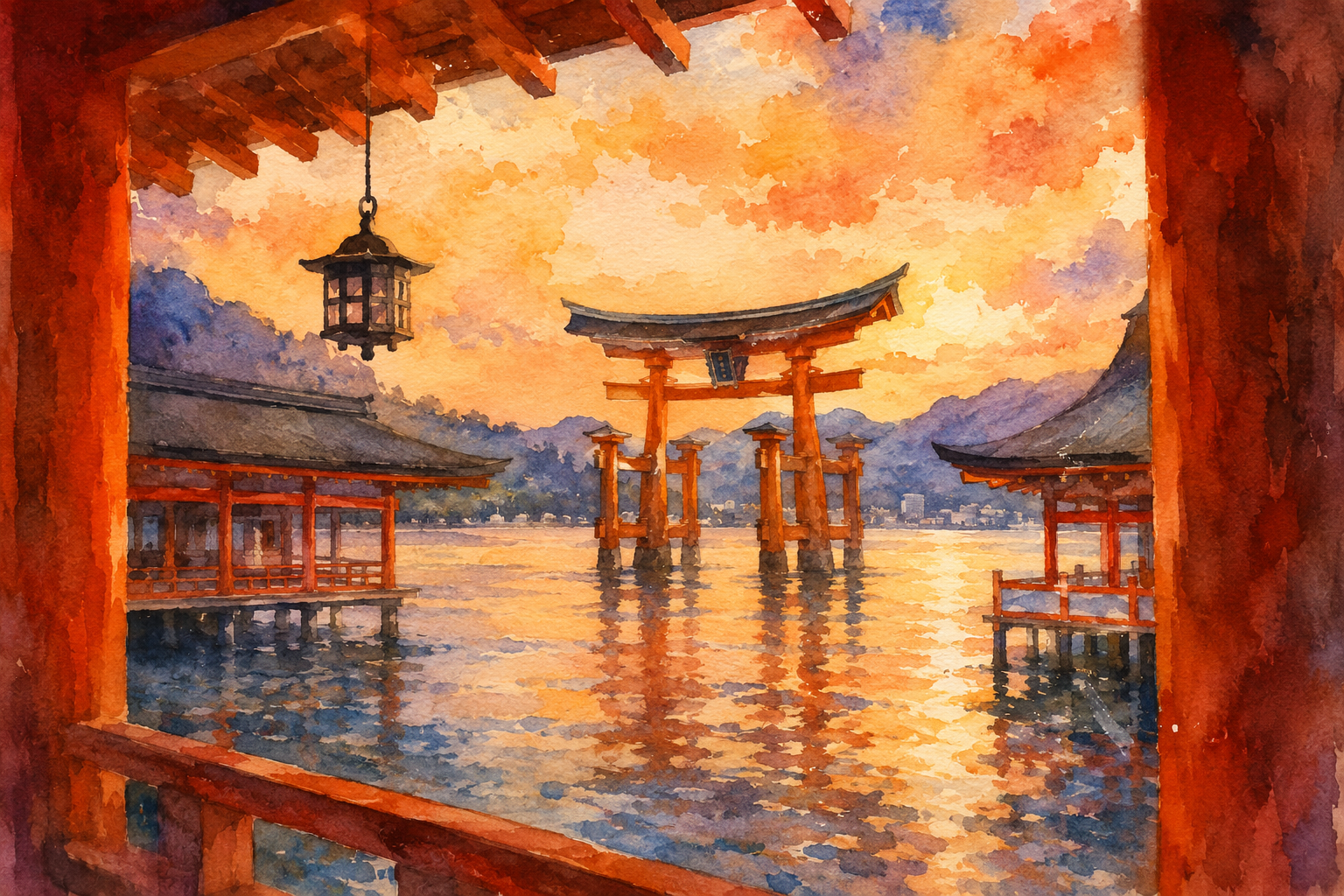
Silent Prayer of the Sea
Critique
1. Introduction This watercolor painting beautifully illustrates a serene coastal scene featuring a magnificent torii gate standing in the water. The artist and execution date are unknown, and there are no records of its provenance. However, the warm light and traditional Japanese atmosphere immediately inspire a sense of wonder. 2. Description In the center, a large vermilion gate stands in the sea, flanked by wooden shrine pavilions. A black iron lantern hangs from the roof beam in the foreground. In the background, soft mountain ridges line the horizon beneath a sky filled with glowing orange clouds of sunset. 3. Analysis The primary characteristic of this work is the frame-within-a-frame composition created by the foreground corridor. This design gives the image powerful depth, guiding the viewer's eye toward the central gate. The color palette harmonizes the vibrant red of the structures with the golden light reflected on the water. 4. Interpretation and Evaluation This painting represents the fusion of sacred architecture and the natural world, expressing a quiet Japanese aesthetic. The solid form of the gate coexists beautifully with the fleeting light of the evening. The setting evokes historical nostalgia and a meditative feeling of peace within the viewer. 5. Conclusion This artwork successfully revitalizes a classic scenic view through a unique presentation of light and space. While it first appears as a familiar shrine depiction, the delicate play of reflections invites deeper contemplation. Ultimately, the painting leaves a lasting impression of tranquil beauty and spiritual grace.
Same Subcategory
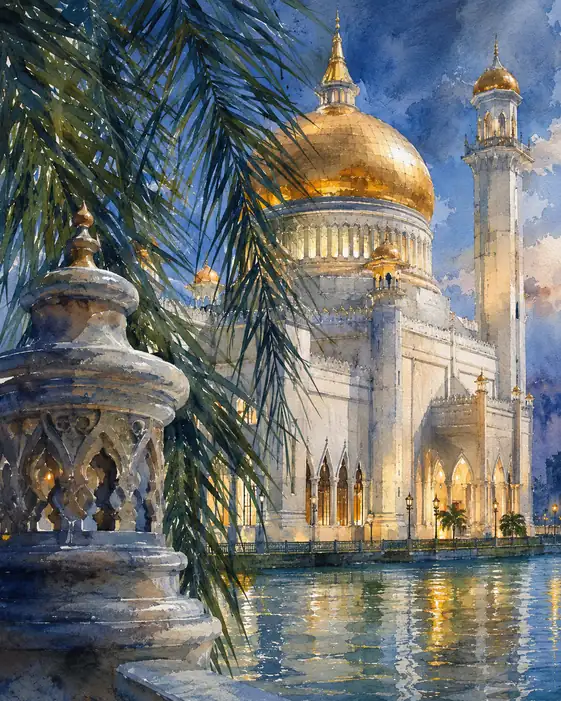 Mirrored Devotion
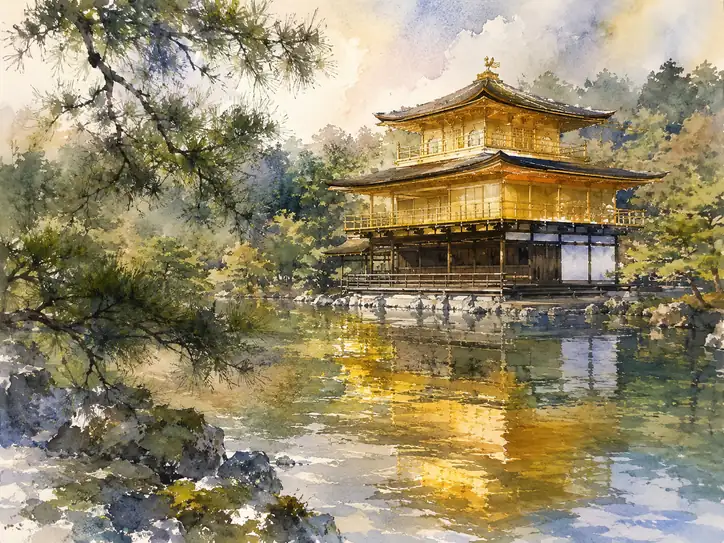 Ripples of Eternal Gold
Similar Artworks
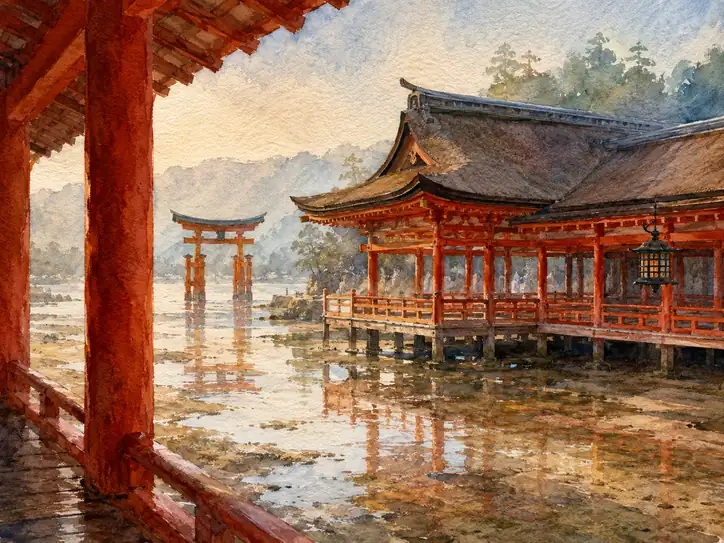 The Sacred Mirror: Eternal Reflection of the Sea Shrine
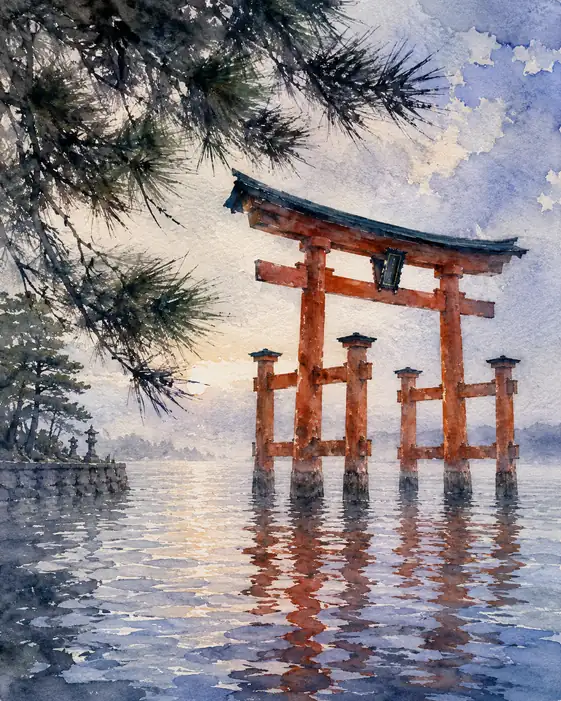 Eternal Reverie: The Sacred Tide
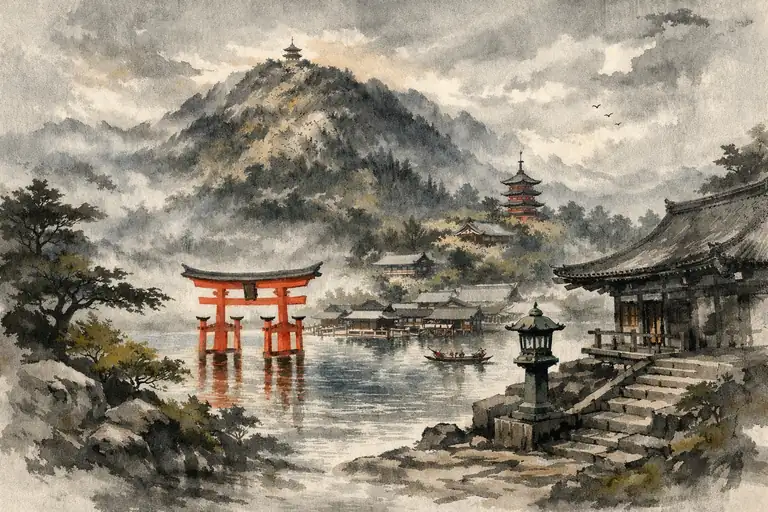 Grand Vermilion over the Shimmering Sea
 Sanctuary of the Crimson Tide
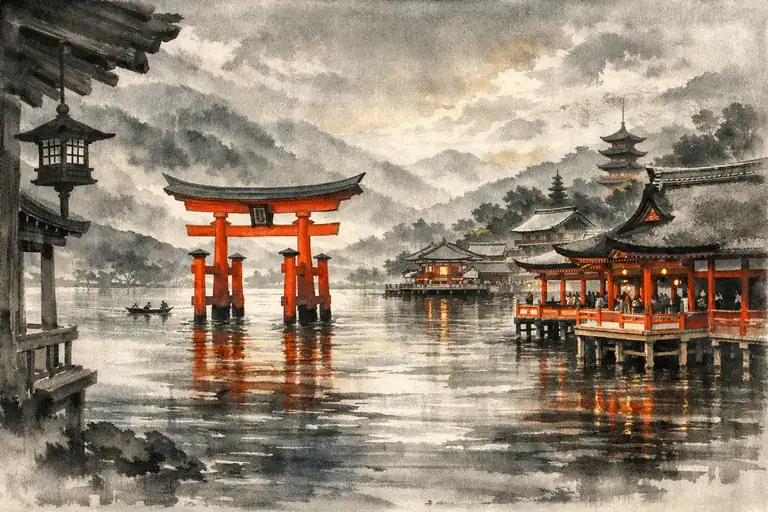 Floating Gateway to the Divine
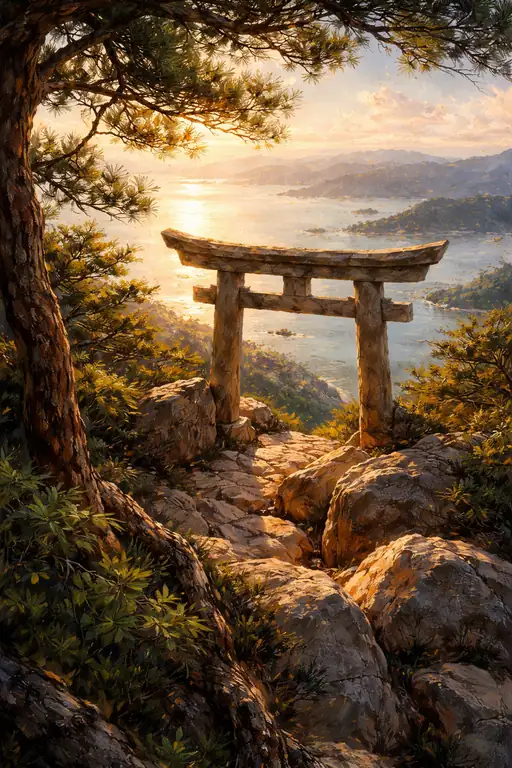 Golden Gateway to the Distant Isles
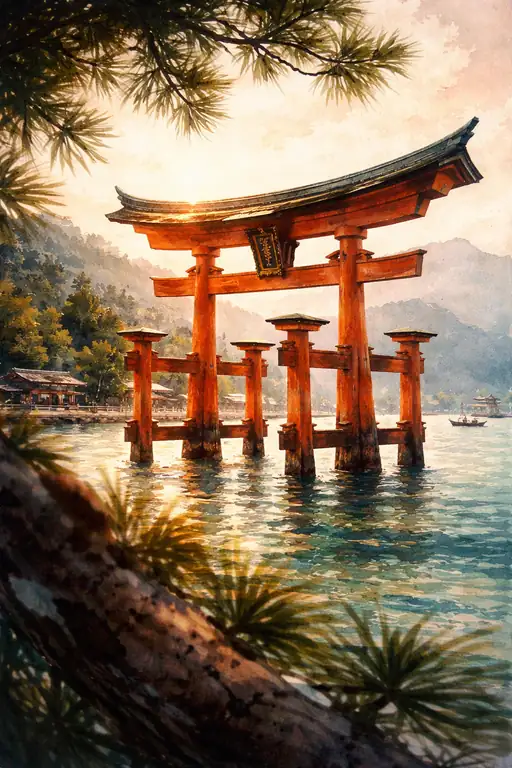 Golden Radiance on the Sacred Tide
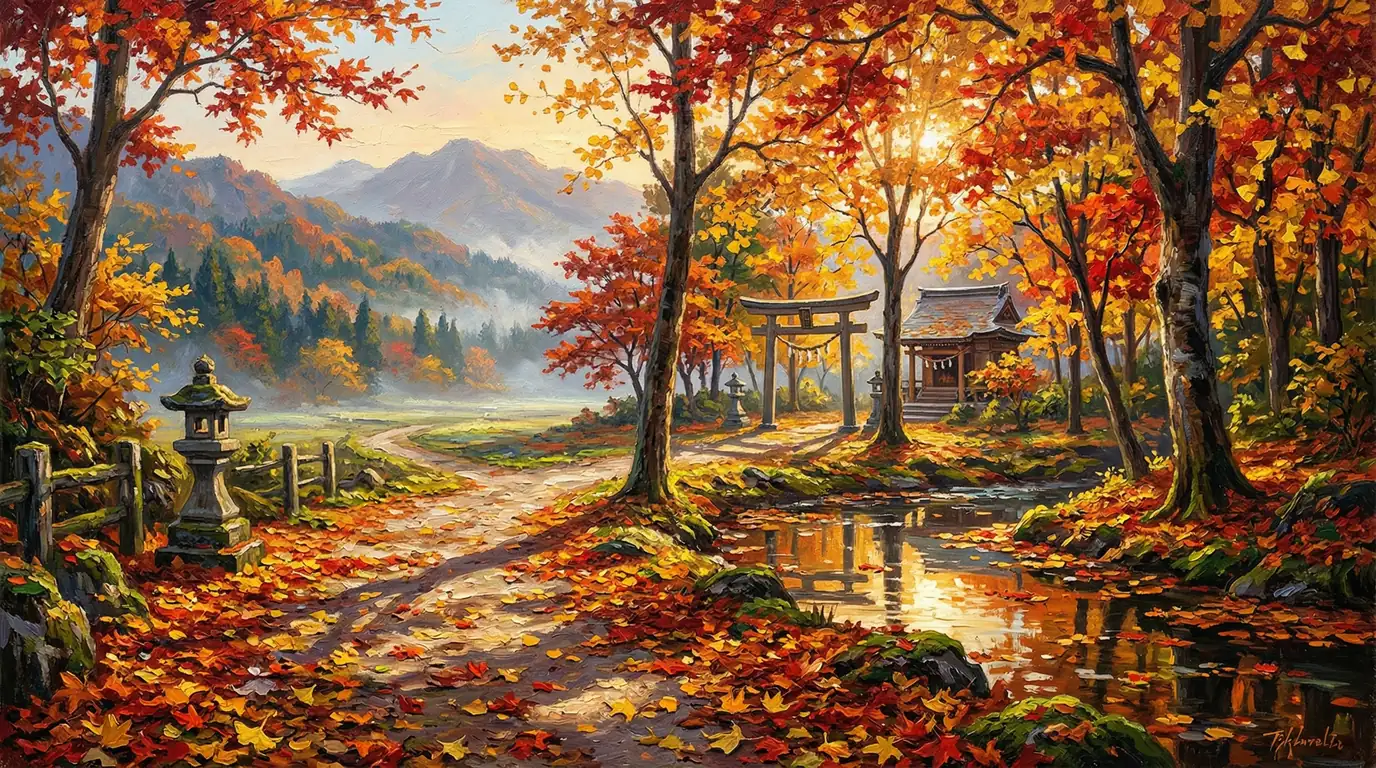 Sanctuary of the Misty Mountains
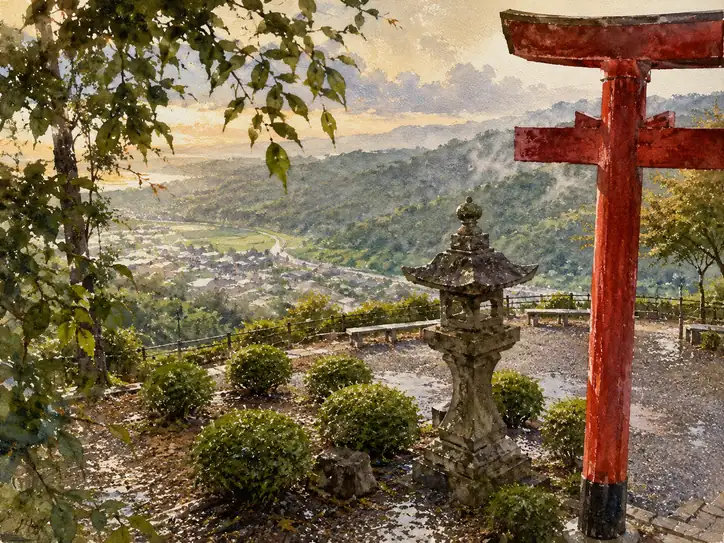 Eternal Peace in the Golden Glow
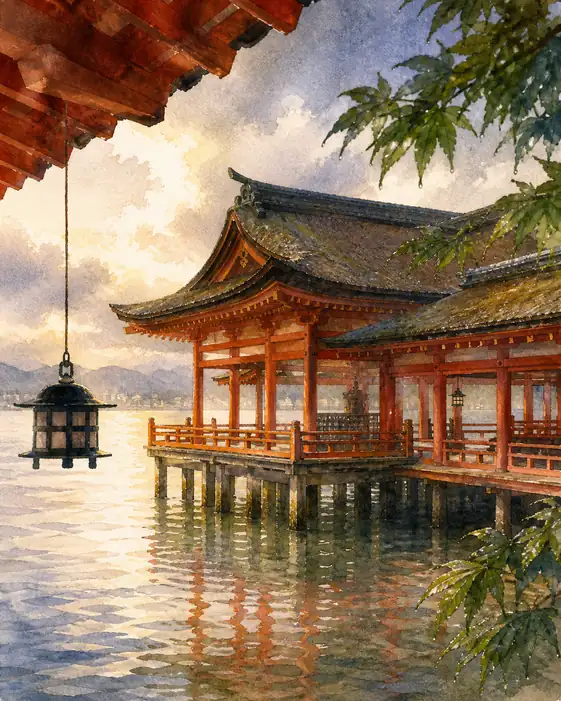 The Vermilion Sanctuary of Twilight Waters