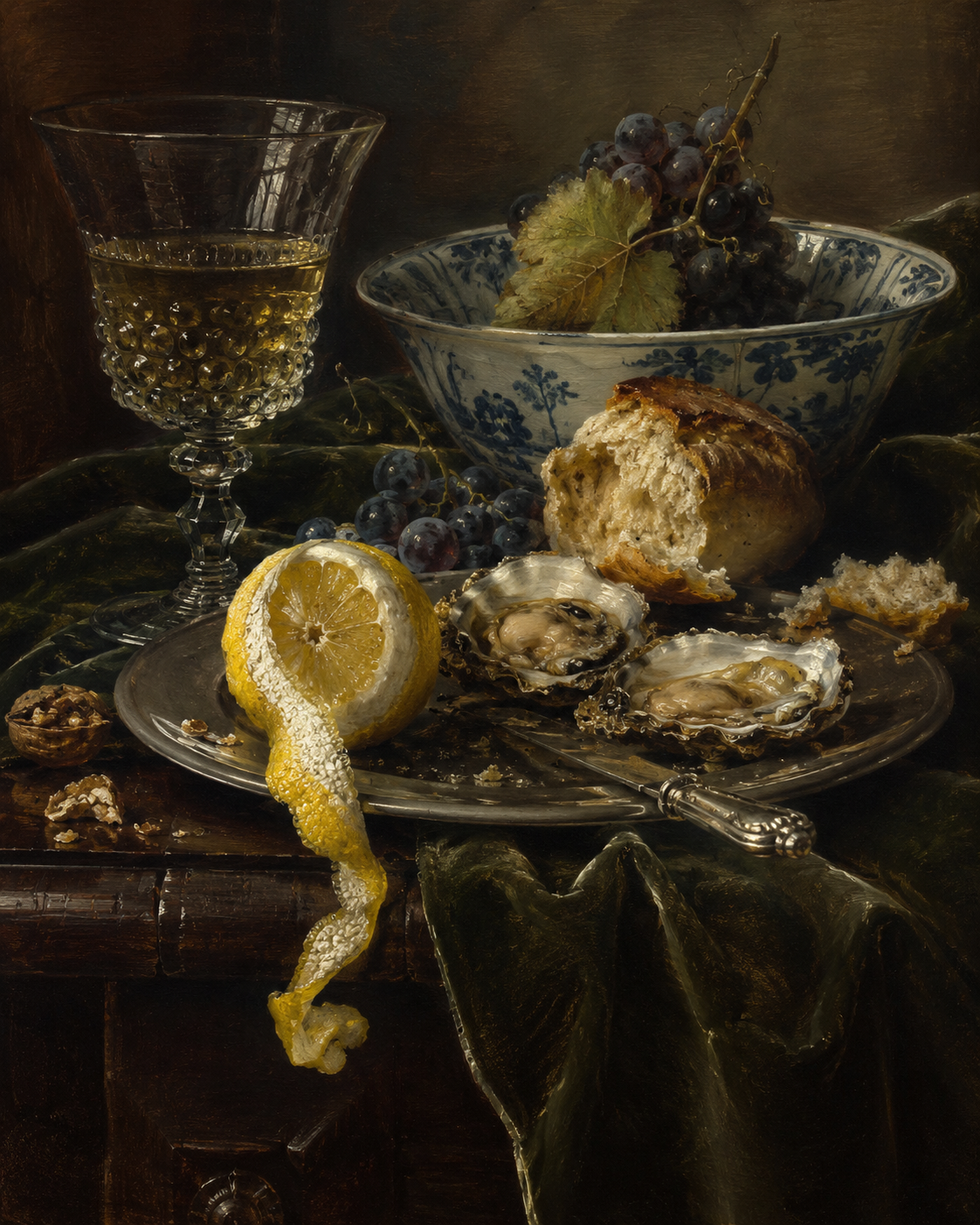
Fragile Pleasures on Pewter
Critique
1. Introduction This oil painting evokes the seventeenth-century Dutch still life tradition of pronkstilleven. The composition presents a meticulously arranged group of items against a dark background. The artist focuses on capturing the textures of diverse materials with high precision. This work serves as a silent reflection on the beauty and transience of worldly pleasures. 2. Description In the center, a pewter plate holds two opened oysters and a peeled lemon with its rind hanging down. To the left, cracked walnuts are scattered on a green velvet cloth, while an ornate knife rests on the right. In the background, a decorated glass of white wine stands beside a porcelain bowl filled with dark grapes. 3. Analysis The composition relies on a diagonal arrangement from the tall glass to the metallic plate. A strong color contrast is created between the dark green cloth and the bright yellow lemon. Focused light from the upper left creates sharp highlights on the glass, metal, and oysters. Subtle tonal gradations define each object. 4. Interpretation and Evaluation The artwork carries clear vanitas undertones, representing the transience of life. The peeled lemon and open oysters symbolize temporary pleasure followed by decay. Technically, the artist displays exceptional skill in rendering the transparency of glass. The piece successfully balances visual realism with a deeper, moral message. 5. Conclusion A deeper inspection of these rich foods and tableware reveals a moral warning behind the luxury. The precise handling of light elevates these objects into symbols of contemplation. Ultimately, the painting remains a masterful fusion of sensory realism and philosophical depth. It is a compelling reminder of the fragility of existence.
Same Subcategory
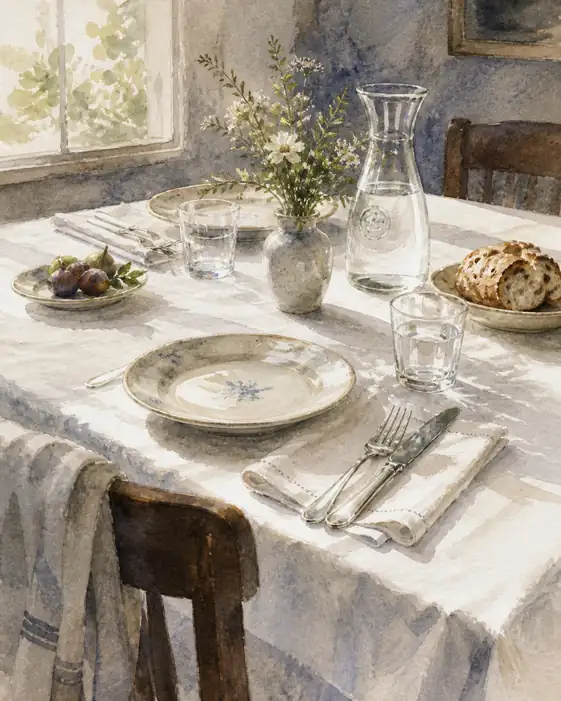 The Table of Morning Stillness and Bloom
 Glistening Drops of a Summer Noon
Similar Artworks
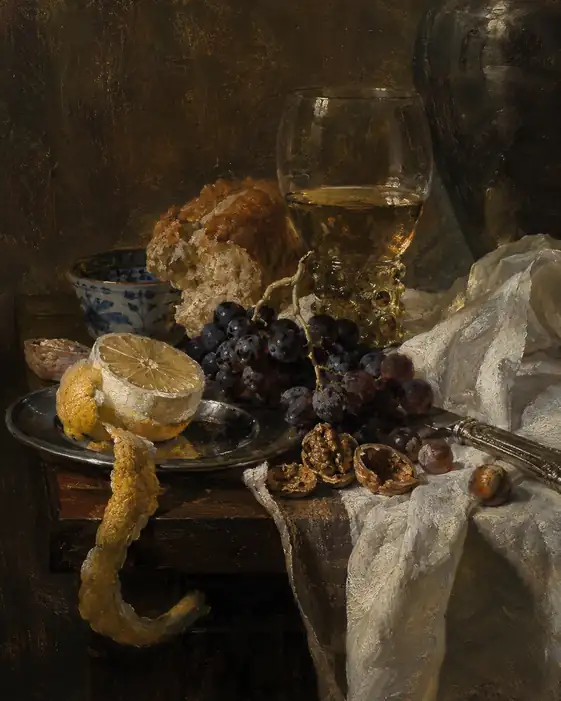 Shadows of a Fleeting Feast
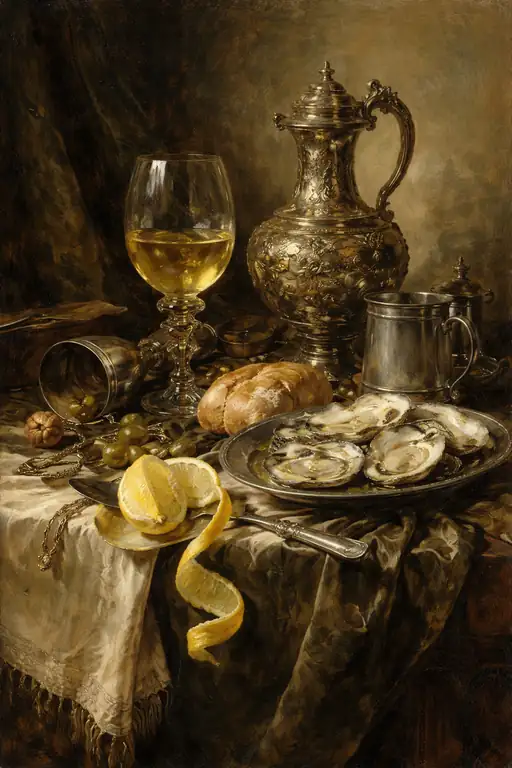 The Fleeting Feast
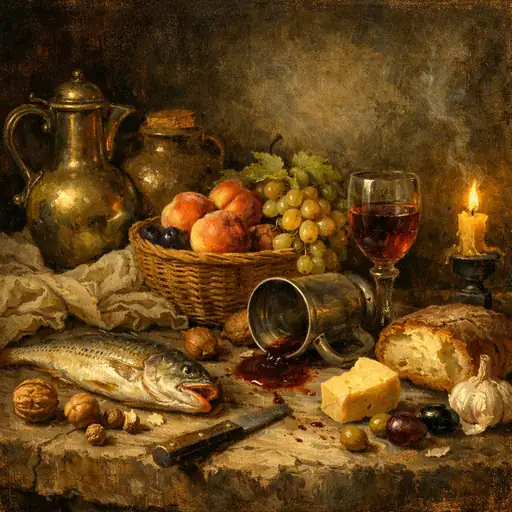 Fish, Fruit, and Spilled Wine
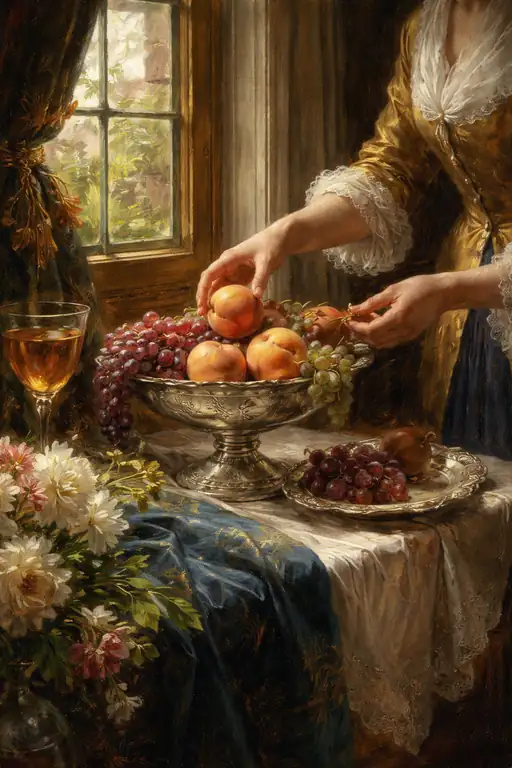 Golden Afternoon Preparations
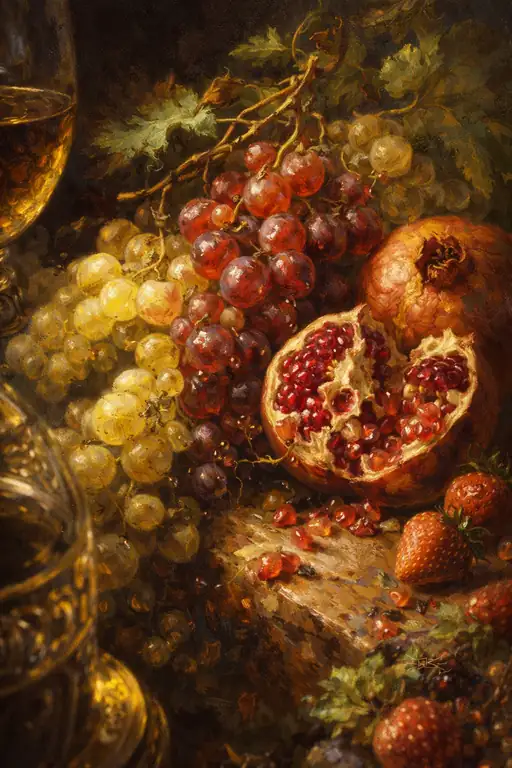 Sunlight Spilled in Crimson Seeds
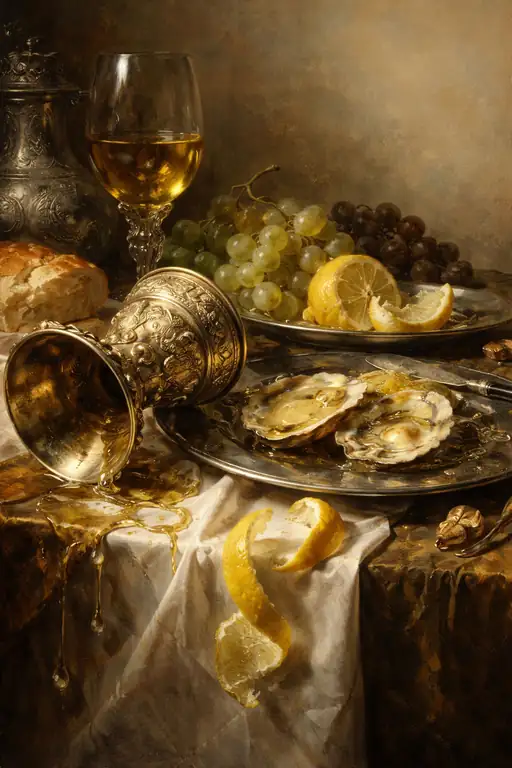 The Fallen Goblet of Vanity
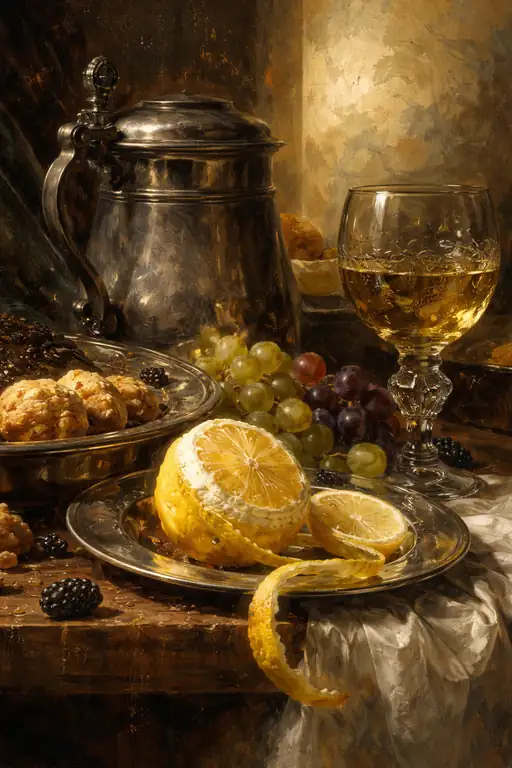 Echoes of a Lavish Banquet
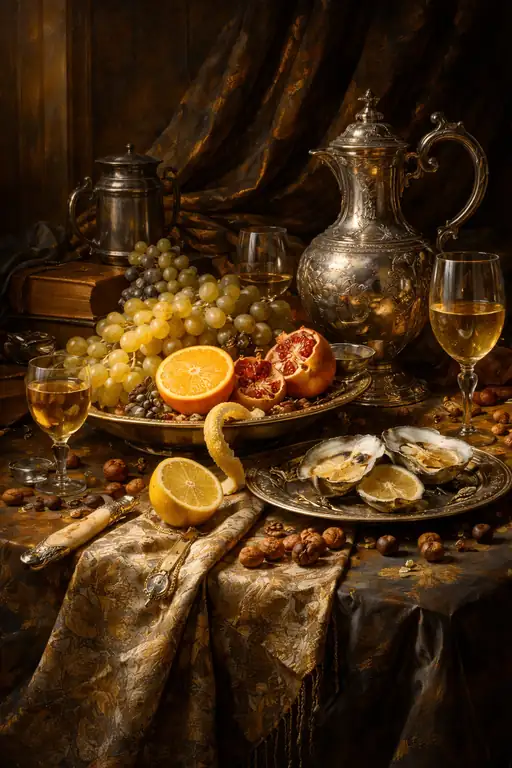 Vanitas in Silver and Crimson
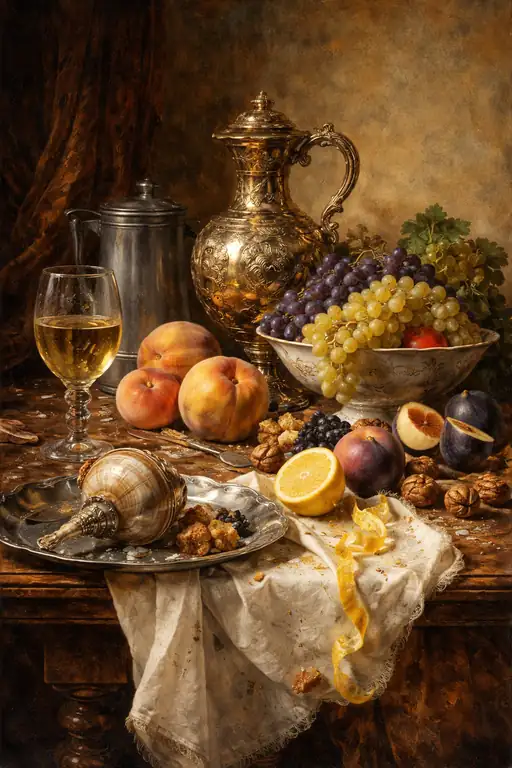 Classical Still Life with a Golden Ewer, Fruit, and Wine
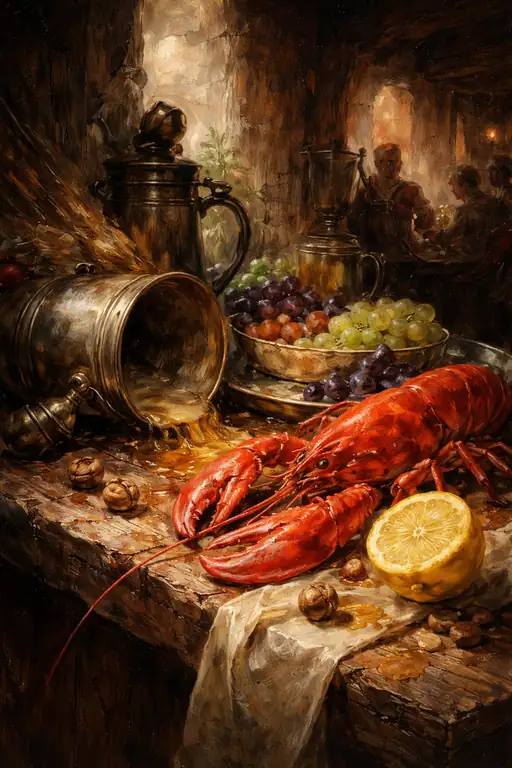 Feast of the Golden Nectar