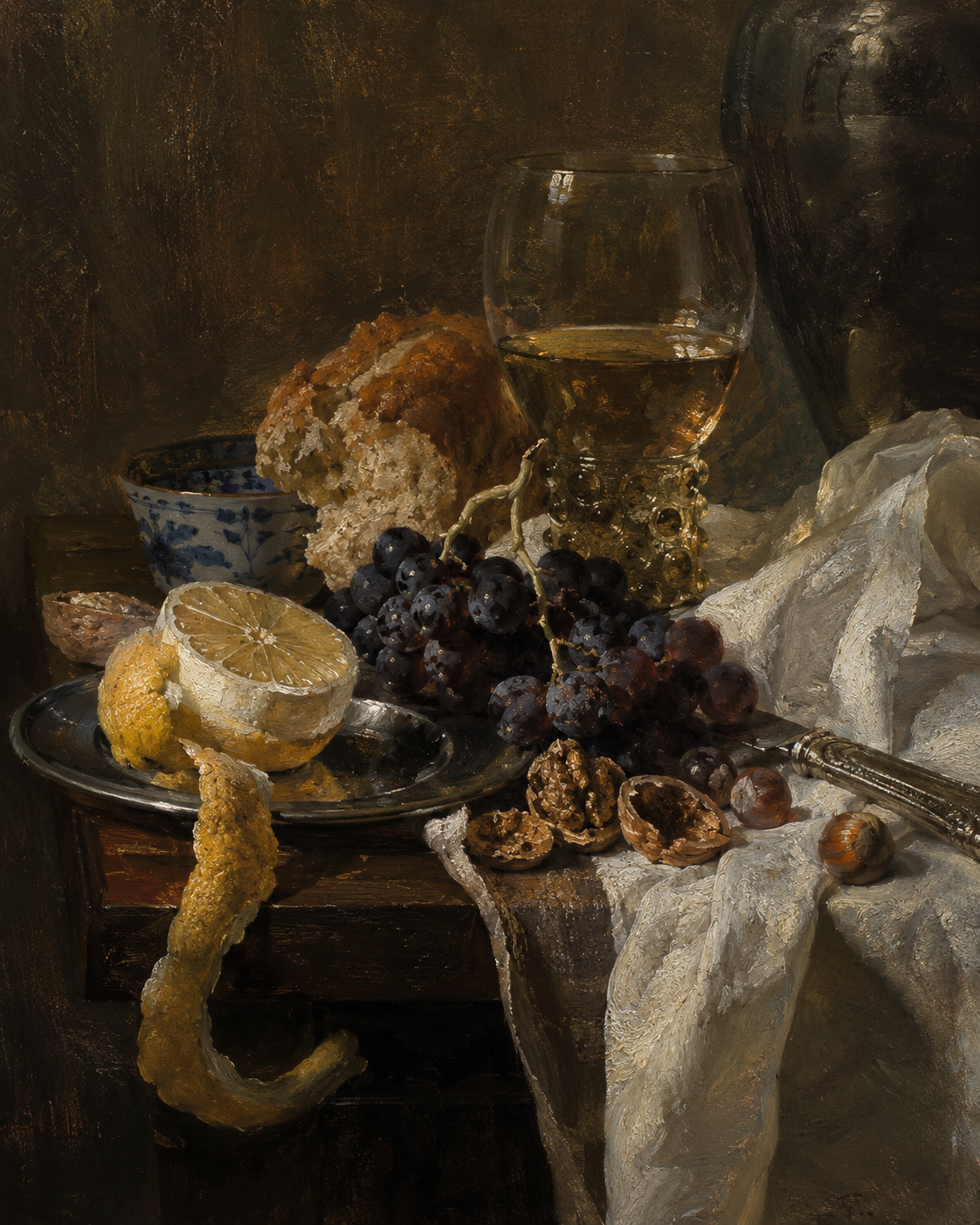
Shadows of a Fleeting Feast
Critique
1. Introduction This oil painting presents a meticulously detailed still life, reminiscent of the seventeenth-century Dutch golden age tradition. The composition displays various food items and vessels arranged on a table, emerging from a dark, atmospheric background. This work invites viewers to contemplate the quiet beauty and transience found within ordinary, earthly objects. 2. Description At the center, a large glass goblet filled with white wine stands beside a fresh cluster of dark grapes. In the left foreground, a partially peeled lemon rests on a metal plate, its spiral peel dangling over the table's edge. To the right, cracked walnuts, hazelnuts, and a silver knife lie upon a crumpled white cloth. 3. Analysis The painting is structured around a strong light source from the upper left, which creates dramatic shadows and realistic highlights. The color palette features a contrast between the bright yellow lemon, deep purple grapes, and warm brown background. Meticulous brushwork accurately captures the differing textures of smooth glass, cold metal, and rough bread. 4. Interpretation and Evaluation This artwork carries a vanitas theme, reflecting on the fleeting nature of worldly pleasures and time's relentless passage. Technically, the artist demonstrates exceptional skill in depicting reflections on the glass and the moist texture of the lemon. The balanced organization of diverse objects showcases a sophisticated understanding of visual harmony. 5. Conclusion While the viewer is initially drawn to the realistic depiction of objects, deeper observation reveals a masterful control of light. The artist successfully captures a single, quiet moment, preserving it in an atmosphere of timeless stillness. Ultimately, the painting stands as a profound testament to the enduring power of classic still life art.
Same Subcategory
 The Silent Wanderer's Song
Similar Artworks
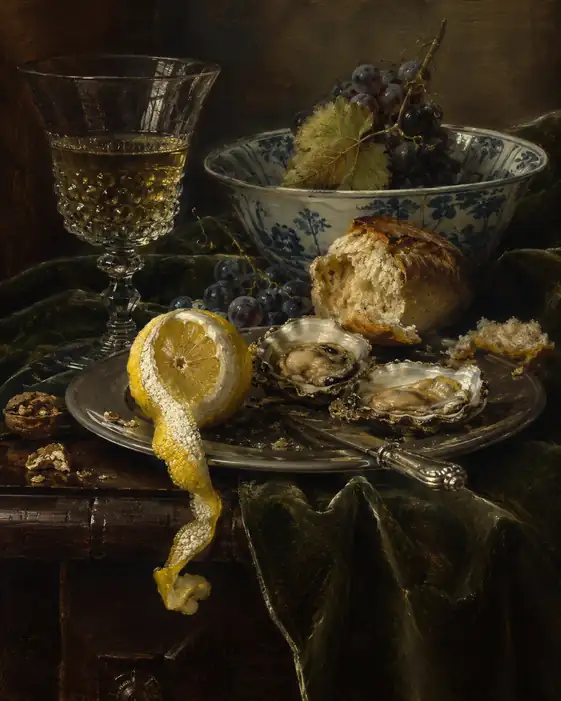 Fragile Pleasures on Pewter
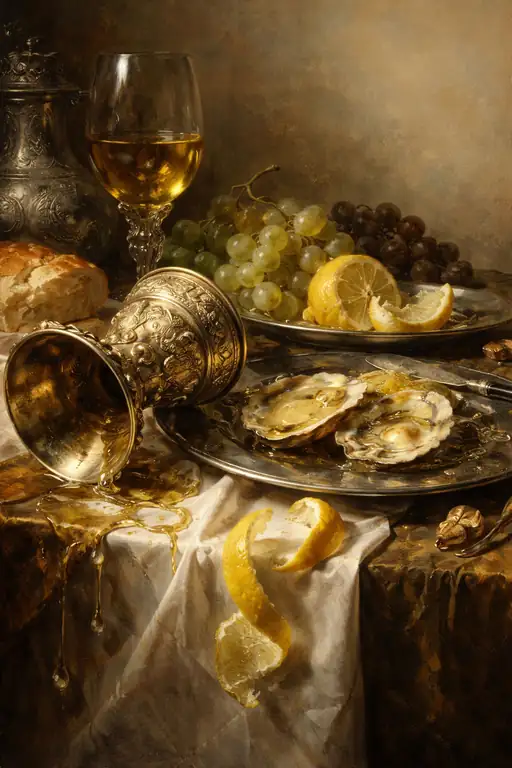 The Fallen Goblet of Vanity
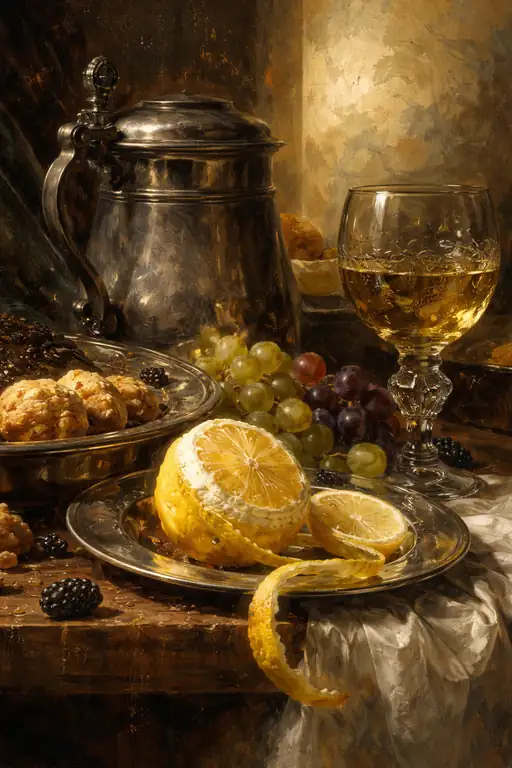 Echoes of a Lavish Banquet
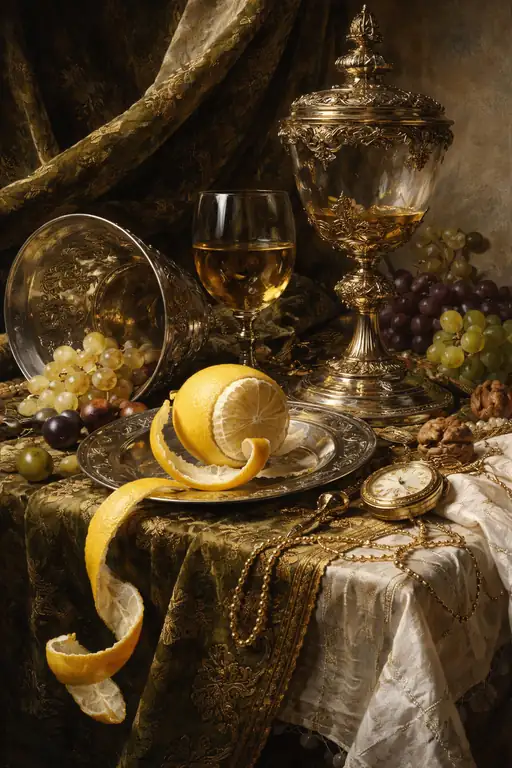 Echoes of the Golden Age: The Fleeting Citrus
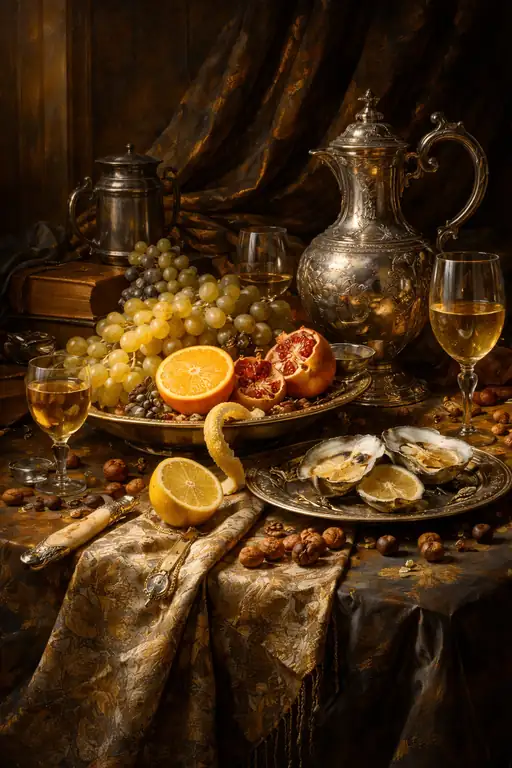 Vanitas in Silver and Crimson
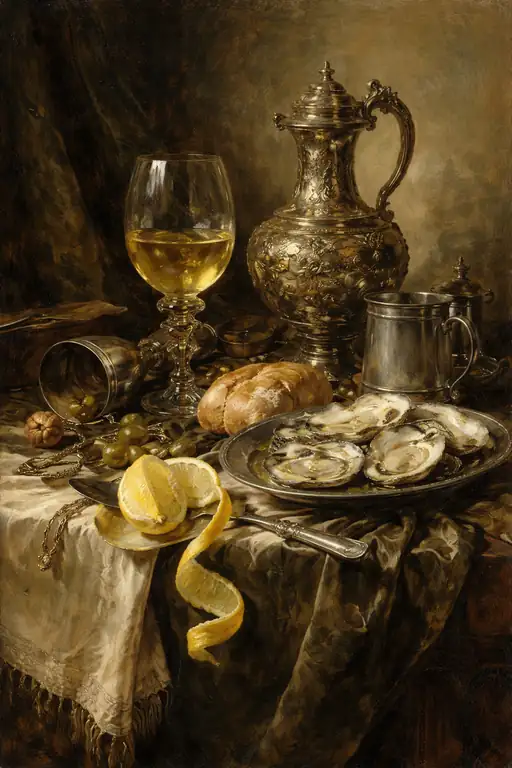 The Fleeting Feast
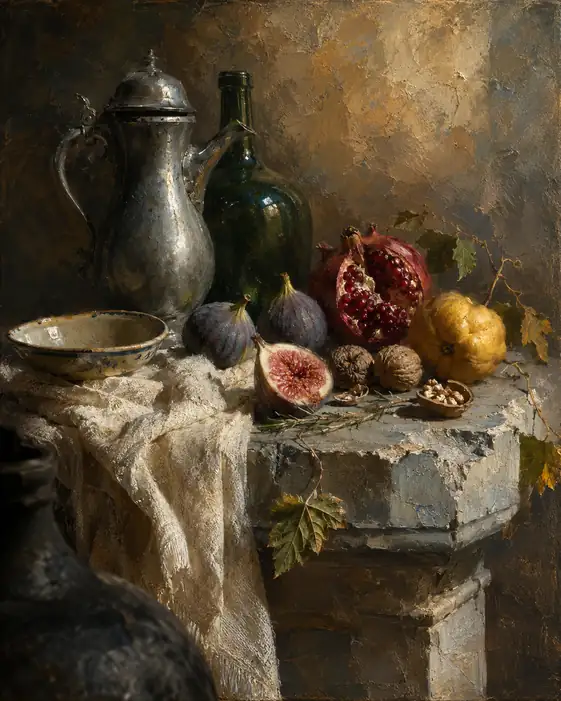 Abundance on the Stone
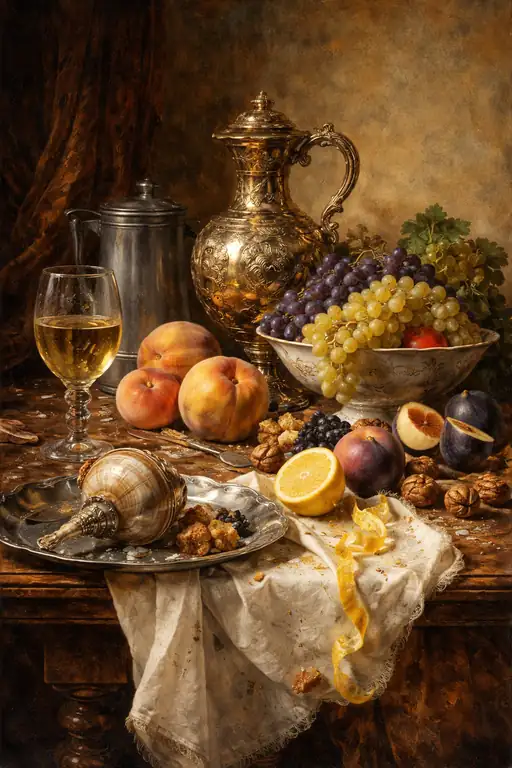 Classical Still Life with a Golden Ewer, Fruit, and Wine
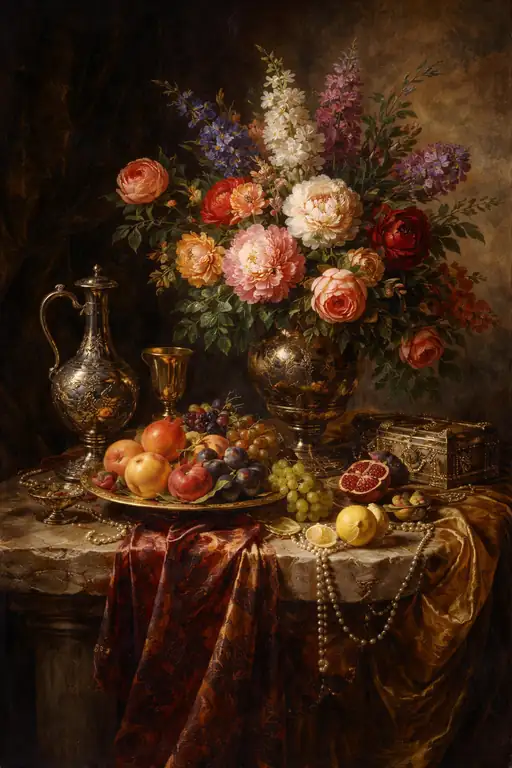 Flowers, Fruits, and Precious Objects
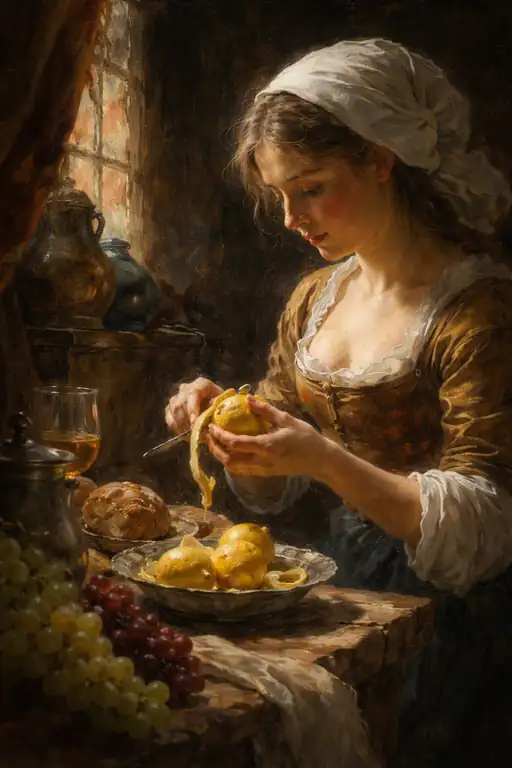 The Gold of the Quiet Hour