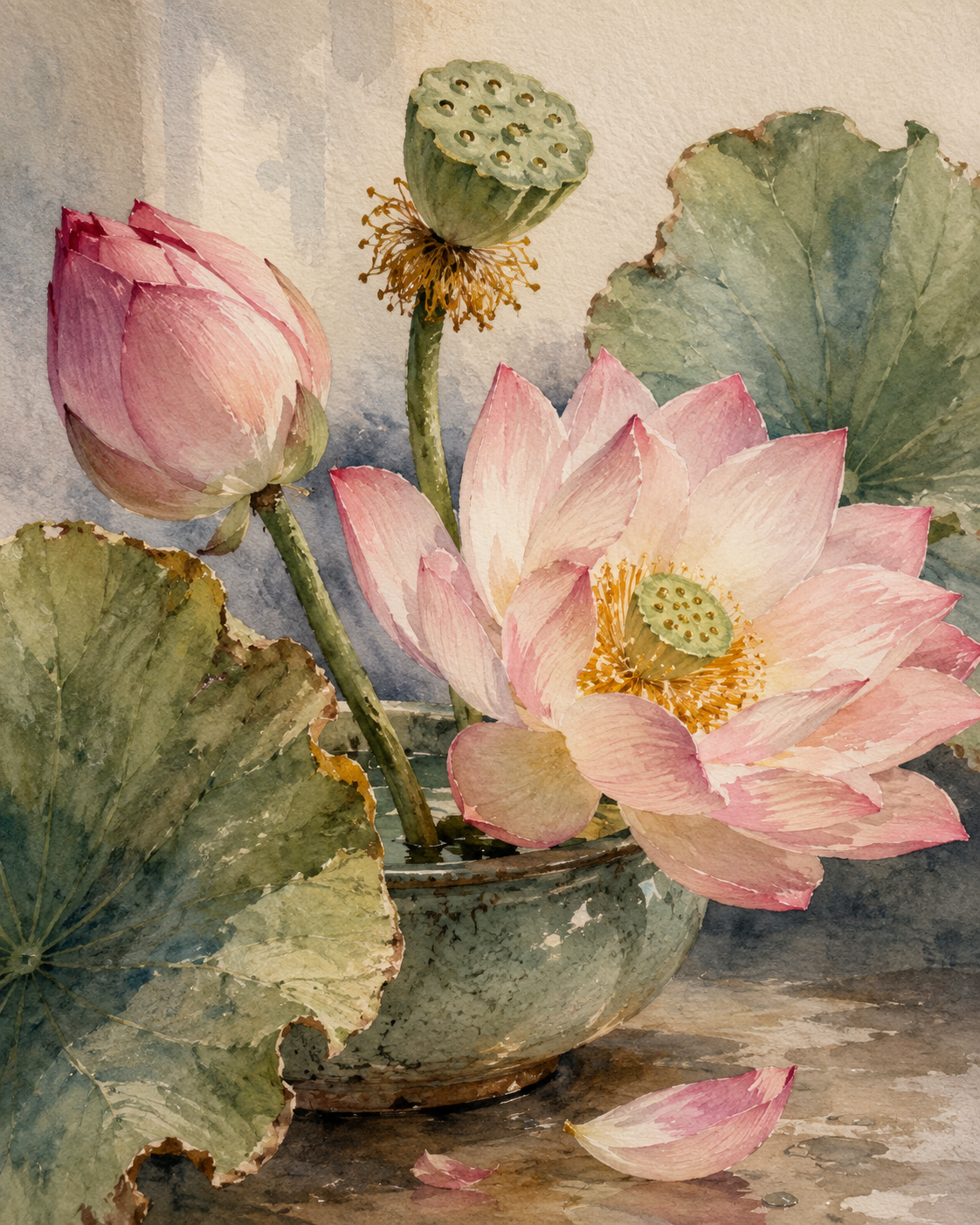
Impermanence in Bloom
Critique
1. Introduction This transparent watercolor painting depicts a beautiful lotus flower and leaves arranged in a ceramic vessel. The serene atmosphere radiating from the composition evokes traditional Eastern tranquility. The delicate contrast between the soft background washes and detailed elements invites quiet contemplation. The work captures a moment of spiritual stillness and harmony. 2. Description In the center, a blue-green pot holds several stems rising from the water. On the right, a pink lotus is in full bloom, with a green seedpod above. A large pink bud stands upright on the left, flanked by lush and slightly decaying leaves. On the floor, two fallen pink petals suggest the passage of time. 3. Analysis The circular arrangement of the flower, bud, seedpod, and leaves around the central vessel provides visual stability. The pink lotus contrasts with the green leaves and the ceramic pot. The soft blue-gray background wash makes the sharp outlines of the lotus stand out. Delicate shadow details on the petals and leaf veins enhance the light source. 4. Interpretation and Evaluation The painting is highly valued for depicting different life stages of the lotus in a single vessel. This transition from bud to flower and seedpod recalls the philosophy of impermanence in Zen. The balance between soft watercolor washes and precise brushstrokes creates tension. The piece transcends a simple still life, poetically expressing cosmic harmony. 5. Conclusion While appearing to be a traditional botanical study at first, closer observation reveals a deep philosophical undertone. Alternating attention between the washes and fine details highlights the dynamics of life within silence. The fallen petals leave a quiet resonance that brings peace. The work is a masterpiece conveying Eastern aesthetics and spiritual comfort.
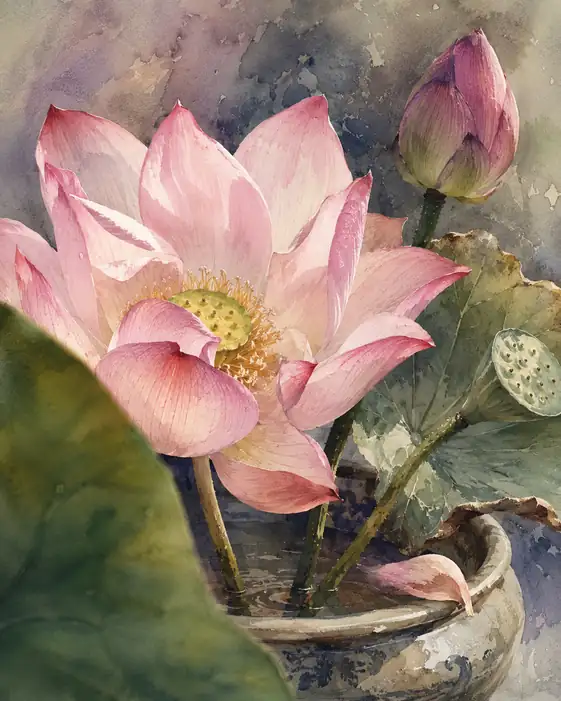 The Ripple of Impermanence
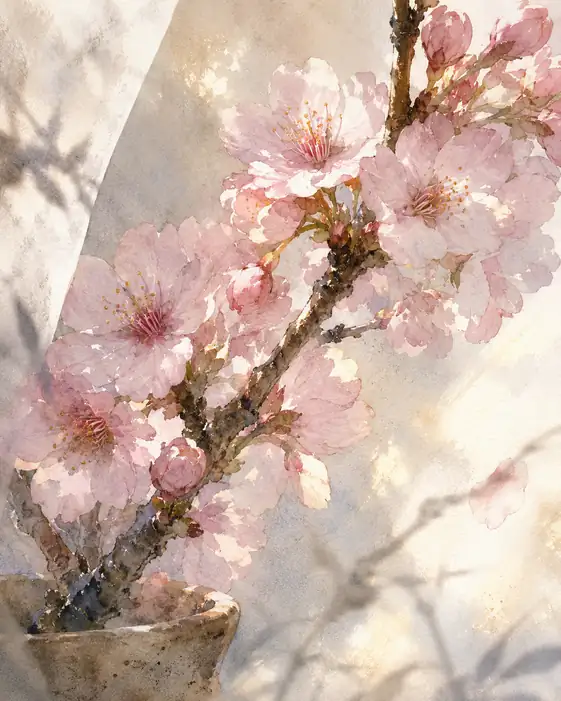 Spring's Transient Sigh
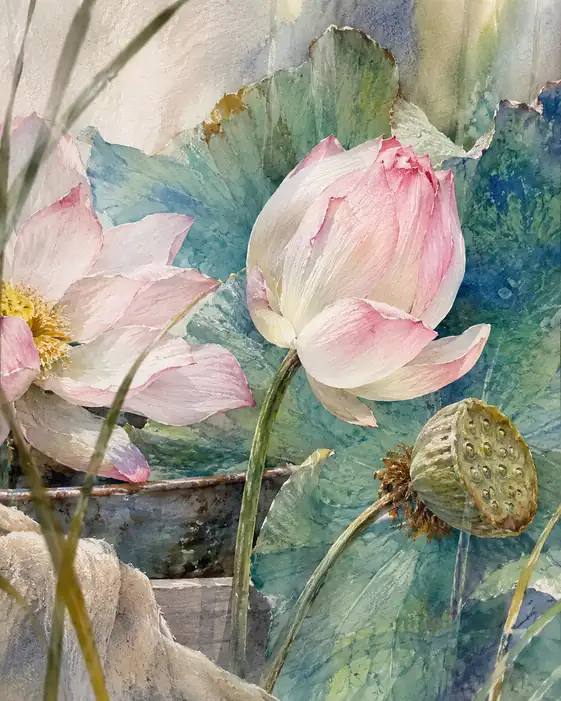 Purity Awakens in Silence
 Pond of Ethereal Blooms
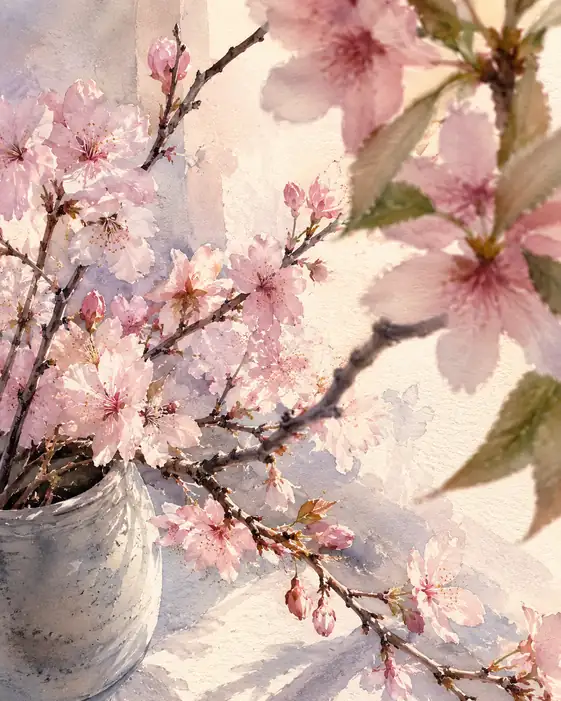 Bleeding Pink, Soft Light
 The Luminous Floral Symphony
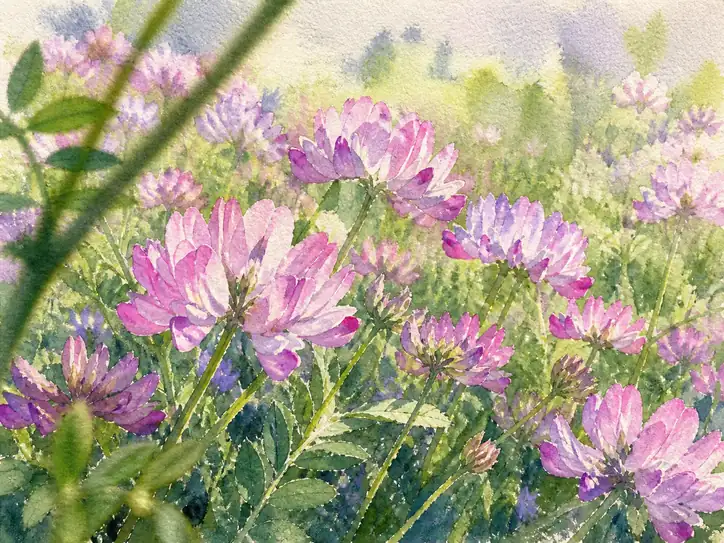 Springtime Hymn in the Grass
 Celebratory Blossoms
 Pastel Ring of Grace
 Whispers of a Gentle Letter