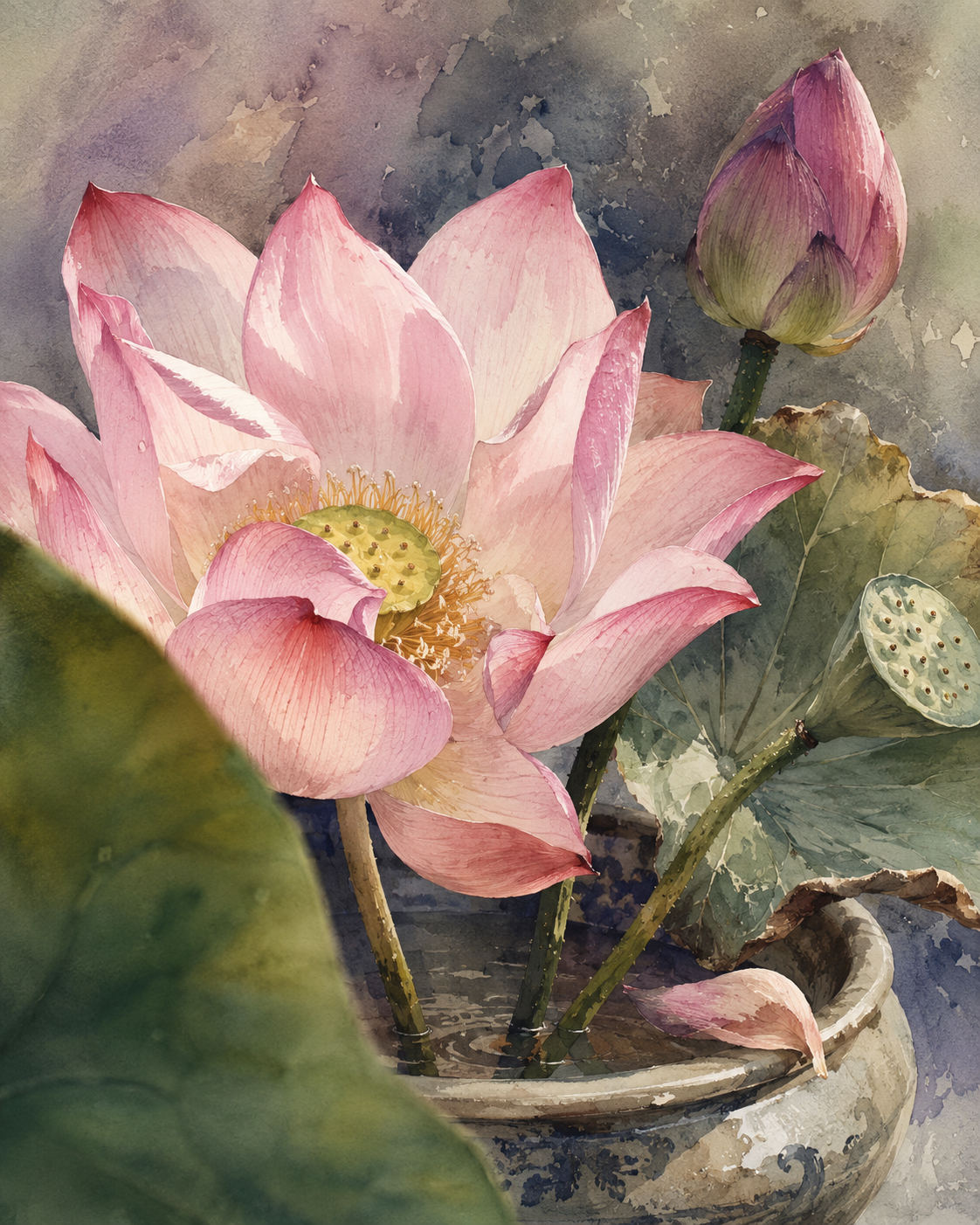
The Ripple of Impermanence
Critique
1. Introduction This watercolor painting captures the elegant beauty of a lotus flower in full bloom with remarkable clarity and sensitivity. Set within a shallow ceramic basin, the composition evokes a peaceful and meditative atmosphere of East Asian aesthetics. The work seamlessly combines a traditional floral subject with modern optical techniques. 2. Description At the center of the canvas, a large, delicate pink lotus flower spreads its petals, revealing its yellow central receptacle. To the upper right, a large bud reaches upward, while a mature seed pod and a weathered leaf sit nearby. A massive, blurred green leaf dominates the left foreground. A single fallen petal floats quietly on the water's surface. 3. Analysis The artwork contrasts soft watercolor washes with highly detailed organic textures. By placing a heavily blurred leaf in the immediate foreground, the artist creates a powerful sense of depth and focus on the main flower. The color scheme contrasts the soft pinks of the petals against the dark, muted greens and purples. 4. Interpretation and Evaluation This piece reflects the symbolic nature of the lotus, representing purity and life's cycle. Technically, the artist demonstrates exceptional control over the medium, successfully rendering the transparency of the petals and the stillness of the water. The choice to include both fresh blooms and decaying leaves adds a poignant layer of depth to the piece. 5. Conclusion At first glance, the painting impresses with its precise execution, but deeper reflection reveals a profound exploration of impermanence. The serene light and shadow create a space for quiet contemplation. Ultimately, the work stands as a beautiful testament to the enduring power of nature to inspire spiritual peace.
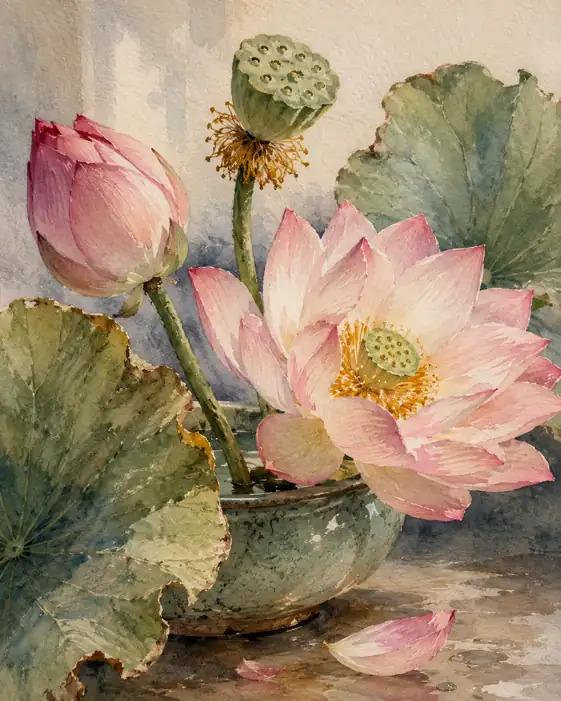 Impermanence in Bloom
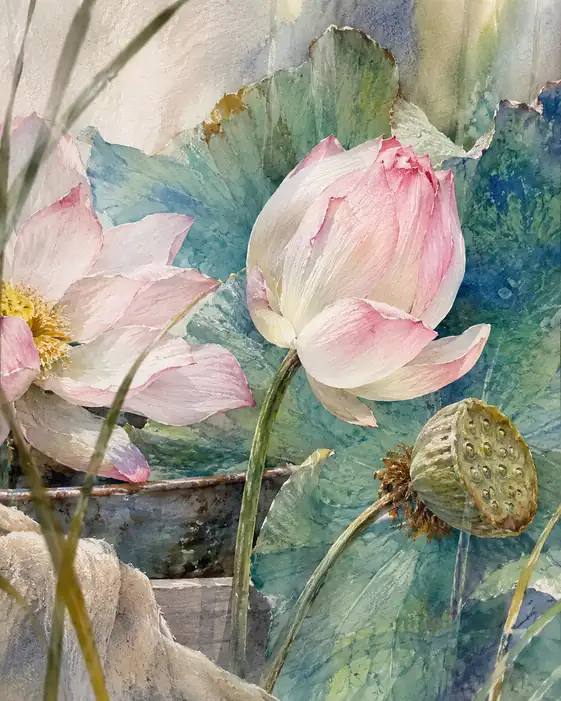 Purity Awakens in Silence
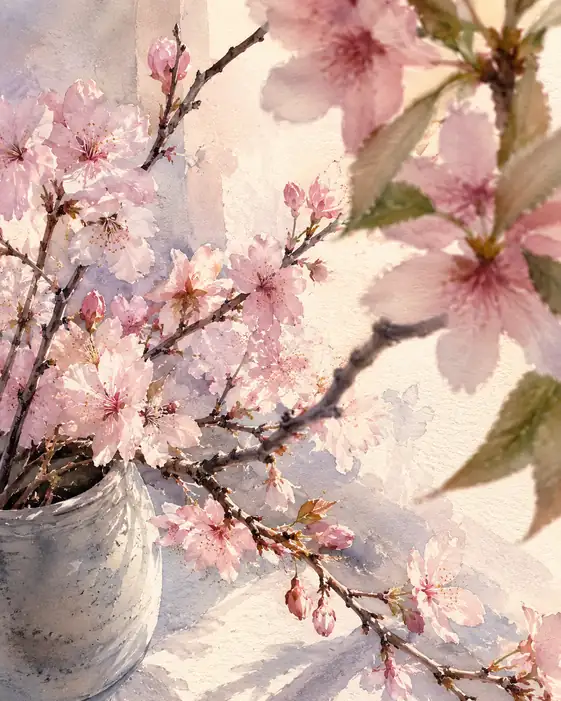 Bleeding Pink, Soft Light
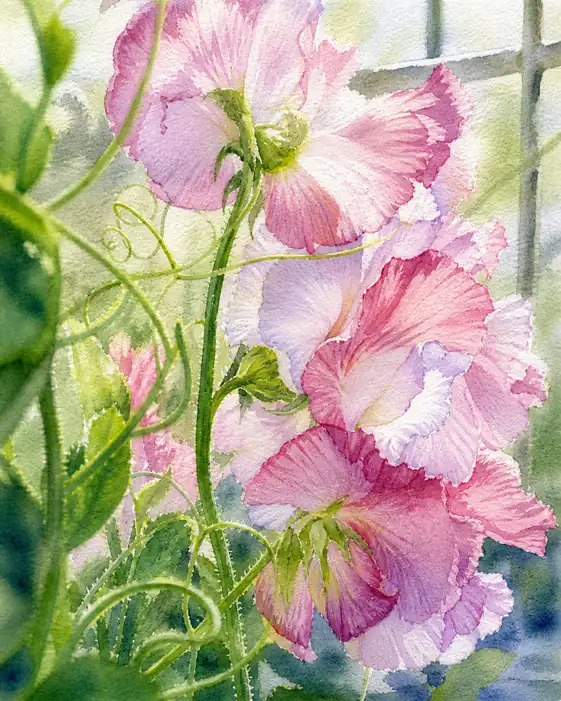 Fragile Whims of Summer
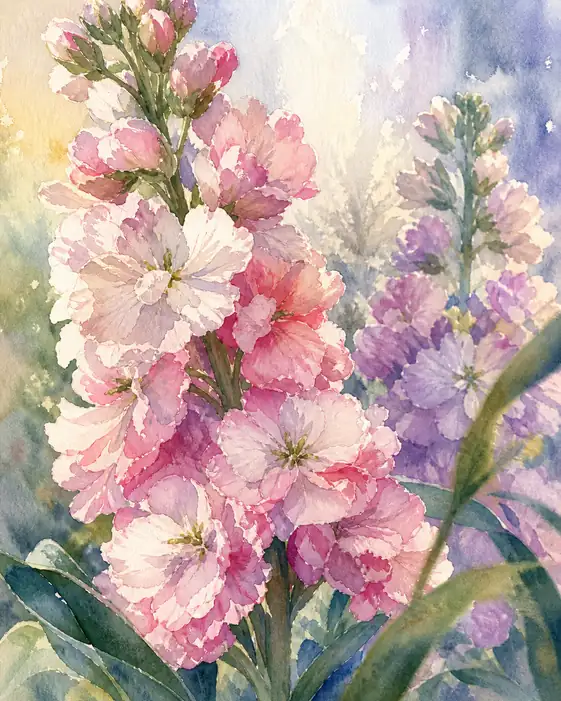 Luminous Ascent
 The Luminous Floral Symphony
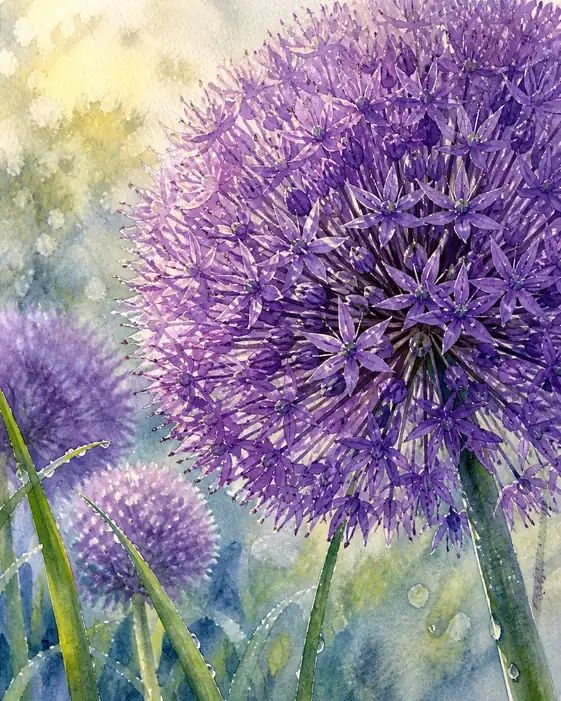 Spheres of Morning Dew
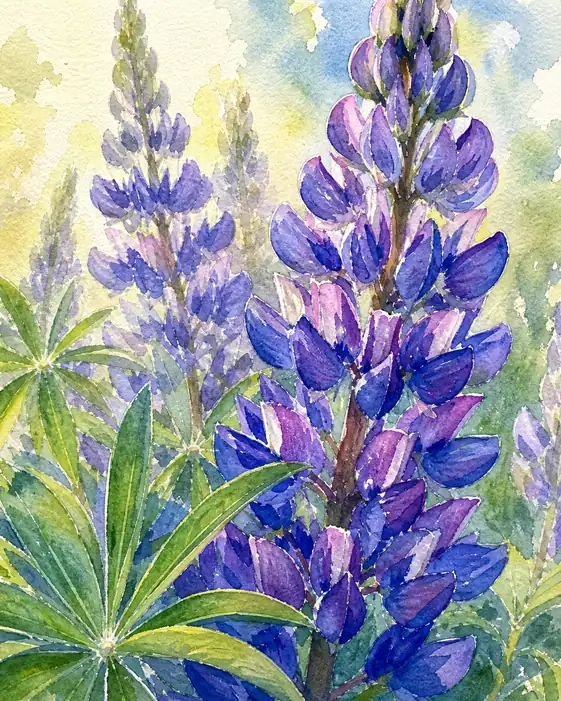 Indigo Spires of Light
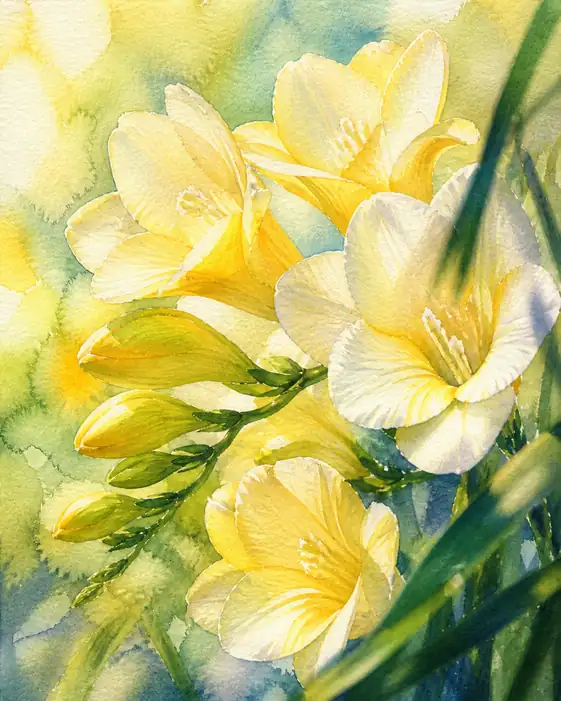 Glow of a Golden Spring
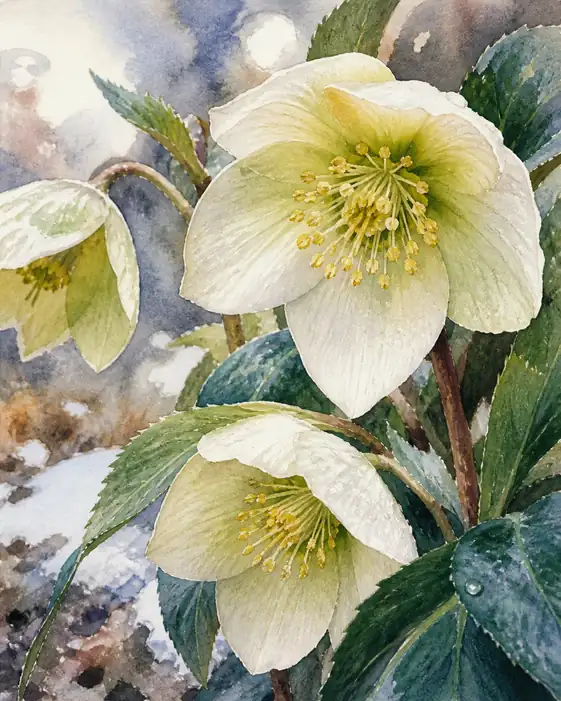 Breath of Winter Hope