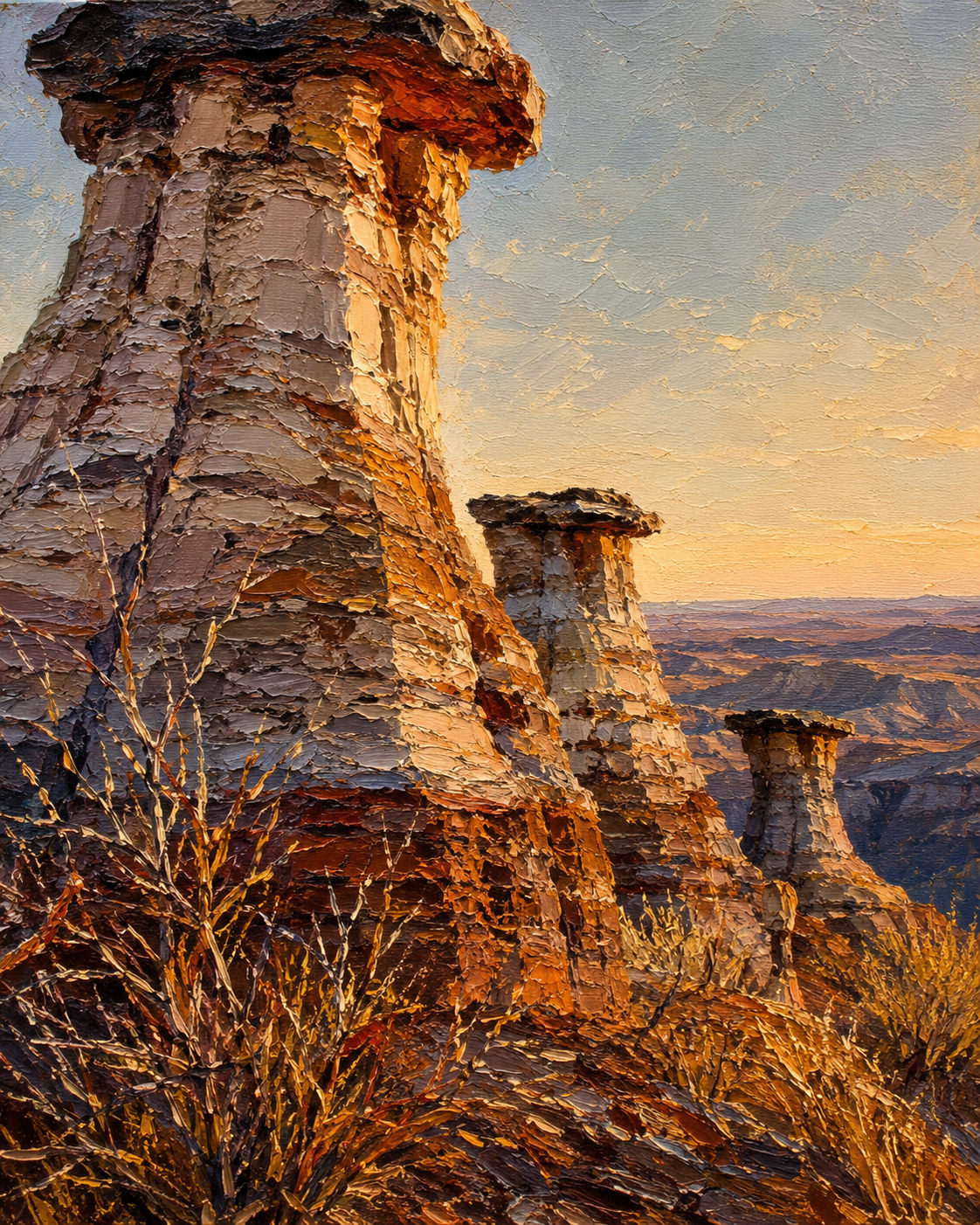
Monoliths of the Deep Time
Critique
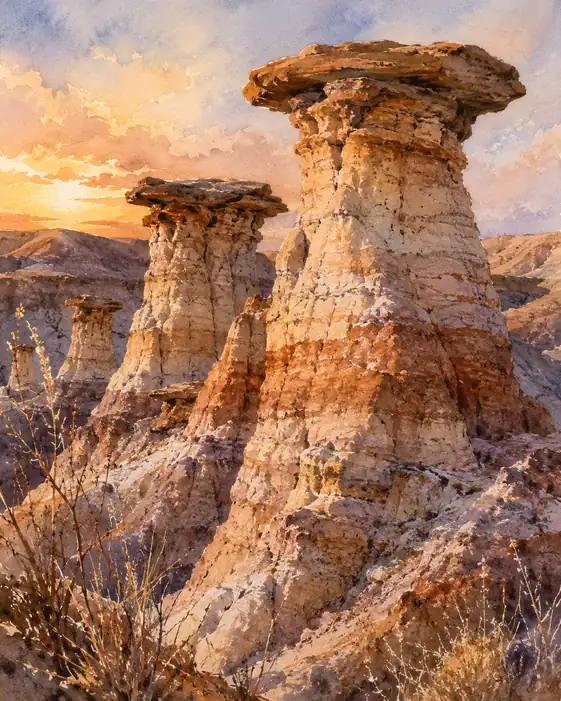
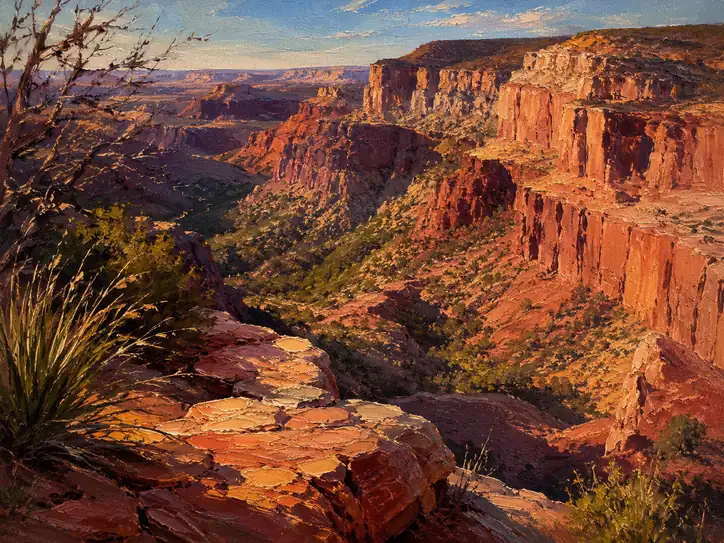
1. Introduction This oil painting presents a dramatic view of unique rock formations, known as hoodoos, glowing under a golden sunset. The work captures the tactile essence of natural sculptures carved by wind and water over immense periods. It invites the viewer to reflect on the geological history and quiet grandeur of the canyon. 2. Description Three mushroom-shaped earth pillars stand in a diagonal line from the left foreground to the middle ground. The largest pillar dominates the left side of the frame, with a dry, leafless shrub positioned directly in front of it. In the background, a vast, layered badlands canyon stretches out toward a pale orange horizon. 3. Analysis The artist uses a heavy impasto technique with broad, energetic strokes to emphasize the rough, crumbling texture of the rock faces. The composition balances the vertical shapes of the pillars with the horizontal lines of the distant valleys. The warm color palette of ochres and reds contrasts sharply with the cool purples in the shadows. 4. Interpretation and Evaluation This piece represents the overwhelming power of nature and the passage of deep geological time that far surpasses human existence. The juxtaposition of the fragile, temporary shrub with the ancient stone pillars highlights the theme of mortality versus endurance. The dramatic lighting and texture showcase the painter's exceptional command of the medium. 5. Conclusion Initially, the scene depicts a harsh, barren environment dominated by strange geological ruins. However, the warm light of the setting sun transforms the landscape into a place of quiet, poetic beauty. The painting successfully conveys a deep reverence for the natural world, leaving a powerful and lasting impression.
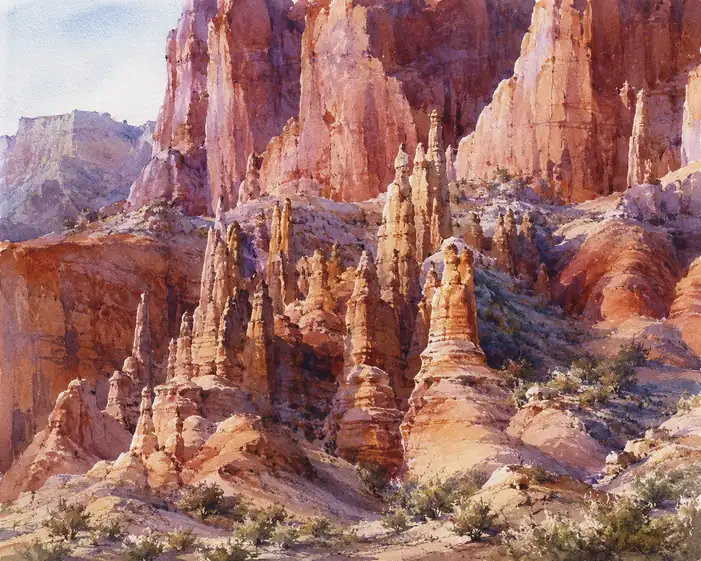 Spires of the Crimson Valley
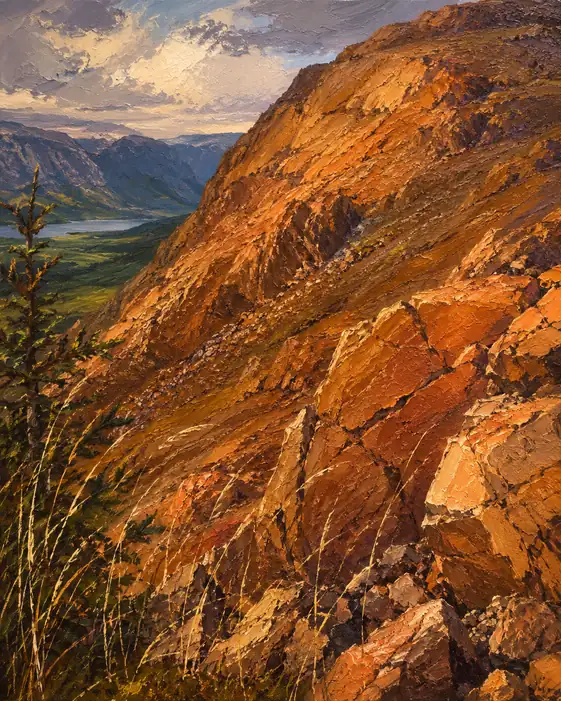 Where the Sun Burns the Stone
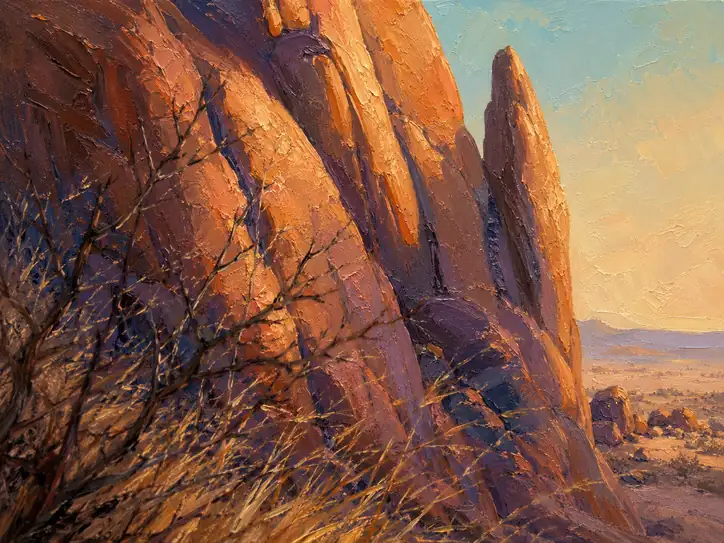 Monolith of the Crimson Waste
 The Silent Spires of Time
 Dialogue between Earth and Sky
 Spires of the Ancient Sun
 The Weight of Thousand Sunsets
 Silent Majesty of the Golden Hour
 Echoes of the Sandstone Ocean
 Echo of the Layered Earth
 Symphony of Fire and Stone