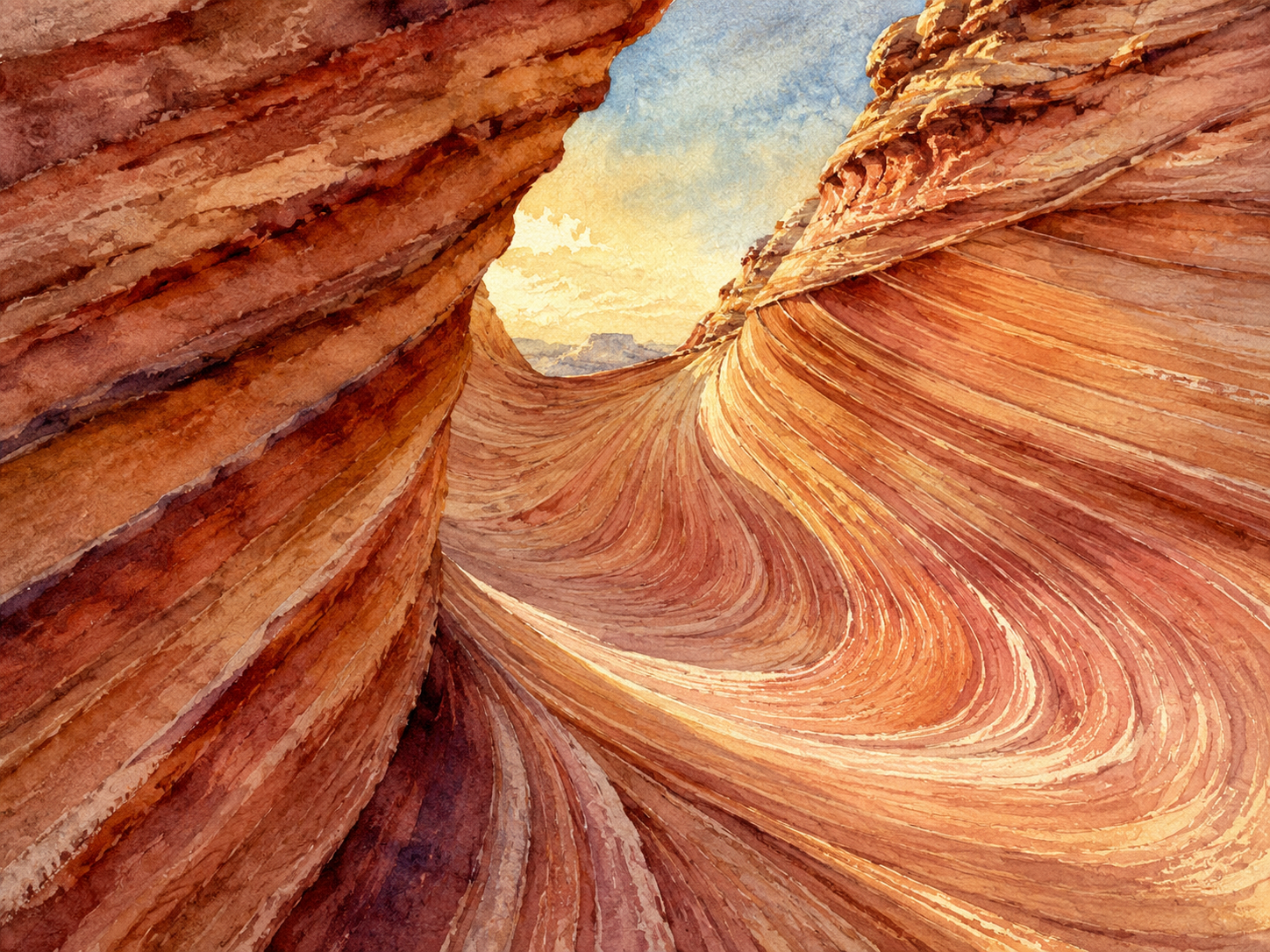
Whispers of the Golden Ravine
Critique
1. Introduction This painting depicts a mysterious, narrow canyon formed by undulating sandstone cliffs. The dynamic swirling patterns of the rock strata converge toward the center, creating a powerful sense of depth. This work beautifully explores the dramatic relationship between natural forms and sunlight. 2. Description On both sides of the canvas, steep sandstone walls with layered textures form a deep pathway. The surfaces are carved with fine, rhythmic stripes that curve smoothly toward the background. Through the narrow gap in the center, a golden sky and distant, bluish mountains are visible. The sunlit right side shines brilliantly, while the left side sinks into deep reddish-brown shadow. 3. Analysis In terms of color, warm tones such as vibrant orange, yellow, and deep crimson dominate the composition. The small patch of cool blue sky in the background provides a crucial contrast to the overwhelming warmth. The strong contrast between light and shadow emphasizes the tactile, layered quality of the canyon walls. Rhythmic curves guide the viewer's eye deep into the canyon. 4. Interpretation and Evaluation The painting celebrates the Earth's natural sculptures carved by wind and water over geological time. The wave-like rock formations evoke a sense of organic movement, as if the landscape itself were breathing. The combination of bold composition and delicate, watercolor-like brushwork is highly effective, demonstrating the artist's outstanding skill. 5. Conclusion In conclusion, the work presents a powerful drama of light and earth with high artistic quality. The dynamic structure and meticulous details convince the viewer of the scene's reality. Ultimately, this painting leaves a quiet but profound impression, instilling a deep respect for the grandeur of the natural world.
Same Subcategory
Similar Artworks
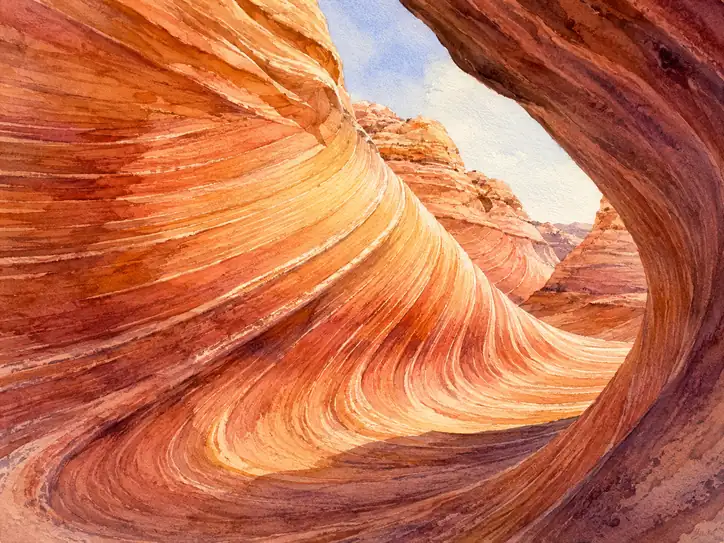 Passage of the Crimson Wave
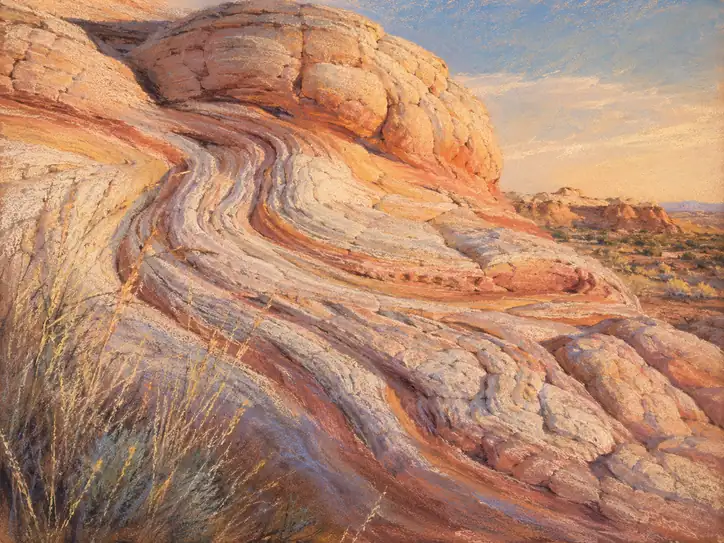 Echoes of the Sandstone Ocean
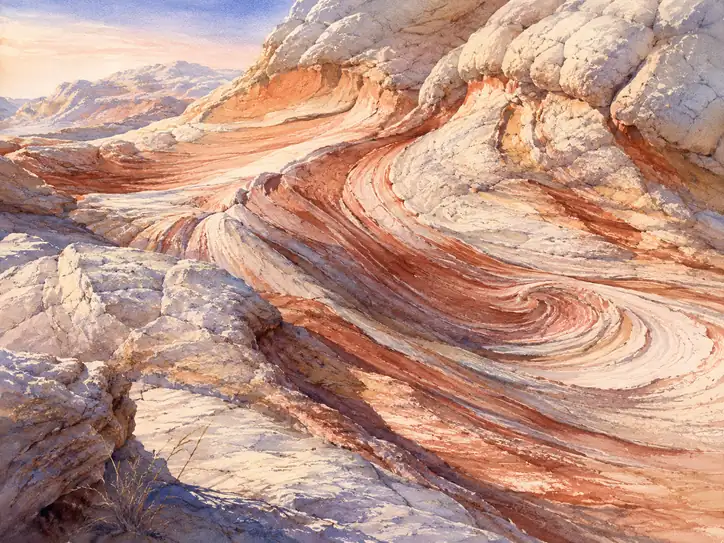 Symphony of the Swirling Earth
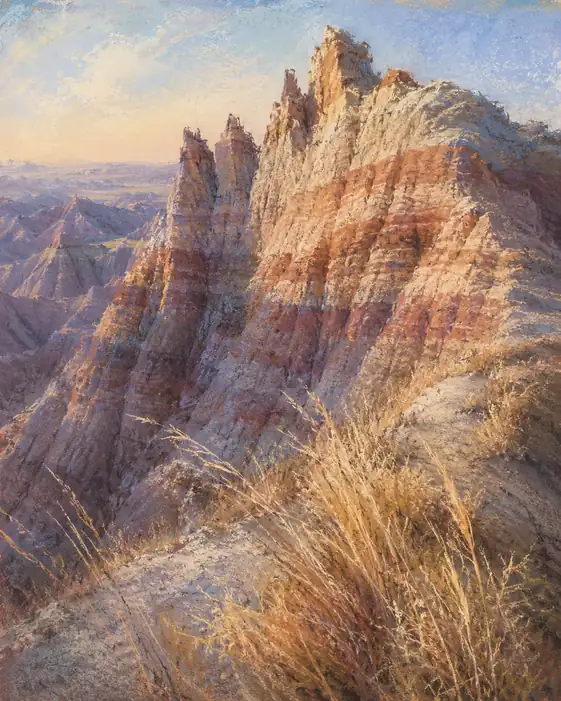 Echo of the Layered Earth
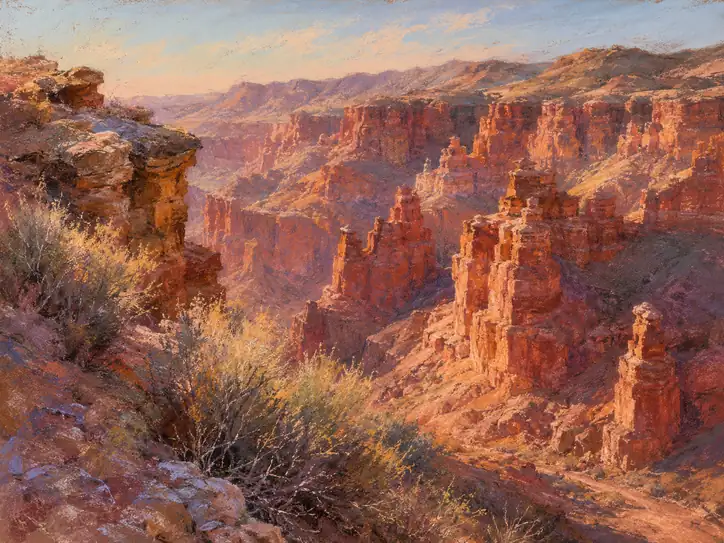 Silence of the Burning Earth
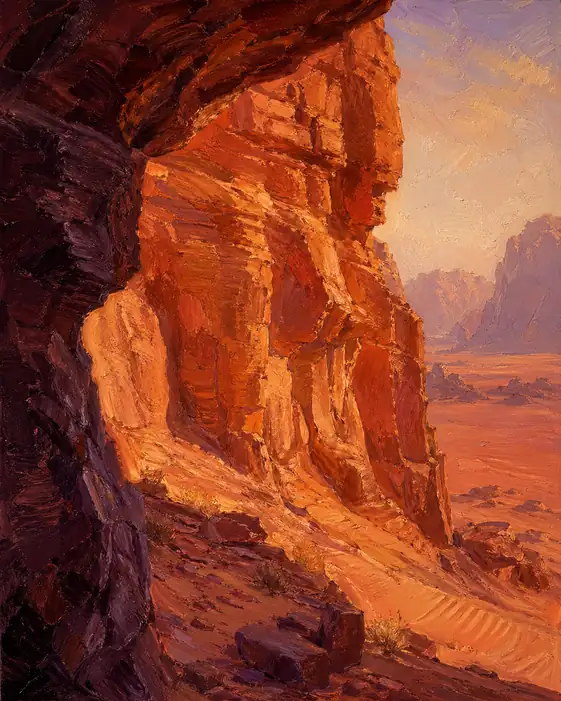 Soliloquy of the Desert: A Dialogue in Light and Shadow
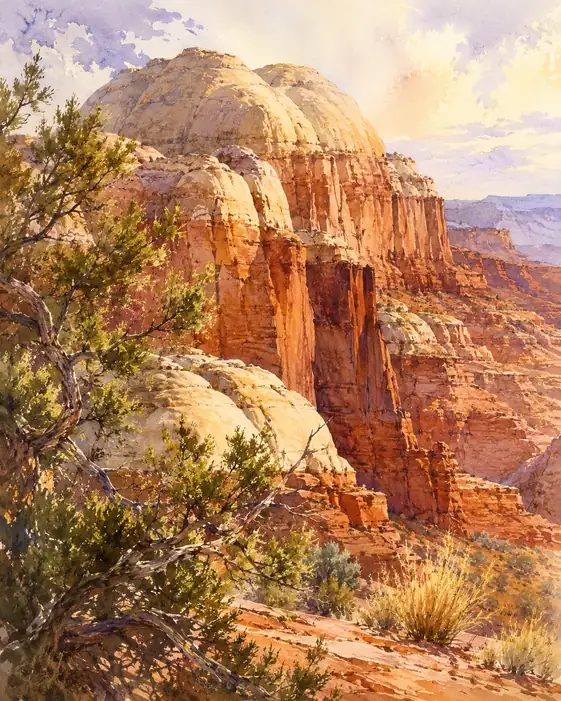 Living Witness to the Ancient Dome
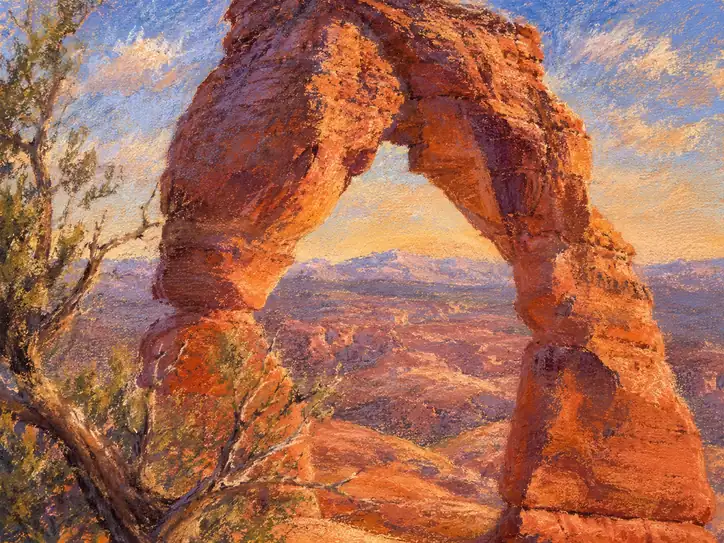 Sculpted by Eternal Whispers
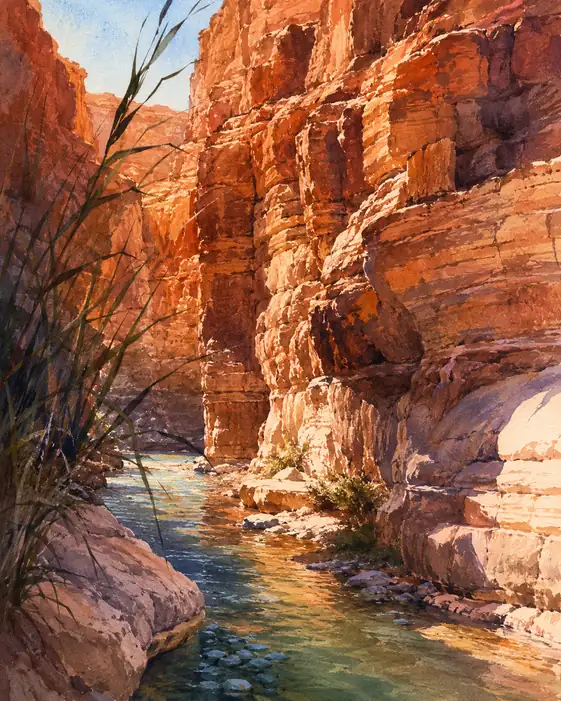 Whispers of the Sunlit Gorge
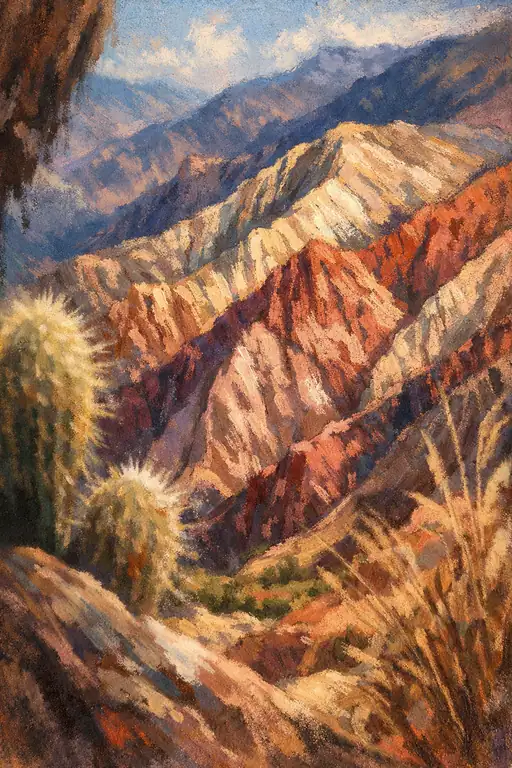 Canyon of Enduring Power: Cacti Flourishing in the Desert's Golden Light