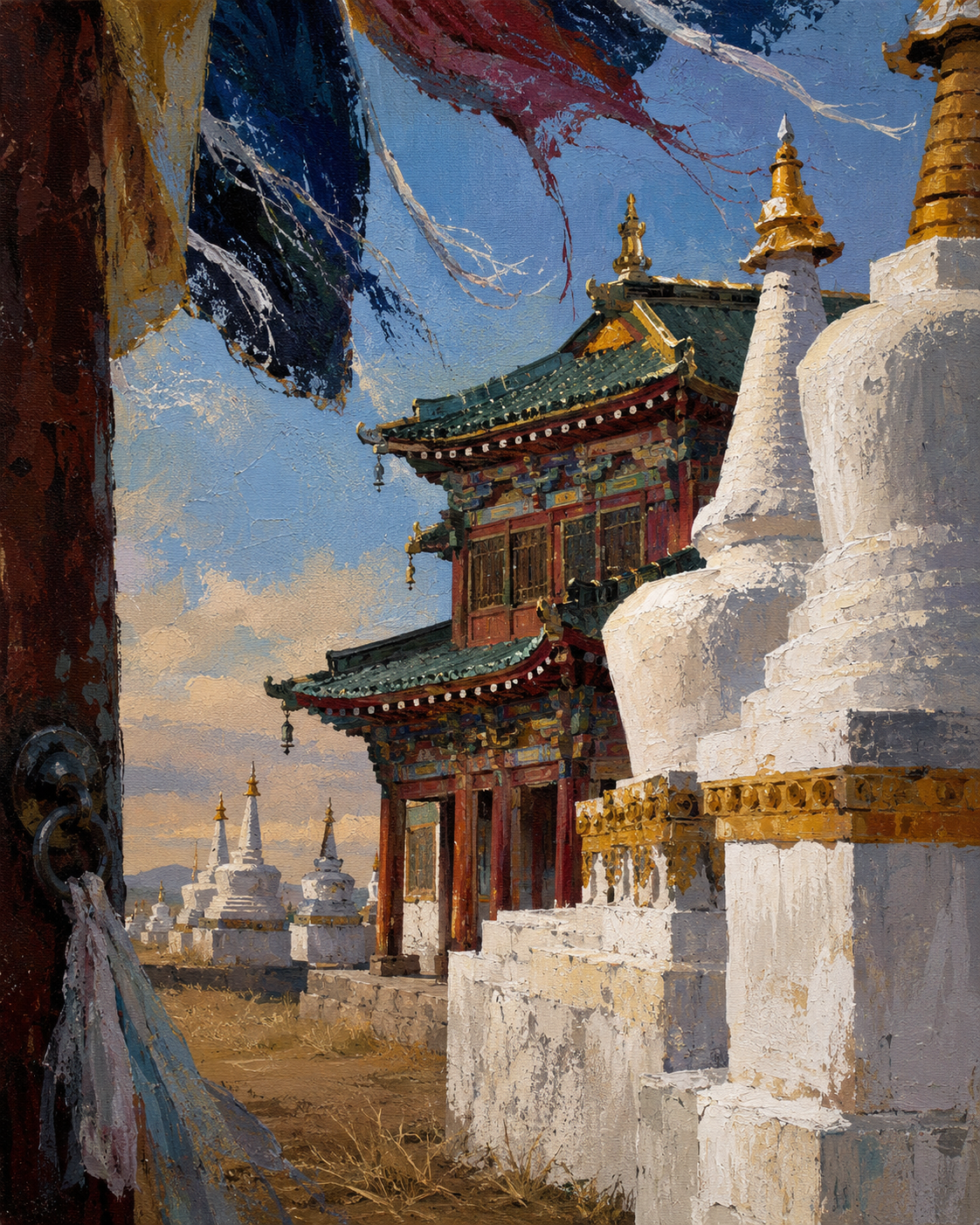
Prayers Carried by the Wind
Critique
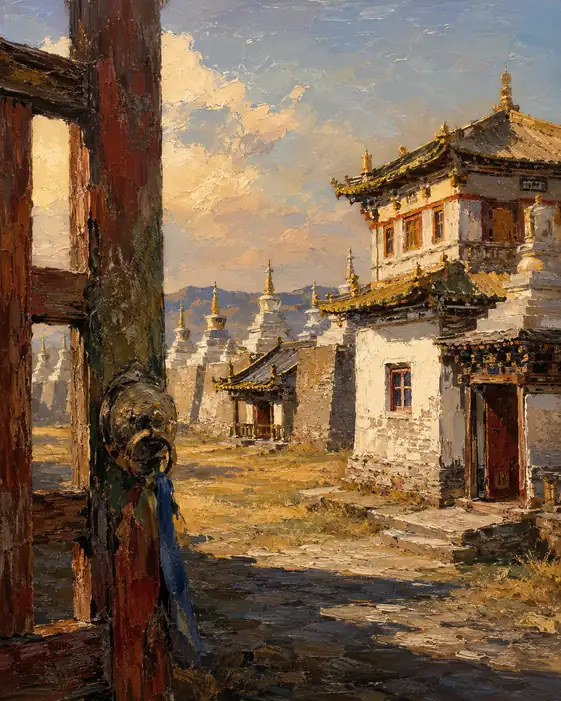
1. Introduction This colorful oil painting depicts a traditional Tibetan monastery and white stupas standing under a clear blue sky. The creation date and title of this artwork are unknown, and no exhibition history is verified. Nevertheless, the religious motifs convey a sacred spirituality and cultural values. The entire canvas is filled with vibrant colors under bright sunlight. 2. Description On the front right, a white stupa reflecting bright light is depicted. In the center, a traditional monastery building with red walls and green tiled roofs stands, with smaller stupas in the distance. On the left, a white scarf is tied to an old wooden door. In the upper part, colorful prayer flags flutter against a blue sky. 3. Analysis The composition brackets the scene with the large stupa on the right and the door on the left, focusing attention on the monastery. An impasto technique with thickly applied oil paint is used, providing a tactile texture to the walls and flags. The contrast between light and shadow highlights the stupa and red walls. 4. Interpretation and Evaluation This artwork represents deep faith and sacred culture thriving in a harsh environment. The powerful impasto textures and vivid color design directly convey spiritual solemnity. The piece demonstrates originality by visualizing invisible prayer through the fluttering flags and scarf, rather than merely documenting a landscape. 5. Conclusion At first glance, the painting seems to be an exotic temple landscape, but close observation reveals a harmony between prayer and wind. Analysis transforms the initial impression of a colorful painting into an appreciation of the artist's attempt to visualize the sacred. This painting is highly valuable, embodying the strength of religious art.
Same Subcategory
 Steps Toward the Eternal Silence
Similar Artworks
 The Wind that Carries Our Prayers
 Winds of Prayer on the Silent Ridge
 Faith Standing in the Wilderness
 The Compassionate Gaze of Gold
 Whispers of the Wind and Snow
 Faith Carved in Light
 Sanctuary Under the Eternal Cliff
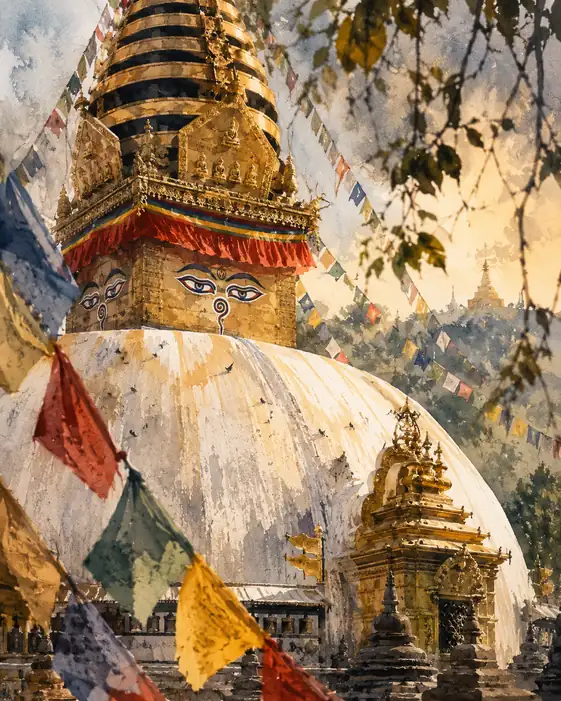 The Quiet Gaze of Eternity
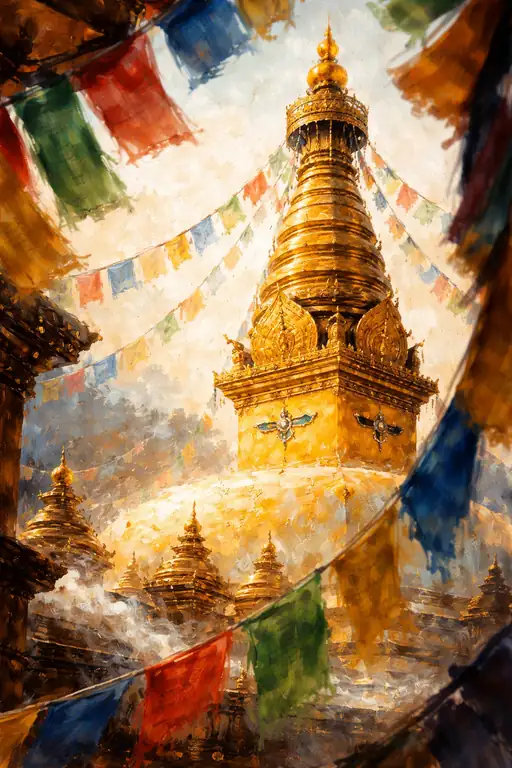 Breath of the Winds: The Golden Stupa's Radiant Prayer
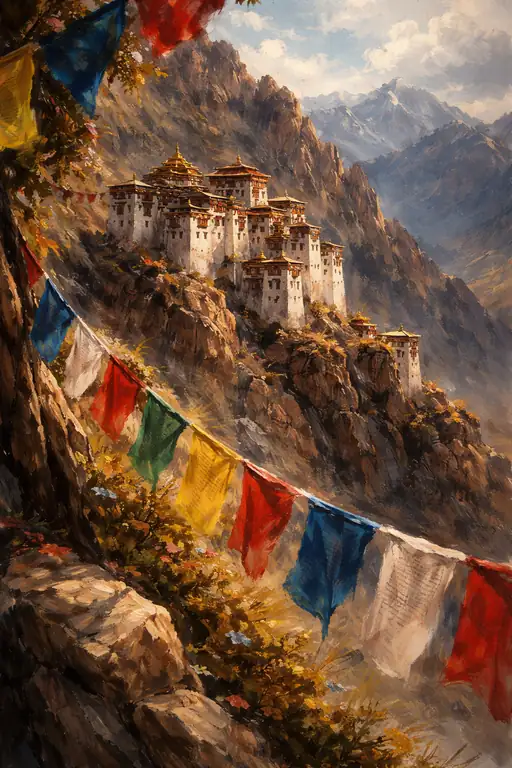 Sacred Serenity at the Edge of the Sky