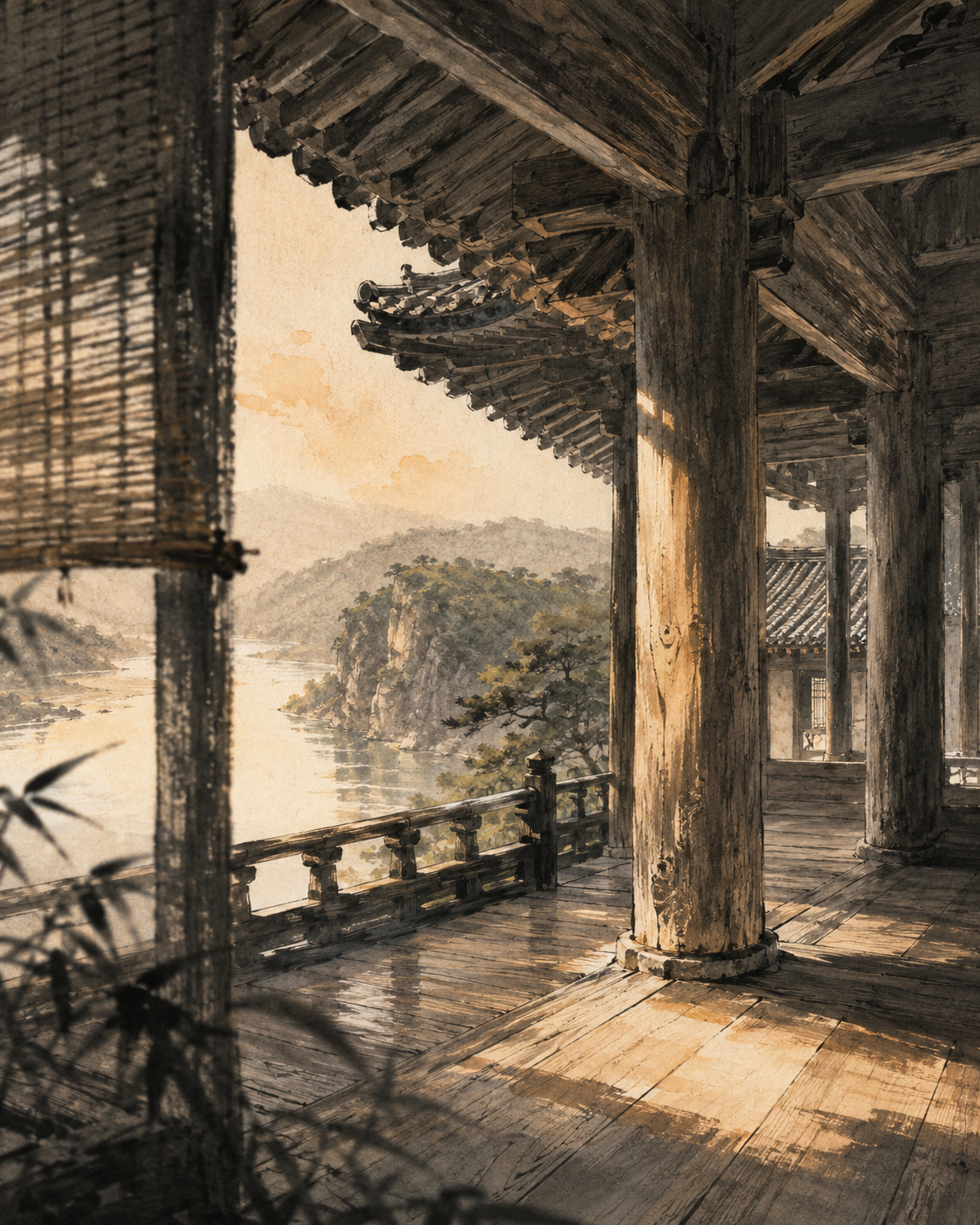
Whispers Beyond the Bamboo Blind
Critique
1. Introduction This oriental painting depicts a traditional pavilion terrace overlooking a steep valley, with warm sunlight filtering in. The creation date and title of this artwork are unknown, and no exhibition history is verified. Nevertheless, the powerful rendering of the architecture conveys historical weight and cultural values. The entire canvas is rendered in a monochrome palette dominated by sepia tones. 2. Description On the front right, a thick log post and a roof with traditional rafters are depicted. Sunlight and shadows fall across the terrace floorboards, highlighting the wood grain texture. On the left, a half-lowered bamboo blind hangs, with delicate bamboo leaves at the bottom. Beyond the railing, a river flows through a valley framed by vertical cliffs. 3. Analysis The composition uses the pavilion's balcony to create a frame effect with the pillar and roof. This framing emphasizes the scale and depth of the distant valley. Additionally, the ink wash technique with delicate lines captures the rough textures of the cliffs and the river's surface. The sharp light contrast adds rhythm to the terrace. 4. Interpretation and Evaluation This artwork represents a traditional perspective on nature, emphasizing coexistence by contrasting the pavilion with the rugged cliffs. Its refined draftsmanship and light contrast successfully evoke tranquility. The piece demonstrates originality in its spatial design, using the bamboo blind and leaves as a foreground to creatively frame the scenic landscape. 5. Conclusion At first glance, the painting seems to be a simple pavilion and valley depiction, but close observation reveals a harmony of artificial and natural beauty. Analysis transforms the initial impression of a sketch into an appreciation of the artist's attempt to visualize silence. This landscape painting is highly valuable, capturing history with outstanding technique.
Same Subcategory
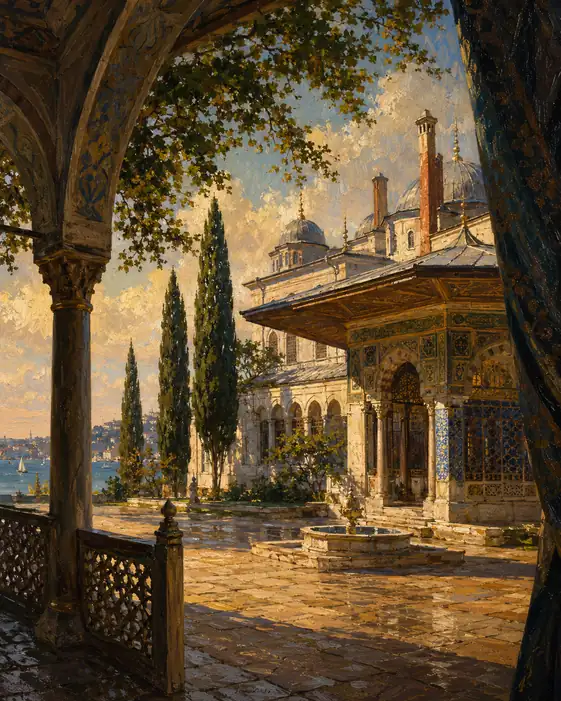 Echoes of the Golden Empire
Similar Artworks
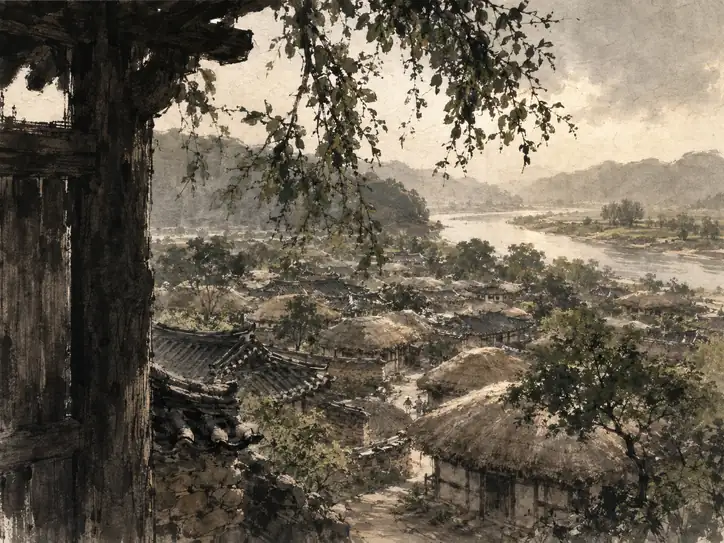 Sanctuary in Sepia
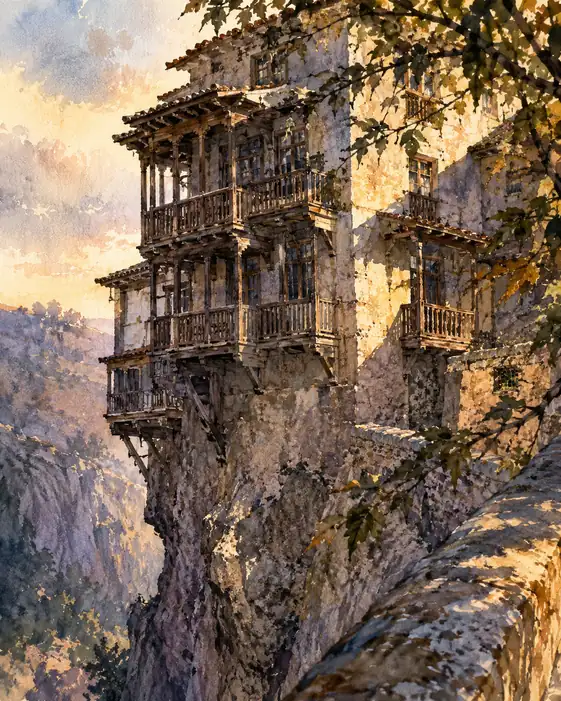 The Precarious Beauty of History
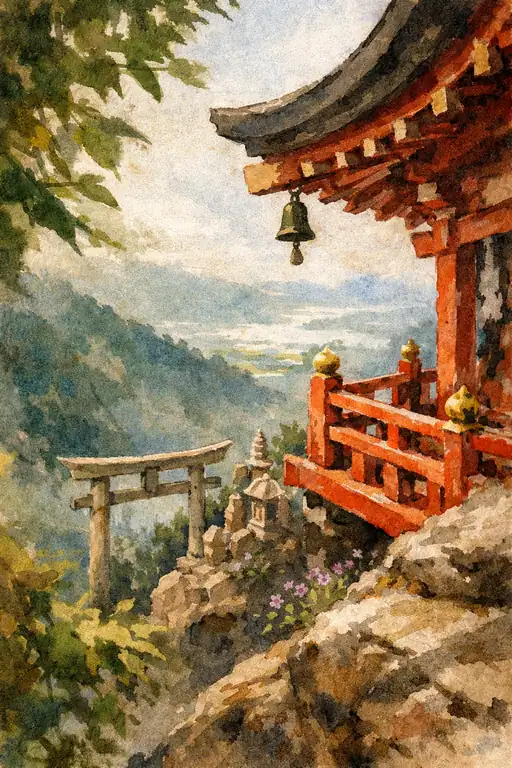 Echoes from the Misty Heights
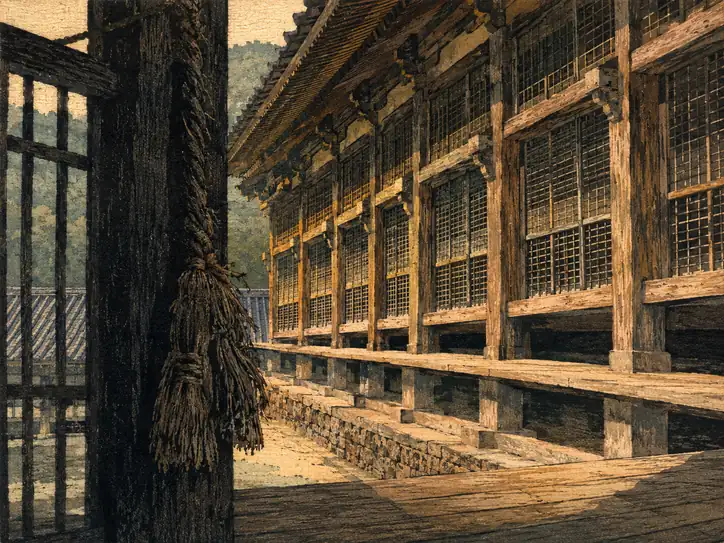 Dusting the Light of Eternity
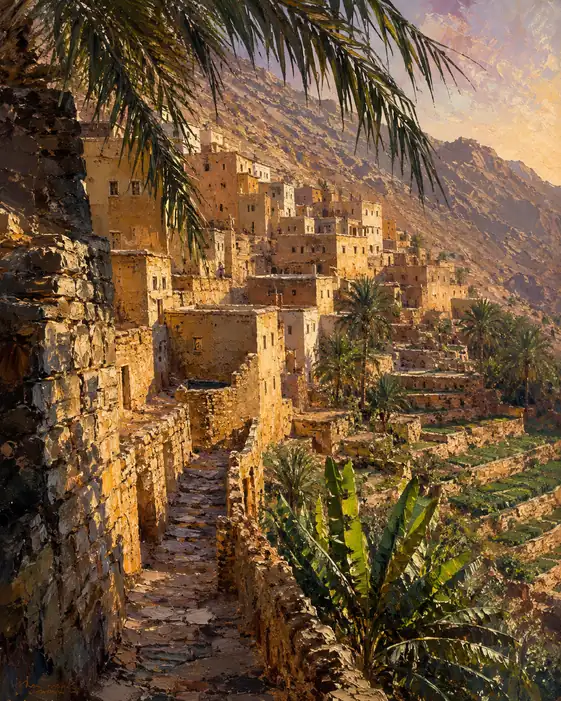 Cradled by the Golden Slopes
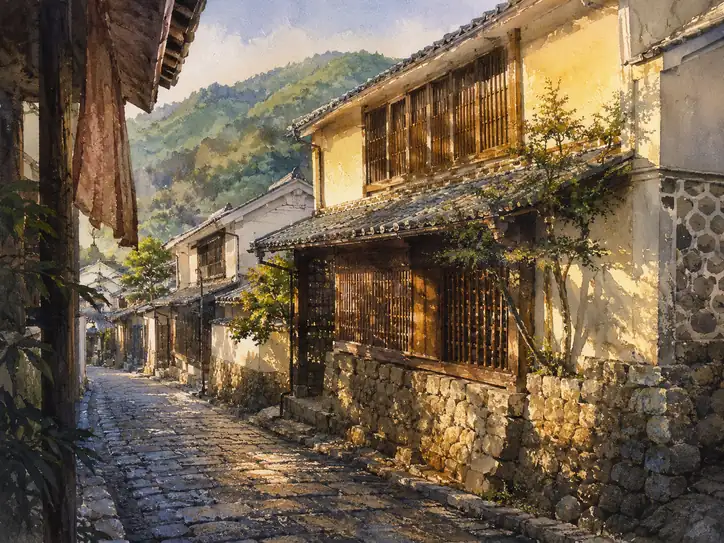 Sun-Drenched Memories of the Old Street
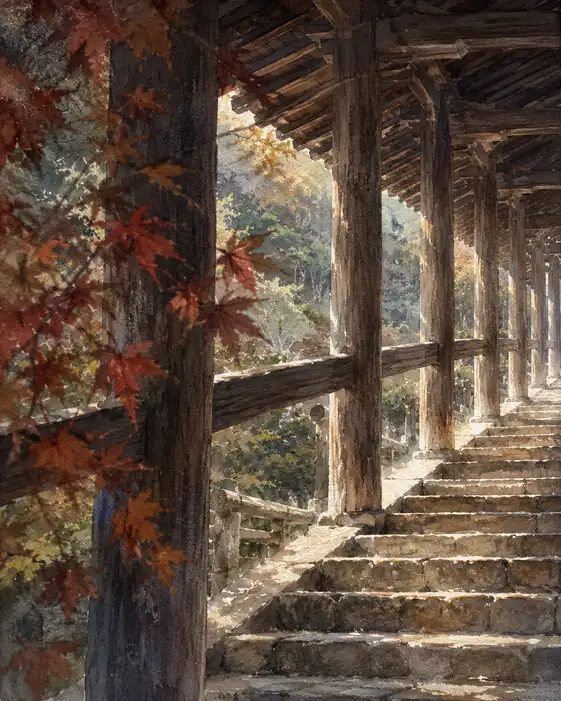 Echoes of Crimson Footsteps
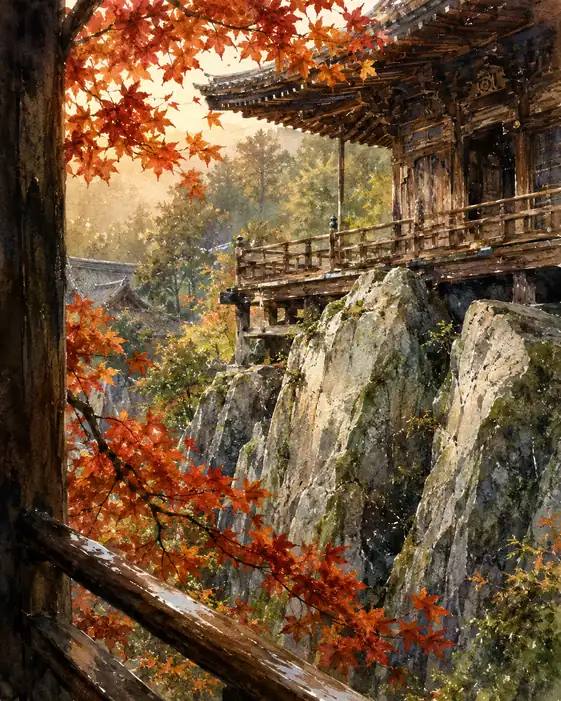 Crimson Reverie on the Temple Veranda
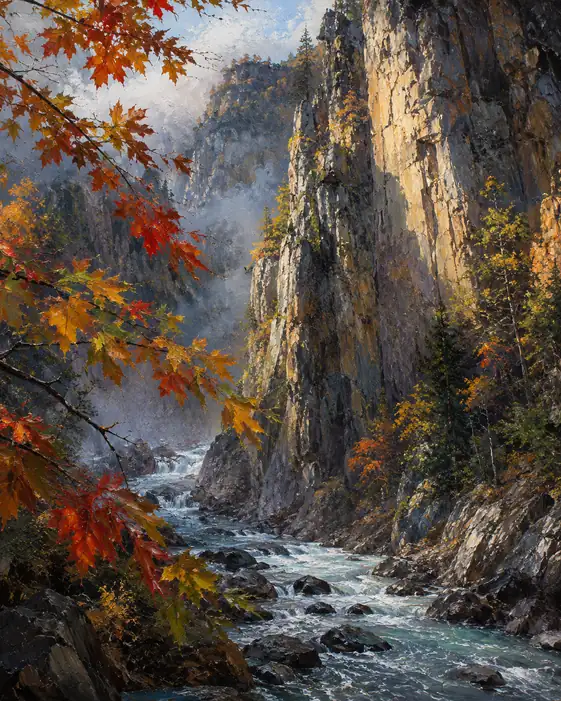 Autumn Whispers in the Sunlit Gorge
 Echoes of the Hidden River