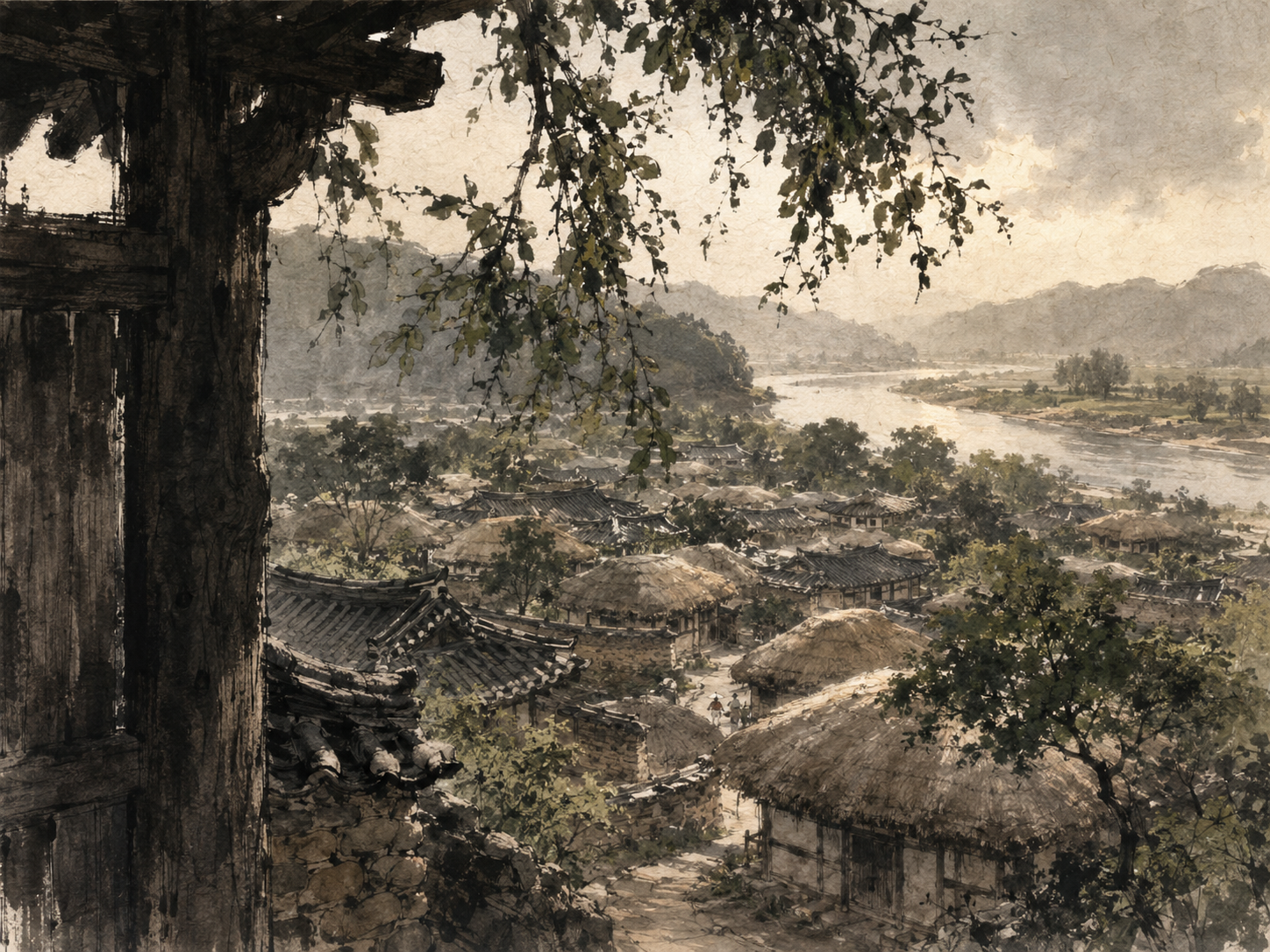
Sanctuary in Sepia
Critique
1. Introduction This oriental painting depicts a serene harmony between a traditional village and its natural surroundings. The exact creation date and title of this artwork are unknown, and no exhibition history is verified. Nevertheless, the depicted motifs convey rich cultural values and nostalgia. The entire canvas is rendered in a cohesive monochrome palette dominated by warm sepia tones. 2. Description On the front left, a sturdy wooden post stands with delicate branches hanging down. Beyond this foreground, traditional houses with thatched and tiled roofs are clustered along the hillside. A narrow, curving path winds through the settlement, hinting at the inhabitants' daily lives. In the distance, a peaceful river flows, framed by gentle mountains. 3. Analysis The composition employs a panoramic spatial structure that guides the viewer's gaze from the foreground to the vast background. The dark foreground post acts as a natural frame, enhancing depth. Furthermore, delicate lines and ink wash techniques capture atmospheric moisture and lighting. The sepia color scheme creates a unified, calm atmosphere. 4. Interpretation and Evaluation This artwork represents traditional life and the tranquility lost in modern times. Its refined draftsmanship and balanced composition successfully evoke nostalgia. Additionally, the piece shows originality in adapting traditional ink wash techniques to a modern sensibility. The scene symbolizes an ideal coexistence between humanity and nature. 5. Conclusion At first glance, the painting seems to be a simple depiction of a quiet village, but close observation reveals vital energy created by light and water. Analysis transforms the initial impression of a historical document into an appreciation of universal harmony. This landscape painting is highly valuable, beautifully integrating history and nature.
Same Subcategory
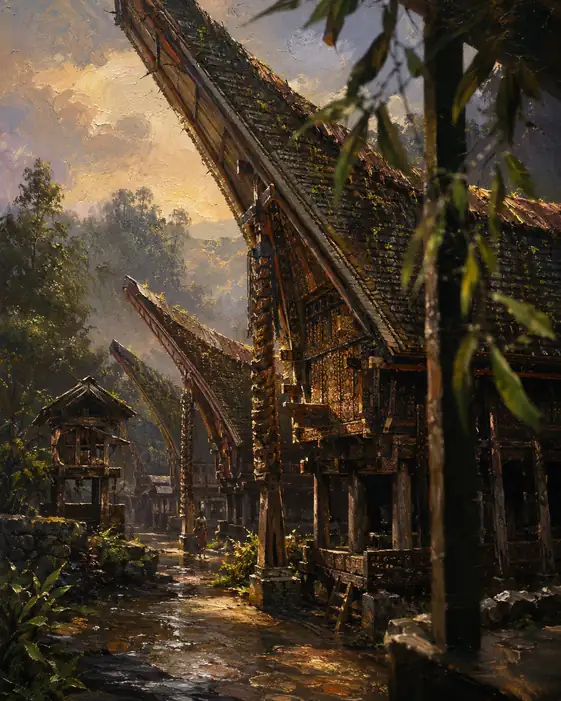 Where Roofs Sail for the Heavens
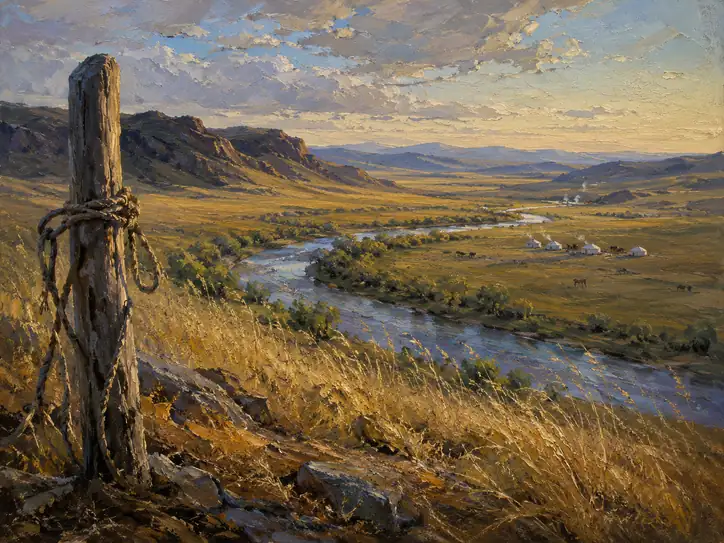 Tethered to the Golden Steppe
Similar Artworks
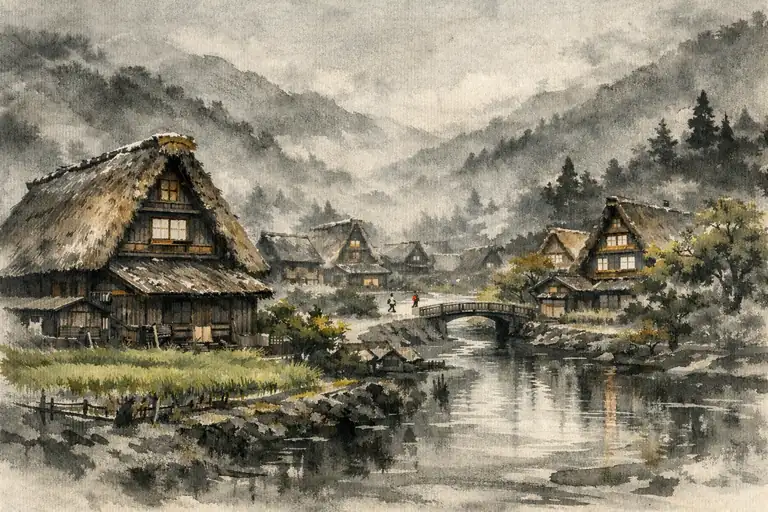 Quiet Breath of the Sacred Valley
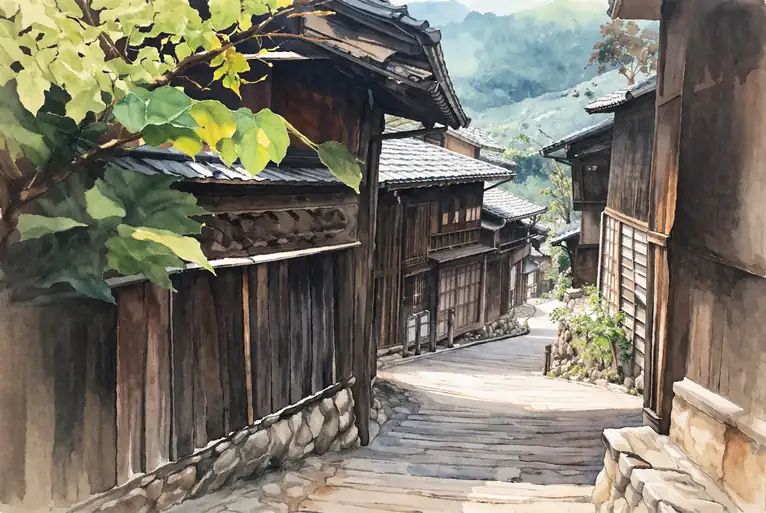 Echoes of the Sloping Town
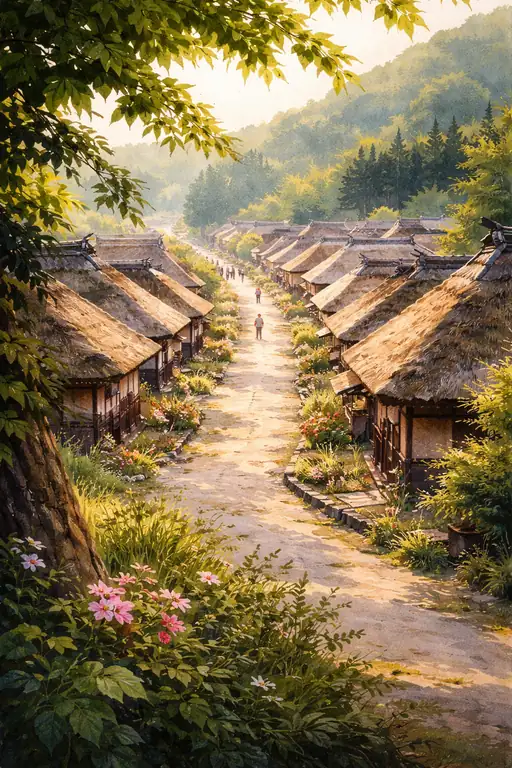 Tranquil Shadows Along the Thatched Village Road
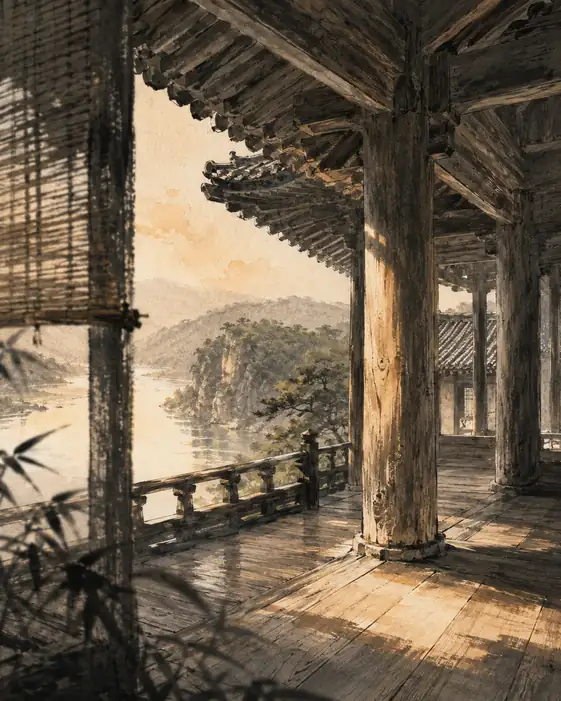 Whispers Beyond the Bamboo Blind
 Where Silence Breathes
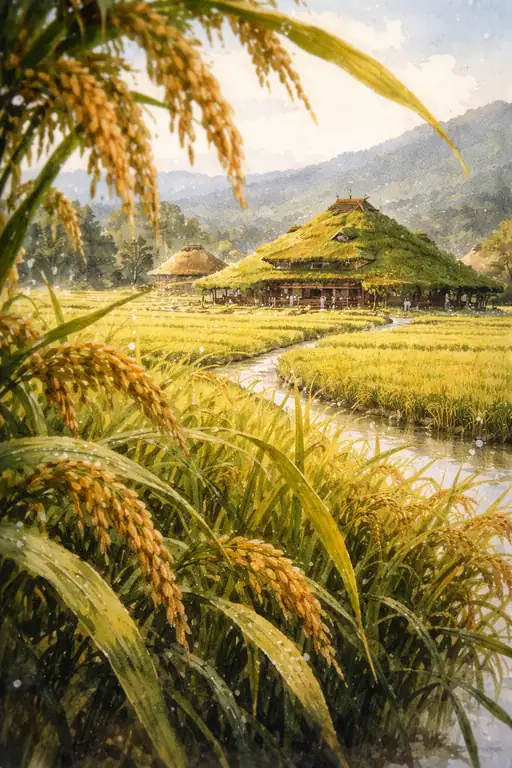 Golden Harvest in the Serene Countryside
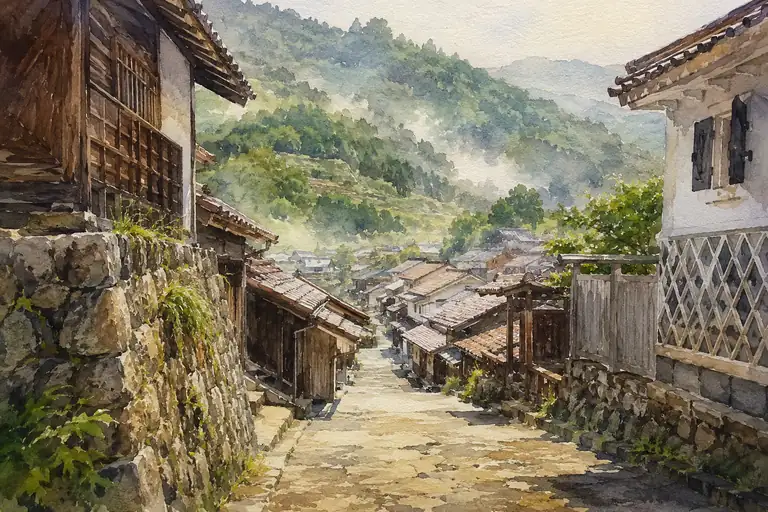 Echoes of the Ancient Path
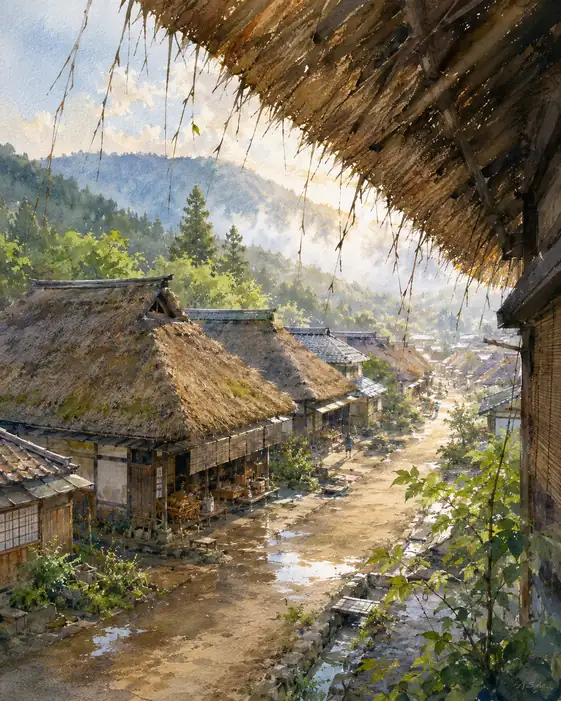 Echoes of the Thatched Village
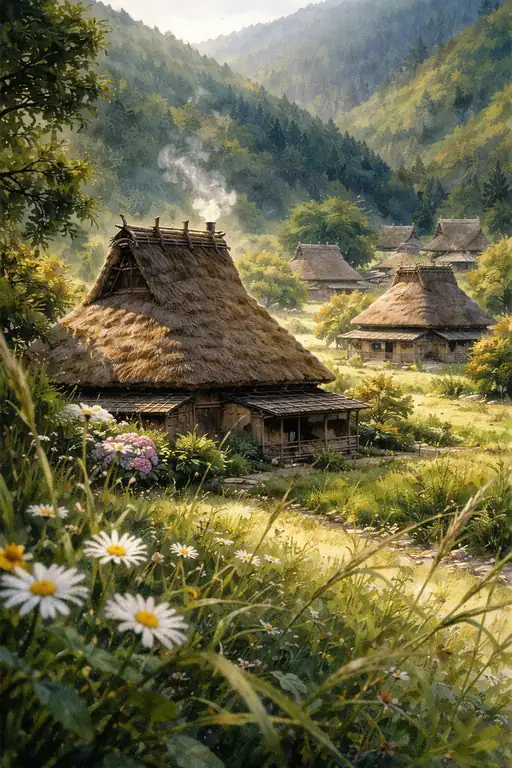 Whispers of the Golden Valley
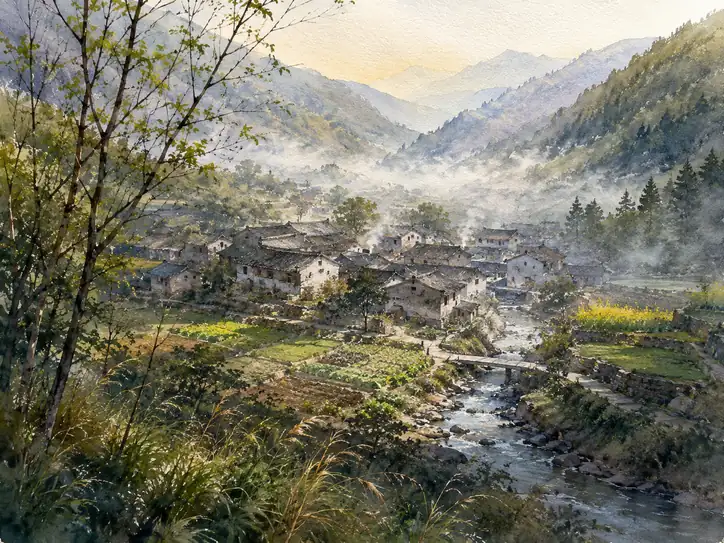 Morning Mist in the Cradle of Mountains