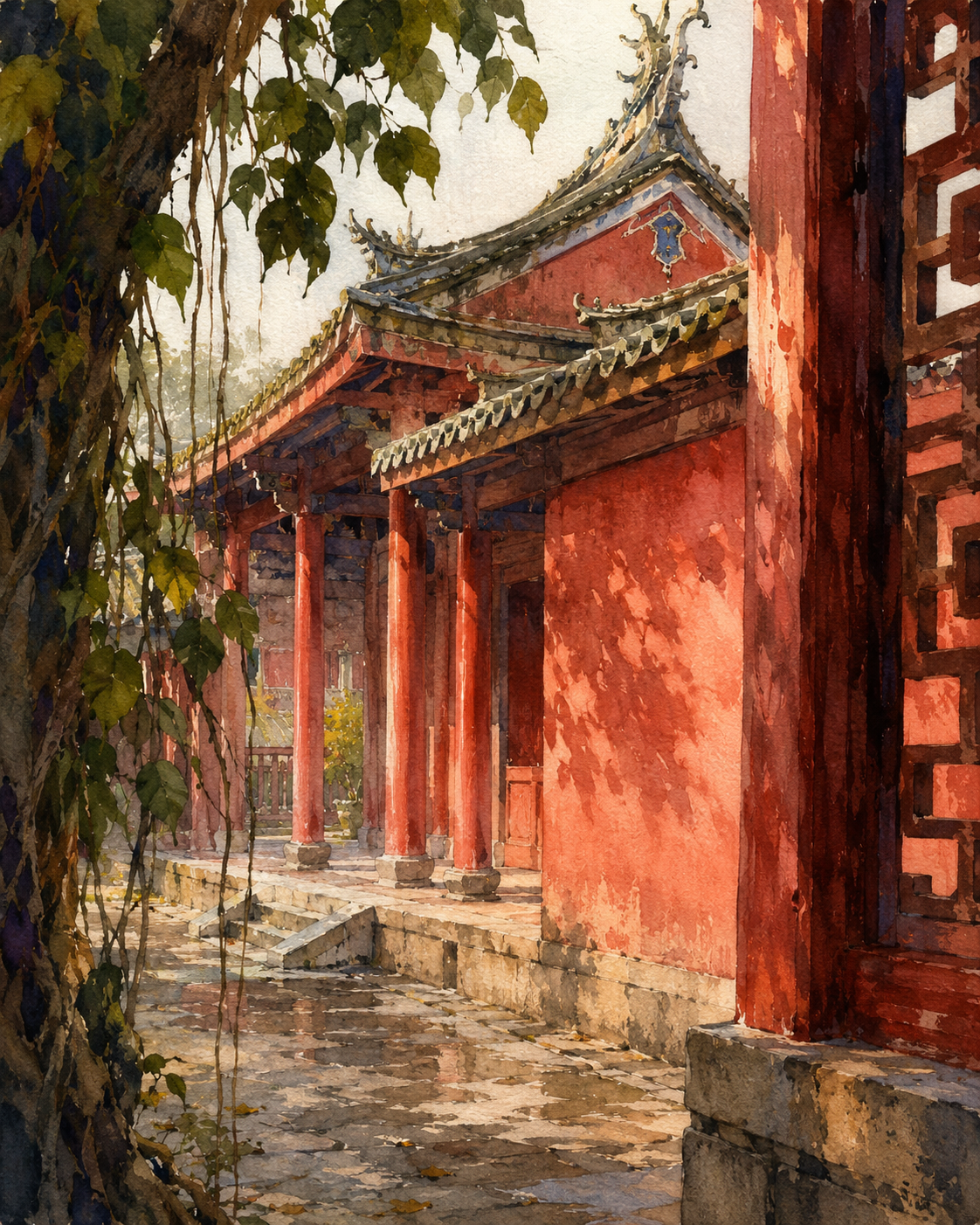
A Fleeting Shadow on the Crimson Wall
Critique
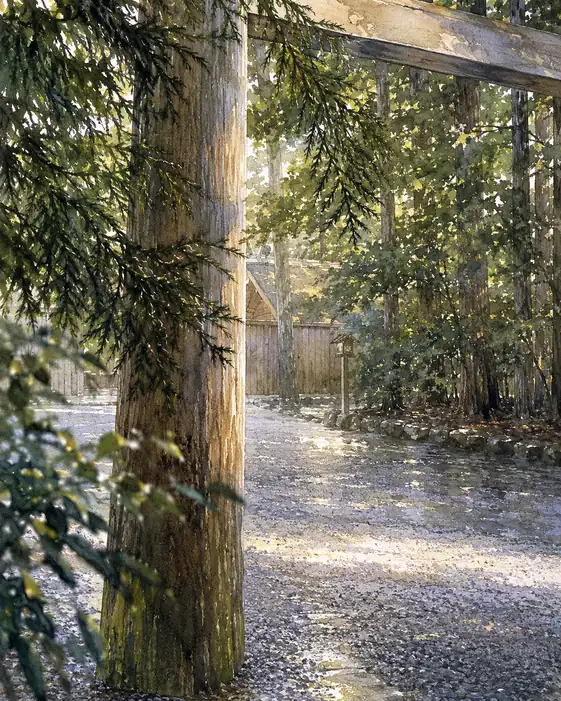
1. Introduction This landscape painting depicts a traditional East Asian temple with vivid watercolor techniques. The primary subject features bright red columns and walls, framed by overgrown tree branches and wooden lattice windows in the foreground. The composition highlights a dramatic interplay of light and shadow, presenting a peaceful yet historic atmosphere. 2. Description In the left foreground, a thick tree trunk wrapped in vines and hanging roots shapes the scene. Behind it, a row of sturdy crimson pillars supports a tiled roof decorated with traditional curved edges. The stone pavement below is wet and reflects the surroundings, while delicate leaf shadows are cast upon the red wall. 3. Analysis The framing elements of the tree on the left and the lattice window on the right focus the viewer's attention on the temple. The diagonal line of columns creates a strong sense of perspective, guiding the eye along the corridor. The contrast between the bright red surfaces and the organic shadows emphasizes the temple's structural volume. 4. Interpretation and Evaluation Through the ancient architecture, the work conveys a harmonious relationship between nature and human creation. The shifting leaf shadows represent a fleeting moment of time, contrasting with the enduring strength of the weathered building. The bold use of red against the green roof tiles showcases the artist's refined color sensitivity and spatial control. 5. Conclusion This piece successfully combines traditional architectural themes with a modern sensibility toward light and surface texture. While capturing a quiet courtyard, the shifting shadows and wet reflections infuse the painting with dynamic life. Ultimately, this work evokes a deep appreciation for heritage, marking it as a highly accomplished and memorable painting.
Same Subcategory
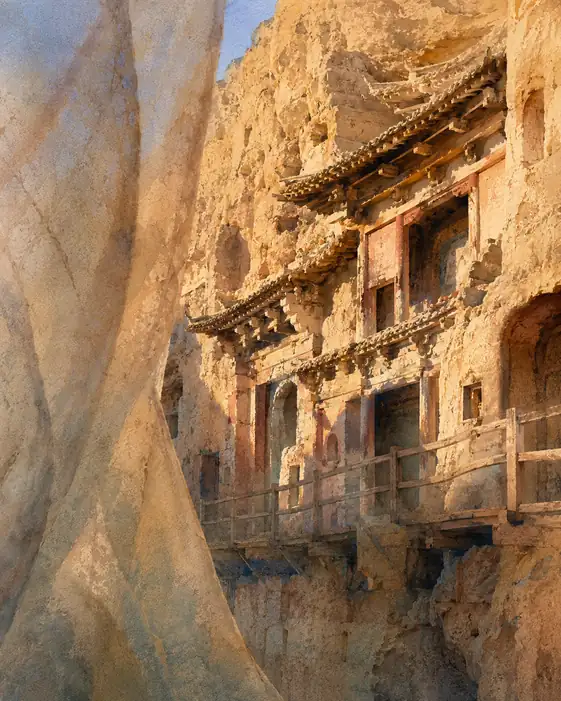 Quiet Solitude on the Ochre Cliff
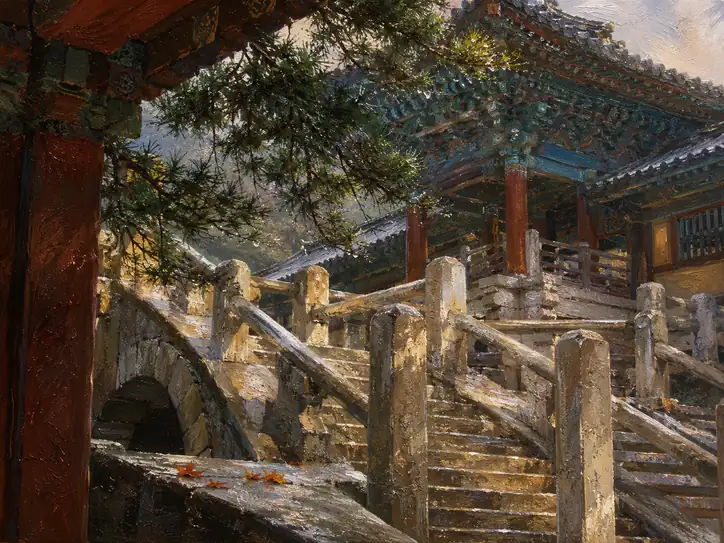 Pathway of Vermilion and Jade
Similar Artworks
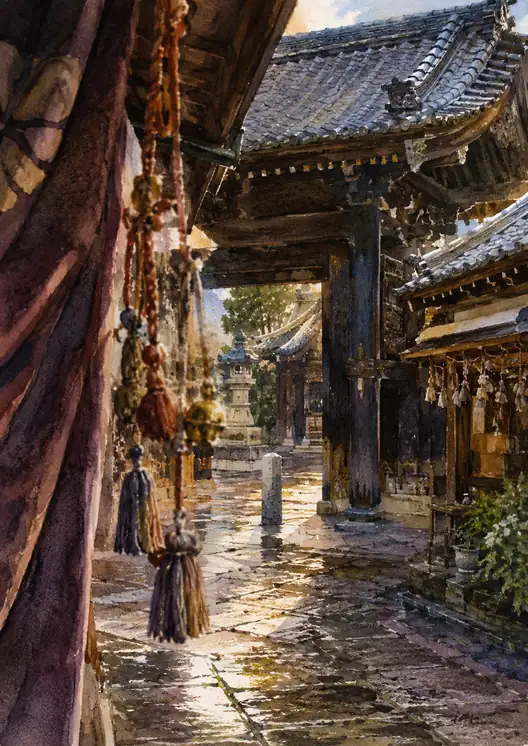 Shadows of the Sacred Path
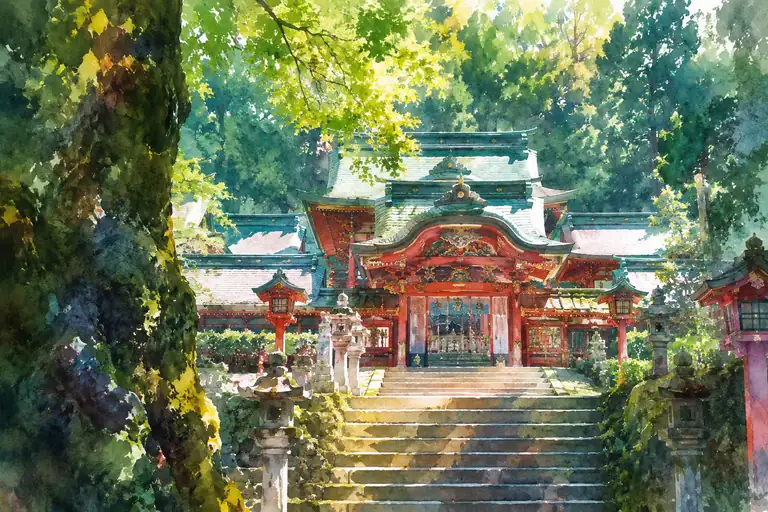 Sunlight on the Sacred Path
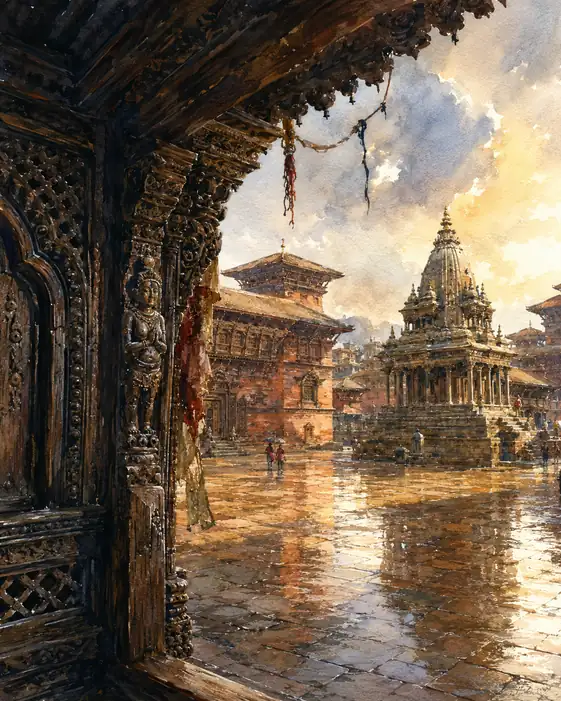 Where Shadow Meets the Glistening Square
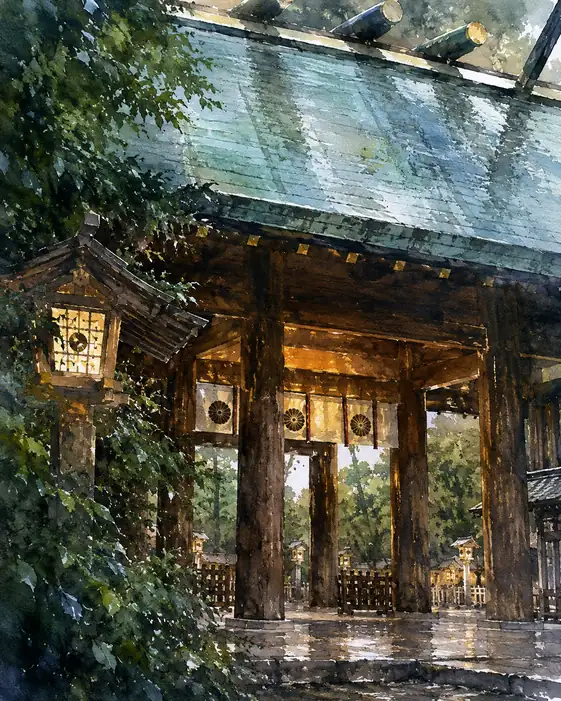 The Silent Breath of the Shrine
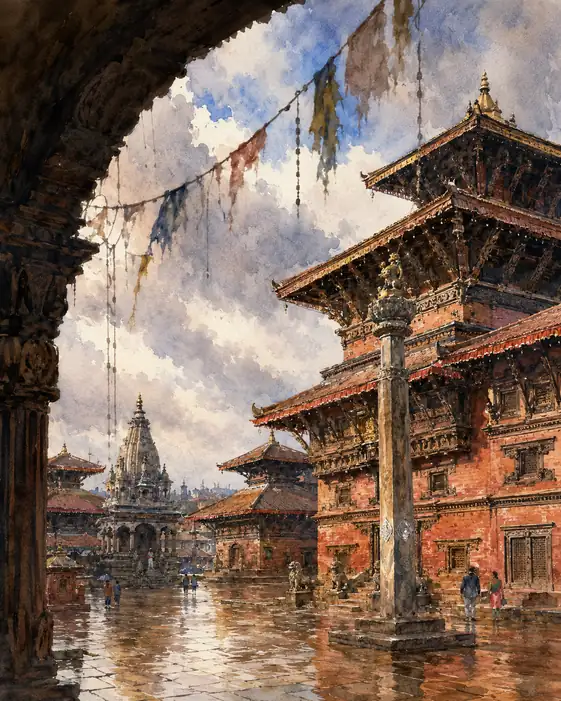 Reflections of a Monsoon Dream
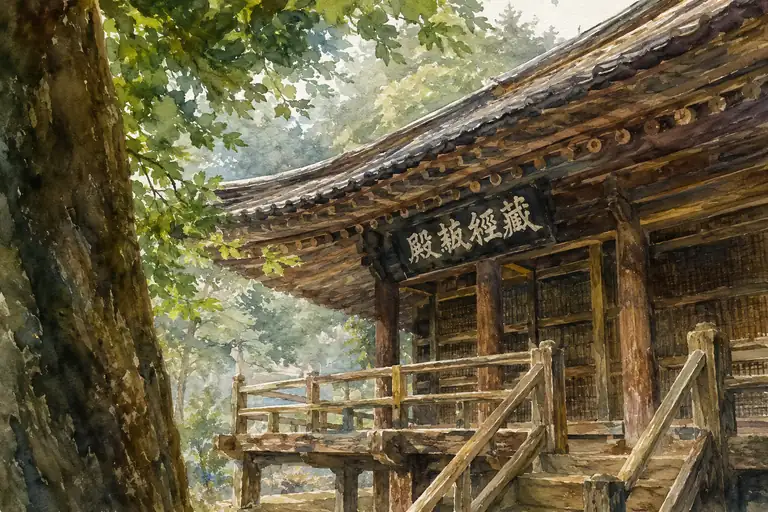 Wisdom Sheltered by the Forest
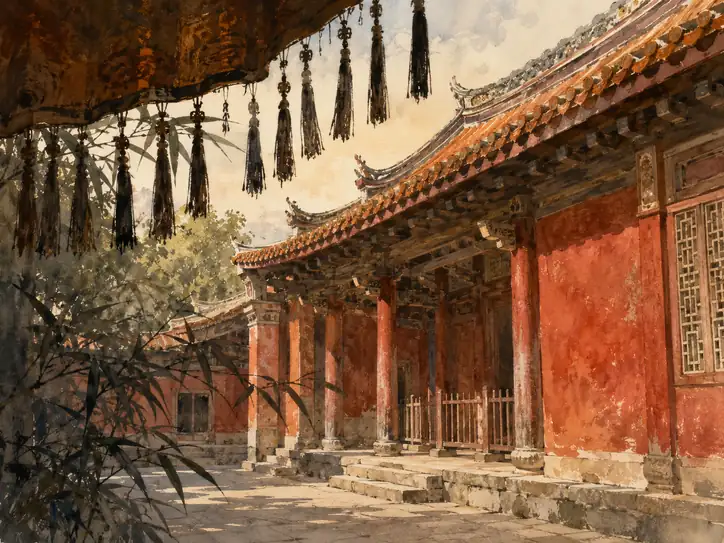 Where Sunlight Whispers to Vermilion
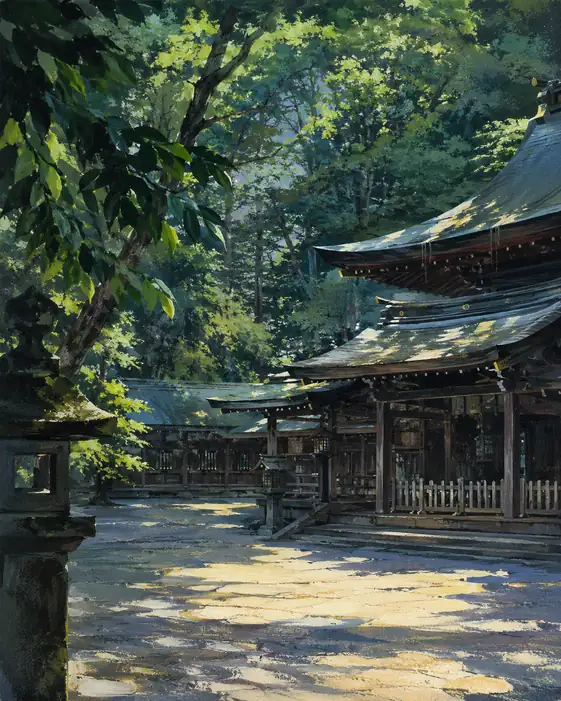 Whispers of the Sunlit Sanctuary
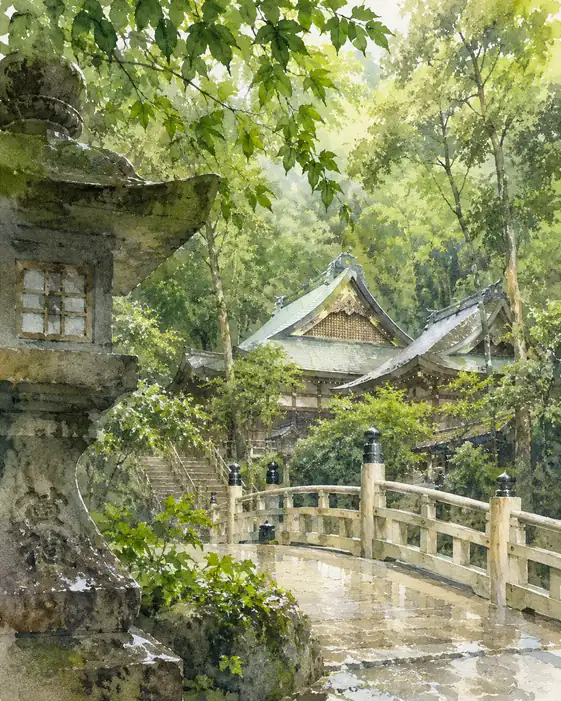 Stillness of the Hidden Sanctuary
 Sunbeams Dancing on the Path of Gods