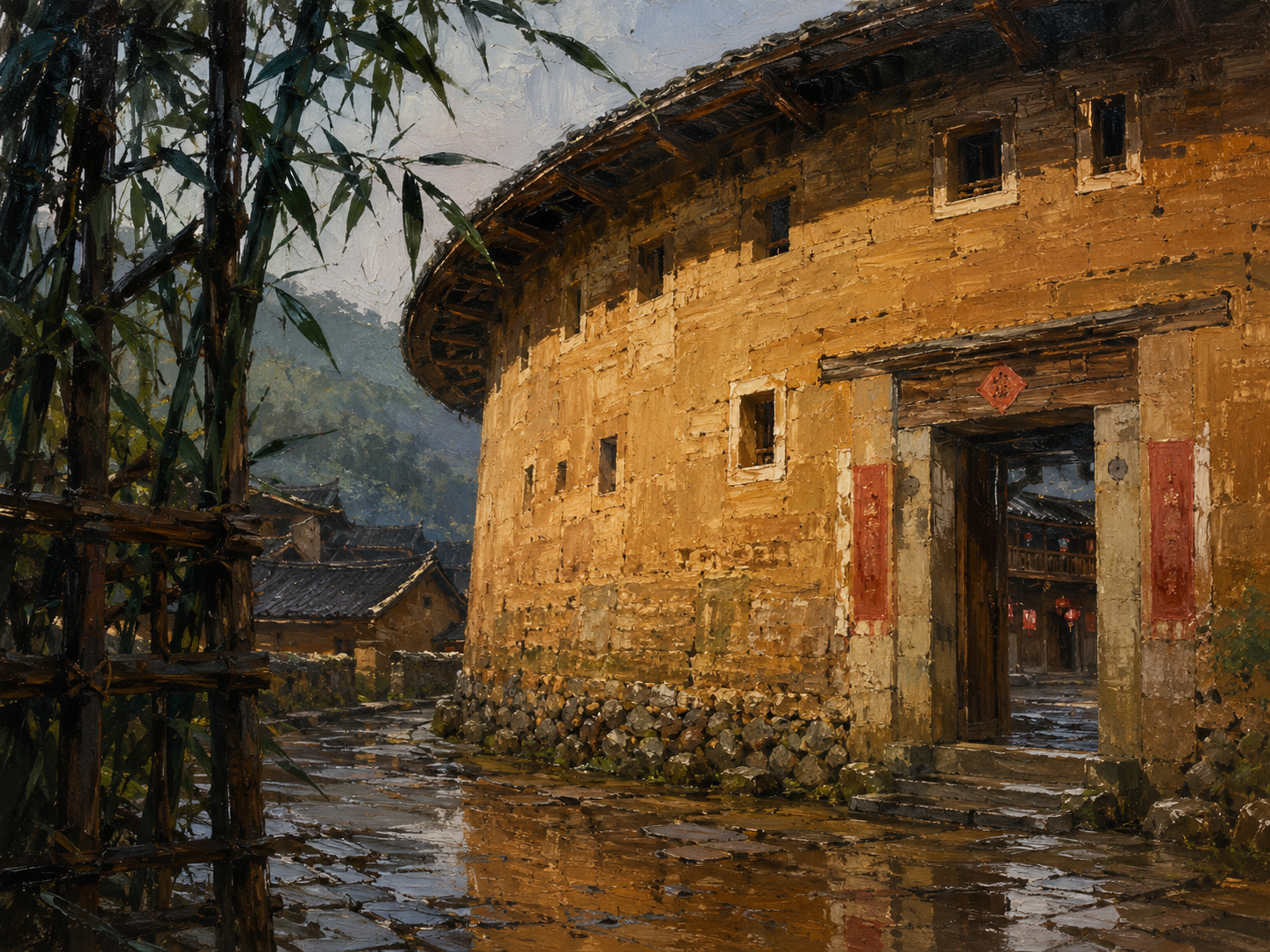
The Warmth Within the Earthen Ring
Critique
1. Introduction This painting depicts a traditional Fujian Tulou, a communal earthen fortress of East Asia. Through textured paint application, the artist captures the heavy materiality of the clay walls and the quiet, damp atmosphere of a rural village. The composition transports the viewer directly to the entrance of a historic community. 2. Description The right side features the curved earthen facade of the Tulou, reinforced with a stone base. An open wooden gate decorated with red banners leads to an inner courtyard. On the left, green bamboo stalks and a rustic wooden fence frame the foreground, while a wet, reflective path leads to distant tiled houses and mountains. 3. Analysis The curved shape of the fortress wall dominates the canvas, creating a strong sense of containment and rhythm. The vertical lines of the bamboo on the left balance the massive horizontal curve of the building. In terms of color, the earthy ochre and deep forest greens are enlivened by the bright red banners. 4. Interpretation and Evaluation The artwork celebrates communal heritage, emphasizing both protective strength and domestic warmth. The artist's impasto technique effectively renders the cracked, weathered texture of the ancient walls. The wet ground reflection introduces a fresh light that contrasts with the old structure, suggesting the enduring flow of daily life across generations. 5. Conclusion With its powerful physical textures and well-balanced composition, the painting captures the rustic dignity of traditional architecture. The initial visual weight of the earthen fortress gives way to a subtle poetry found in the warm doorway light and wet pavement. Ultimately, this scene evokes a peaceful nostalgia for historic communal living.
Same Subcategory
Similar Artworks
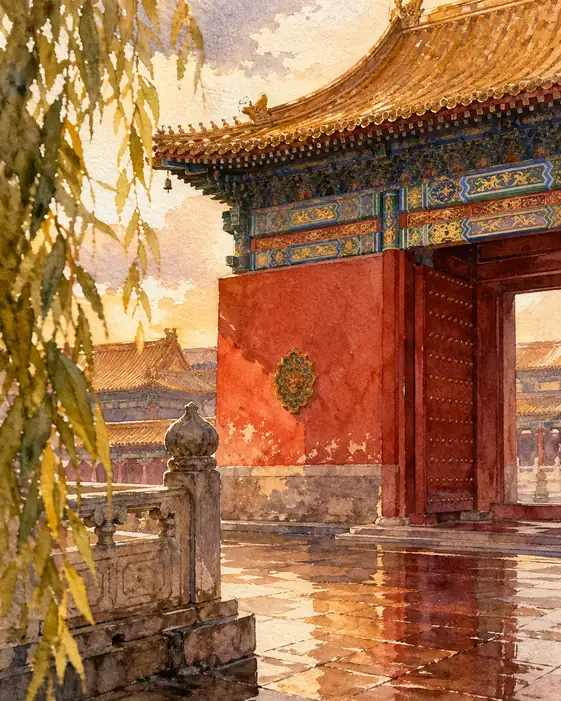 Echoes of Crimson After the Rain
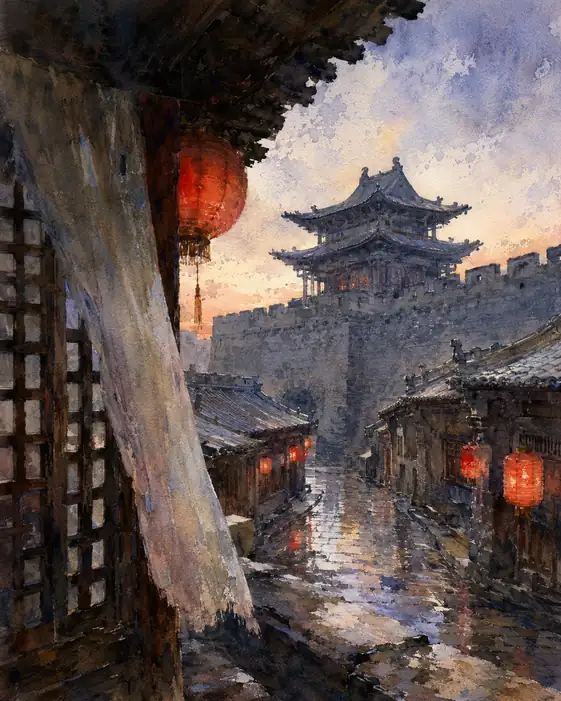 A Soft Beacon in the Gathering Dusk
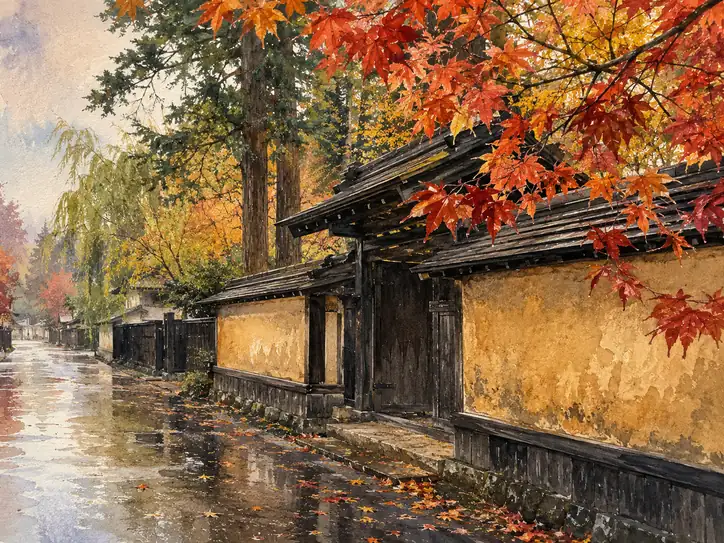 The Rain's Quiet Reflection
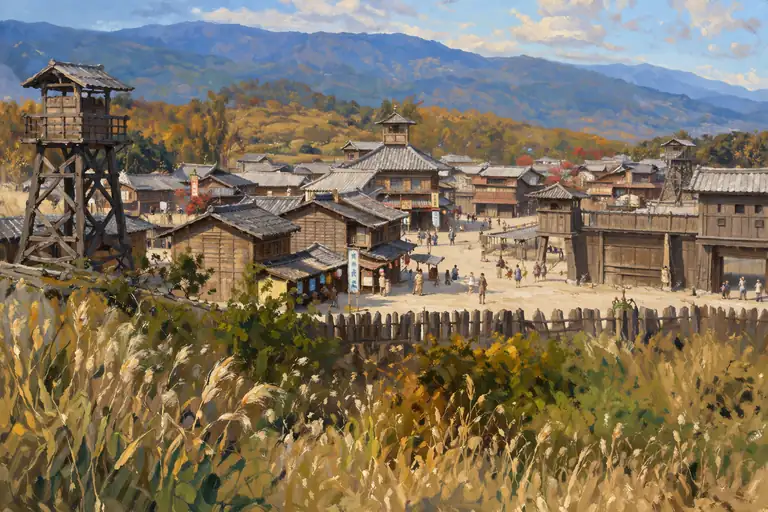 Golden Echoes of a Forgotten Village
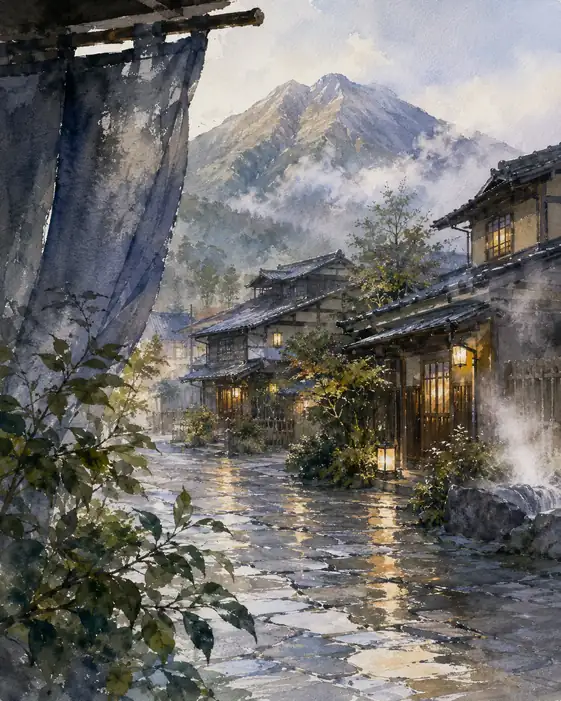 Echoes of the Mist-Bound Inn
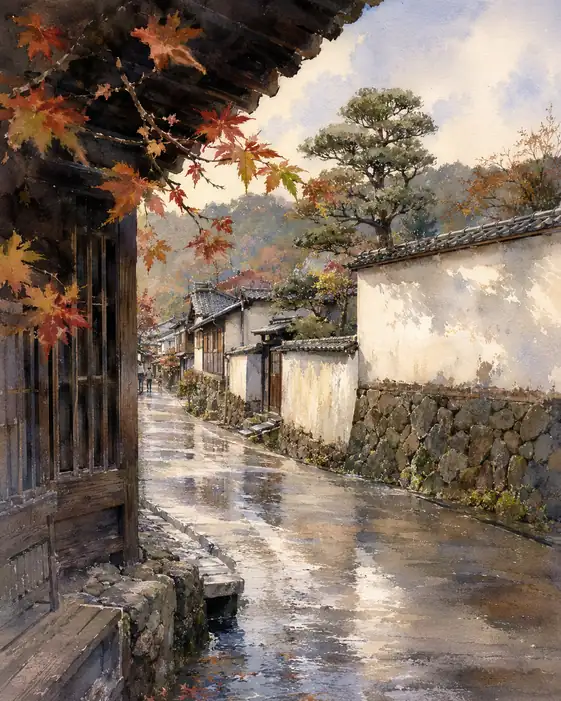 Reflections of a Fading Autumn
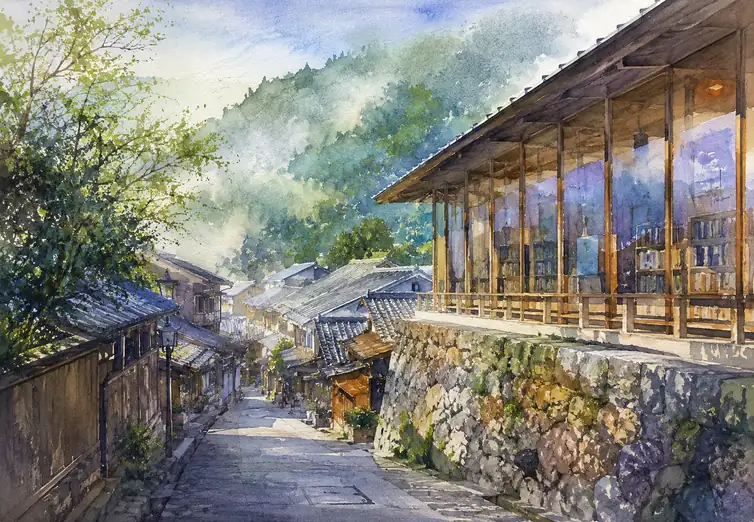 A Dialogue Between Stone and Glass
 The Gilded Heart of the Forest
 Pulse of the Ancient Path
 Where Sunlight Whispers to Vermilion