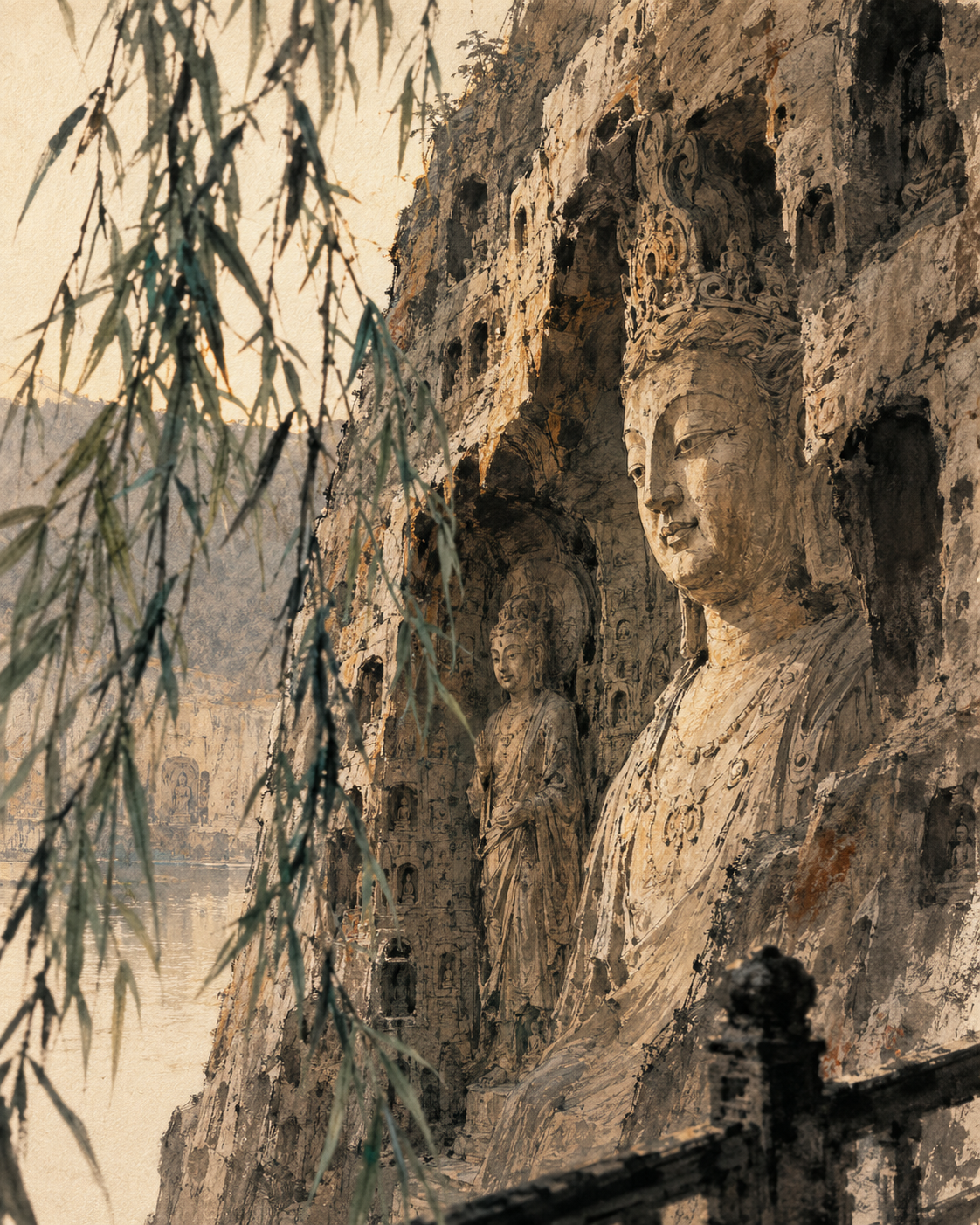
Whispering Willows, Silent Stone
Critique
Introduction This watercolor painting depicts a grand Buddhist grotto complex carved into a cliff overlooking a river. The composition is dominated by a majestic, ornately crowned Buddha statue on the right side. The thin leaves of a willow tree hanging in the left foreground add a poetic layer to the overall scene. Description In the upper right, the colossal Buddha is shown from a side angle, wearing a highly detailed decorative crown. In the adjacent cave, a standing deity statue is carved with fine details indicating drapery and robes. In the background, a tranquil river reflects the distant mountain range and smaller caves along the opposing shore. Analysis The color scheme is characterized by warm earth tones of ochre and sepia, which contrast gently with the cool greenish-grey of the willow leaves. A strong value contrast exists between the dark railing and leaves in the foreground and the pale water behind them. The diagonal cliff edge creates a dynamic sense of movement within the vertical format. Interpretation and Evaluation This artwork symbolizes the coexistence of human devotion and the ephemeral qualities of nature. By placing willow branches in front of the stone monument, the painting highlights a contrast between organic life and ancient stone. The careful rendering of light and shadow gives the weathered carvings a quiet, living presence. Conclusion In conclusion, the painting beautifully captures the serene spirit of a historical sanctuary through a unique visual frame. While the viewer is initially drawn to the impressive size of the main Buddha, the willow leaves guide the eye to the surrounding atmosphere. By blending realistic details with soft textures, this piece remains a remarkable masterpiece.
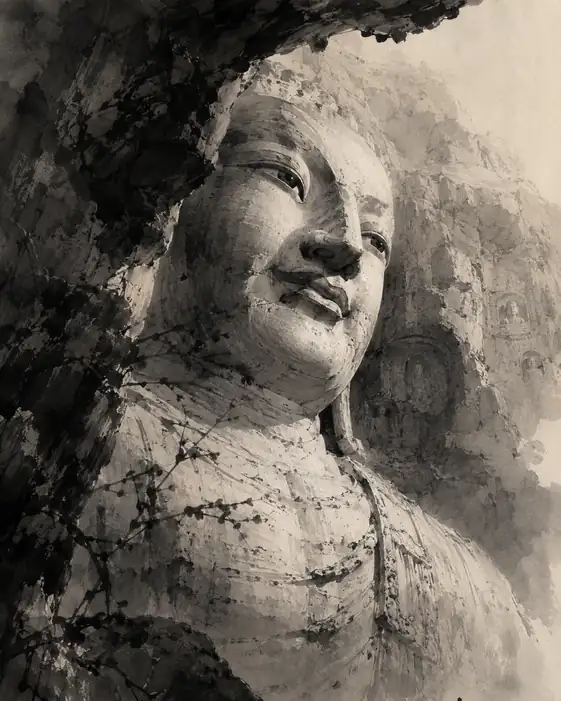 Echoes of Impermanence
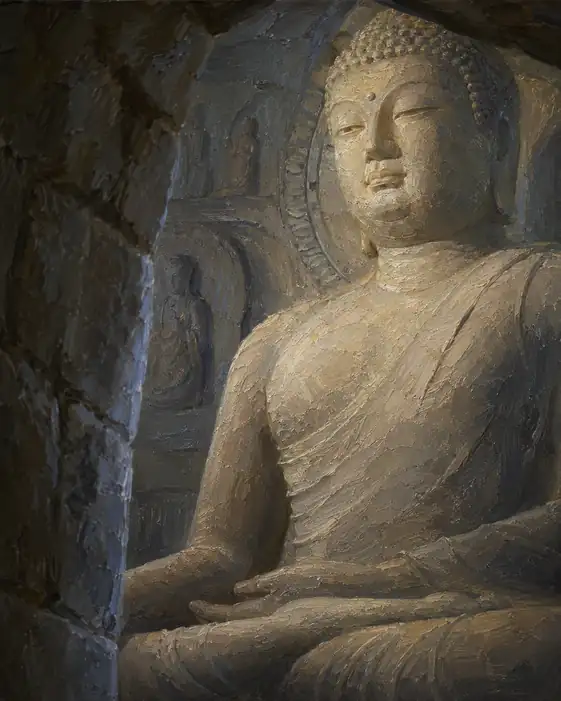 A Smile Out of the Darkness
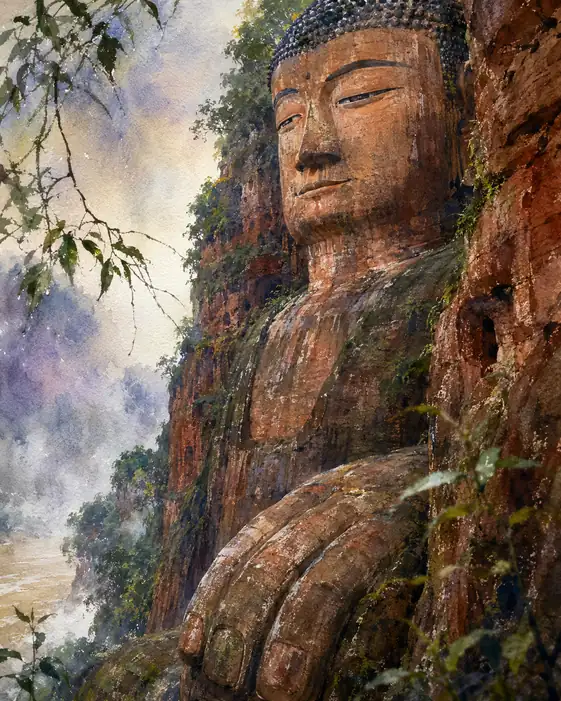 One with the Mountain
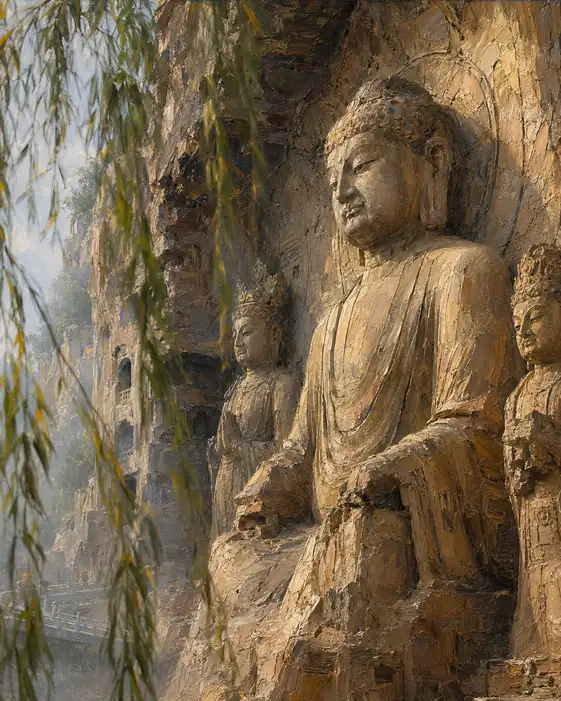 Eternal Smile in the Stone
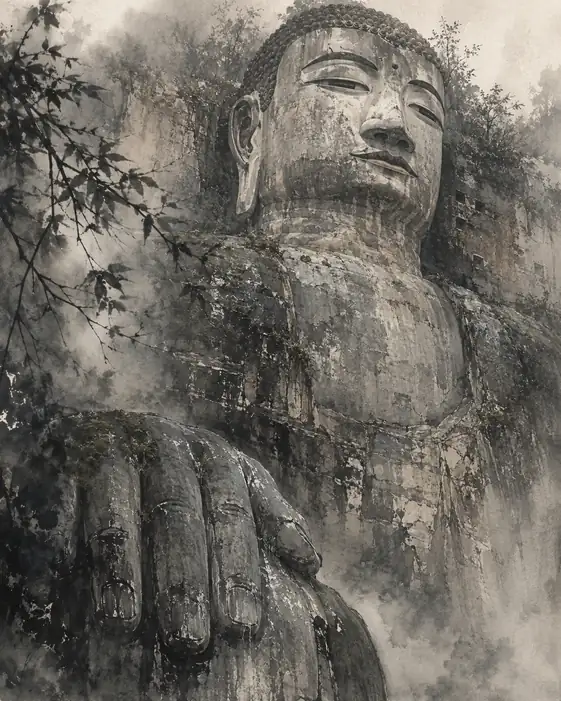 A Prayer Carved in Mist and Stone
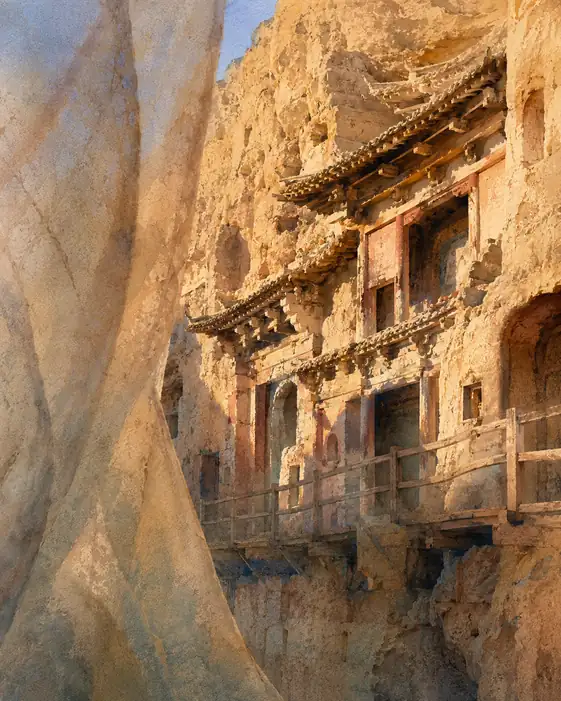 Quiet Solitude on the Ochre Cliff
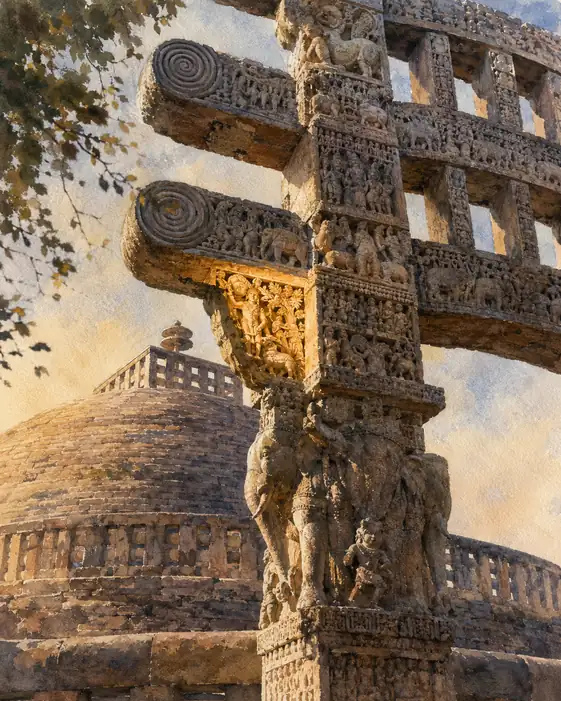 The Gate of Eternal Peace
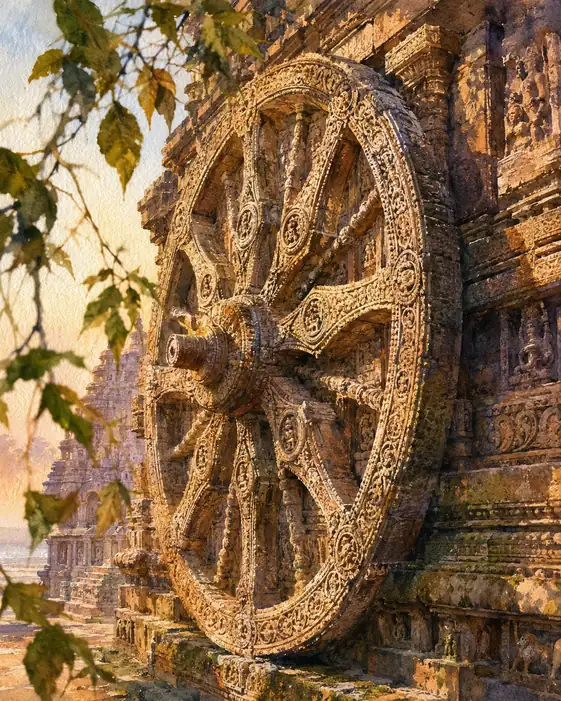 Where Time Whispers in Golden Dust
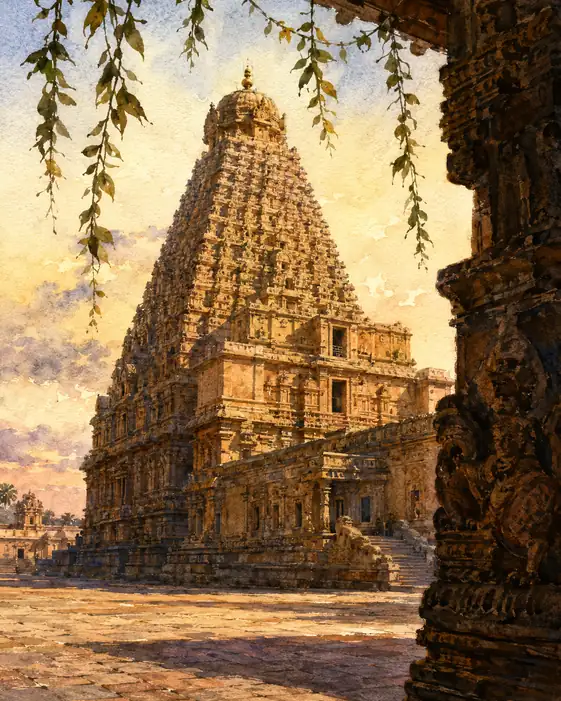 Silent Sanctuary of the Golden Dusk
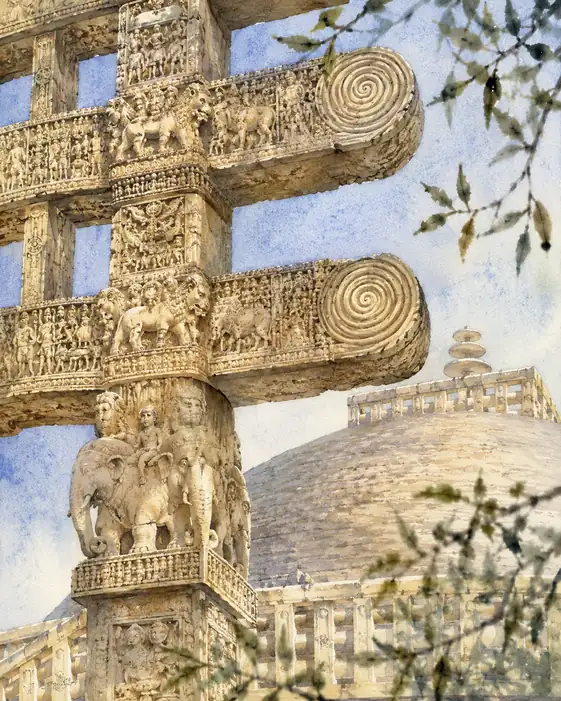 Gateway to the Infinite
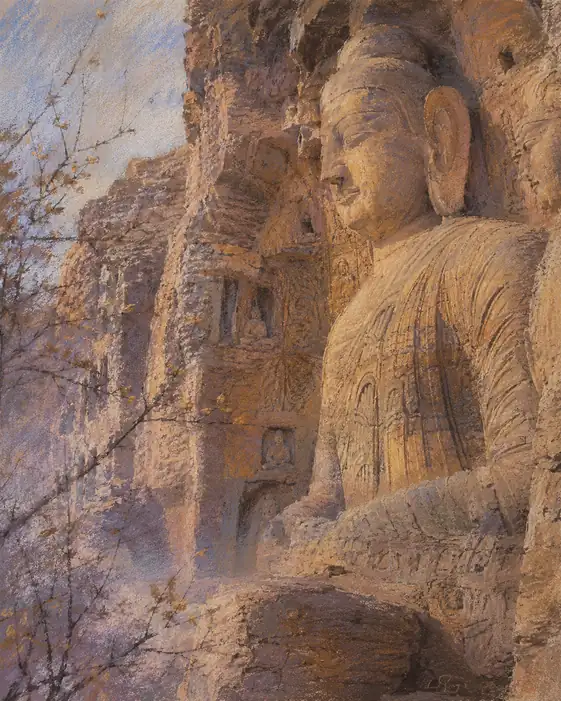 Transient Light, Eternal Smile