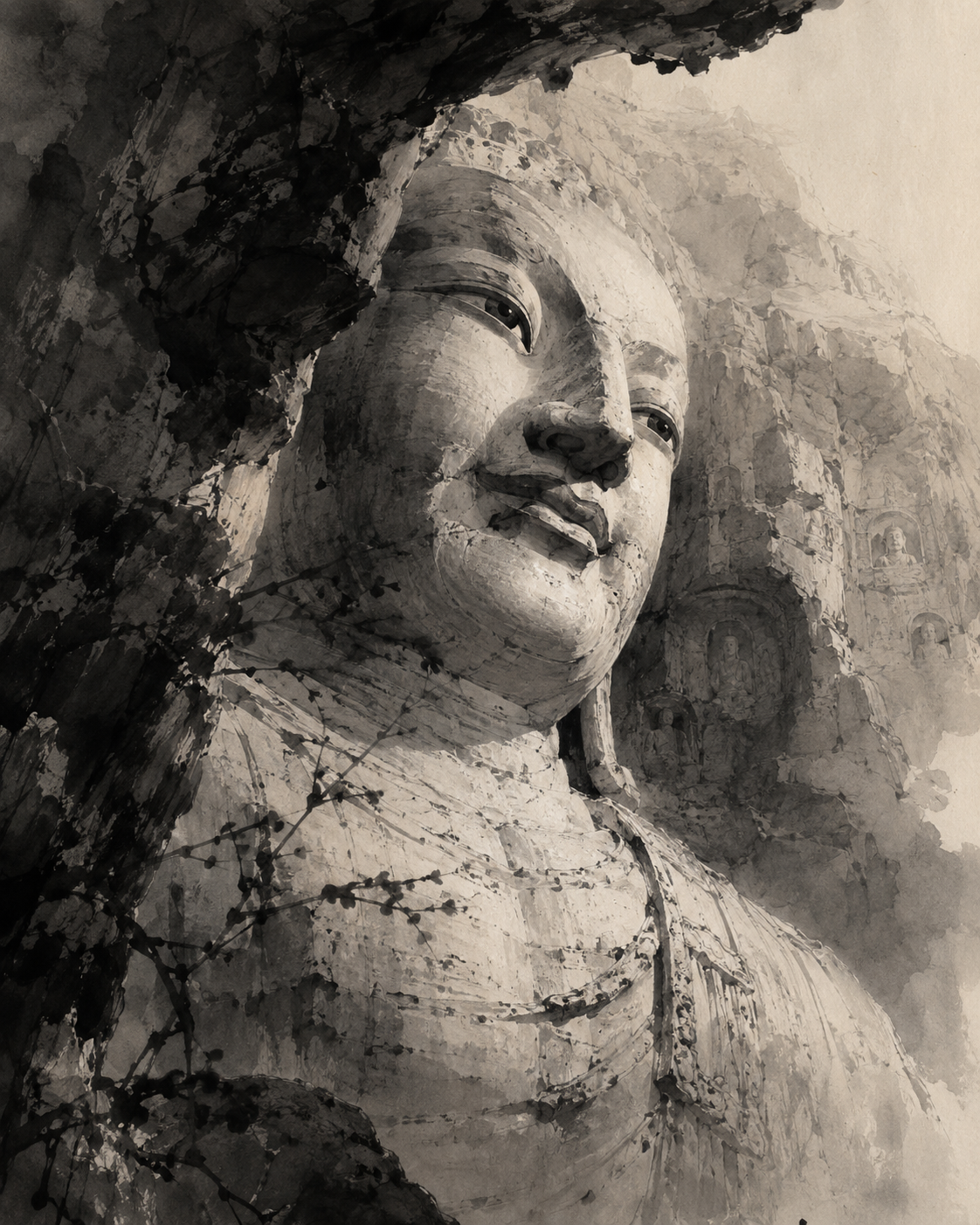
Echoes of Impermanence
Critique
Introduction This monochrome watercolor painting depicts a massive stone Buddha carved into a towering cliffside. Captured from a dramatic low angle, the grand statue dominates the center and right sections of the composition. The interplay between the dark foreground and the light-filled background evokes a deep sense of historical solemnity and spiritual peace. Description The Buddha is shown with partially opened eyes, gazing calmly into the distance with a serene expression. Fine cracks and weathered textures are meticulously detailed across the surface of the stone statue, showing the passage of time. To the right, smaller Buddhist figures are visible inside several caves carved into the distant cliff face. Analysis The color palette is strictly limited to shades of black, grey, and sepia, creating a unified and cohesive atmosphere. A strong tonal contrast is established between the deep black ink in the foreground and the luminous upper right background. The vertical perspective successfully emphasizes the monumental scale of the primary sculpture and surrounding ruins. Interpretation and Evaluation This artwork beautifully represents the endurance of spiritual faith and the natural erosion of ancient structures over centuries. By detailing the decayed surfaces rather than polishing them, the painting highlights the beauty of impermanence and nature's embrace. The masterfully controlled lighting gives the cold stone a subtle, living warmth. Conclusion In conclusion, the painting demonstrates the profound emotional depth that can be achieved through a monochrome medium. While the initial view captures the grand scale of the ruins, a closer look reveals rich textures and subtle shadows. By merging traditional Asian ink techniques with realistic rendering, this artwork stands as a powerful masterpiece.
Same Subcategory
Similar Artworks
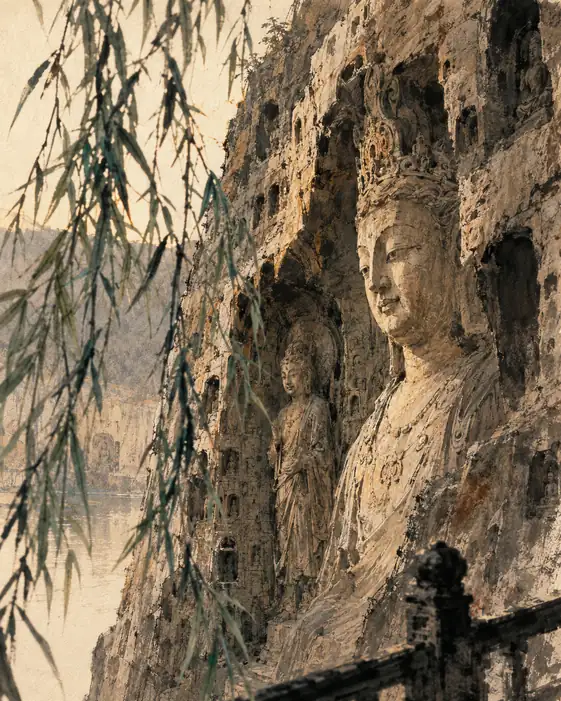 Whispering Willows, Silent Stone
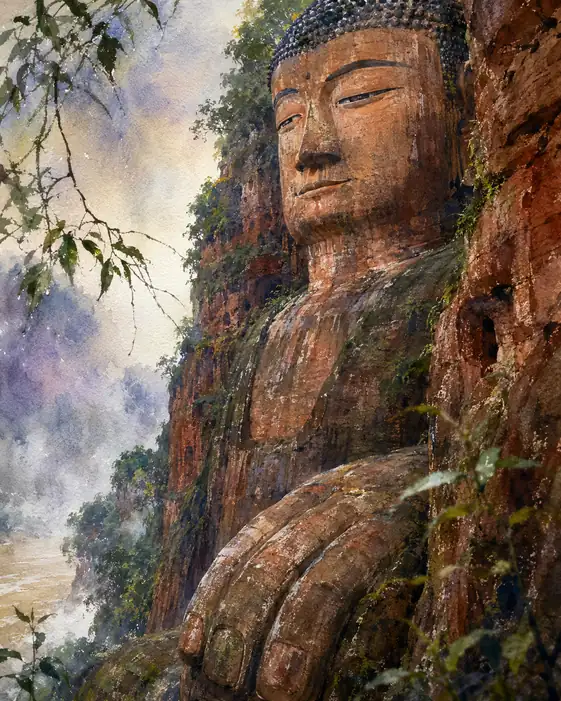 One with the Mountain
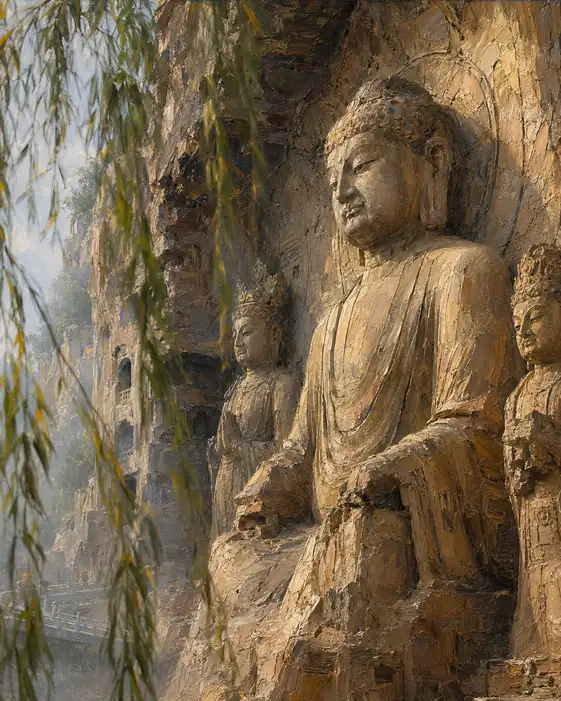 Eternal Smile in the Stone
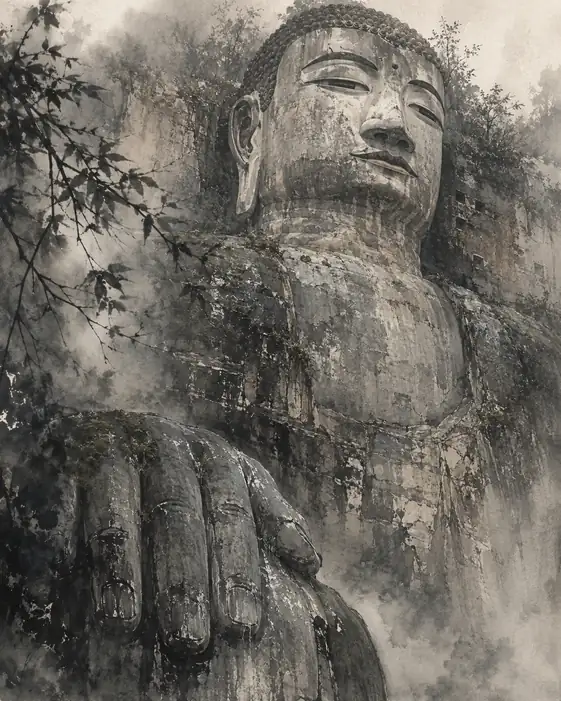 A Prayer Carved in Mist and Stone
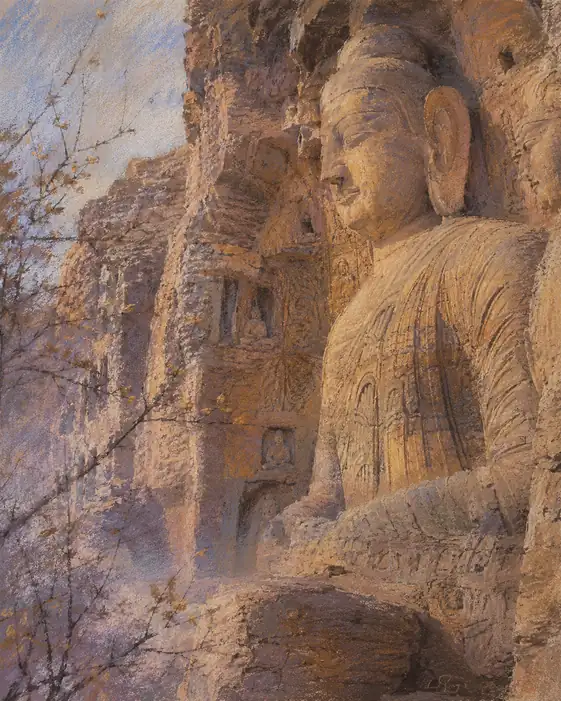 Transient Light, Eternal Smile
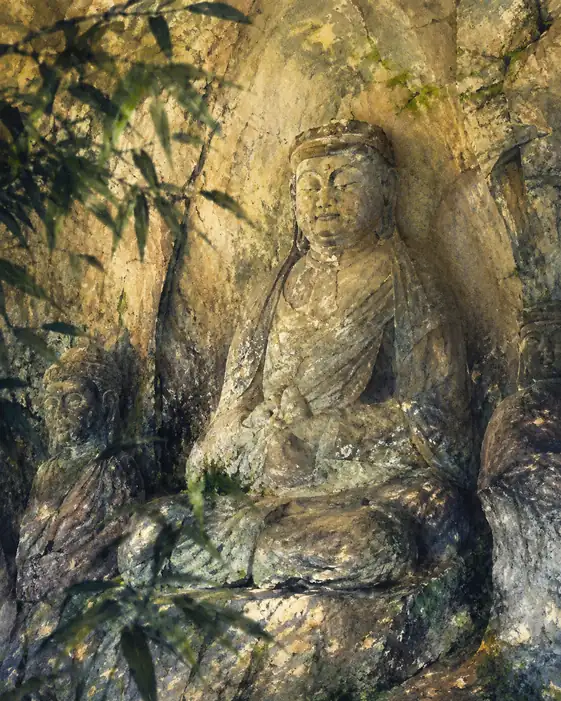 Eternal Resonance: The Silent Stone Soul of the Mountain
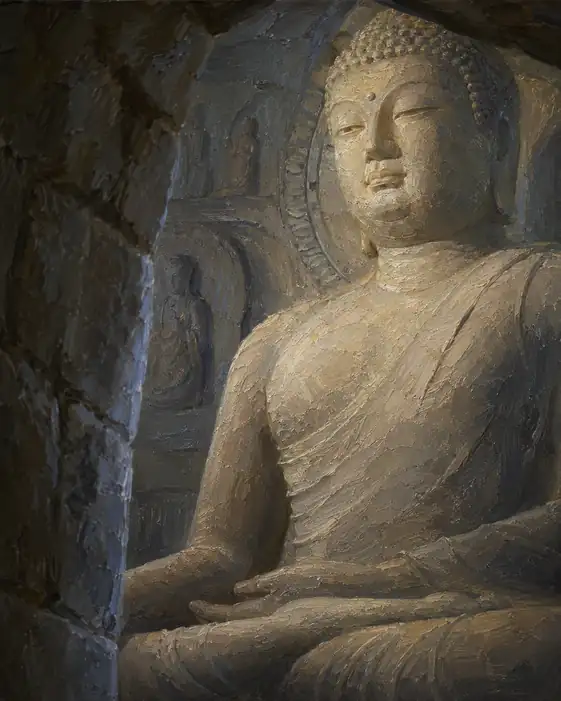 A Smile Out of the Darkness
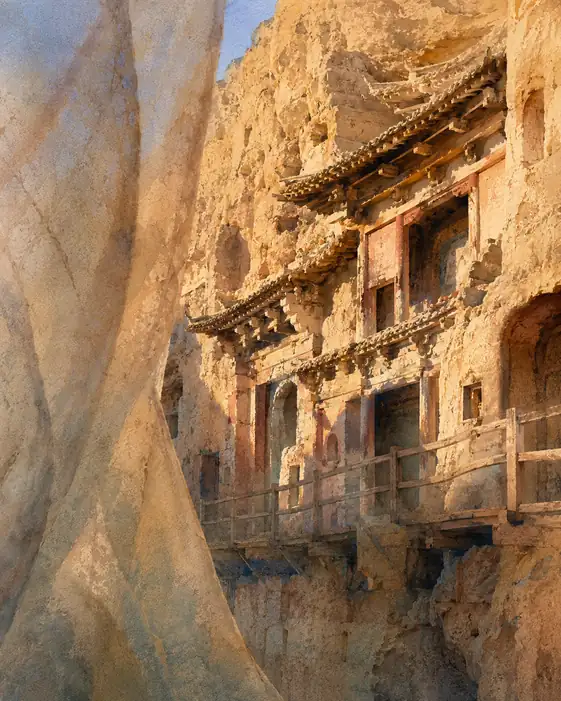 Quiet Solitude on the Ochre Cliff
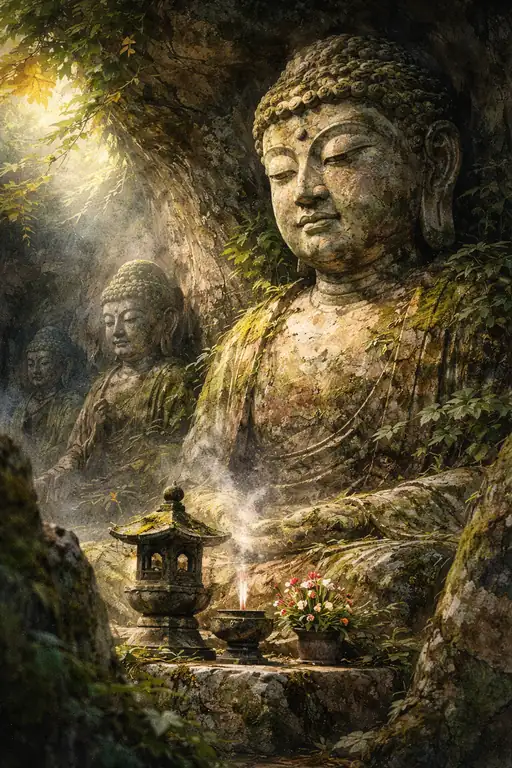 Eternal Stillness: The Sunlit Path of the Stone Buddha
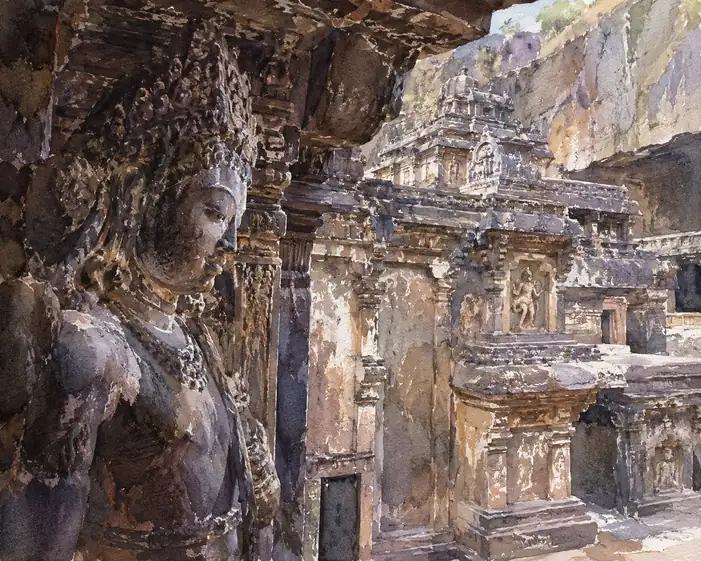 Dialogues in Shadow and Light