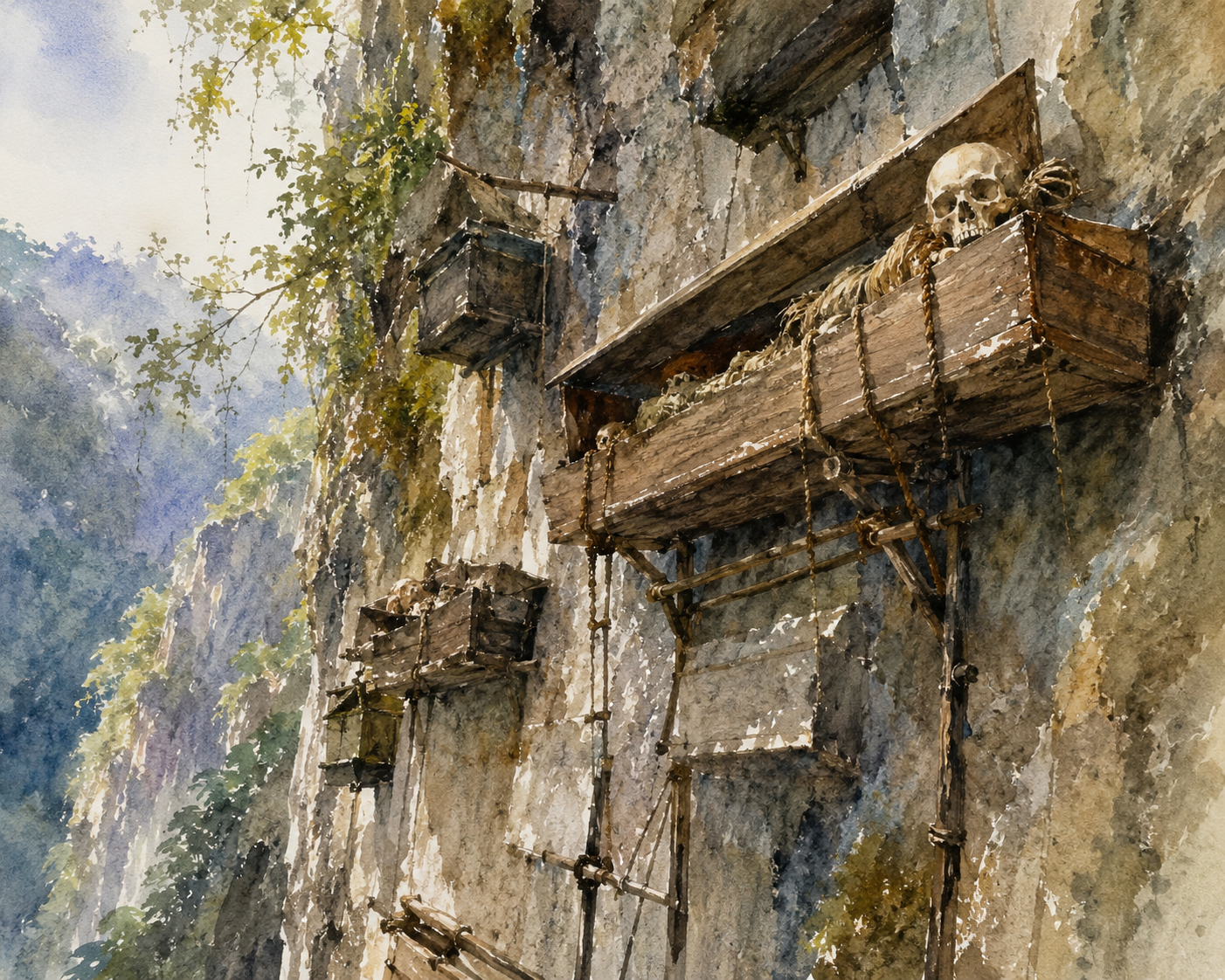
Cradle in the Mist
Critique
1. Introduction This watercolor painting depicts mysterious wooden hanging coffins attached to a steep cliffside. The close-up perspective emphasizes the vertical scale of the towering rock face. The artist captures a silent scene filled with historical gravity and solemnity. This work invites viewers to ponder the boundaries between life and death. 2. Description On the right, several weathered wooden coffins bound by ropes are secured to the rock. The largest coffin in the foreground reveals a white human skull looking outward. To the left, a deep valley opens up with hazy mountains and green vegetation draping from the rocks. Dark shadows cover the wet stone surface. 3. Analysis The piece utilizes a limited palette of earth tones like brown and gray, contrasted with green leaves. Watercolor washes are layered carefully to render the rugged texture of the cliff and wood. Soft light illuminates the skull and ropes, highlighting their intricate details. Diagonal wooden supports create a subtle sense of tension. 4. Interpretation and Evaluation This artwork reflects a unique cultural perspective on death and its integration with the natural world. Technically, the artist shows exceptional skill in portraying the textures of decayed wood and dry bone. The atmospheric mist in the valley adds a profound silence and reverence to the canvas. It is a highly successful and evocative painting. 5. Conclusion Although the skull might initially seem unsettling, deeper contemplation reveals a poetic sadness and historical depth. The artist successfully recreates the heavy atmosphere of this secluded sanctuary. Ultimately, the painting portrays the human acceptance of mortality within nature. It leaves the viewer with a sense of awe and quiet introspection.
Same Subcategory
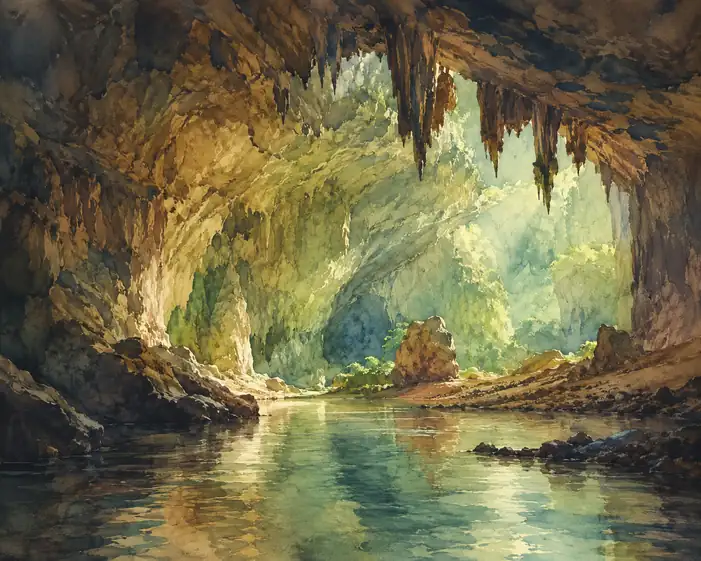 Where Light Breaks the Silence
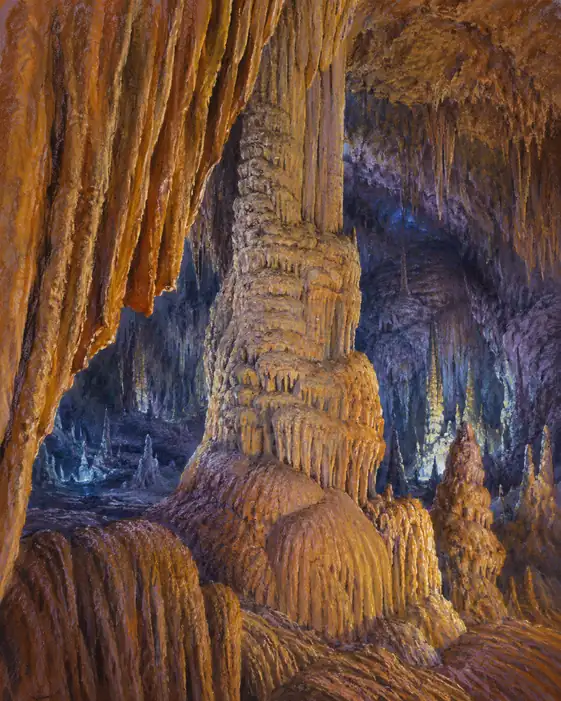 Pillars of the Eternal Depths
Similar Artworks
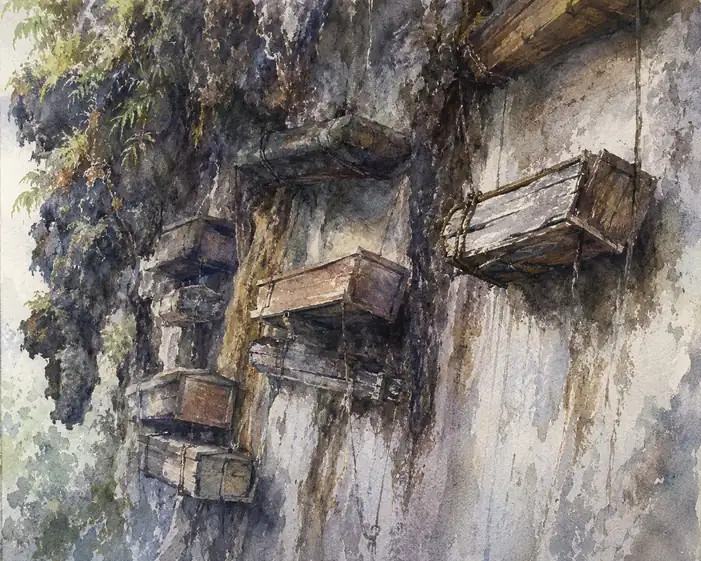 Cradles of the Sacred Cliff
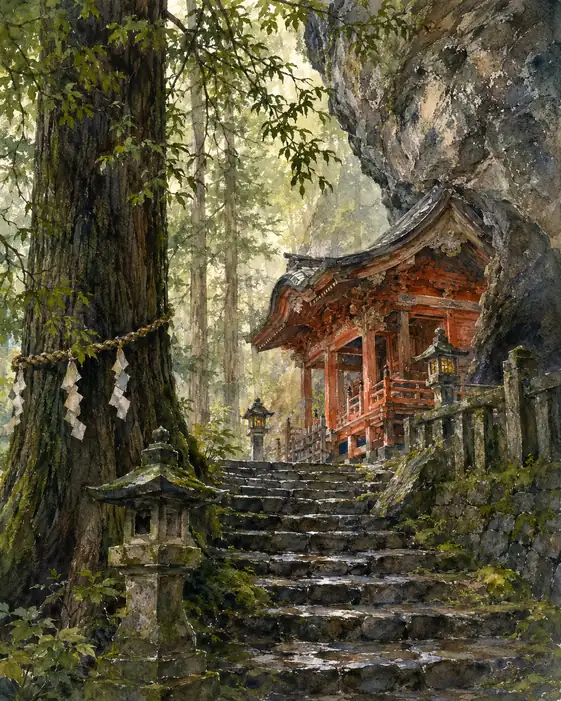 The Ancient Spirit’s Sanctuary
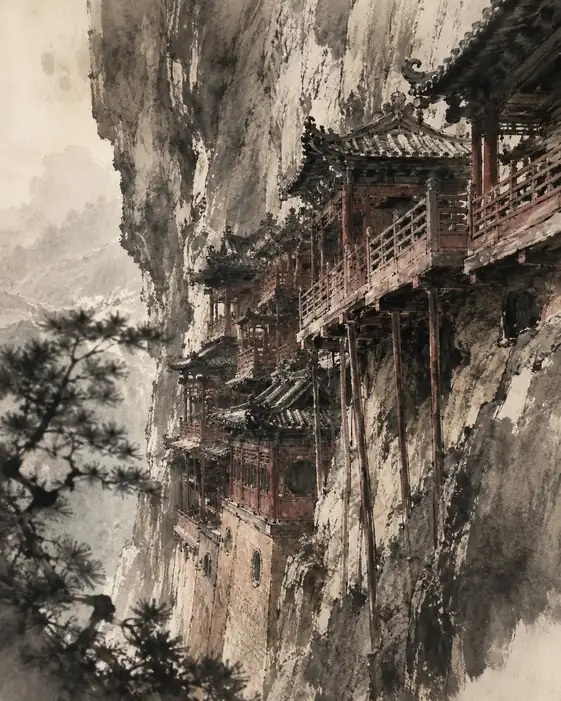 Silence Breathing on the Cliff
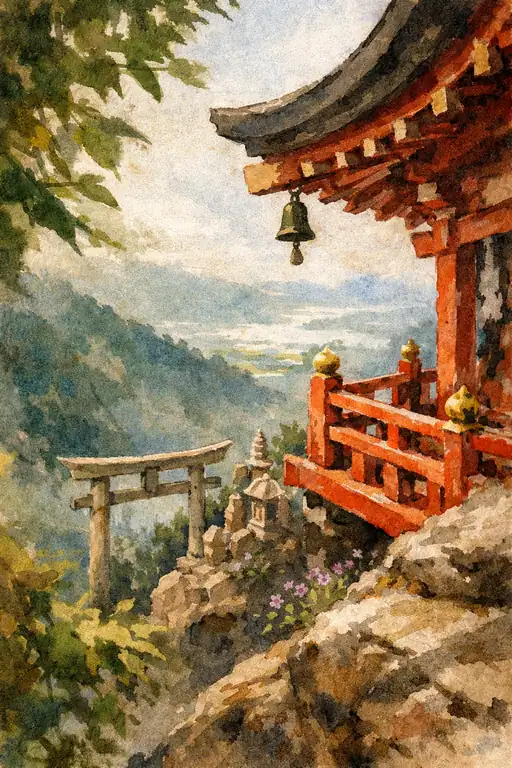 Echoes from the Misty Heights
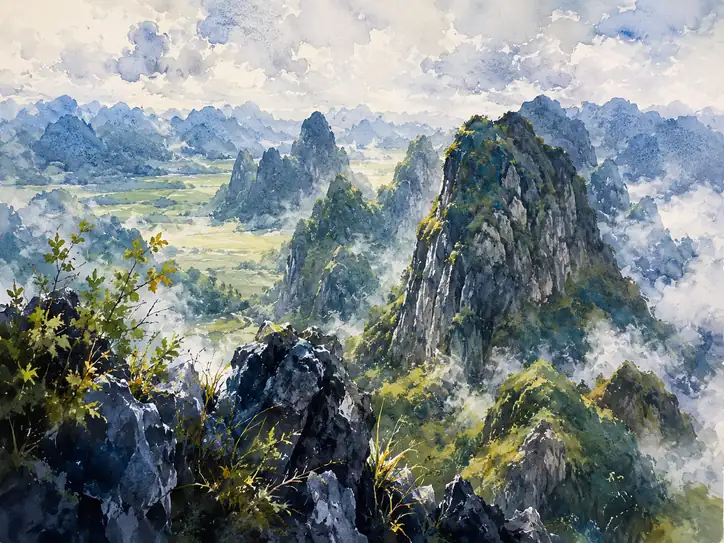 Where the Earth Whispers to the Sky
 Requiem of a Prehistoric Giant
 Threshold of the Sacred Mist
 Prayer in the Mountain Mist
 The Path across the Silent Gorge
 Echoes from the Sacred Void