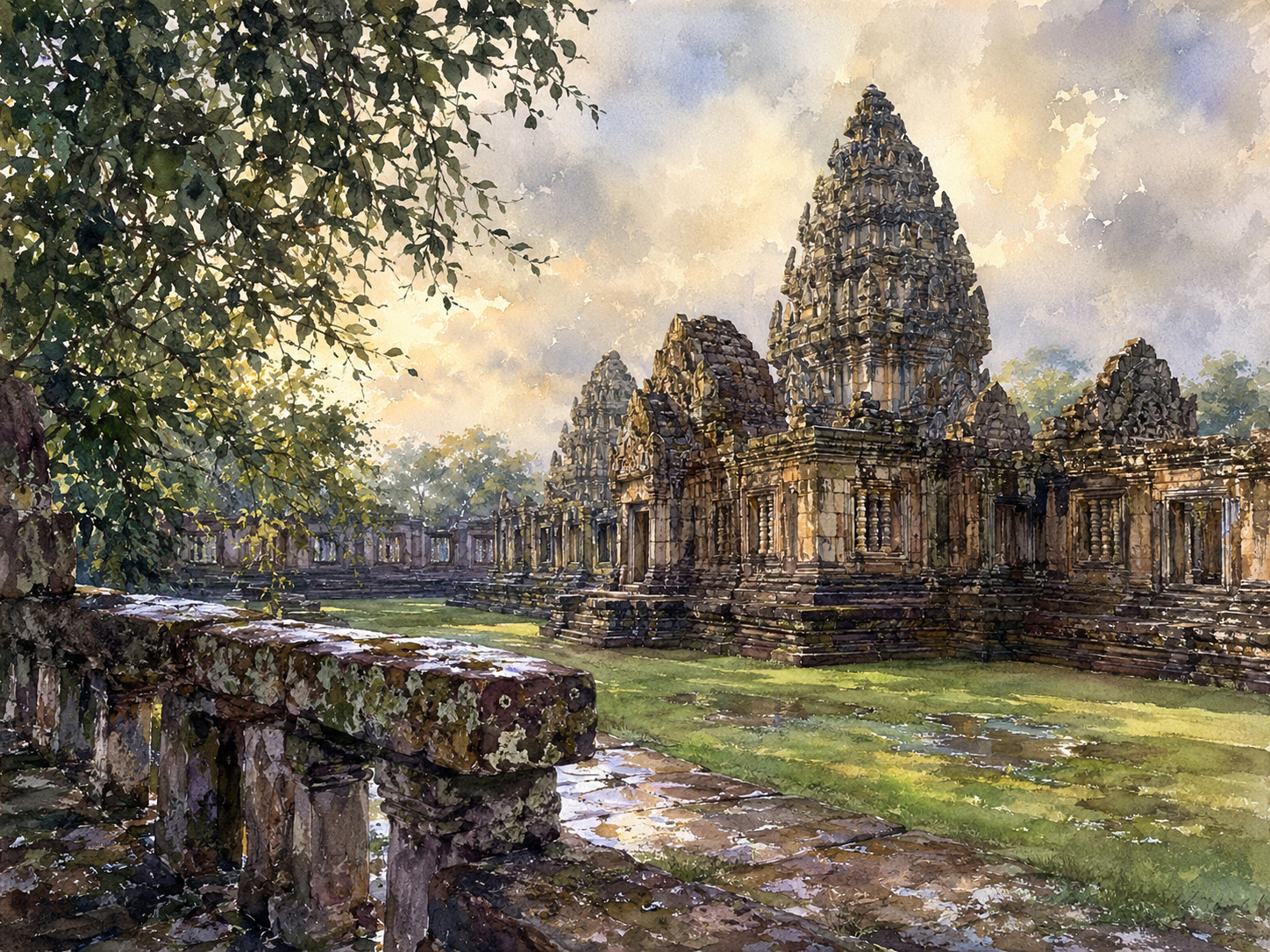
Where History Sleeps in Green
Critique
1. Introduction This watercolor painting depicts an ancient Southeast Asian stone temple nestled within lush green nature. The artwork conveys a tranquil relationship between historical ruins and vibrant natural elements. The warm light enveloping the scene guides the viewer into a contemplative space. This essay will analyze the work's composition and color harmony. 2. Description In the left foreground, a weathered stone railing covered with moss provides a strong sense of depth. Beyond it, a magnificent temple complex with detailed Khmer-style spires stands tall on a grassy field. Overhanging tree branches frame the left side, casting soft shadows on the ground. A soft, glowing sky fills the background. 3. Analysis The artist employs an organic palette dominated by greens and earthy browns, emphasizing both decay and life. The contrast between the dark foreground and the illuminated background creates a dramatic light distribution. Fluid watercolor techniques, such as washes and soft edges, effectively represent the humid atmosphere. The stable composition enhances the monument's grandeur. 4. Interpretation and Evaluation The ancient temple integrated with nature symbolizes the rise and fall of civilizations and the permanence of the natural world. The juxtaposition of weathered stone and fresh leaves suggests the cycle of life. With meticulous detailing and lyrical lighting, the work successfully reveals the dignity of historical heritage, achieving high aesthetic value. 5. Conclusion This painting is a highly accomplished landscape that beautifully balances architectural form and natural beauty. It captures the poetic quality of passing time and the peaceful coexistence of history and nature. The initial grand impression deepens into a sense of quietude upon closer inspection. This harmonious landscape leaves a lasting, calm impression.
Same Subcategory
 Golden Whispers in the Deep Grotto
Similar Artworks
 Eternity Under the Blue Vault
 Silent Prayers in Sandstone
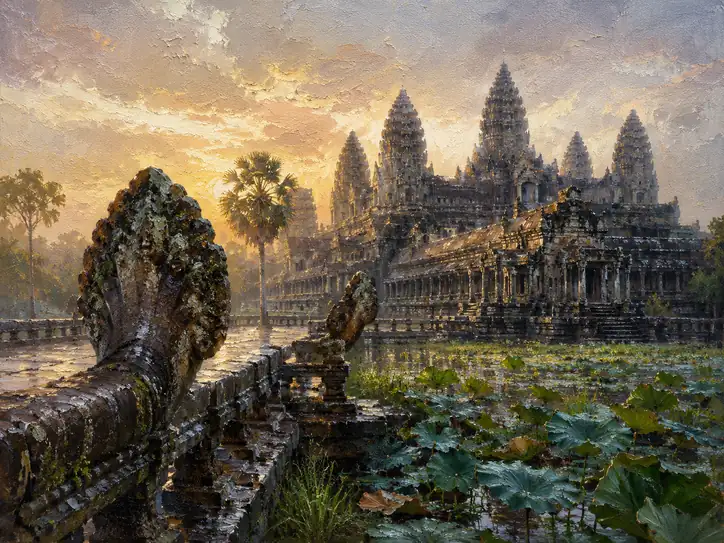 Whispers of the Golden Ruin
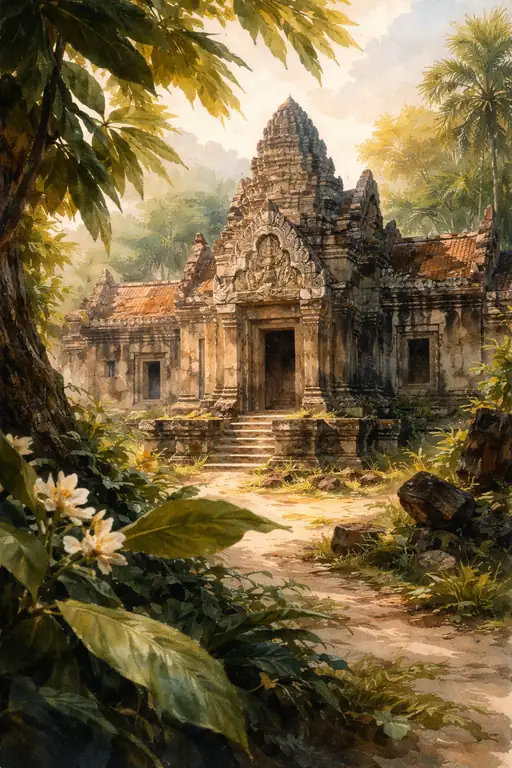 Echoes of the Khmer in the Emerald Jungle
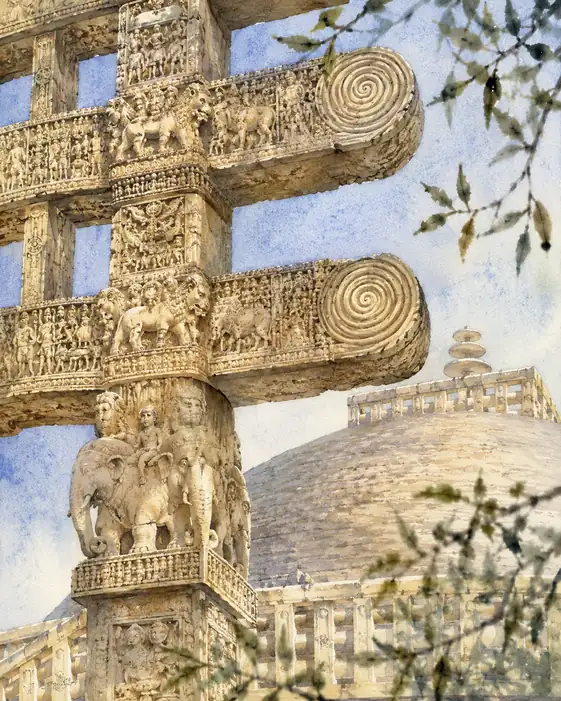 Gateway to the Infinite
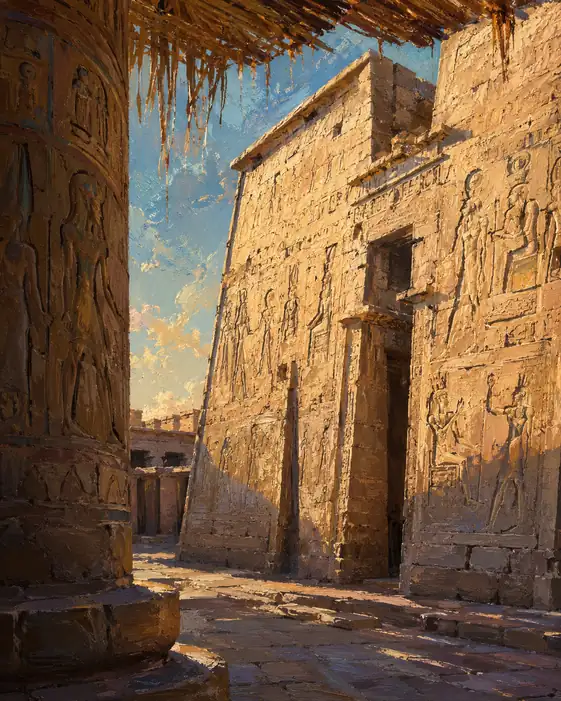 Under the Straw Canopy of Time
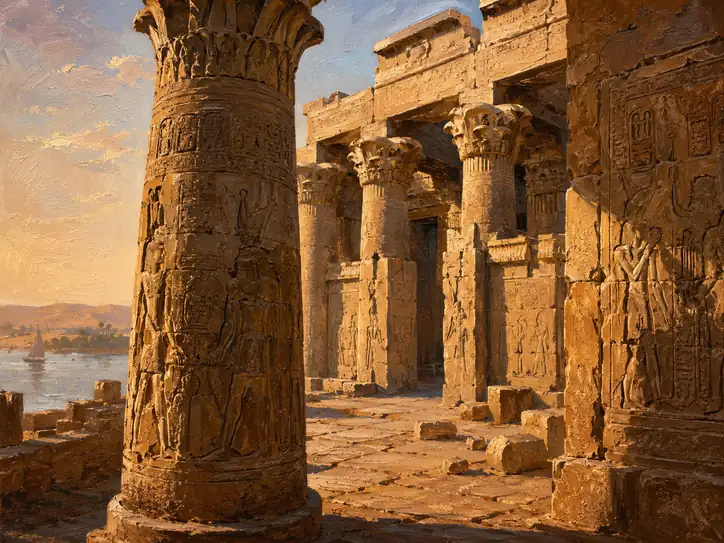 Whispers of the Golden Nile
 A Golden Prayer in the Silence of Millennia
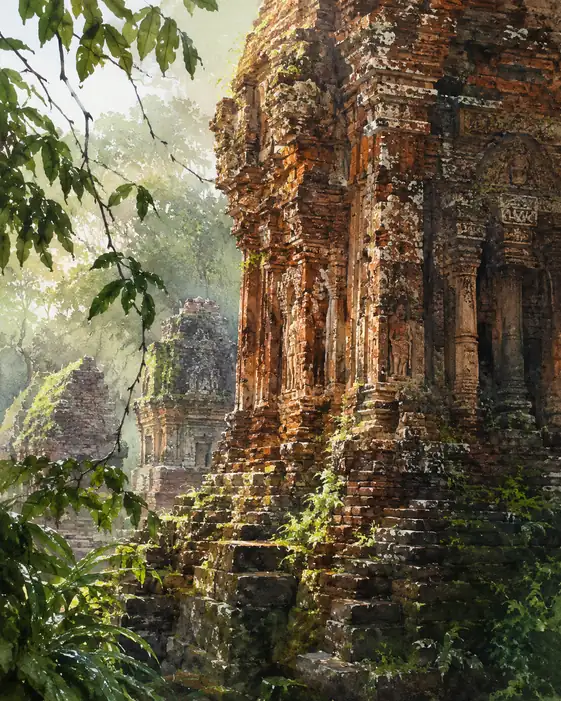 Where Time Dissolves into Green
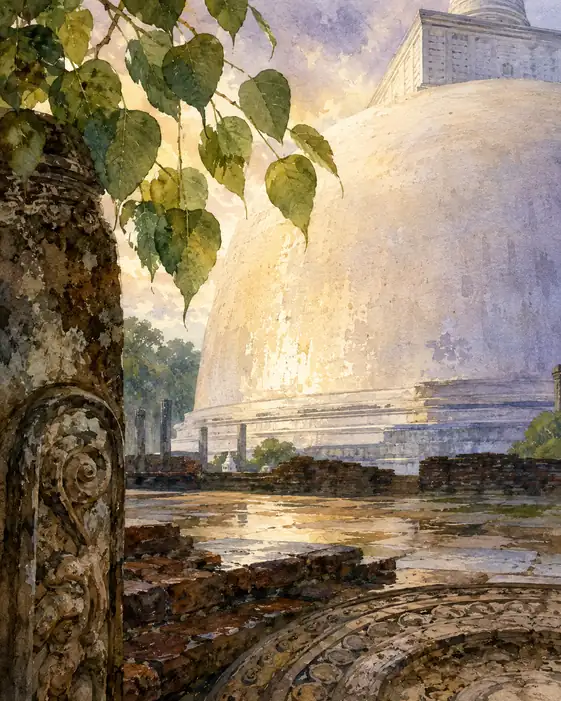 The White Sanctuary of Dawn