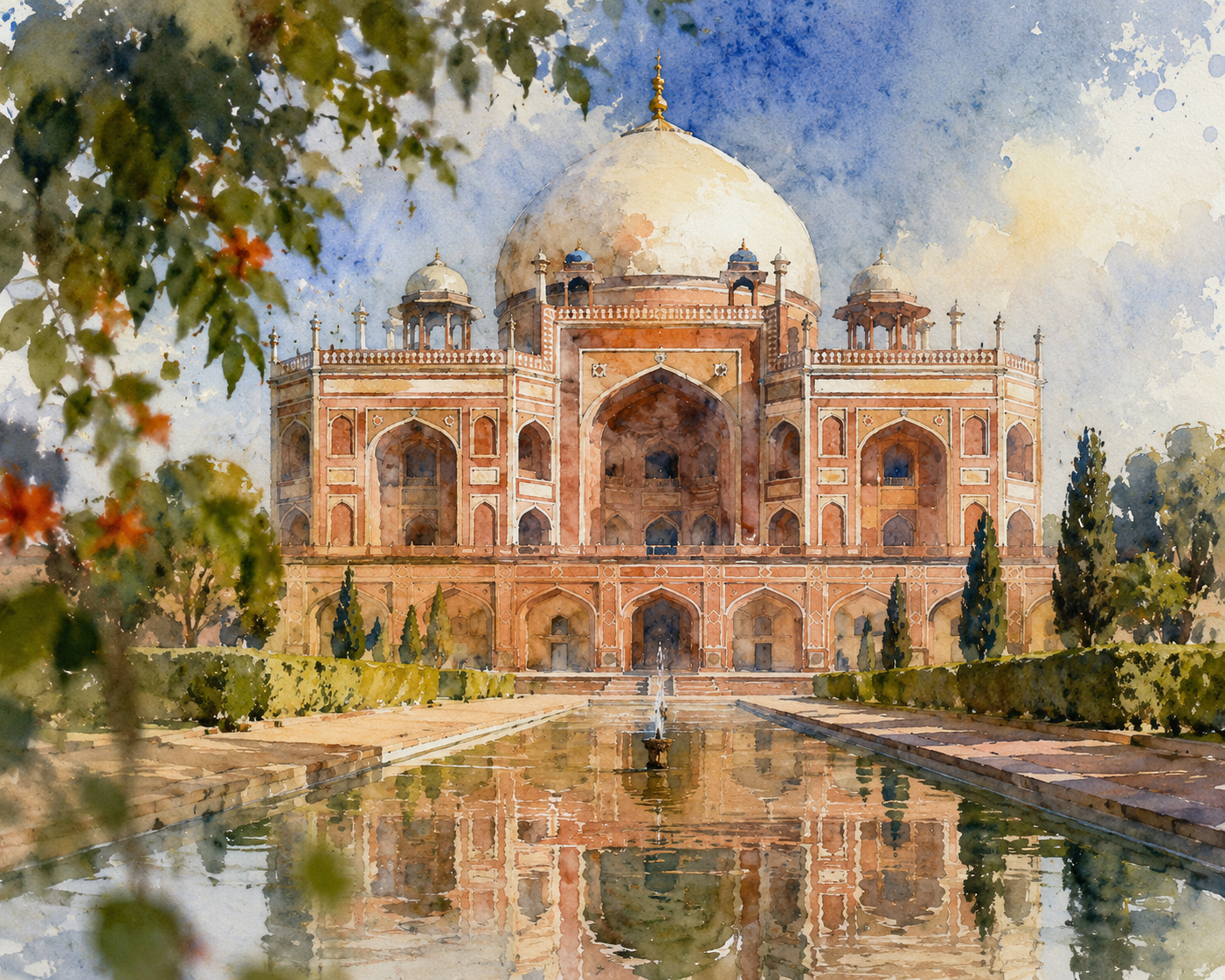
Reflections of an Empire's Dream
Critique
1. Introduction This watercolor painting depicts Humayun's Tomb, a key Mughal heritage site in Delhi, India. The primary subjects are the grand mausoleum and the water channel. Although its creation year and dimensions are unknown, it is painted with thin washes. The symmetrical composition emphasizes the geometric harmony of the architecture. 2. Description The red sandstone tomb stands centrally, showing its symmetric facade. In front of it, a long pond extends forward, reflecting the structure on its calm surface. A small fountain stands in the center of the water, creating delicate ripples around it. Blurred green leaves and orange flowers frame the scene from the left foreground. 3. Analysis The color palette features a contrast between the warm terracottas of the tomb and the cool blues of the sky. Soft washes blend the clouds and sky, creating an atmospheric sky. A one-point perspective guides the viewer's eye along the water path toward the dome. The foreground leaves frame the view, establishing depth. 4. Interpretation and Evaluation The painting captures the serene grandeur and harmony of Mughal architecture. Combining delicate colors with precise drawing, it represents the contrast between solid stone and fluid water. The watery reflection shows high technical skill, creating a poetic interaction. This work holds artistic value beyond mere documentation. 5. Conclusion At first, the viewer is captivated by the symmetric structure. Over time, one notices how natural elements like the moving water and leaves bring life to the scene. By balancing the static tomb and dynamic water, the work induces a peaceful feeling. In summary, it is a high-quality watercolor showing historical solemnity.
Same Subcategory
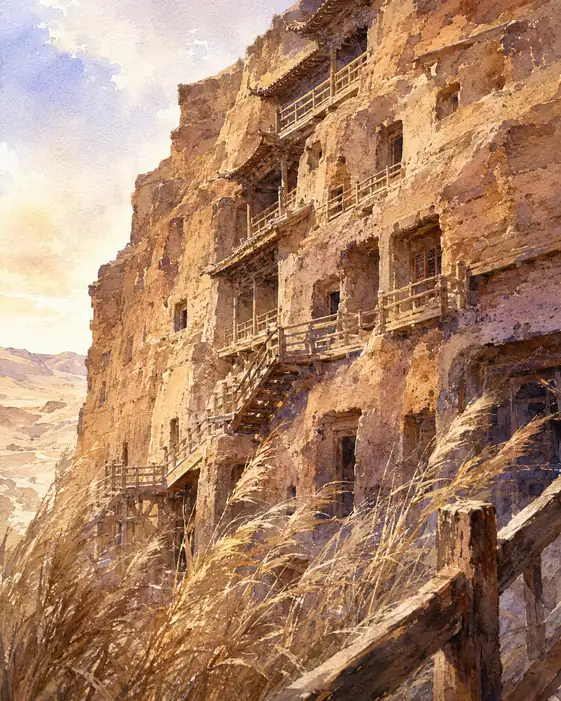 Prayers Swaying in the Winds of Time
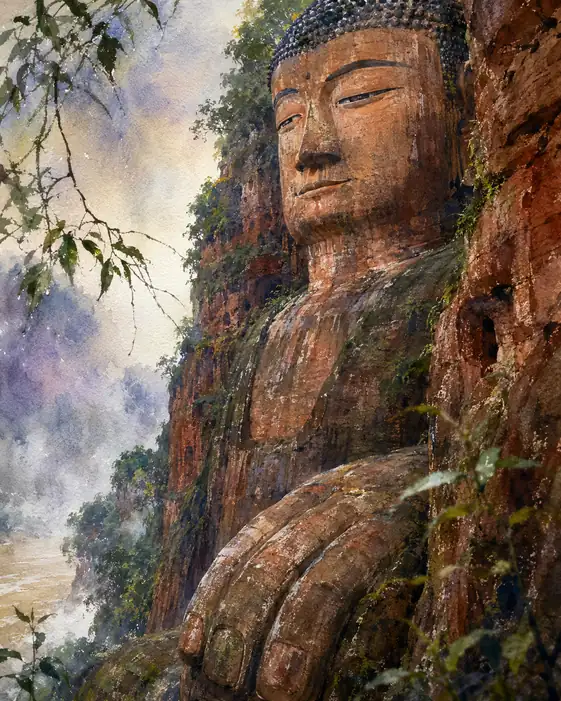 One with the Mountain
Similar Artworks
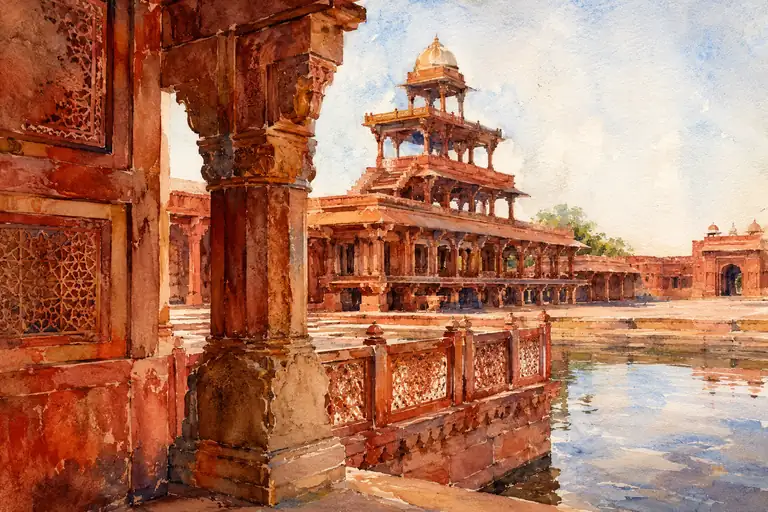 The Palace of Liquid Mirrors
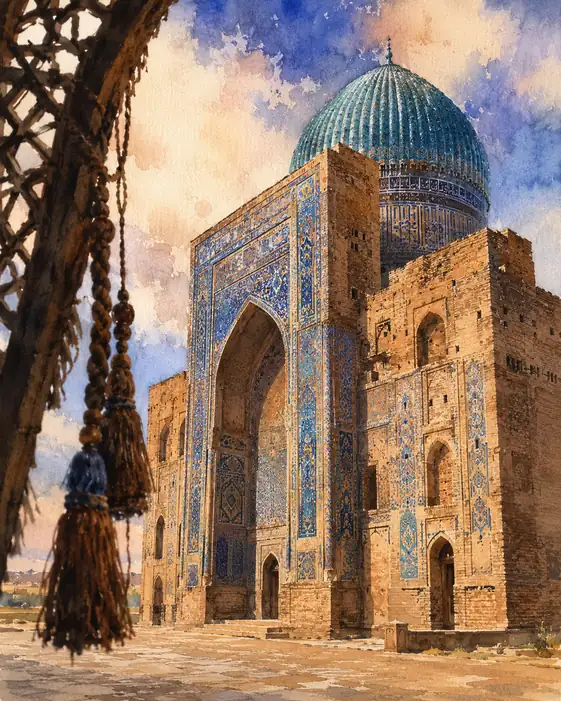 Azure Dreams in the Golden Twilight
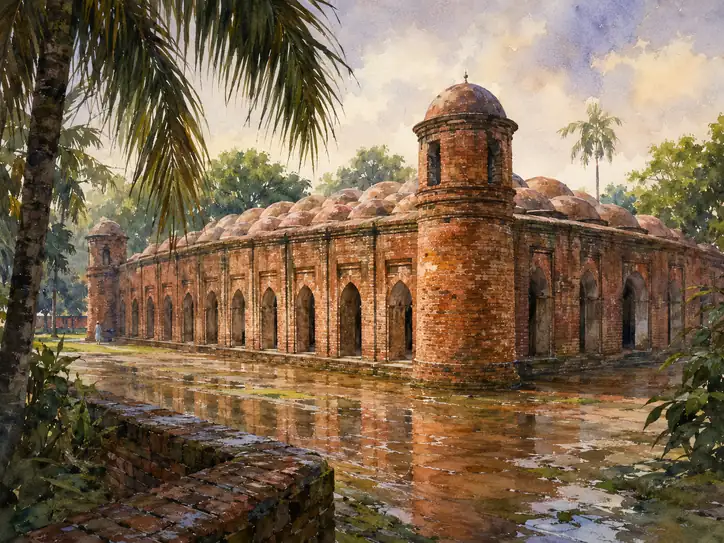 A Shimmering Prayer in the Rain
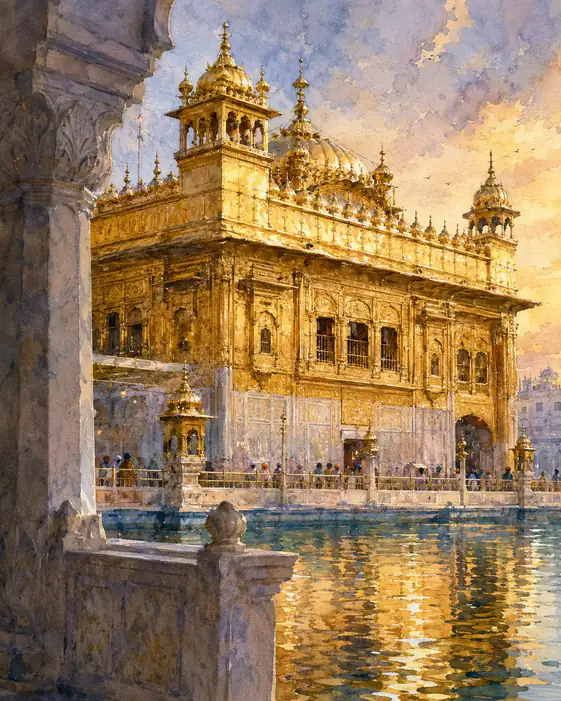 Mirror of the Golden Soul
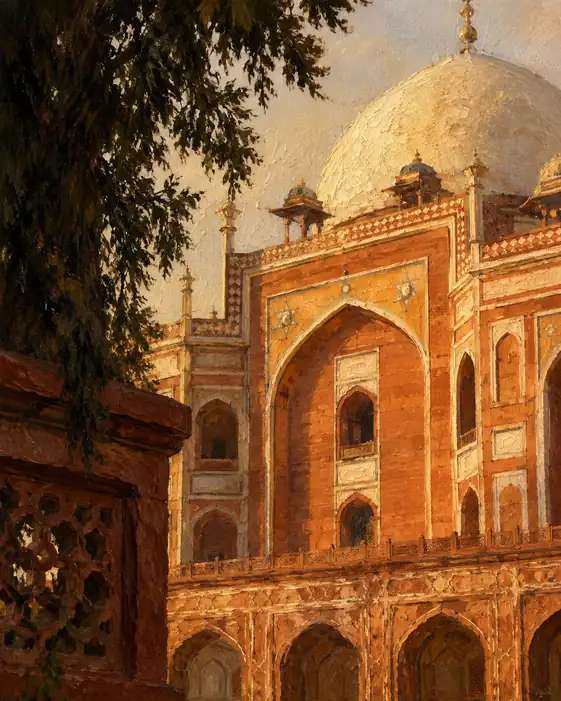 Twilight Glow on the Silent Dome
 Sanctuary of the Golden Twilight
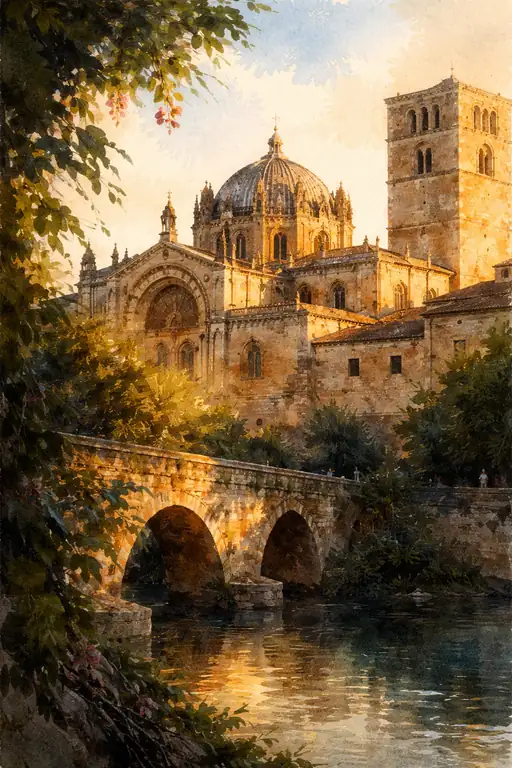 Eternal Grace Spanning the Still Waters
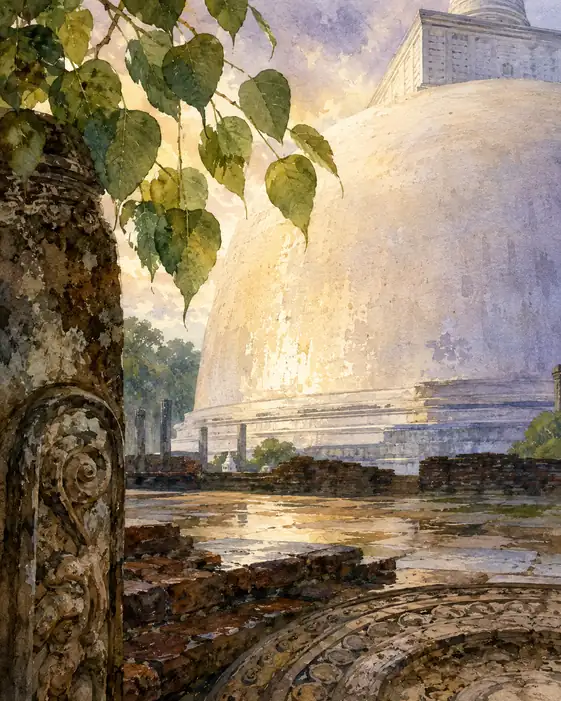 The White Sanctuary of Dawn
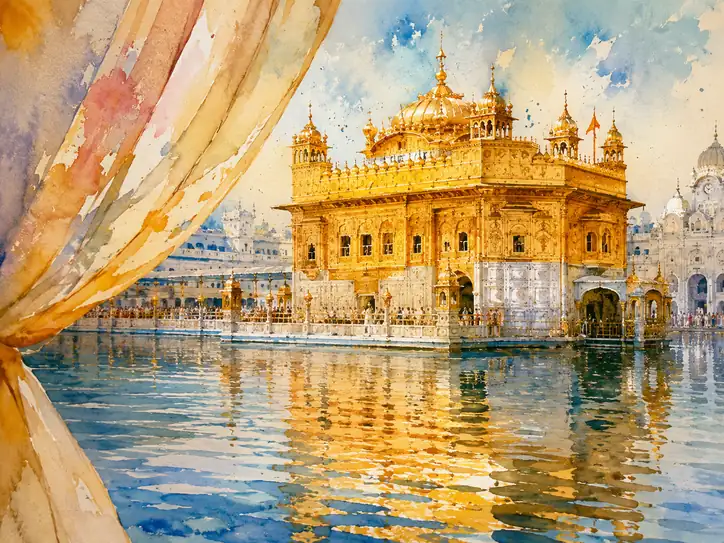 Sanctuary in Gilded Ripples
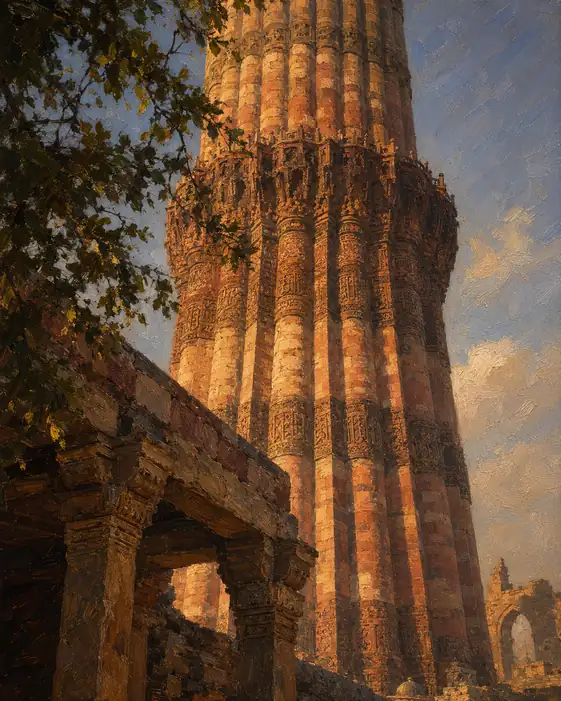 Whispers of the Eternal Minaret