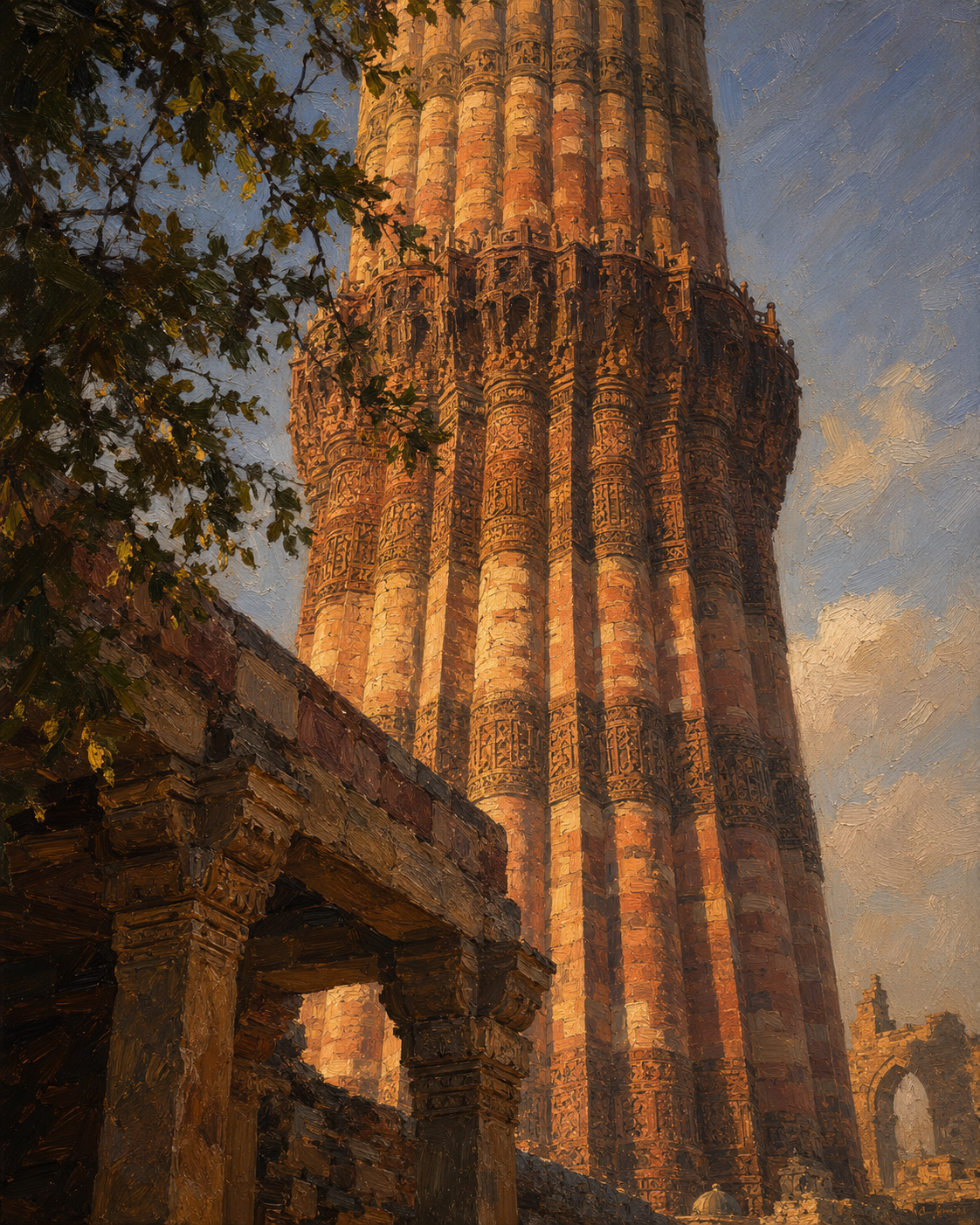
Whispers of the Eternal Minaret
Critique
1. Introduction This oil painting depicts the Qutub Minar in Delhi, India. The primary subjects are the red sandstone minaret and the ruined stone columns in the foreground. Although its creation year and dimensions are unknown, it is rendered in detail. The vertical tower dominates the composition, conveying historical significance. 2. Description The detailed sandstone tower rises in the center under sunlight. Its surface is carved with alternating round and angular shapes, creating clear light and shadow. In the left foreground, weathered stone beams and pillars obscure the tower's base. The background features a blue sky with thin clouds and green leaves. 3. Analysis The color scheme contrasts the warm sandstone hues with the cool blue sky. Natural light shines from the right, highlighting the relief carvings and the tower's volume. A low-angle perspective is used to emphasize the monumental height. The foreground ruins frame the scene, creating depth through value contrast. 4. Interpretation and Evaluation The painting captures the solemn grandeur of Islamic architecture. The draftsmanship is outstanding, rendering the stone texture and monument's structure with high fidelity. The representation of the rough surface and light is particularly effective. The color harmony reflects a deep respect for historical heritage. 5. Conclusion At first, the spectator is impressed by the monumental scale of the tower. Closer observation reveals the fine details of the stone carvings and lighting. By capturing this quiet scene, the work transcends simple documentation. It is a high-quality oil painting blending architectural beauty and quiet atmosphere.
Same Subcategory
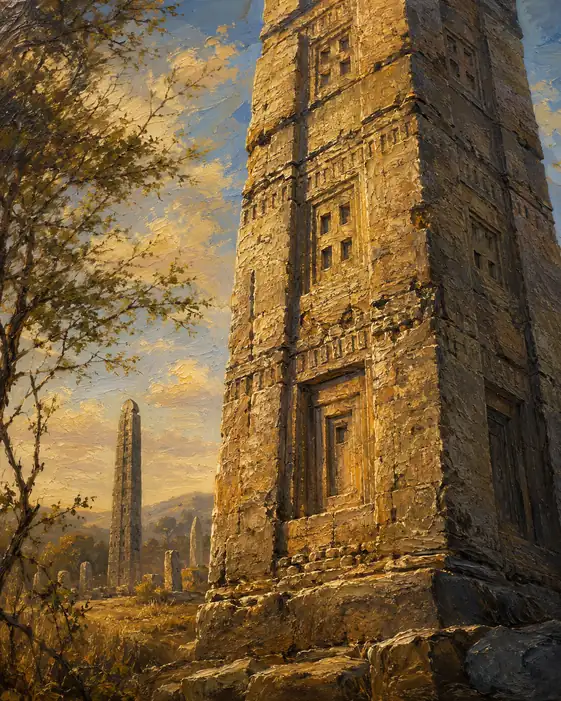 Monolith of the Golden Dusk
Similar Artworks
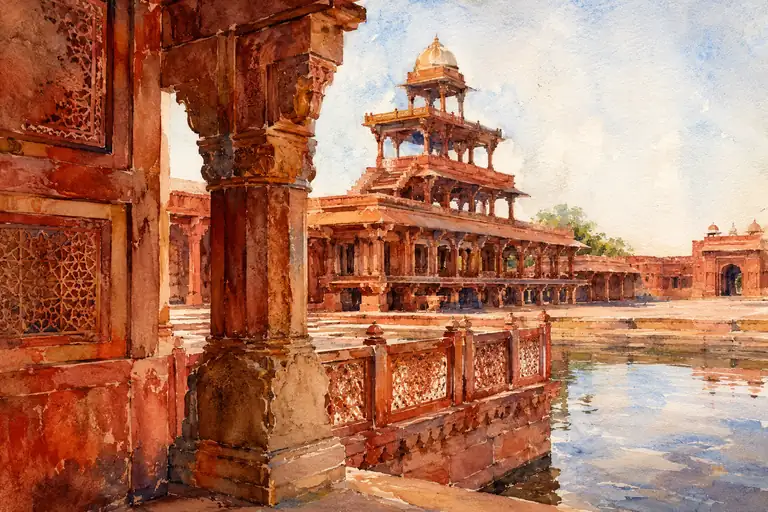 The Palace of Liquid Mirrors
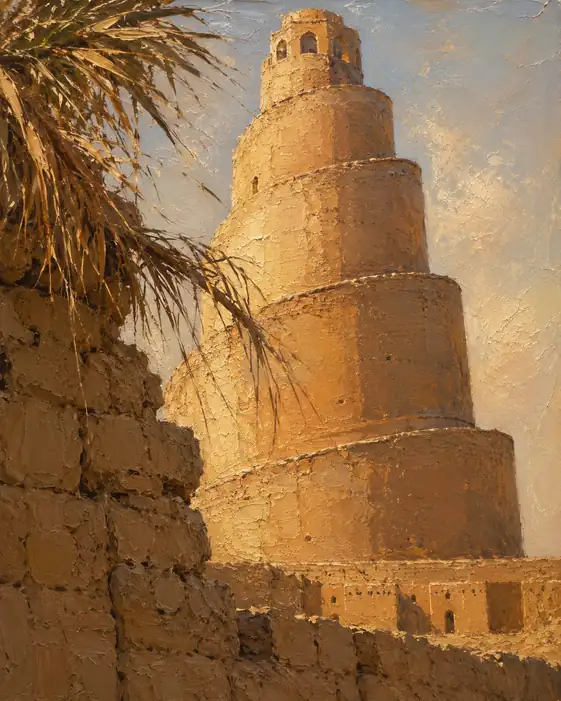 A Helical Dream in the Dust
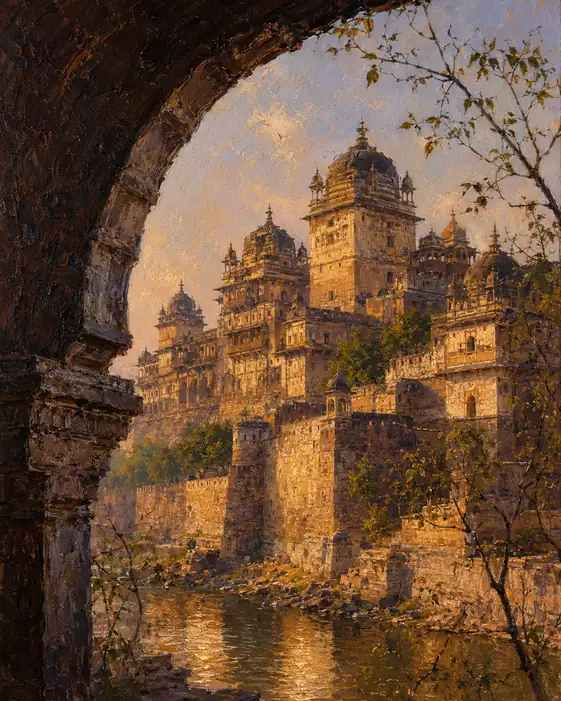 Palace of the Golden River
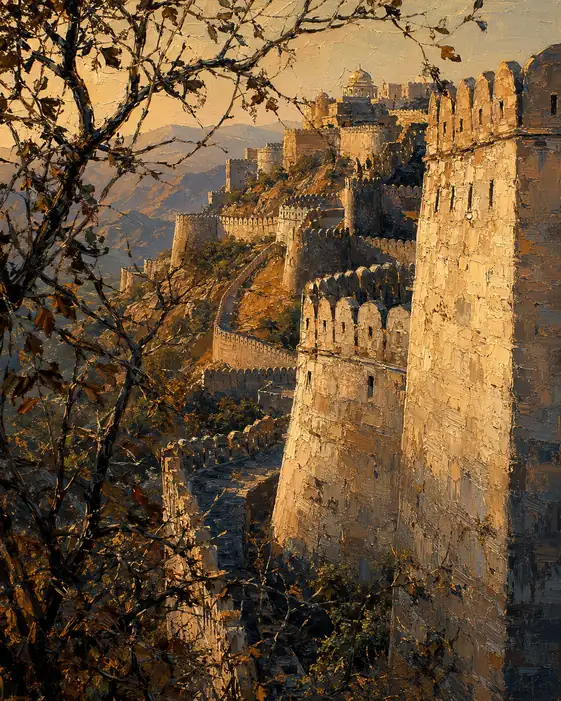 Ramparts of the Golden Ridge
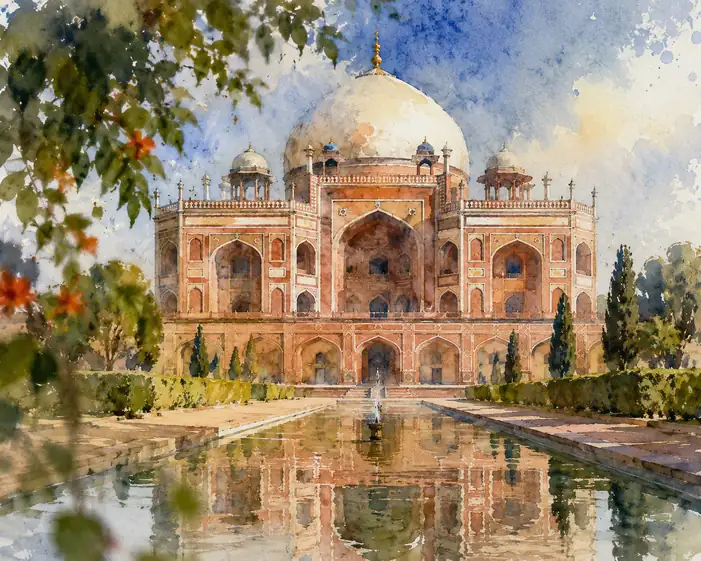 Reflections of an Empire's Dream
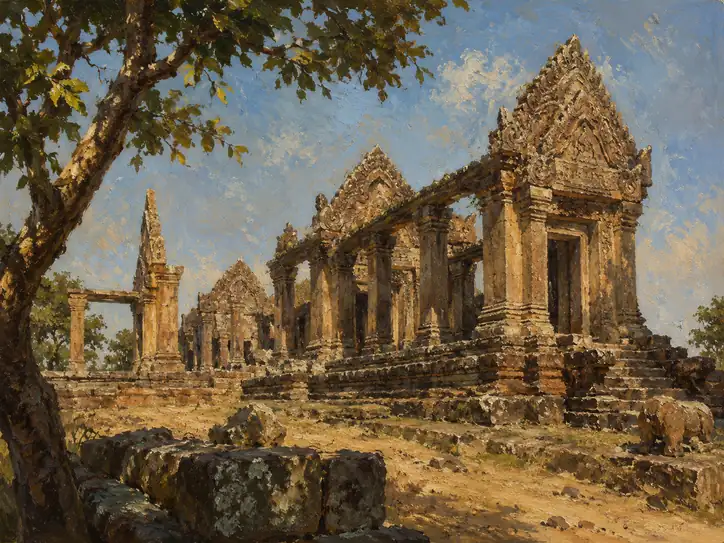 Eternity Under the Blue Vault
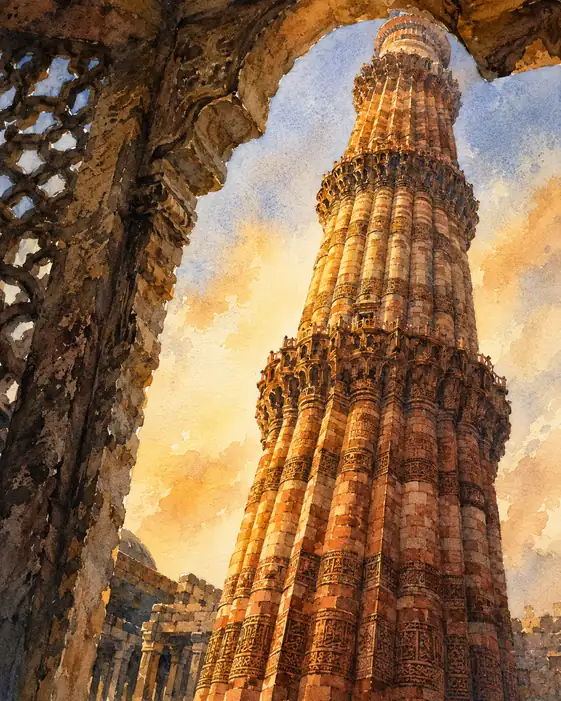 Reach for the Golden Heavens
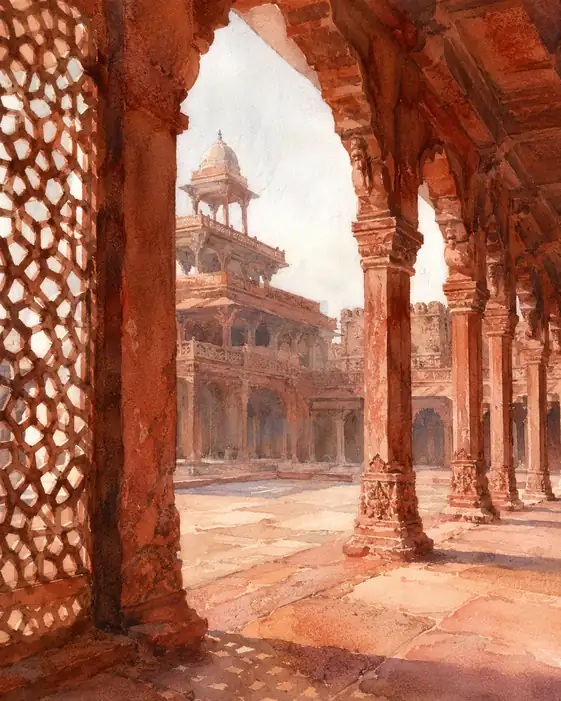 The Courtyard of Whispering Shadows
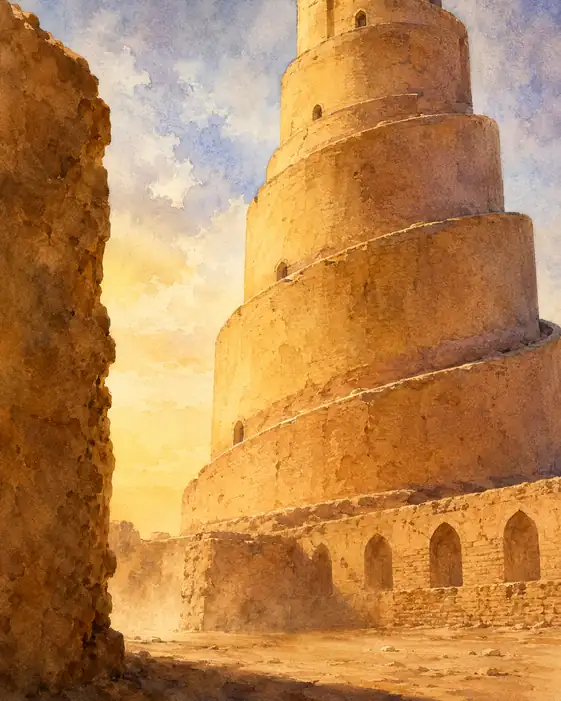 Where the Spiral Meets the Sky
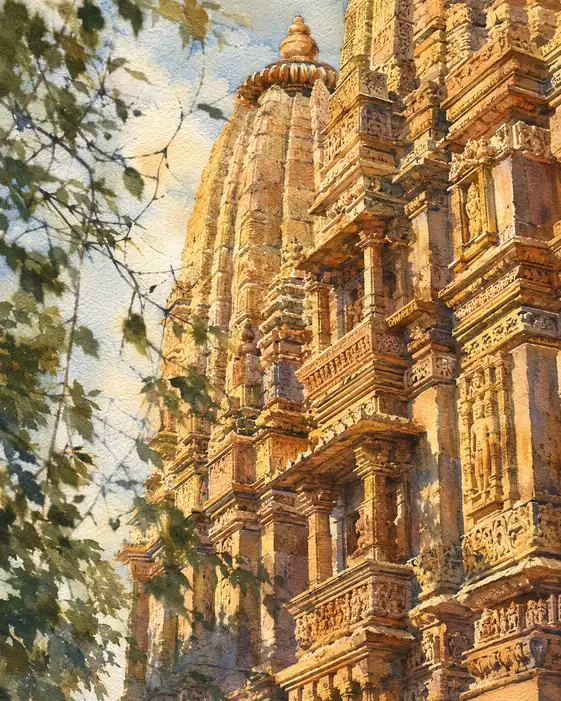 The Golden Spire's Soliloquy