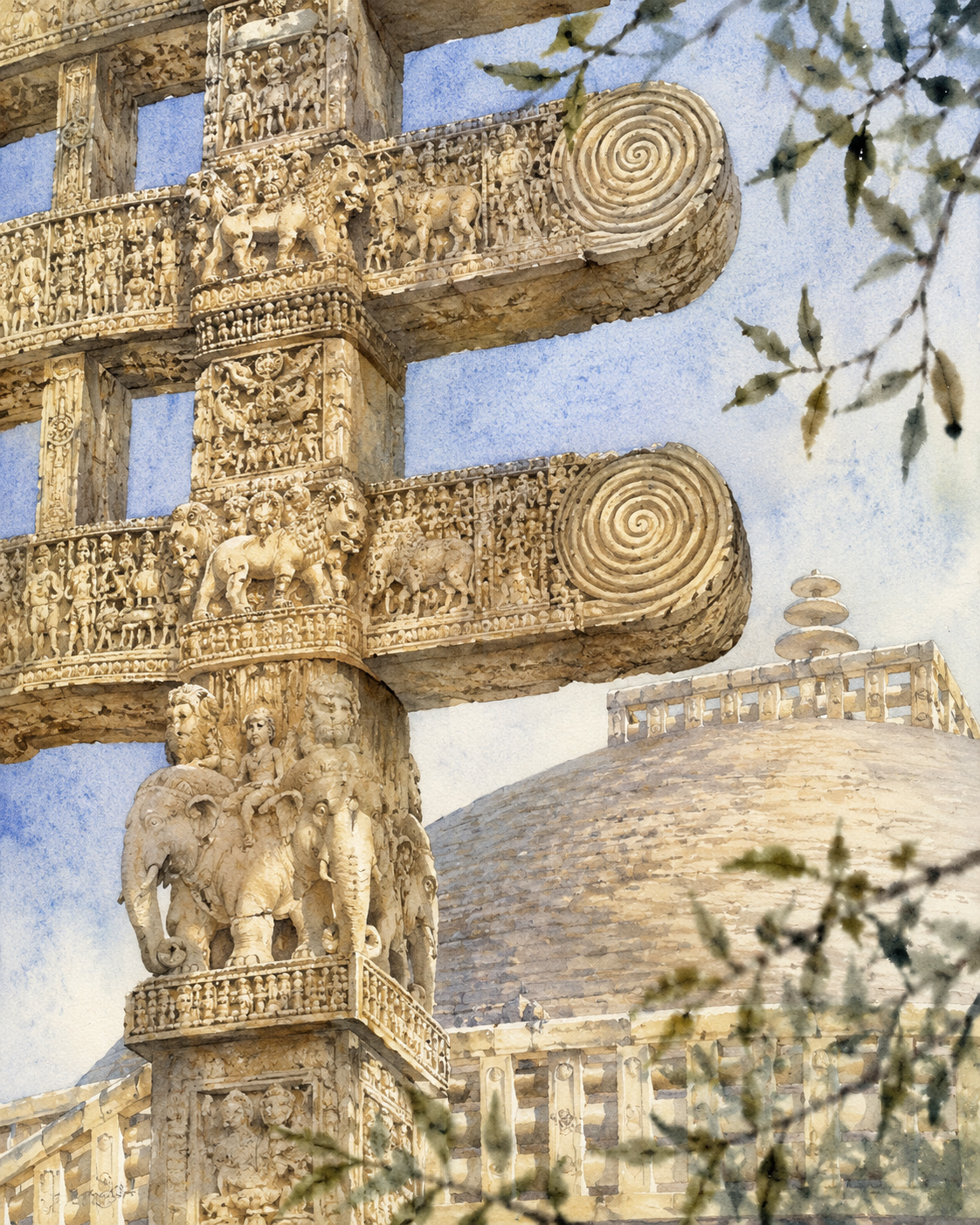
Gateway to the Infinite
Critique
1. Introduction This watercolor painting presents a close-up view of a highly detailed stone torana gateway, set against the massive dome of an ancient Buddhist stupa. The composition captures the exquisite carving traditions of early Buddhist art under bright daylight. It successfully balances heavy architectural form with delicate decorative detail. 2. Description The prominent gateway pillar and crossbeams on the left feature intricate reliefs of elephants, lions, and human figures, ending in large stone spirals. In the background, the smooth, tan-colored brick dome of the stupa rises, topped by its traditional stone umbrella spire. Out-of-focus foliage frames the scene on the right and bottom, adding natural depth. 3. Analysis The artist uses a limited color palette of warm ochres, grays, and pale blues, creating a sun-drenched atmosphere. Sharp, fine linework defines the tiny sculpted figures on the gateway, contrasting with the soft, textured washes of the stupa dome. The shallow depth of field achieved by blurring the foreground leaves enhances the focus on the gateway's carving. 4. Interpretation and Evaluation The painting acts as a tribute to early Buddhist craftsmanship, emphasizing the narrative richness carved into sacred architecture. The execution shows remarkable patience in detailing the stone reliefs while maintaining the soft translucency of watercolor in the sky and dome. The composition feels intimate yet monumental, drawing the viewer close to historical stone. 5. Conclusion Initially perceived as a historic architectural illustration, the work quickly becomes an evocative study of light and stone. The interplay of crisp shadows on the carvings and the soft curves of the dome creates a peaceful visual rhythm. It remains a visually compelling and technically accomplished celebration of ancient art.
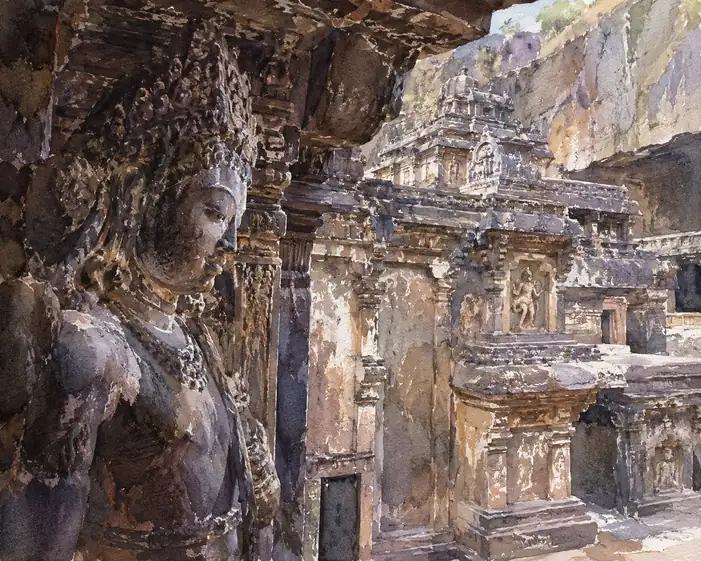 Dialogues in Shadow and Light
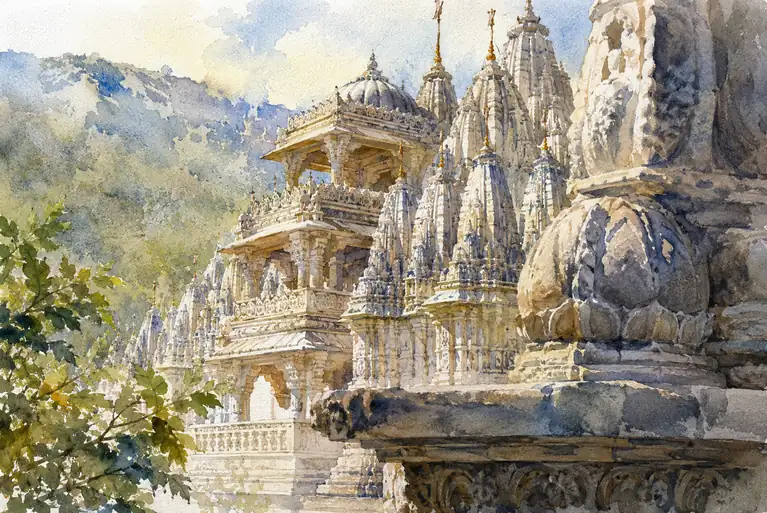 Silent Sanctuary of White Marble
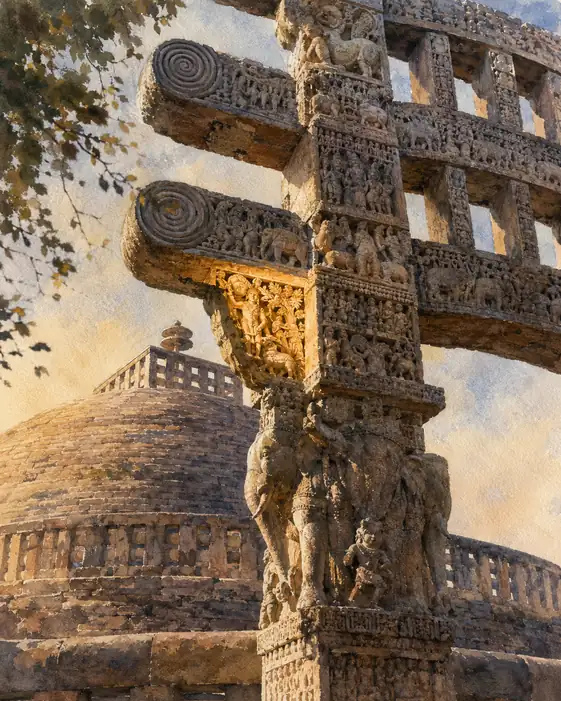 The Gate of Eternal Peace
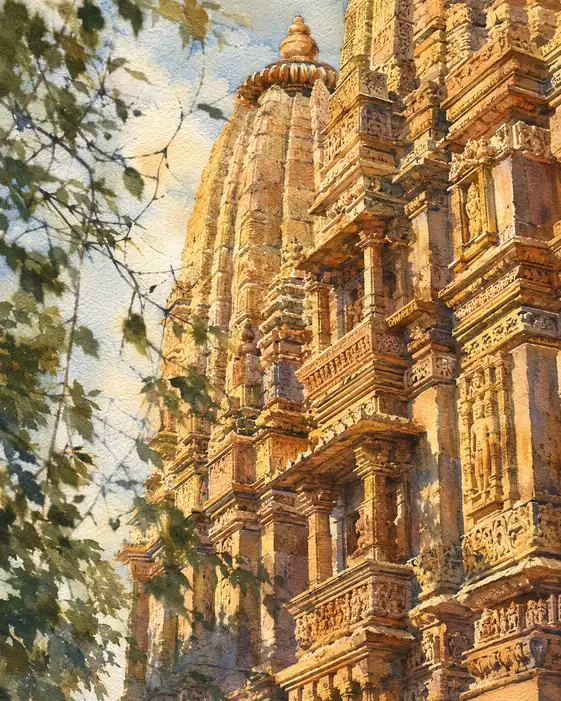 The Golden Spire's Soliloquy
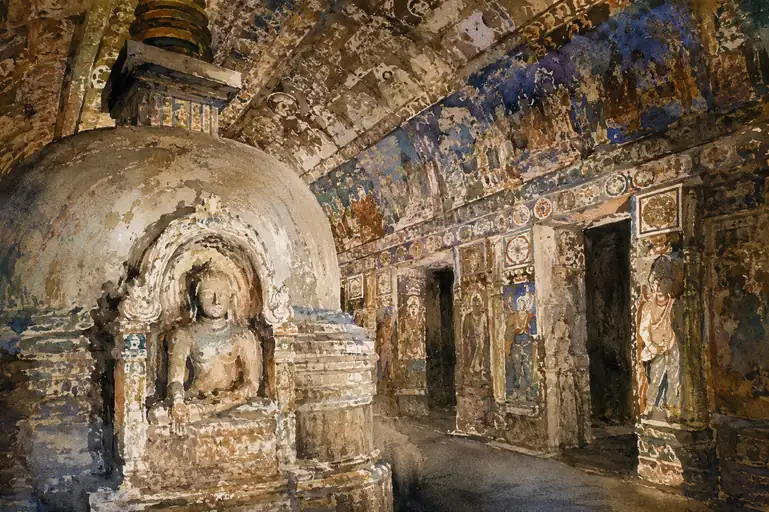 Silent Devotion in the Stone
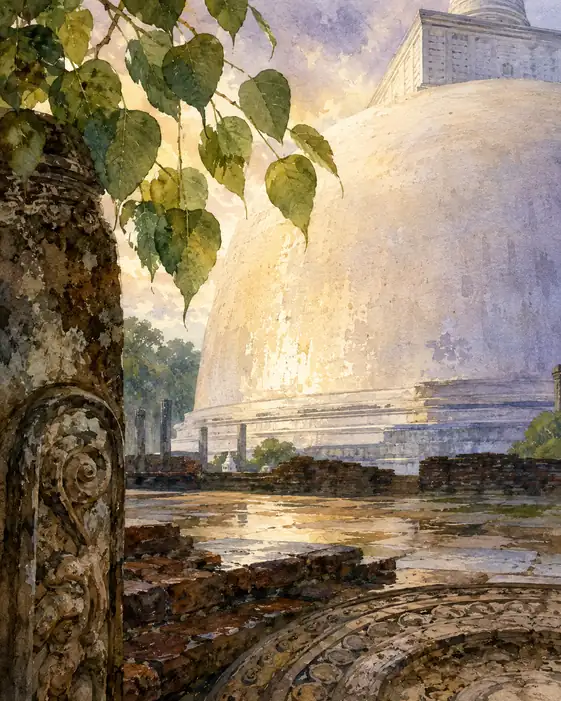 The White Sanctuary of Dawn
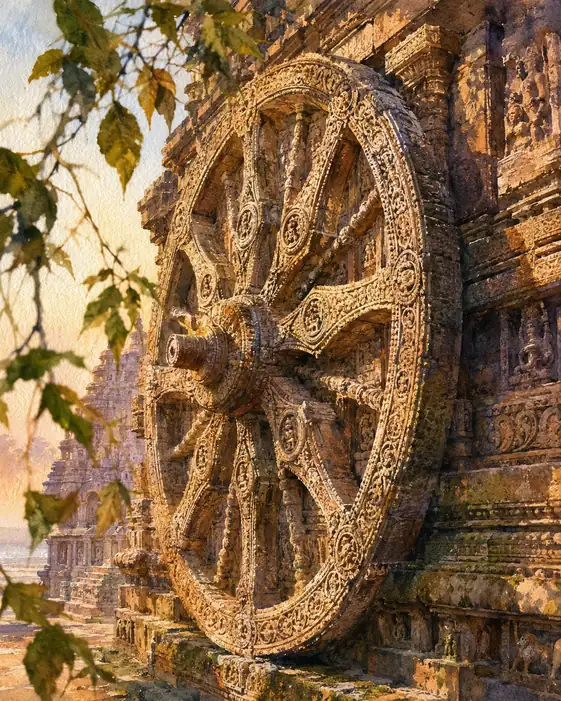 Where Time Whispers in Golden Dust
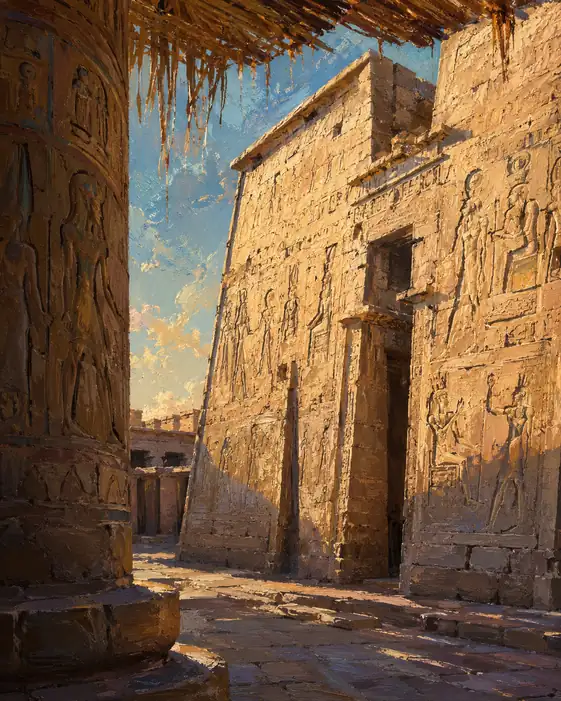 Under the Straw Canopy of Time
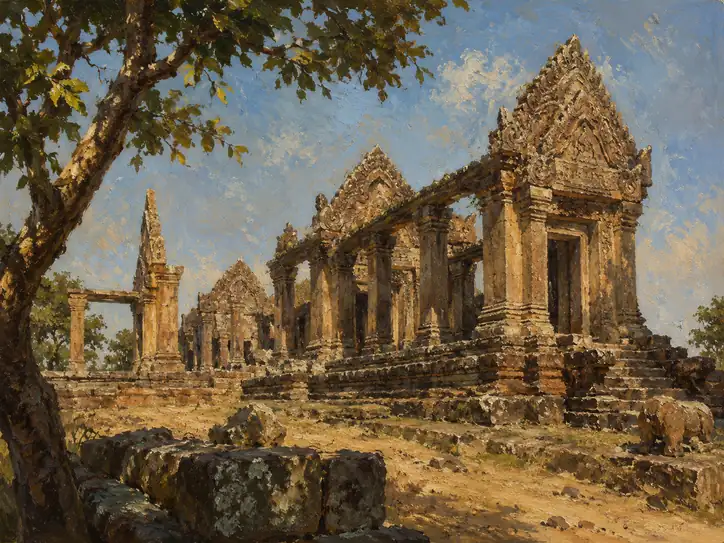 Eternity Under the Blue Vault
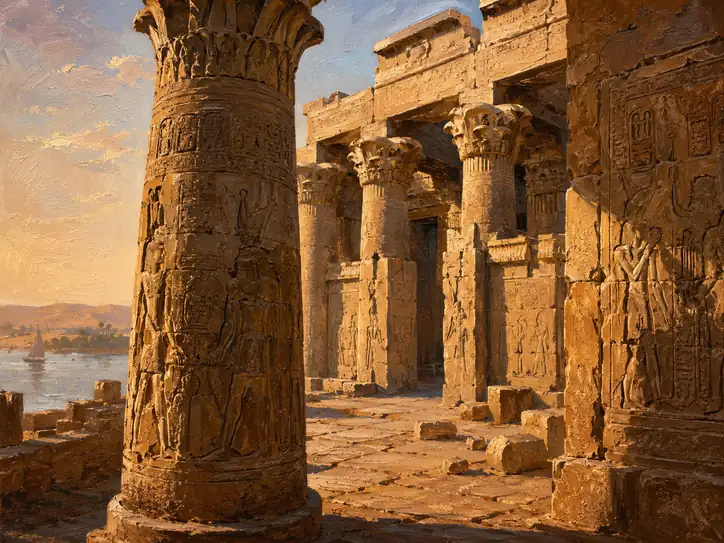 Whispers of the Golden Nile
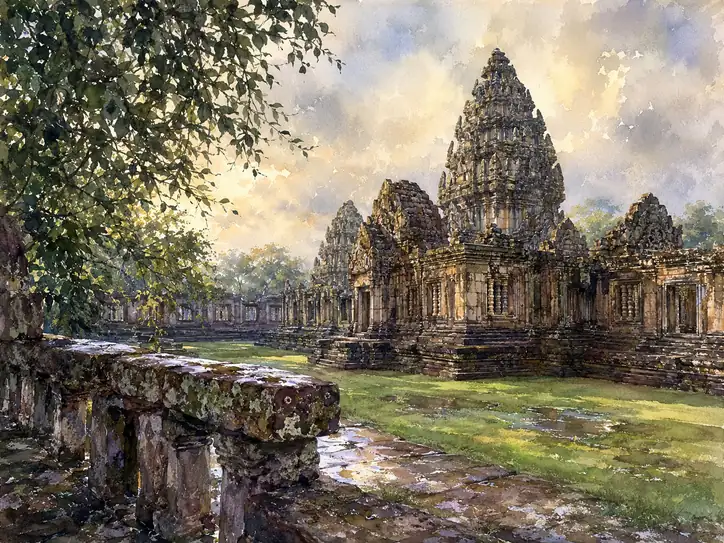 Where History Sleeps in Green