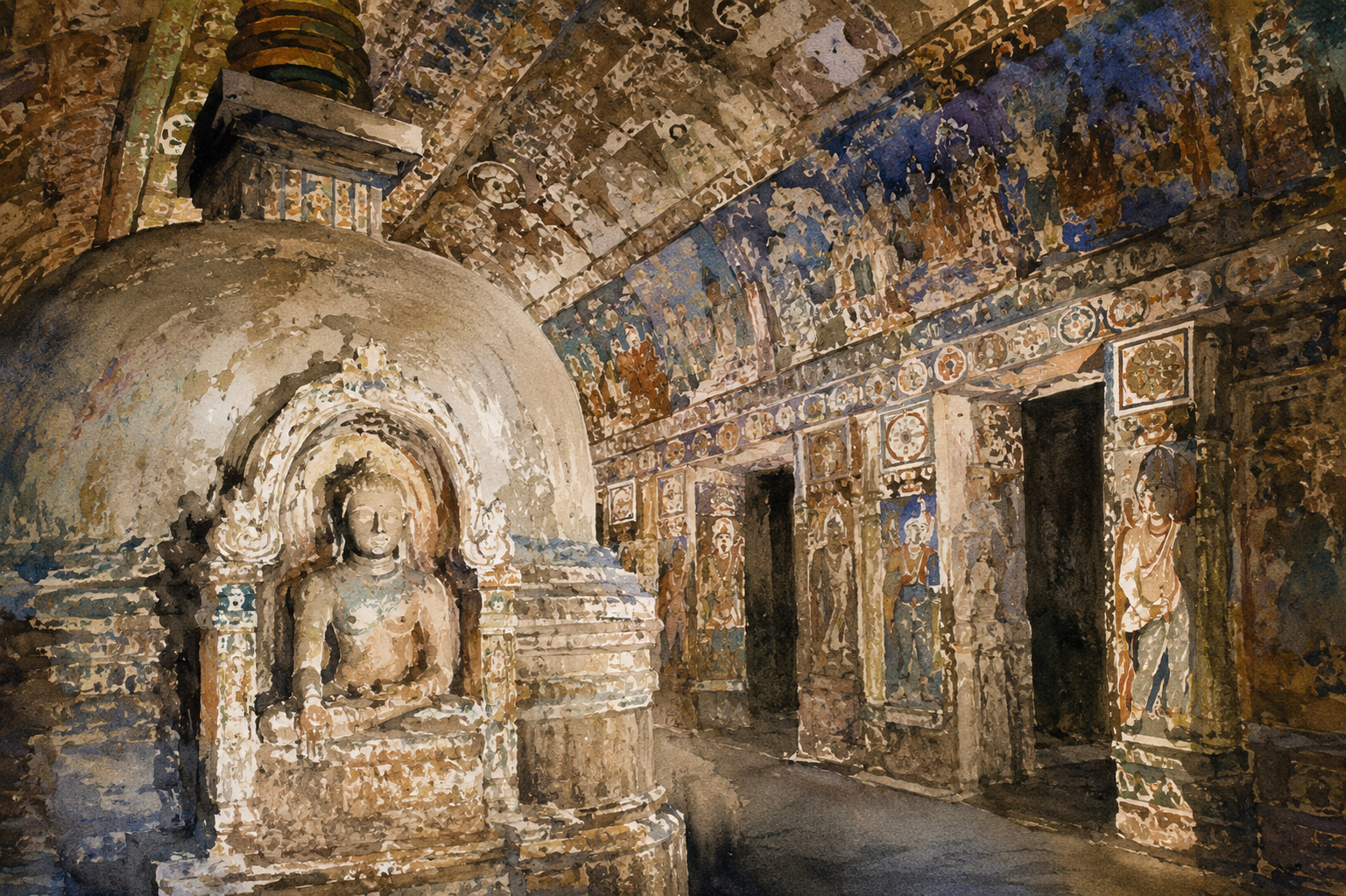
Silent Devotion in the Stone
Critique
1. Introduction This watercolor painting depicts the serene interior of an ancient Buddhist cave temple, featuring a large stupa with a carved Buddha figure. The artwork captures the mysterious, spiritual atmosphere of a subterranean sanctuary preserved through centuries. It successfully blends architectural weight with the delicate decay of historic murals. 2. Description On the left, a weathered stone stupa dominates the composition, enclosing a seated Buddha statue in a decorative niche. To the right, a row of columns leading into dark chambers is covered with faint, colorful frescoes depicting various figures. The vaulted ceiling and walls are adorned with patterns in shades of blue, ochre, and earthy red, showing signs of natural aging and erosion. 3. Analysis The artist utilizes a complex interplay of light and shadow, highlighting the stupa while letting the recesses of the cave dissolve into darkness. Texture is a key element, achieved through dry brush layers and mottled washes that mimic the rough, carved stone and plaster. The perspective guides the viewer's eye along the cave's curvature, enhancing the feeling of confinement and depth. 4. Interpretation and Evaluation The painting serves as a contemplation on time, devotion, and artistic heritage, contrasting the solidity of stone with the fragility of wall paintings. The rendering of the weathered surface textures shows outstanding technical skill and sensitivity to the subject matter. The subtle use of lapis blue and earth tones effectively evokes the pigments used in ancient temple art. 5. Conclusion Initially appearing as a detailed historical illustration, the painting ultimately transcends documentation to evoke a profound sense of quietude and reverence. The harmony of light, shadow, and color creates a sanctuary for both the depicted subject and the viewer. It stands as a masterful tribute to the endurance of spiritual and artistic traditions.
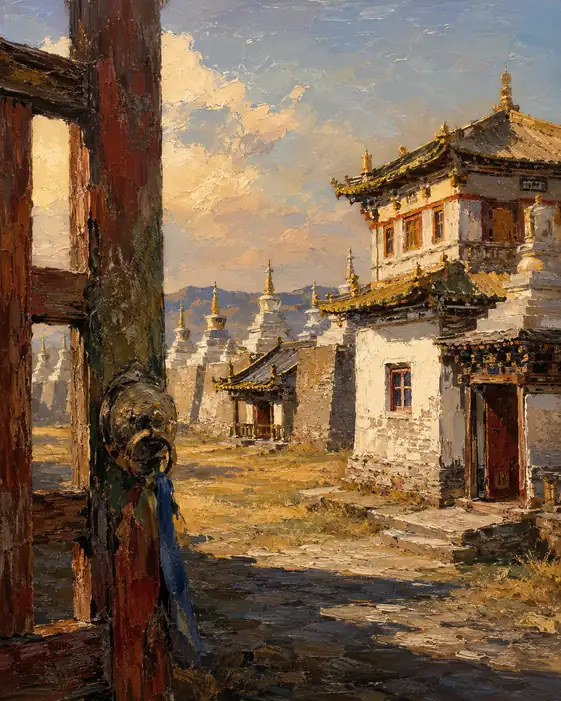 Faith Standing in the Wilderness
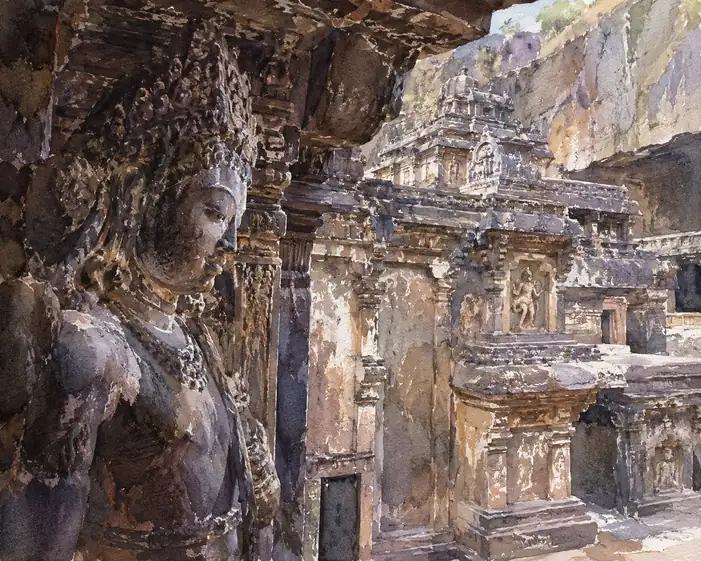 Dialogues in Shadow and Light
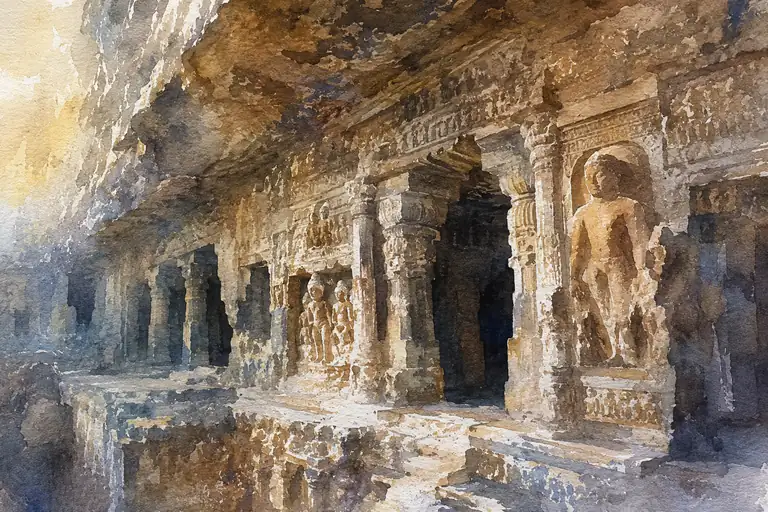 Whispers from the Sacred Cave
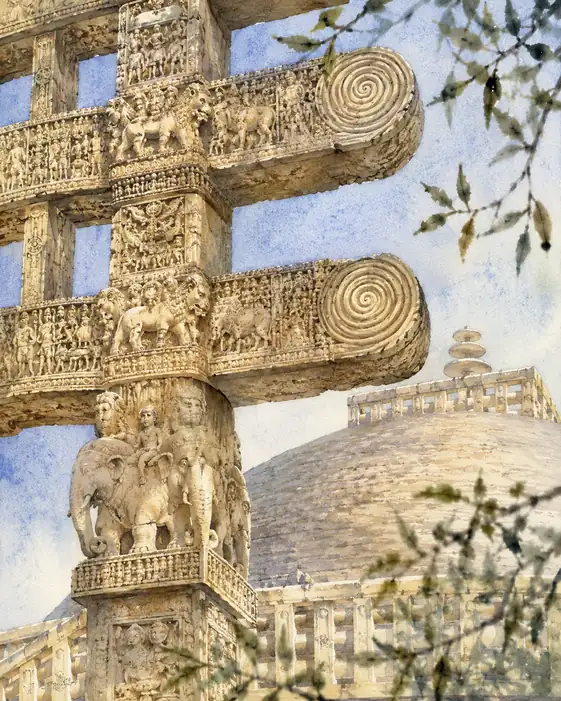 Gateway to the Infinite
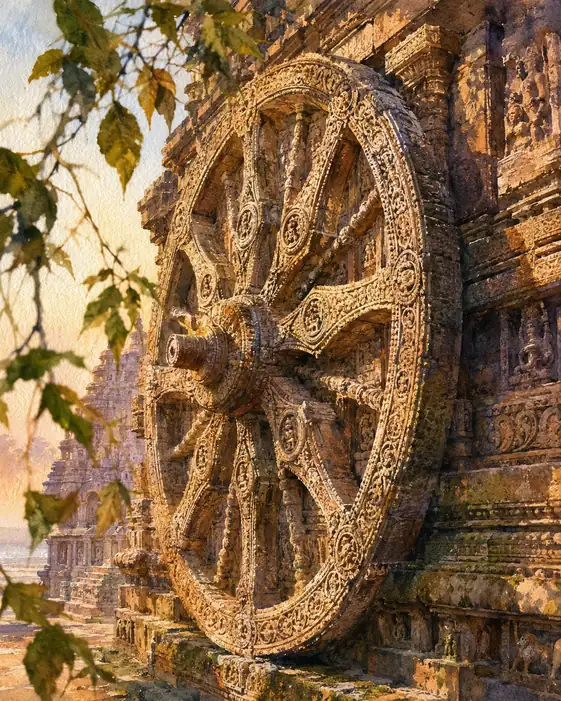 Where Time Whispers in Golden Dust
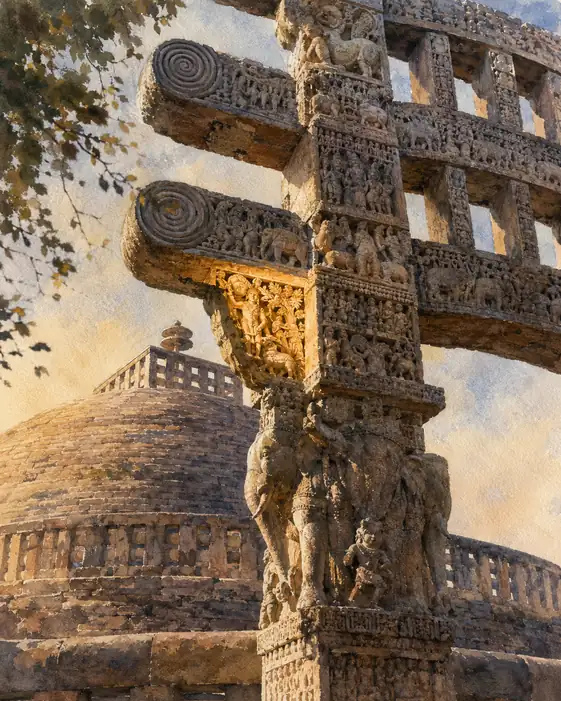 The Gate of Eternal Peace
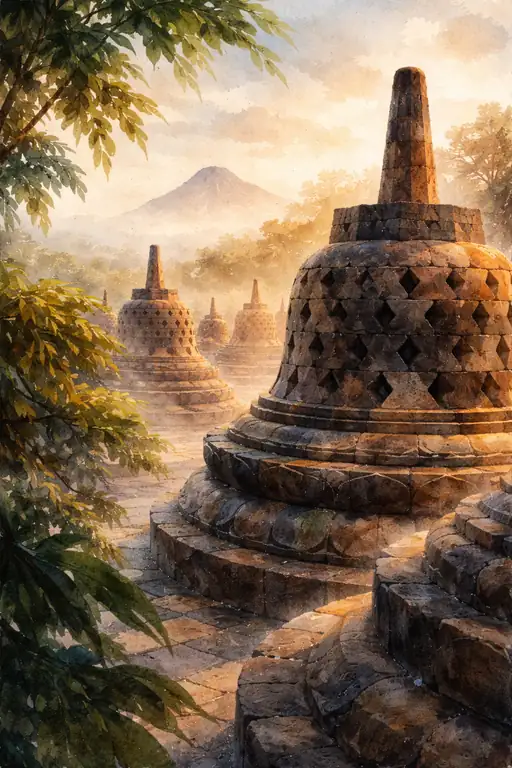 Whispers Through the Morning Veil
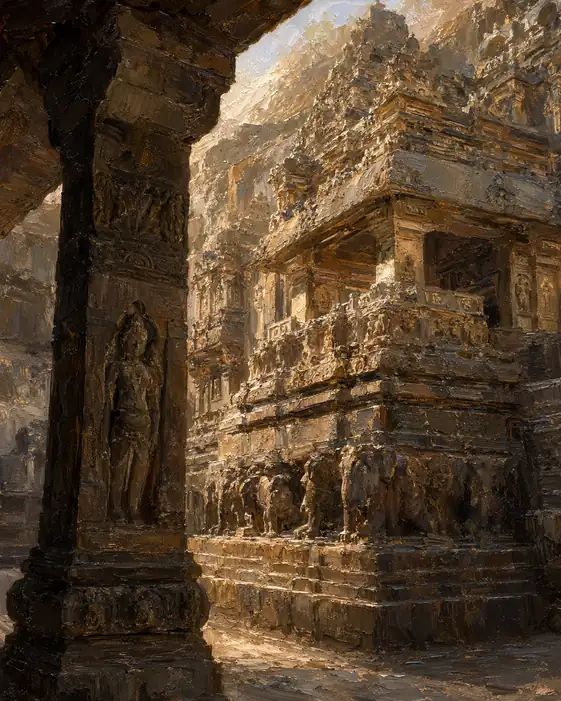 Born of the Living Rock
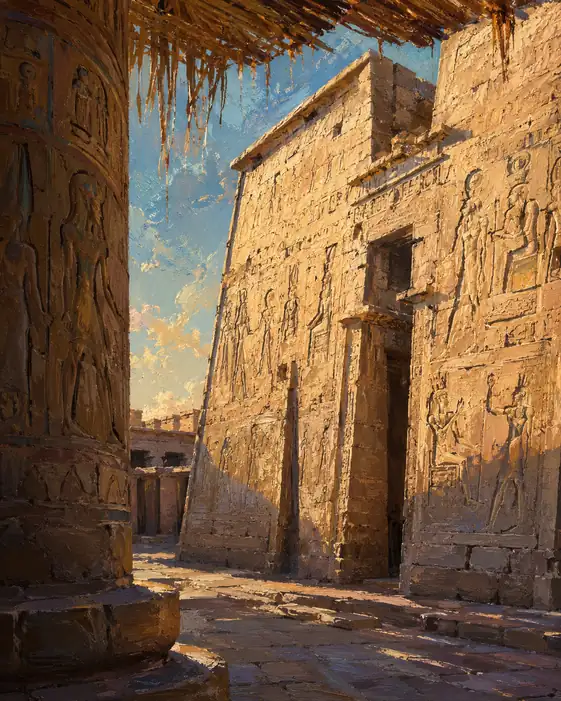 Under the Straw Canopy of Time
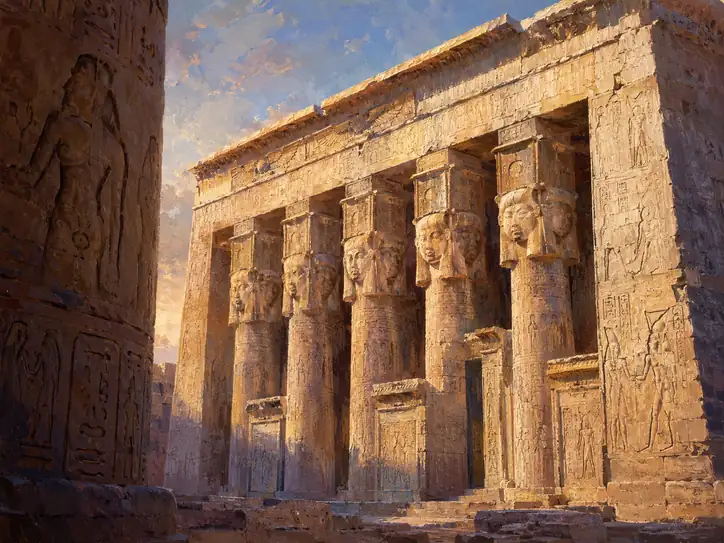 Silent Prayers in Sandstone
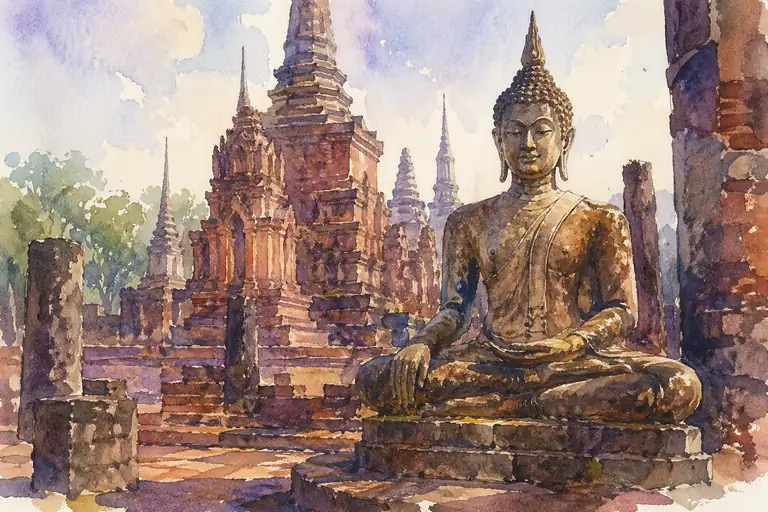 Stillness Across the Ages