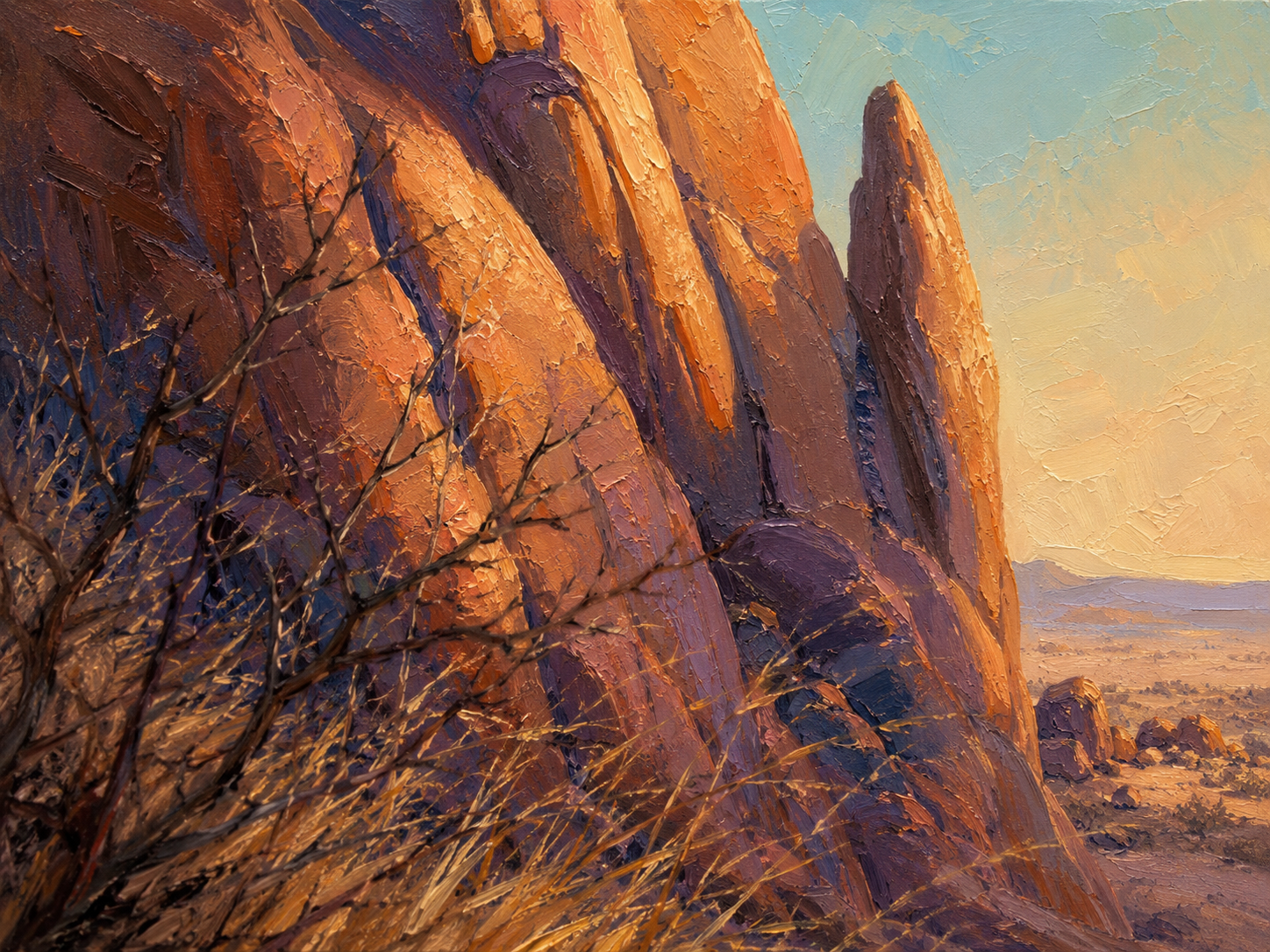
Monolith of the Crimson Waste
Critique
1. Introduction This oil painting captures a majestic desert scene featuring a massive rock formation glowing under the strong sun. On the left side, the giant rounded rock dominates the canvas, creating an imposing presence. 2. Description In the foreground, a dark tangled shrub and dry grass appear in shadow against the light background. The right side of the canvas displays a flat, arid plain stretching toward the distant horizon under a gradient sky. A range of soft blue mountains is visible at the edge of the wilderness. 3. Analysis The artist utilizes a heavy impasto technique with visible brushstrokes to emphasize the rough texture of the mountain. A vibrant contrast between the bright orange highlights and the deep purple shadows defines the rock’s three-dimensional shape. Furthermore, the diagonal lines of the cliff balance the horizontal line of the distant desert floor. 4. Interpretation and Evaluation This artwork illustrates the ancient power and silent endurance of nature in a harsh desert environment. The thick layers of oil paint convey a sculptural solidity that goes beyond simple natural representation. The painter's strong drafting ability and dramatic use of complementary colors deserve praise for capturing this luminous moment. 5. Conclusion Initially, the painting looks like a simple study of rock shapes, but closer study reveals a poetic harmony of colors. The vast contrast between the massive monument and the flat horizon offers a feeling of peaceful quiet. Ultimately, the work stands as a refined oil piece that celebrates the beauty of dry landscapes.
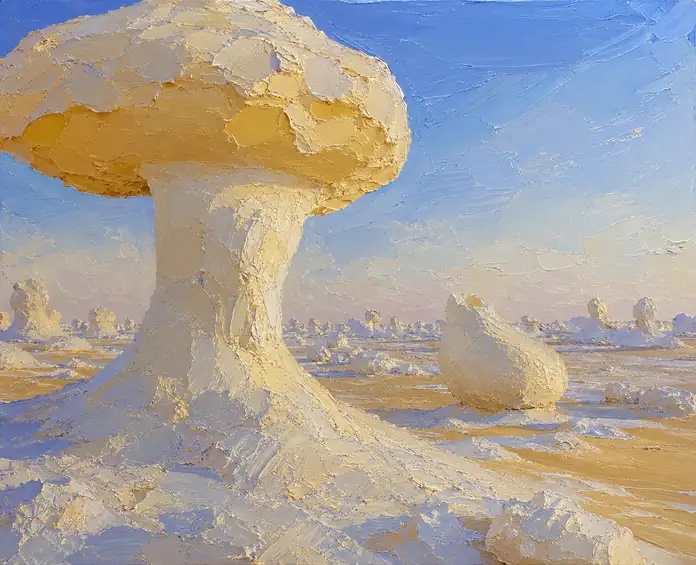 Sculpture of Wind and White Sand
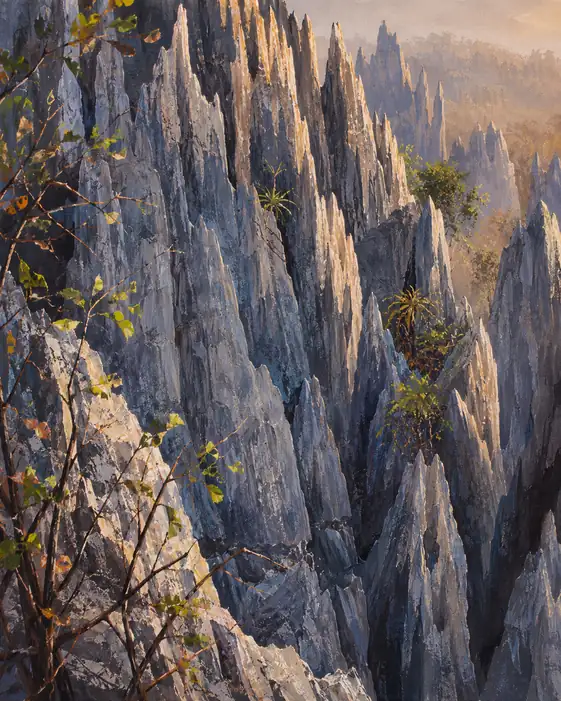 Stillness Amidst the Spires
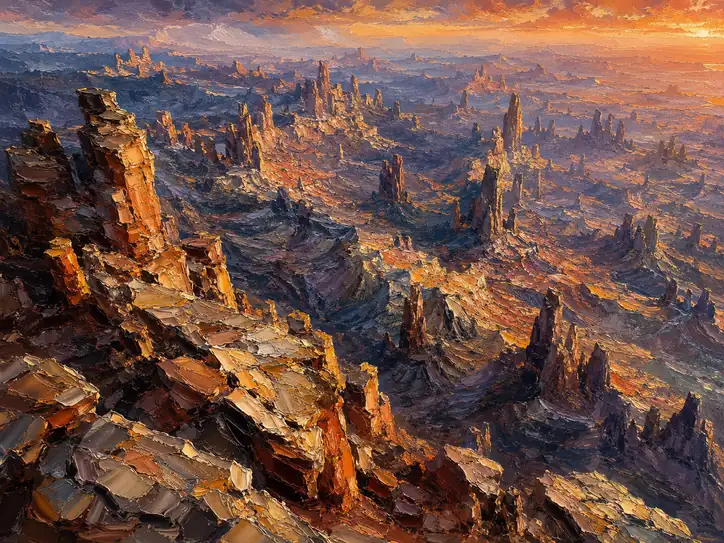 Silent Kingdom of the Jagged Spires
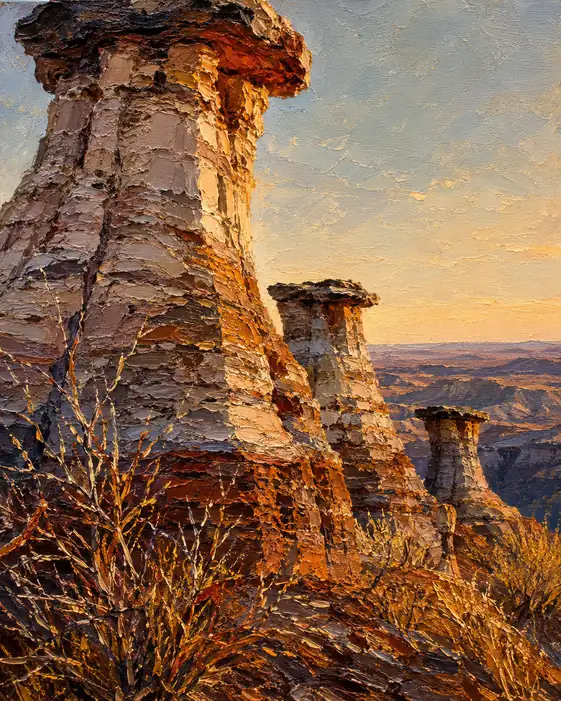 Monoliths of the Deep Time
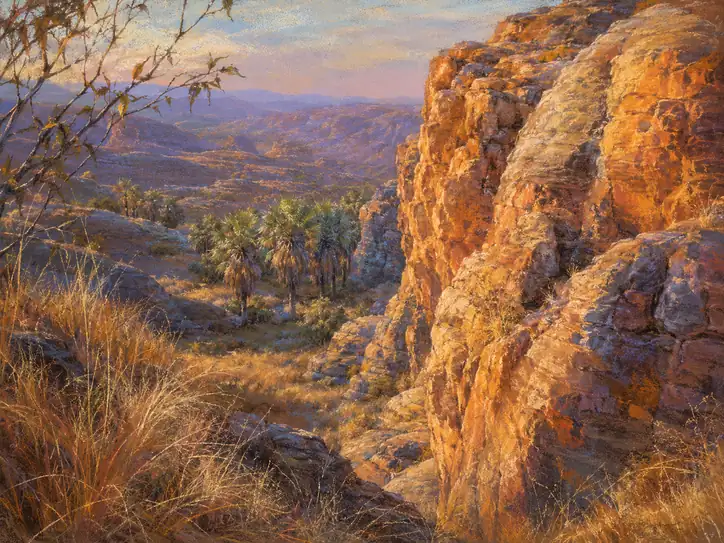 Where Silence Finds a Home
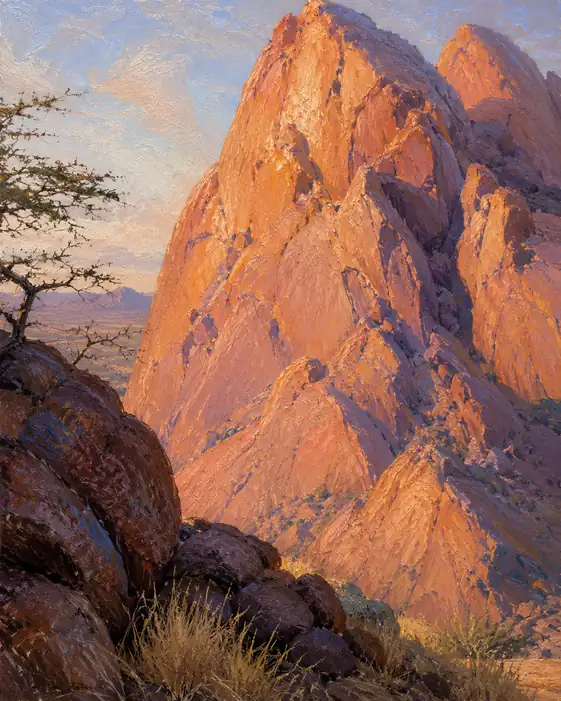 Eternal Flame of the Red Earth
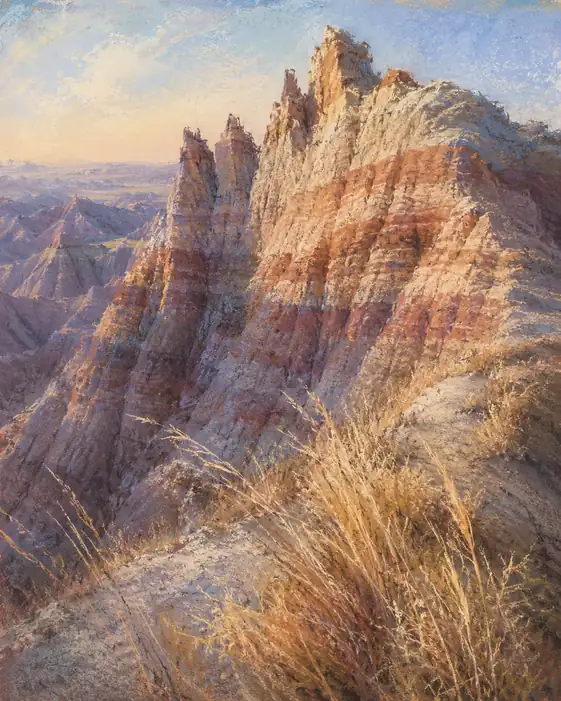 Echo of the Layered Earth
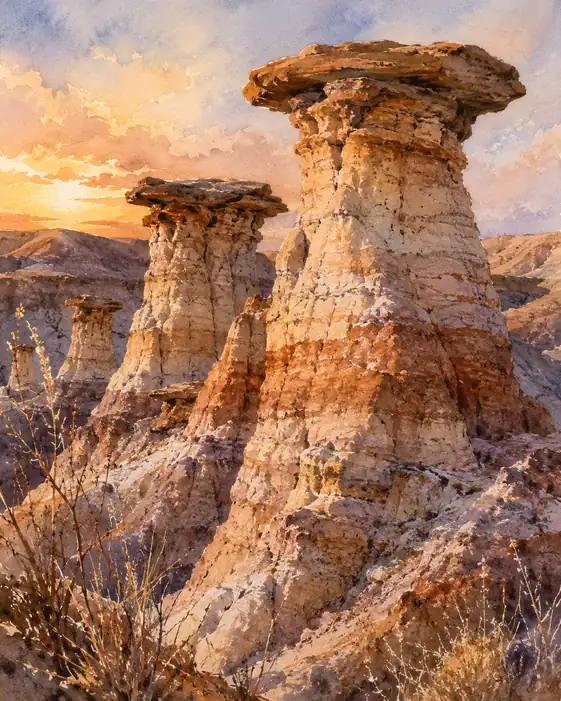 The Silent Spires of Time
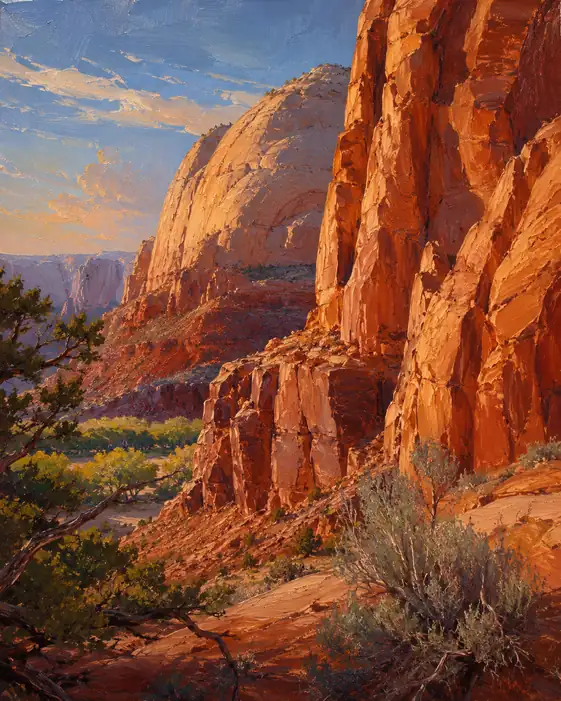 Golden Echo of the Canyon
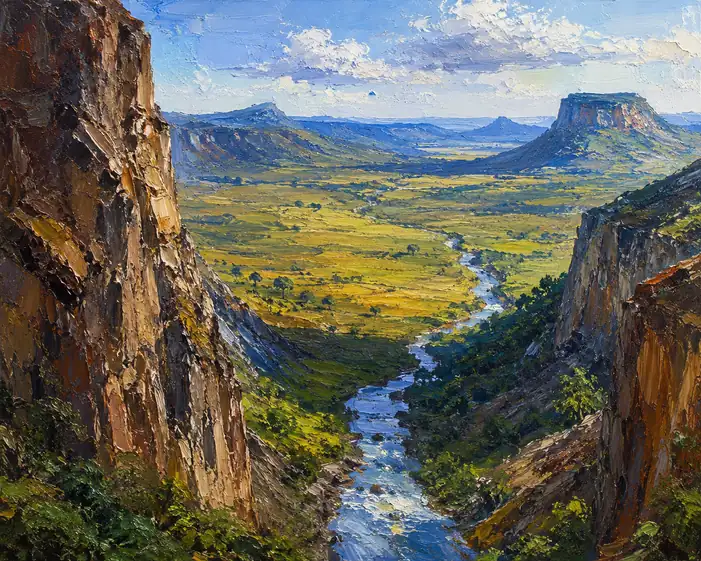 Corridor of the Ancient Earth
 Whispers of the Ancient Strata
 Pristine Silence of the Highlands