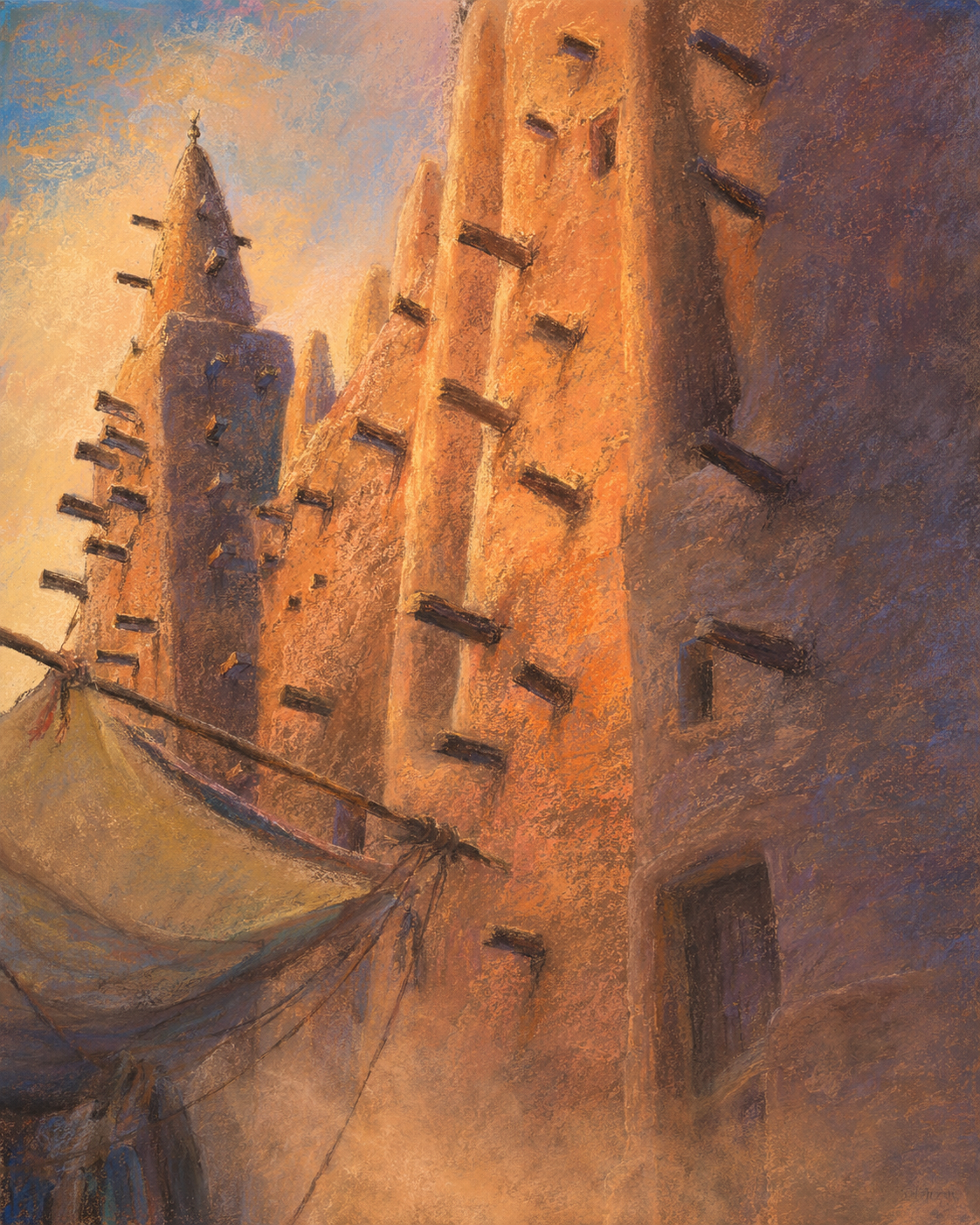
Minarets of the Sacred Soil
Critique
1. Introduction This pastel painting depicts a grand mud mosque reflecting the traditional Sahel-Sudanese architectural style of West Africa. The strong evening light highlights the organic beauty and monumental presence of the earthen walls. It invites viewers to feel the spiritual connection with the earth. 2. Description On the right, a massive mud-brick wall rises, adorned with numerous projecting wooden beams. In the upper left background, tall minarets stretch toward the sky, adding religious solemnity. The lower left features a market canopy supported by wooden poles, with dusty air hinting at local daily life. 3. Analysis The artist utilizes the coarse texture of pastels to represent the tactile quality of the mud walls and rising dust. The rhythmic horizontal beams contrast with the soaring vertical structures. The palette combines warm oranges of sunlight with cool violet shadows, creating a complementary balance. 4. Interpretation and Evaluation The work celebrates a sustainable civilization where human architecture and natural materials harmonize. The mud mosque symbolizes both religious devotion and ancestral adaptation to the Sahel environment. Technically, the color gradations effectively capture the dry air and sunlight. The composition bridges the sacred building with everyday market life. 5. Conclusion This piece successfully captures the unique aesthetics and local vitality of West African mud architecture. Initial impressions of primitive strength shift to an appreciation for the calculated contrast and spiritual depth. It remains an inspiring testament to the connection between soil and belief.
Same Subcategory
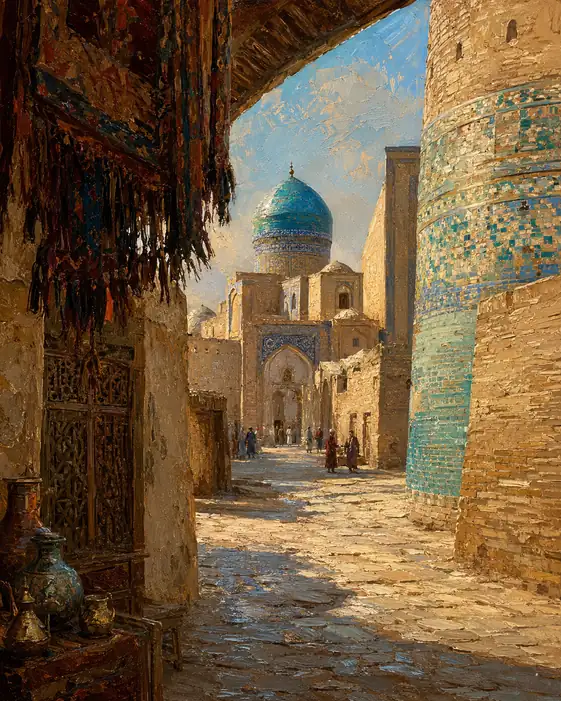 Alleyway to the Turquoise Heaven
Similar Artworks
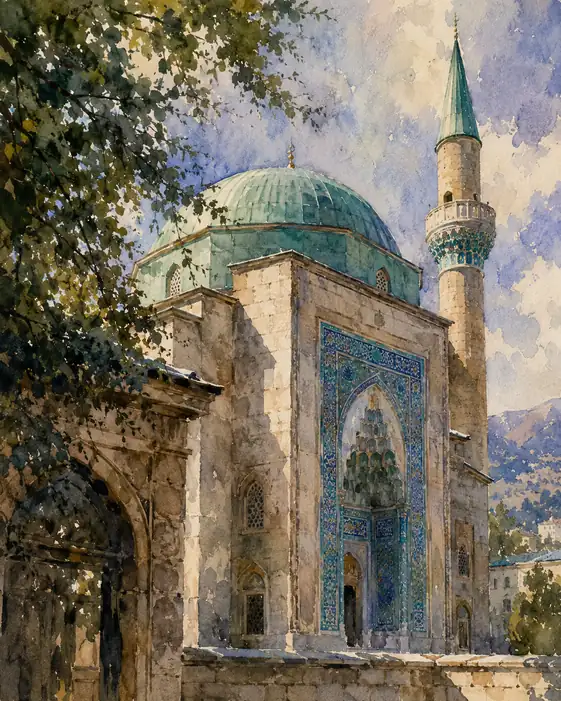 Sanctuary of the Emerald Dome
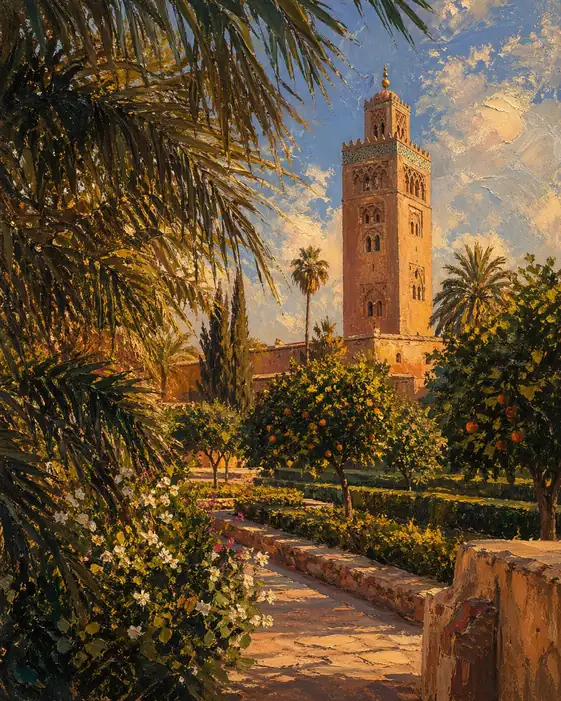 Symphony of the Golden Minaret
 Where the Light Prays
 Through the Arch of Golden Light
 Fortress of the Earthborn Dream
 Gateway to the Sublime
 Threshold to the Cobalt Sky
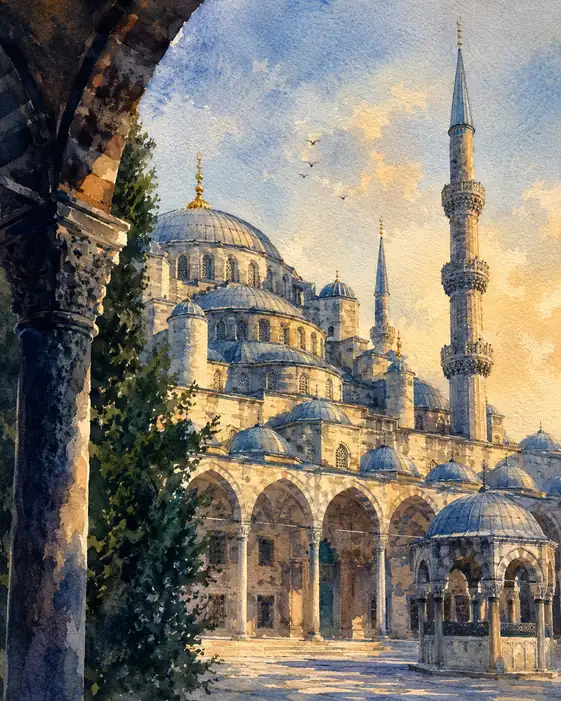 Whispers of the Golden Dome
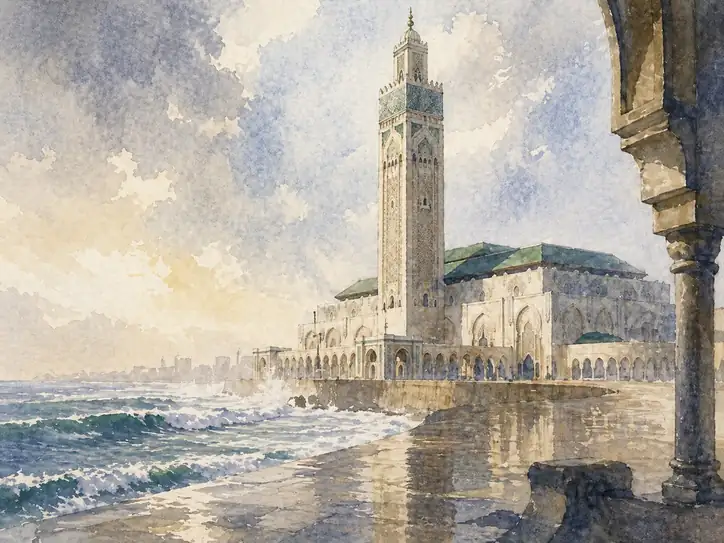 Monolith of Faith and the Resolute Sea
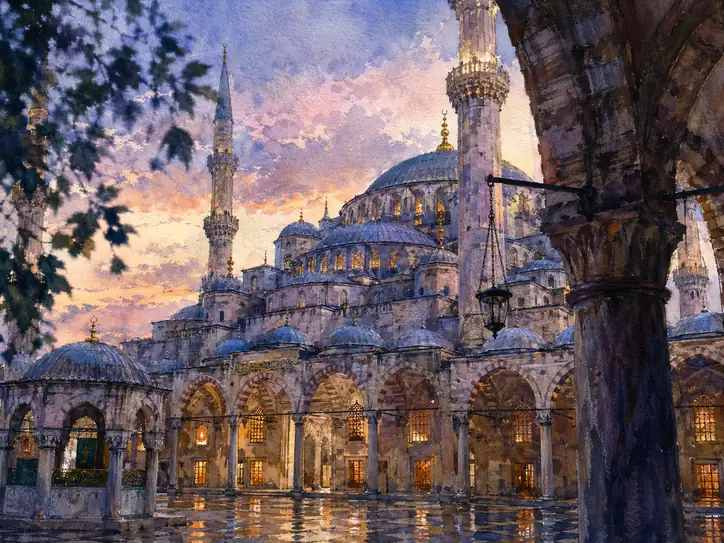 Twilight Prayer: When the Sacred Sky Whispers