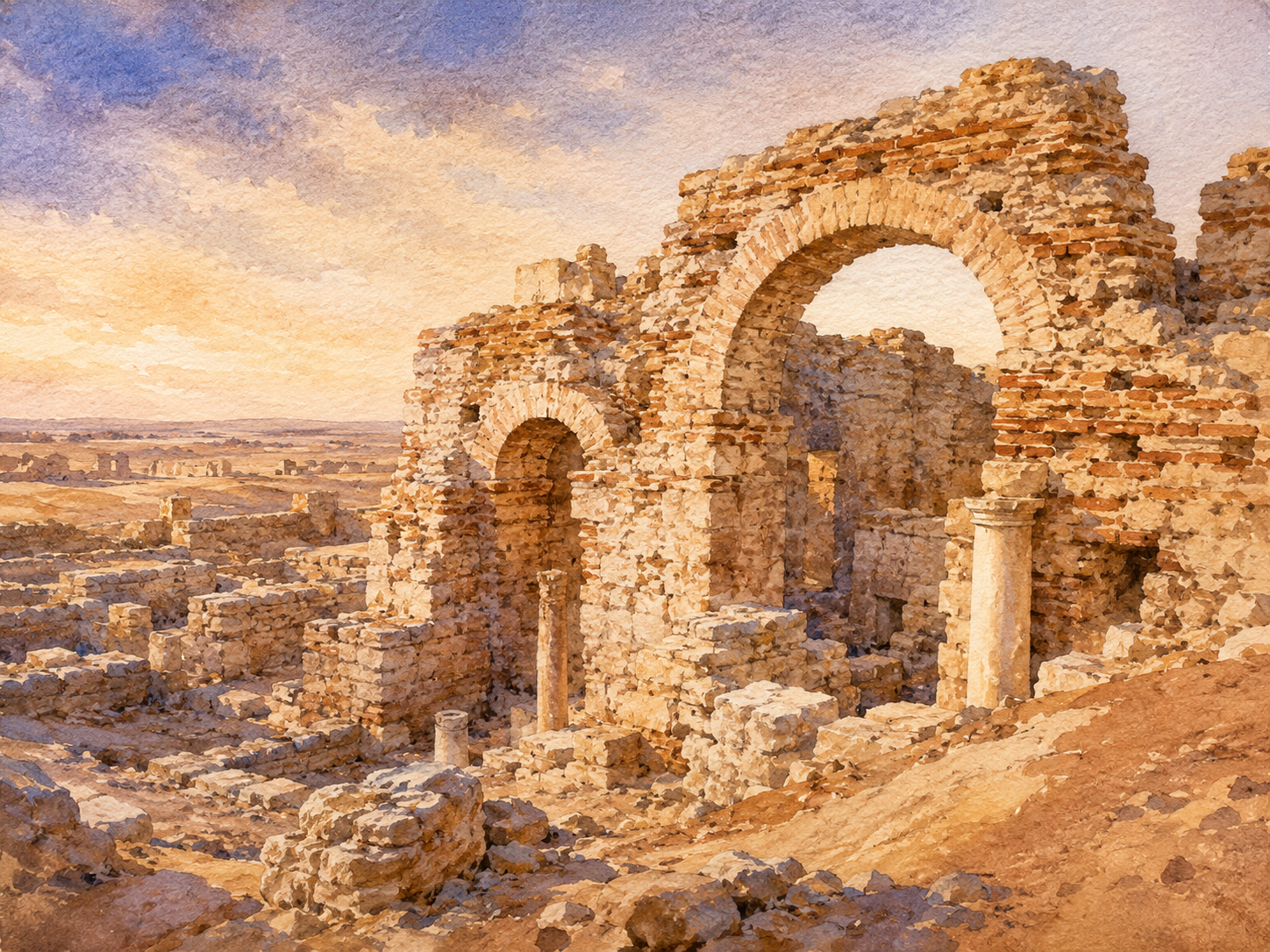
Arch of the Lost Empire
Critique
1. Introduction This watercolor painting depicts the grand ruins of an ancient civilization standing in a vast desert. The central motif of crumbling stone arches immediately captures the viewer’s attention, evoking a sense of deep history. The artwork presents a quiet contemplation of past glory and the relentless passage of time. 2. Description Two semi-circular arches built with bricks and stone dominate the right half of the canvas. The structure is partially collapsed, with the reddish-brown texture of the exposed bricks depicted in detail. Scattered stone blocks lie at its base, while a single intact pillar stands nearby. The background reveals a flat desert landscape extending to the distant horizon under a warm sky. 3. Analysis The color palette utilizes warm hues of beige, orange, and brown, mirroring the dry warmth of the desert environment. In contrast, the upper left sky transitions into pale blue and purple, creating a delicate color balance. The perspective draws the eye from the foreground arches to the empty plains, establishing a dramatic sense of depth. 4. Interpretation and Evaluation The painting symbolizes the temporary nature of human achievements compared to the permanent presence of the natural world. The disintegrating arch represents both the fragility of civilization and the beauty of architectural remains. The artist's mastery of light and texture successfully infuses the dry ruins with a poetic and nostalgic atmosphere. 5. Conclusion This artwork is a remarkable achievement that reconstructs ancient ruins through a refined modern watercolor technique. The arches bathed in evening light encourage the viewer to reflect on the transient nature of human history. The initial impression of a simple landscape study gradually transforms into a deeper emotional connection with the distant past.
Same Subcategory
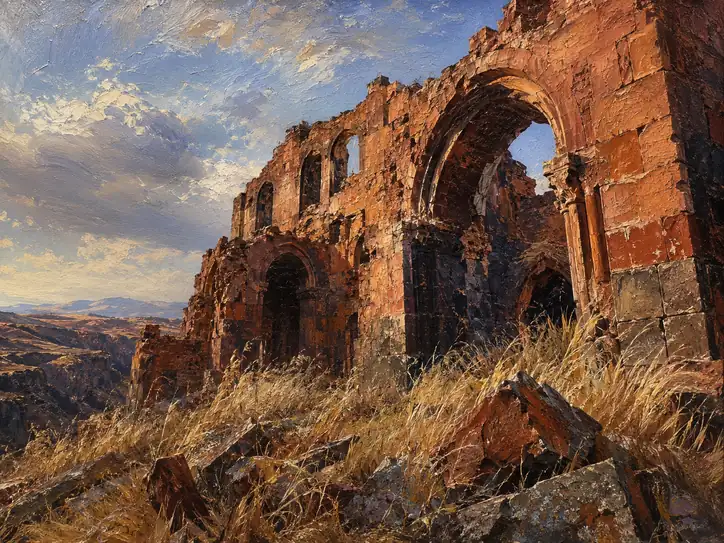 Echoes of a Forgotten Age
Similar Artworks
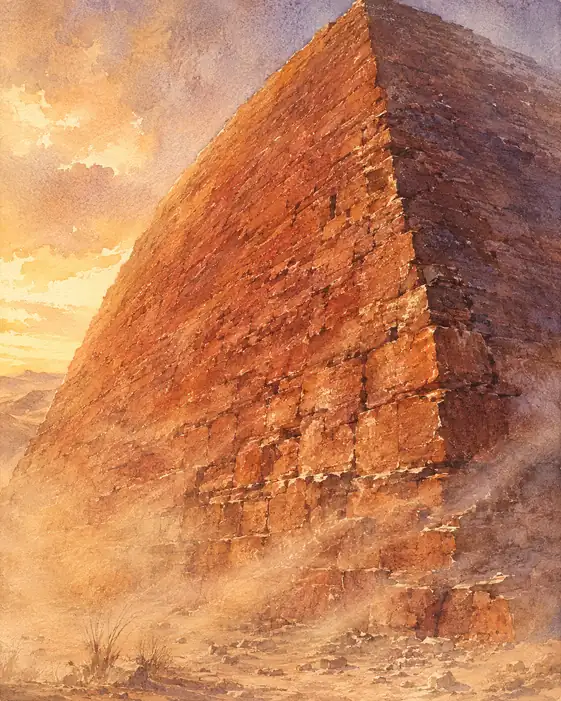 The Crimson Pillar of Sunsets
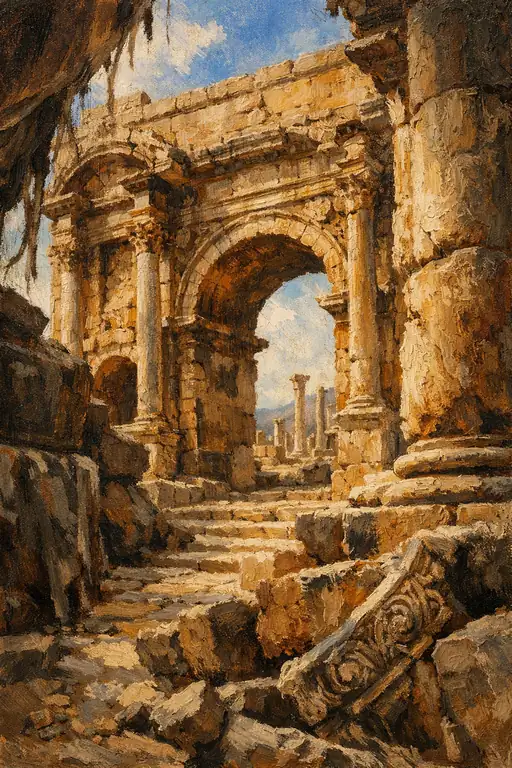 Echoes in the Stones of Time
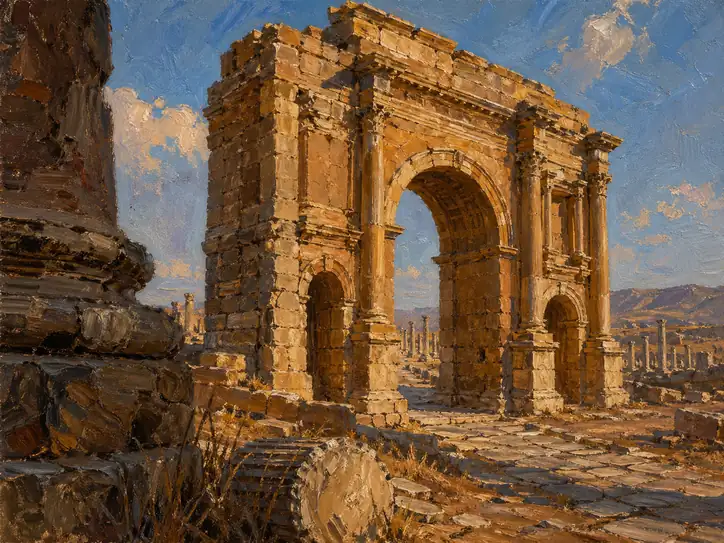 Sovereign of Silence: The Triumphal Arch of the Forgotten Sands
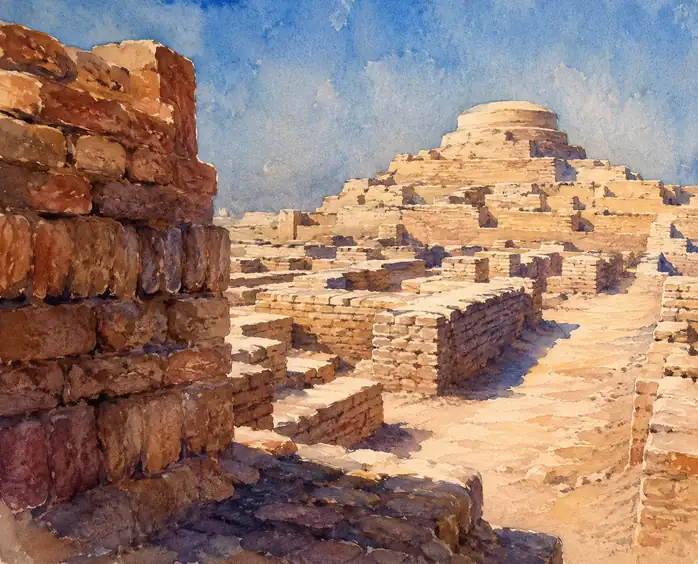 The Silent Stupa under the Azure
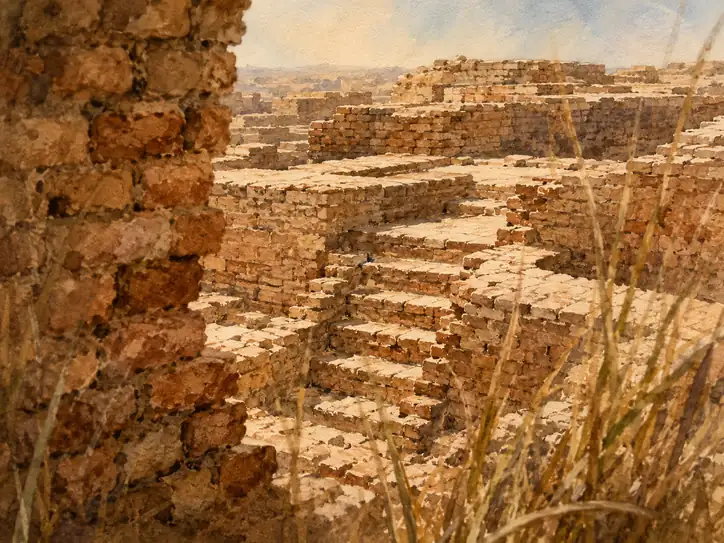 Steps into the Silent Past
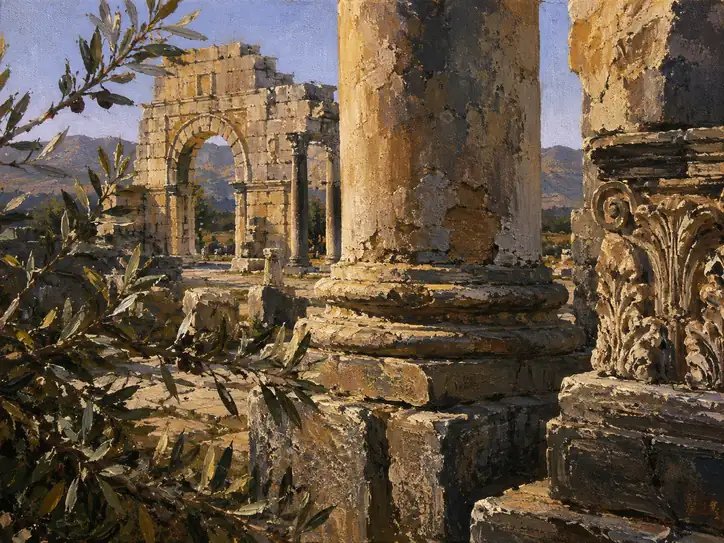 The Silent Witness of Ages
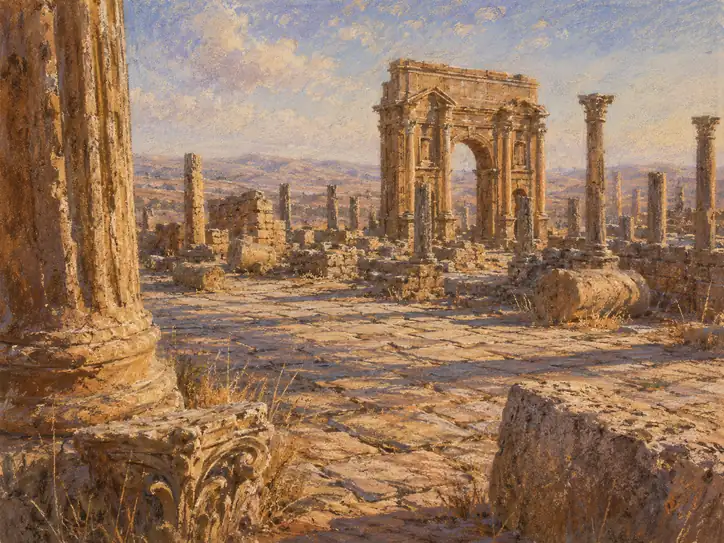 The Silent Dignity of Time
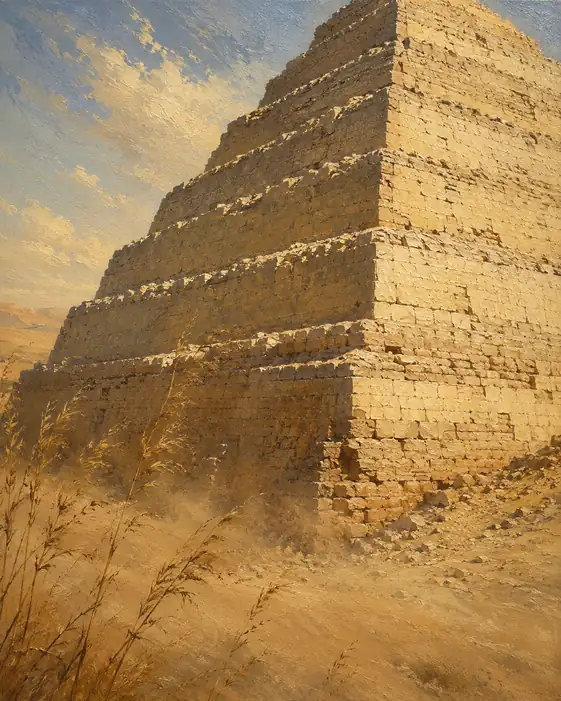 Steps in the Howling Sand
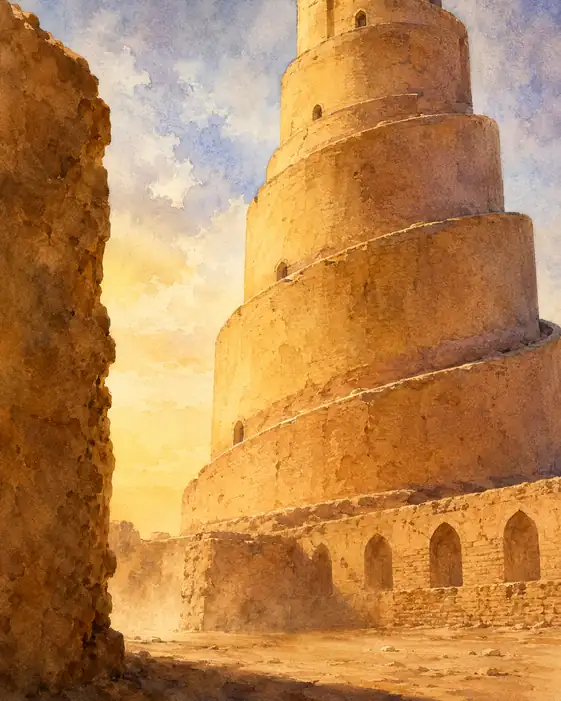 Where the Spiral Meets the Sky
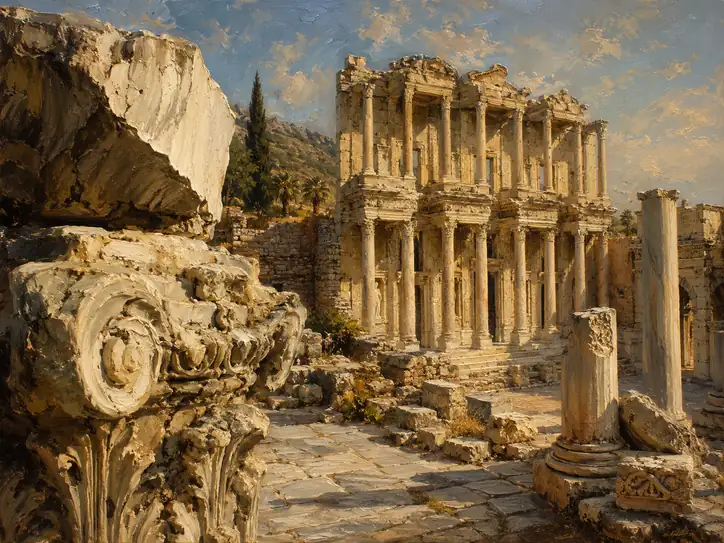 Where the Ancient Sun Still Remembers