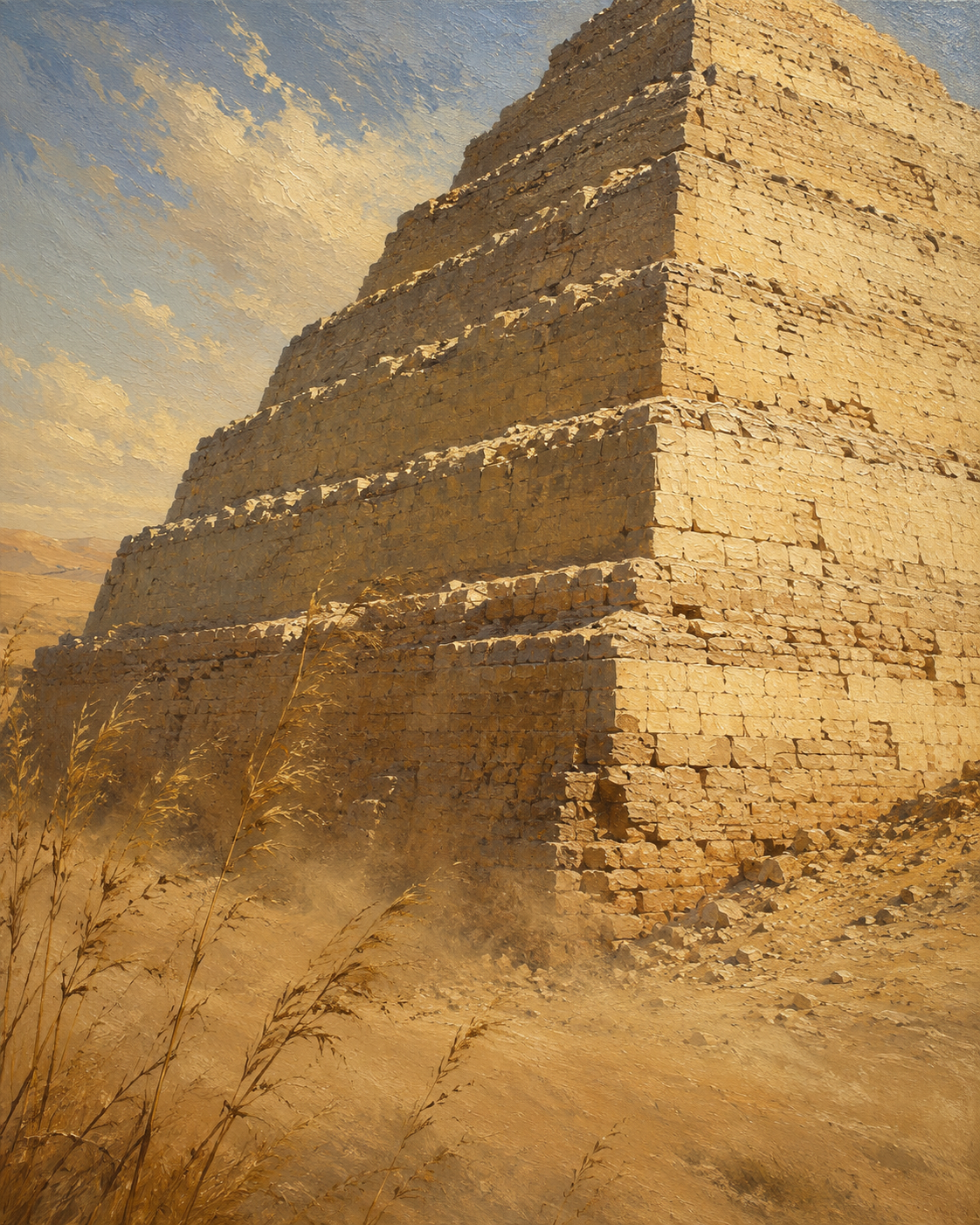
Steps in the Howling Sand
Critique
1. Introduction This oil painting captures a powerful view of a step pyramid standing in a vast desert. The composition balances the massive pyramid on the right and dry grass blowing in the wind on the left. The low-angle perspective successfully emphasizes the dignity of this ancient structure. The hot atmosphere of the desert is depicted beautifully. 2. Description The sandstone pyramid, built from countless blocks, dominates the entire scene. The stone surface is weathered and damaged by time, showing detailed cracks and textures. In the left foreground, golden wild grass sways, causing dust to rise in the dry air. The sky behind shows a gradient of blue and yellow. 3. Analysis The artist uses a thick impasto technique to represent the rough texture of stone and sand. Layers of warm beige and ochre paint effectively capture the intense heat. Light enters from the upper right, casting sharp shadows on each level of the step structure. This pattern highlights the geometric beauty. 4. Interpretation and Evaluation This work symbolizes both the greatness of human creation and the permanence of ruins. The blowing sand represents fluid time, while the solid pyramid tells of unchanging history. The precise execution of texture and light successfully draws viewers into the scene. Depicting invisible elements like wind deserves praise. 5. Conclusion At first glance, it seems a standard landscape, but study reveals its rich material charm. The combination of strong light and wind movement gives the painting a dynamic depth. This artwork successfully reconstructs historical heritage through a unique perspective. It remains a remarkable piece that leaves a lasting impression.
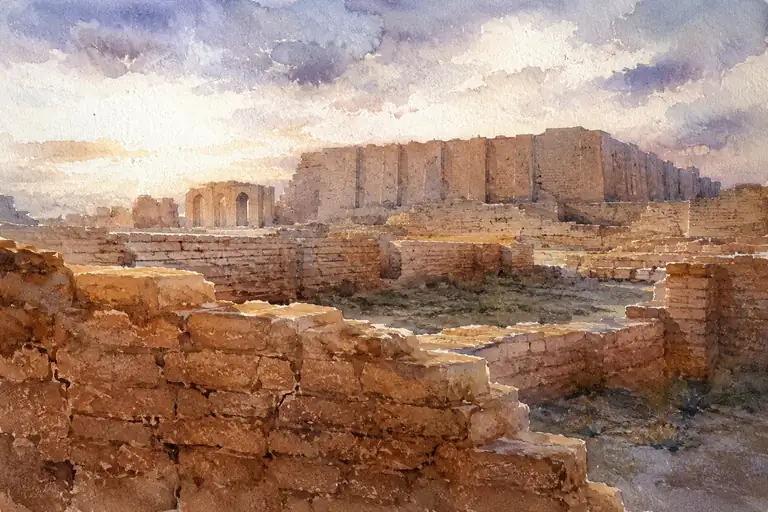 Prayer to the Fading Light
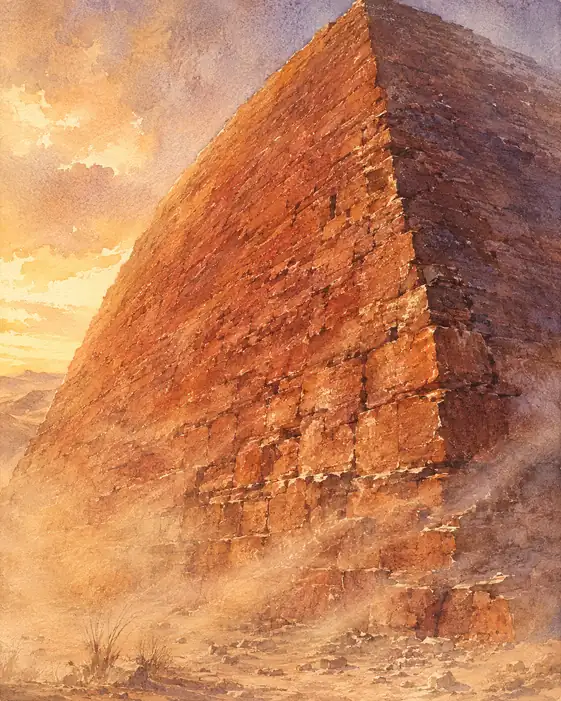 The Crimson Pillar of Sunsets
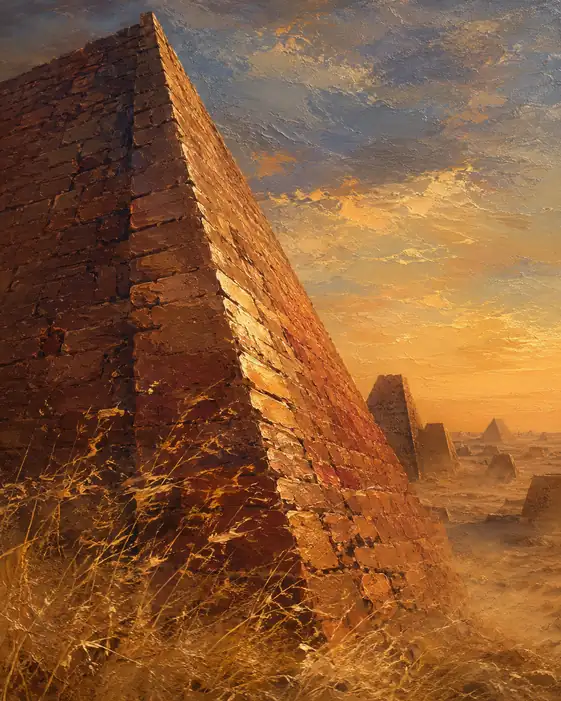 Eternity in Golden Silence
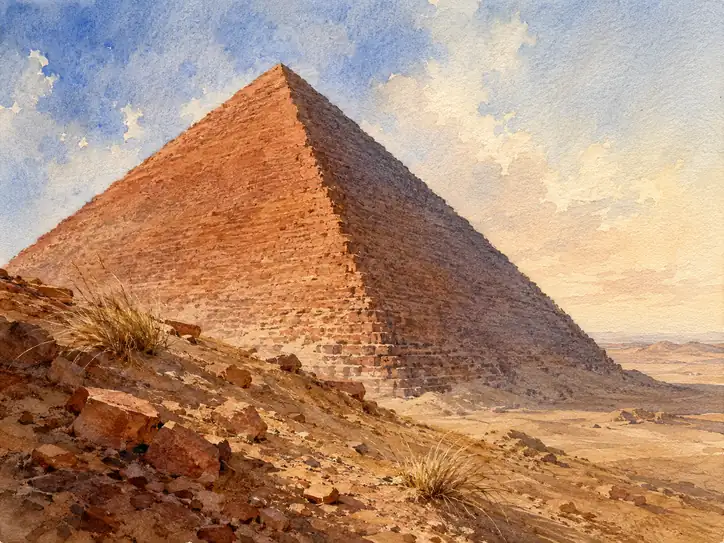 Sand and Sky's Eternal Embrace
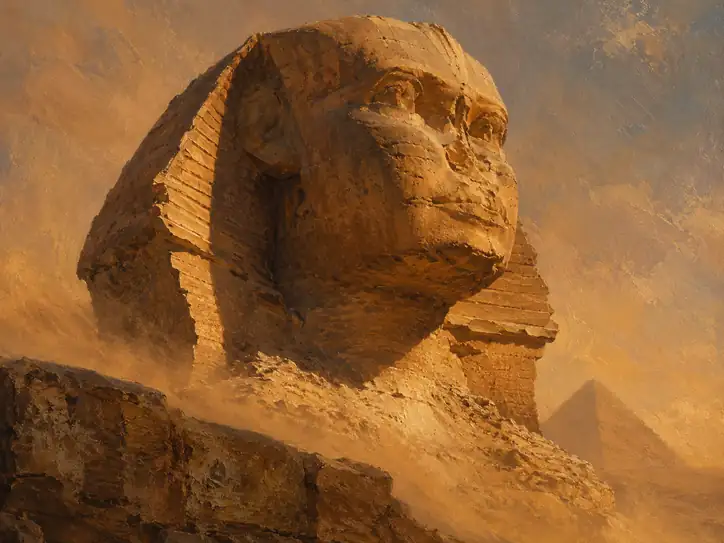 Gaze of the Silent Stone
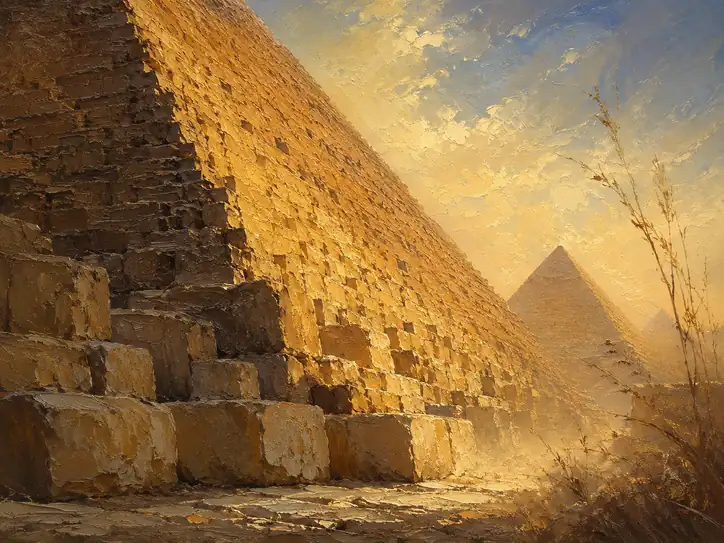 Eternity in Golden Dust
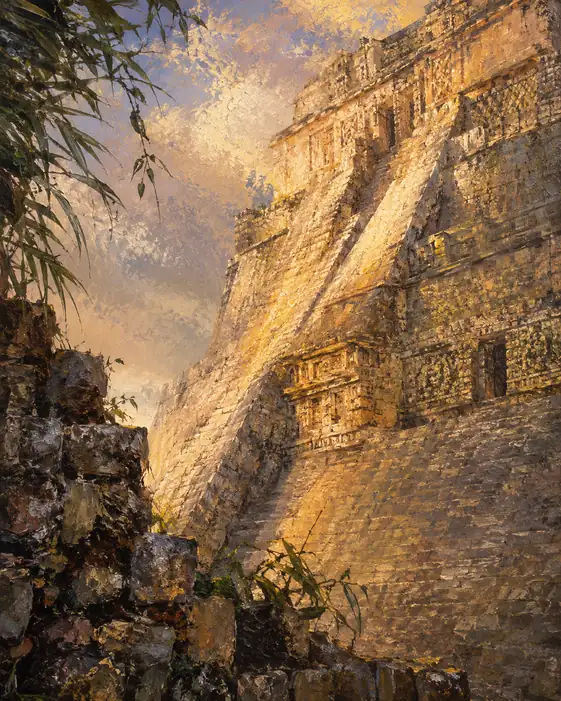 The Last Ray of a Forgotten Empire
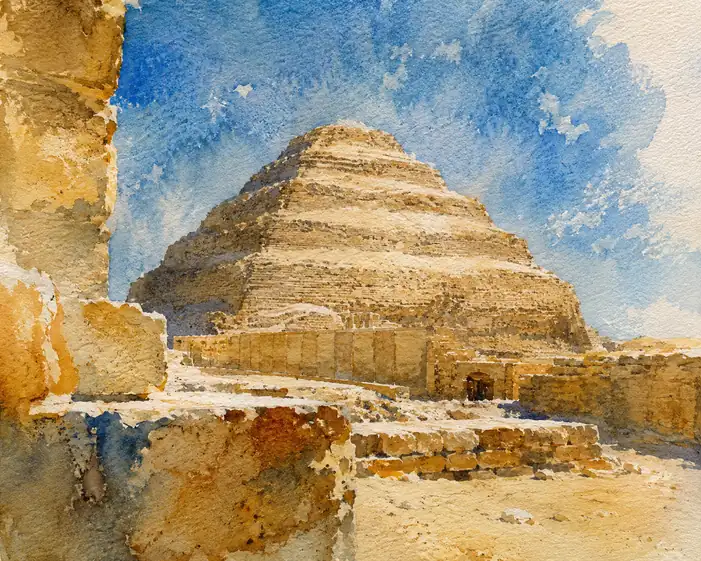 Steps to the Azure Sky
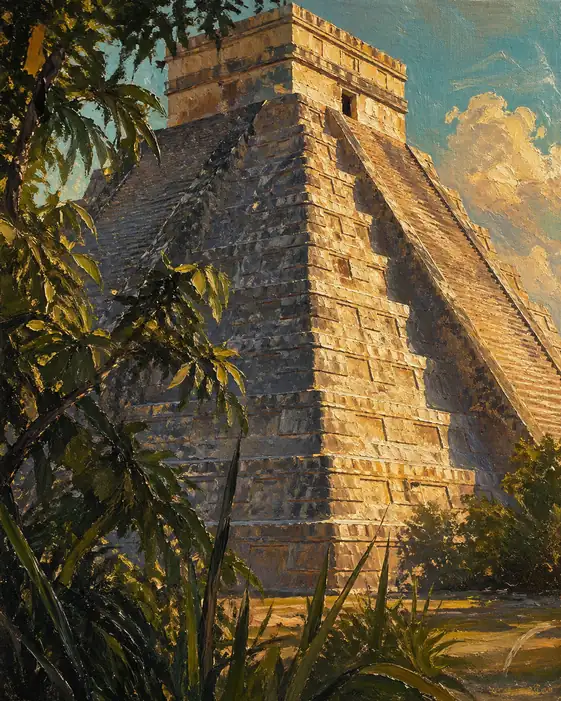 Echoes of the Golden Empire
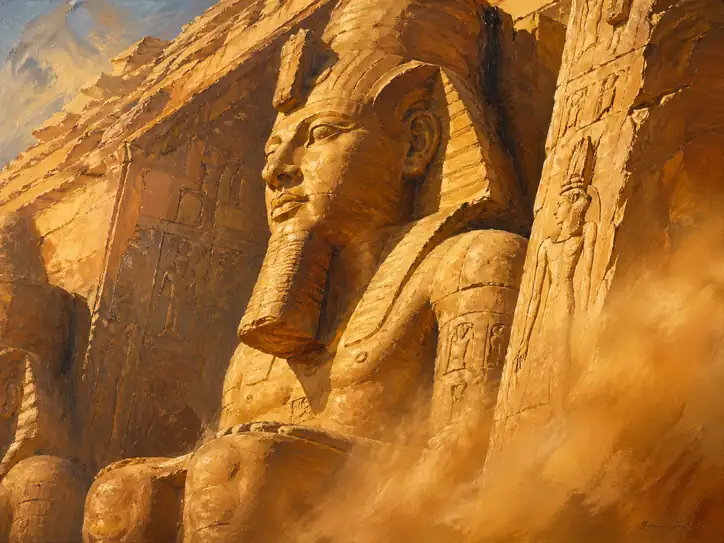 The Pharaoh's Eternal Vigil in the Storm
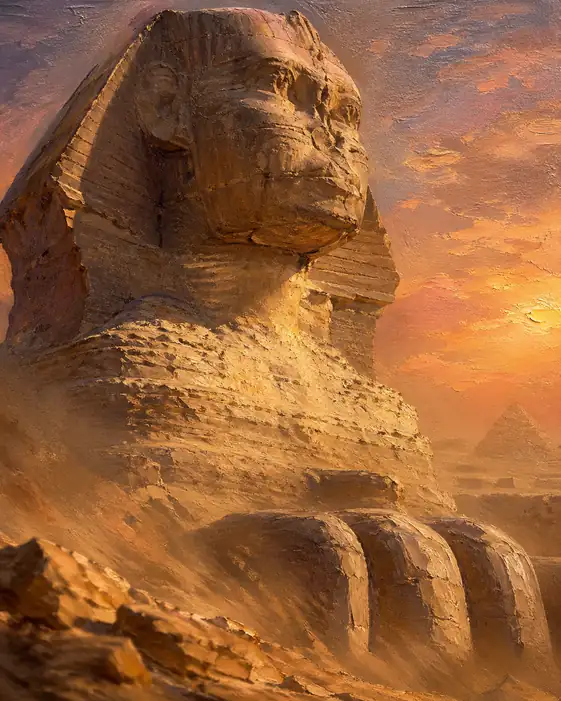 The Sun-Kissed Gaze of Infinity