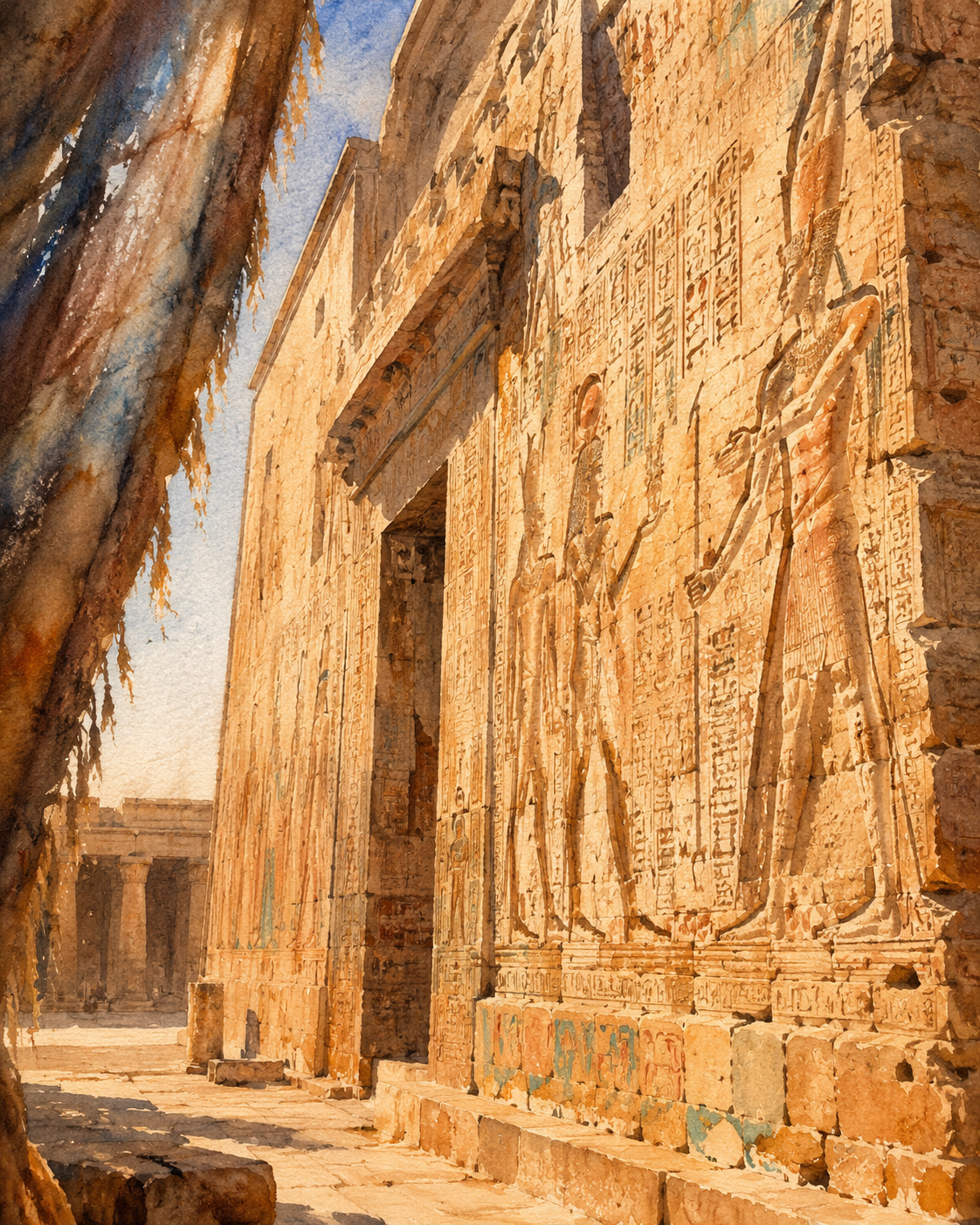
The Shroud and the Sacred Wall
Critique
1. Introduction This watercolor painting captures a dramatic view of a massive temple wall decorated with reliefs. The composition balances a towering wall on the right and a weathered cloth on the left. The low-angle perspective successfully creates the overwhelming scale of ancient architecture. Bright sunlight emphasizes the sacred atmosphere of this ruin. 2. Description On the sandstone wall dominating the right side, divine figures and hieroglyphs are depicted in detail. Traces of ancient pigments remain on the carvings, suggesting past glory. In the left foreground, a hanging fabric adds unique depth and contrast. In the background, other stone structures and shadows are visible. 3. Analysis The artist employs transparent watercolor with delicate layering to represent the dry texture of stone. While warm ochre forms the base, subtle blue and green pigments provide a fresh touch. Light comes from the right, casting sharp shadows that make the carvings stand out. This diagonal setup adds movement to the scene. 4. Interpretation and Evaluation This work symbolizes records of ancient faith and the aesthetic erosion caused by time. The detailed divine figures retain their dignity, while the torn cloth evokes a sense of transience. The combination of precise linework and color gradients successfully recreates the sacred air. The dynamic perspective combined with watercolor deserves praise. 5. Conclusion At first glance, it seems a detailed study of a wall, but study reveals its artistic depth. The handling of light and the inclusion of the cloth give the painting a strong narrative quality. This artwork successfully reconstructs historical heritage through a unique composition. It remains a remarkable piece that leaves a lasting impression.
Same Subcategory
Similar Artworks
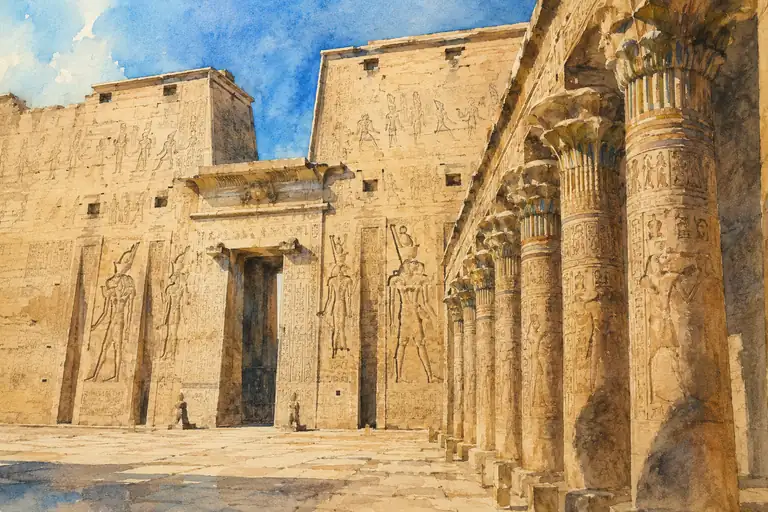 Portal to the Edfu Sky
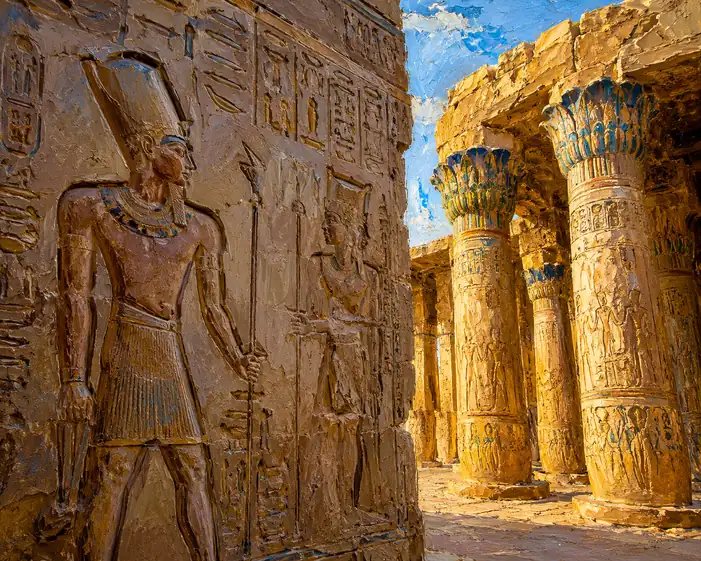 Echoes of the Golden Dynasty
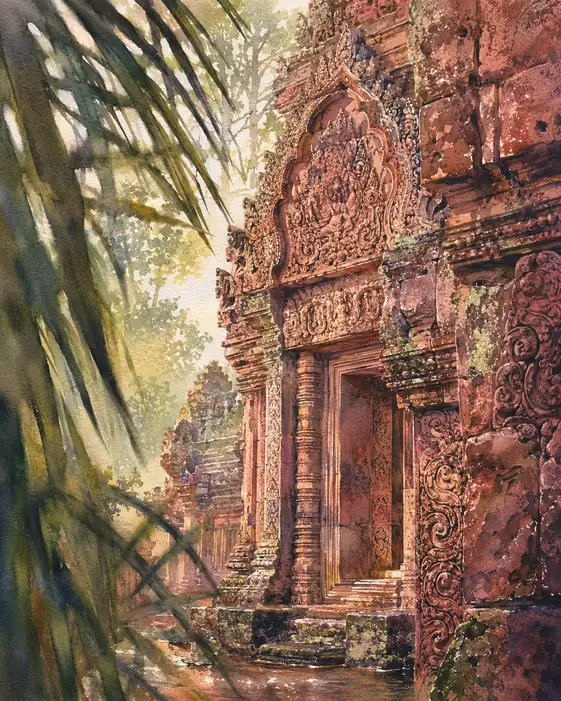 The Red Portal of the Jungle Depth
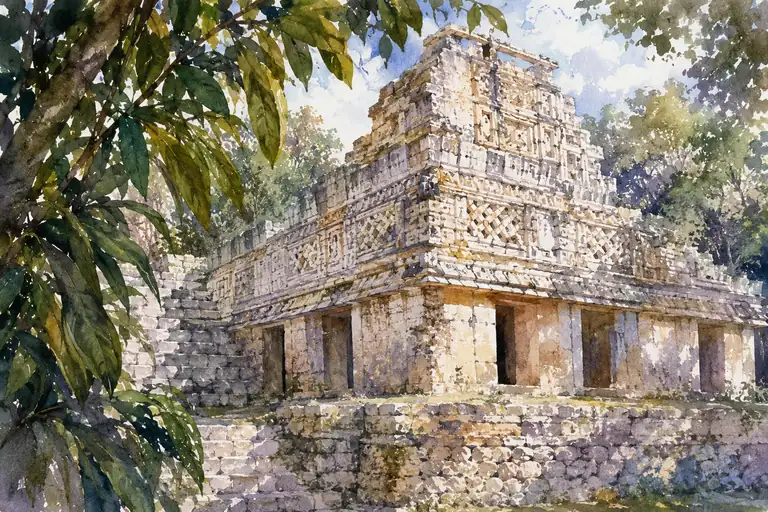 Echoes of the Green Sanctuary
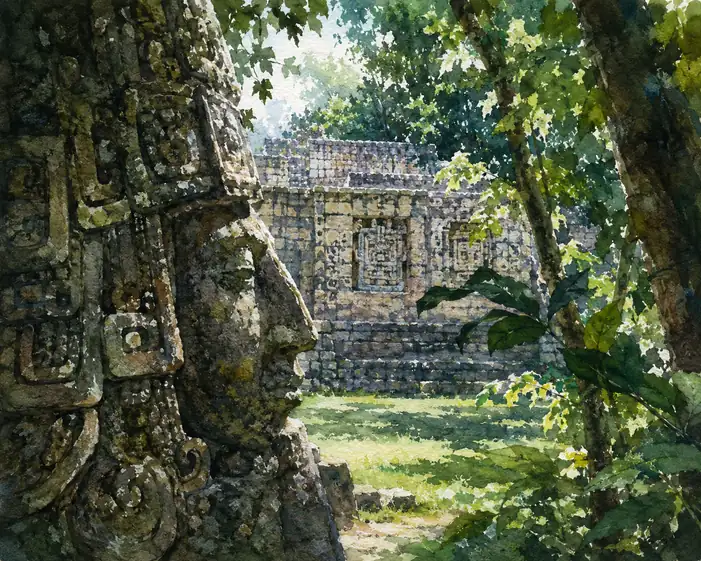 The Silent Profile Dreaming of Eternity
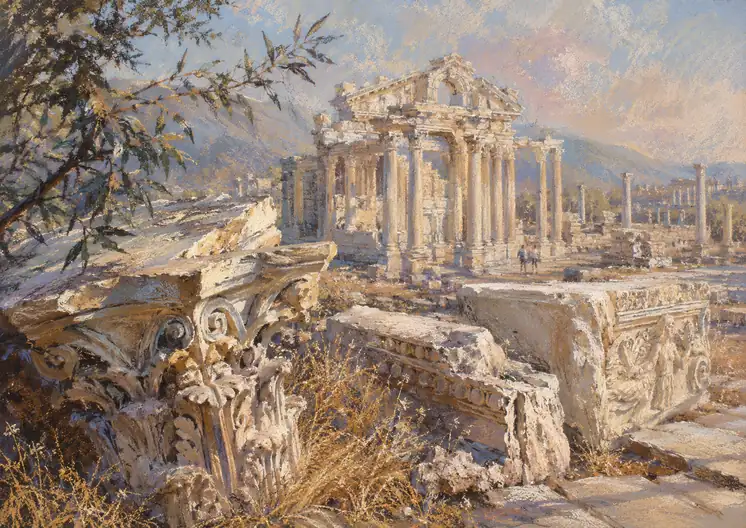 Echoes in the Dust of Time
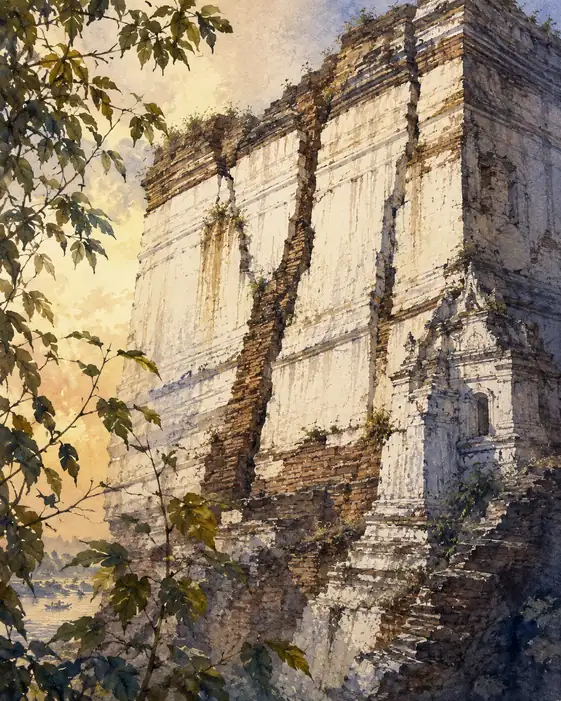 Where Time Splits the Stone
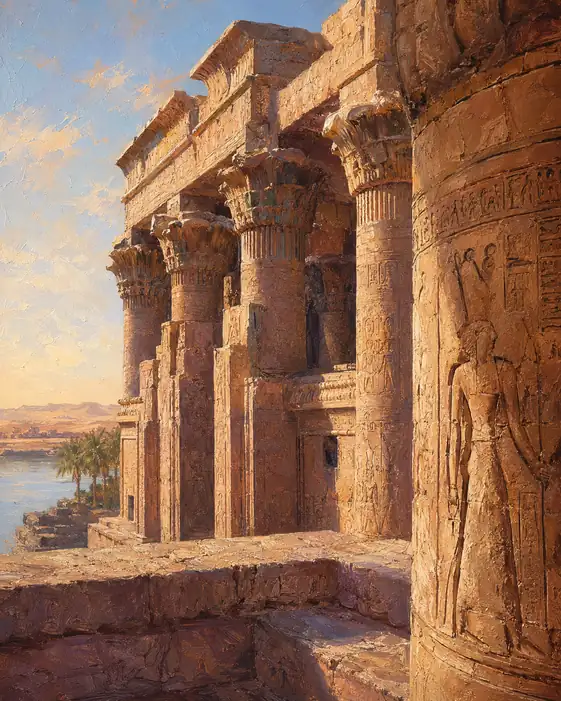 Whispers of Philae at Sunset
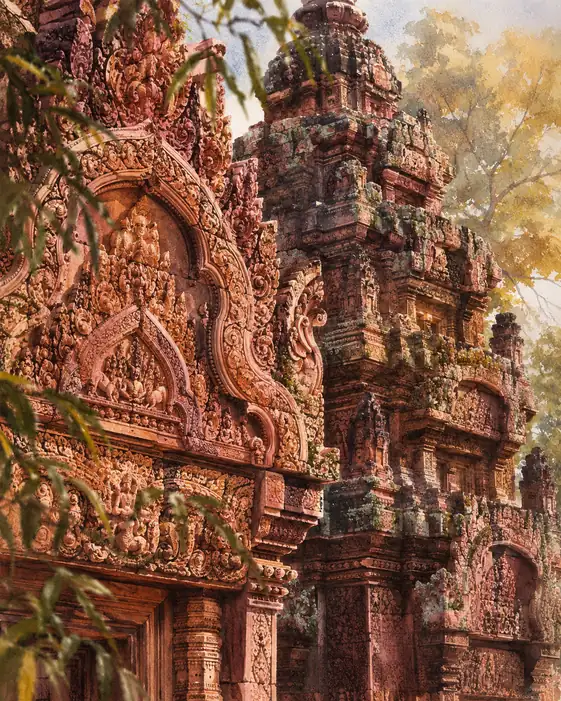 The Gateway to Forgotten Devotion
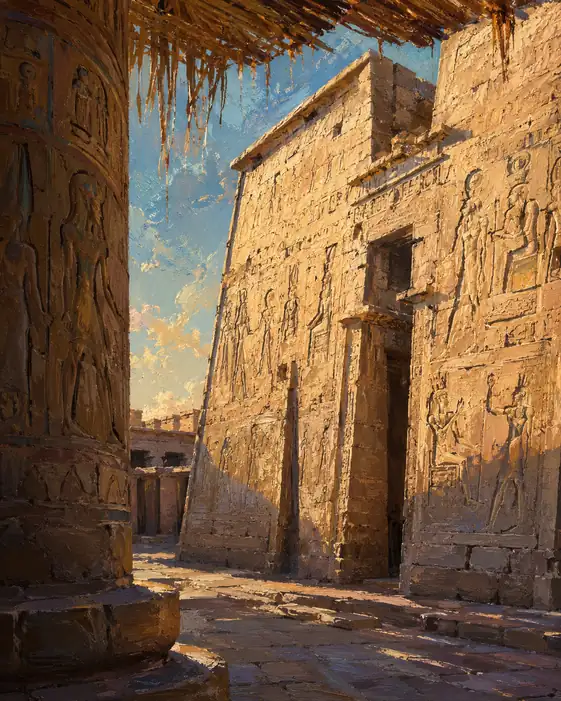 Under the Straw Canopy of Time