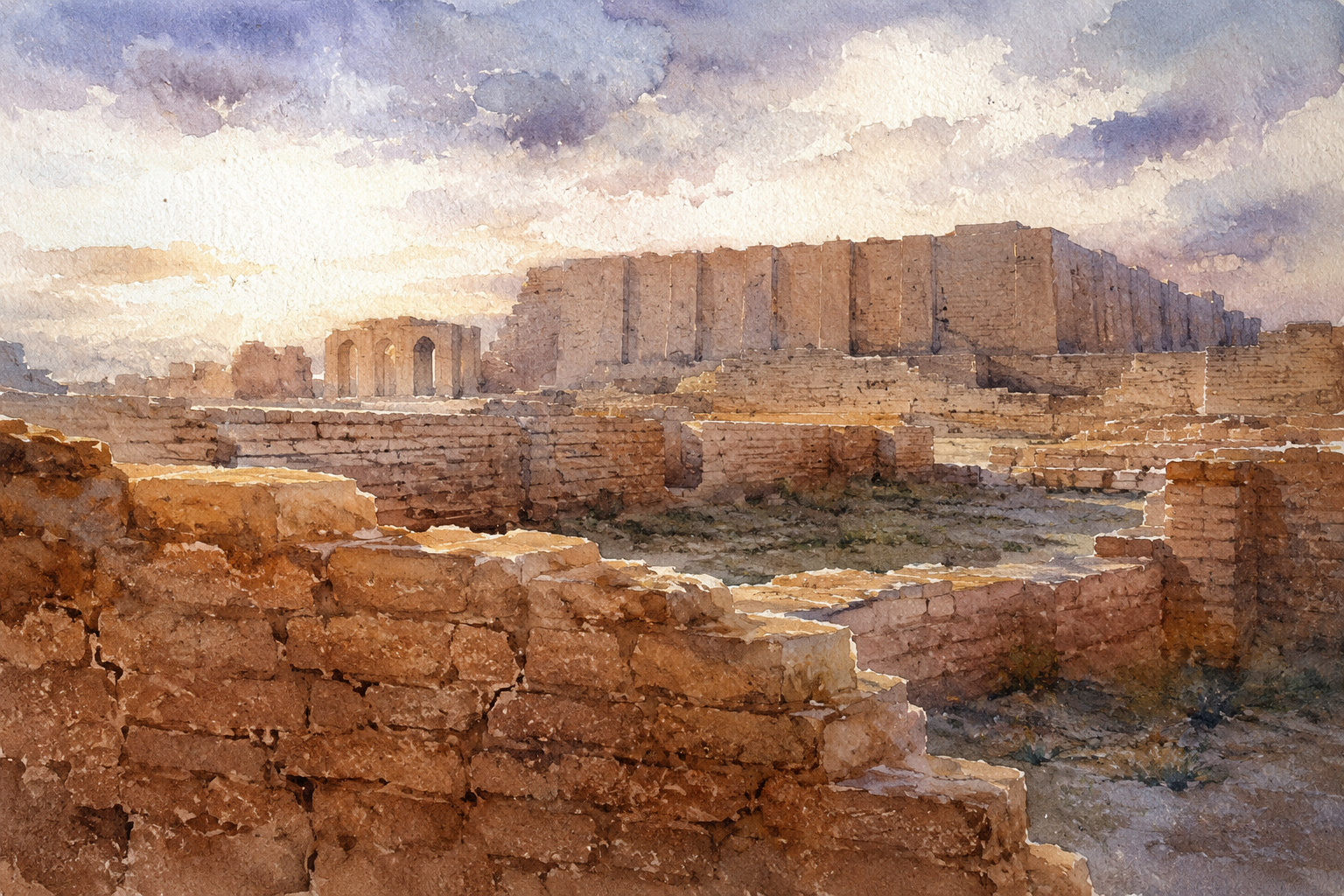
Prayer to the Fading Light
Critique
1. Introduction This watercolor painting presents a sprawling view of a monumental ancient ziggurat surrounded by complex ruins. The massive terraced temple complex rises in the background on the right, demonstrating the architectural ambition of a lost era. In the foreground, crumbling brick structures are arranged, guiding the eye into the historical site. 2. Description The towering main facade features deep vertical recesses along its weathered brick walls. To the left, a smaller structure with three arched openings stands in silhouette against the bright, low light of the sun. The labyrinthine foreground walls are built of dry mud bricks, with sparse vegetation clinging to the arid ground between them. 3. Analysis The color composition pairs the warm terracotta and sandy hues of the ruins with the cool purples and blues of the sky. Fluid watercolor washes create soft clouds, which contrast with the dry texture of the sun-bleached bricks. The horizontal layers of foreground walls balance the verticality of the ziggurat, establishing a stable composition. 4. Interpretation and Evaluation The artwork successfully evokes the solemn spirit of the historical site through its sensitive rendering of atmospheric light and physical decay. Utilizing watercolor to capture the dusty air and fleeting evening glow is both highly original and technically skilled. The juxtaposition of the massive ziggurat and crumbling relics underscores the inevitable passage of historical time. 5. Conclusion Initially seen as a simple depiction of ruins, the painting offers a poetic reflection on human heritage. The contrast between the solid, enduring monument and the soft, shifting clouds highlights a beautiful tension between permanence and transience. Ultimately, the work stands as a visually stunning and emotionally evocative tribute to ancient history.
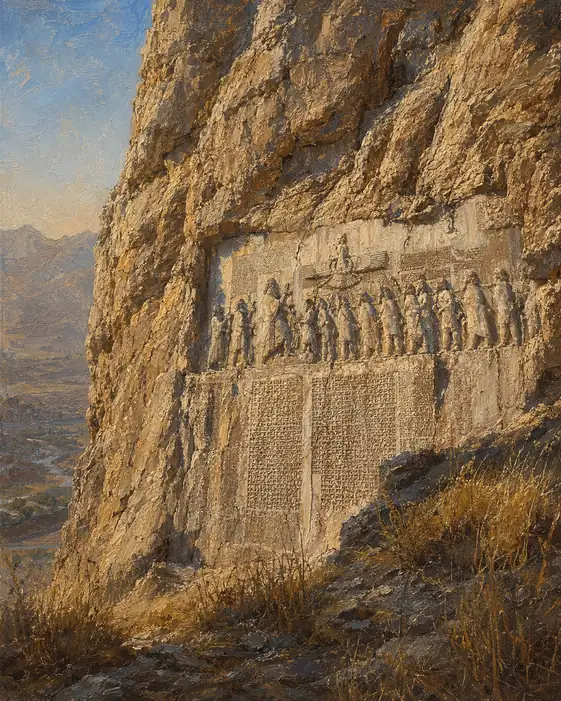 Silent Voices in the Stone
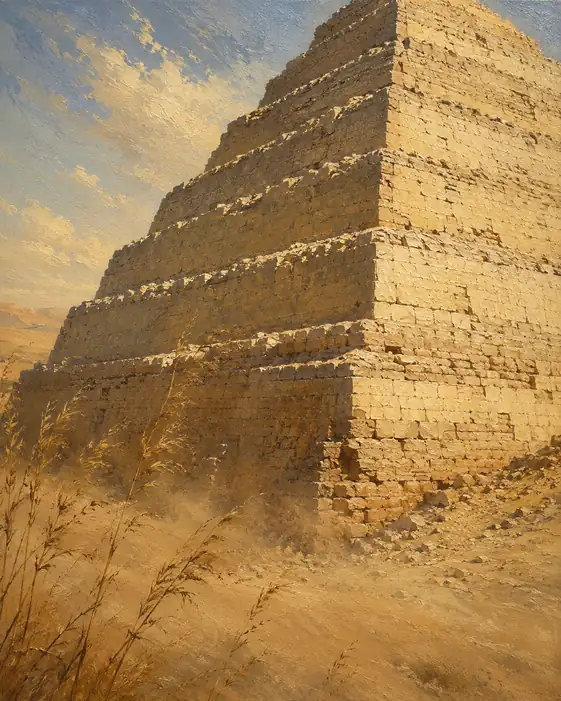 Steps in the Howling Sand
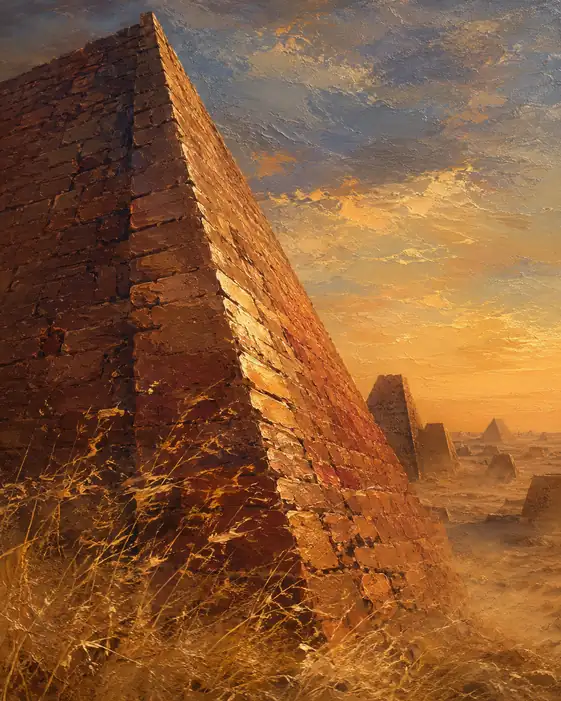 Eternity in Golden Silence
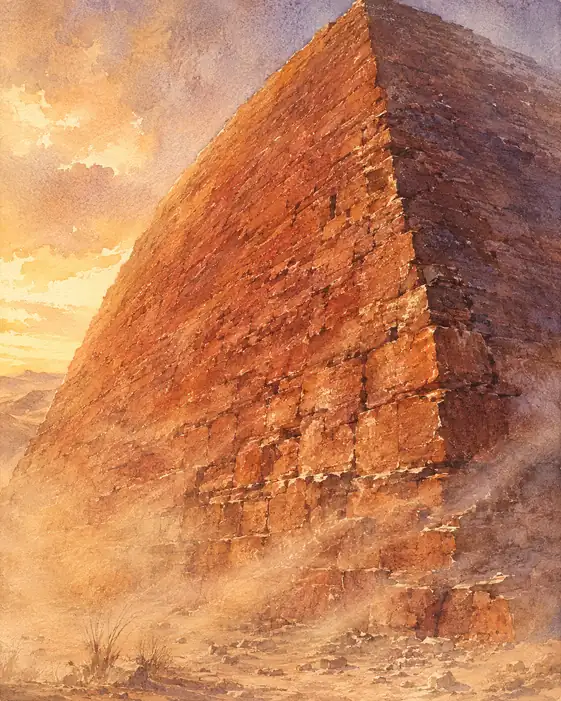 The Crimson Pillar of Sunsets
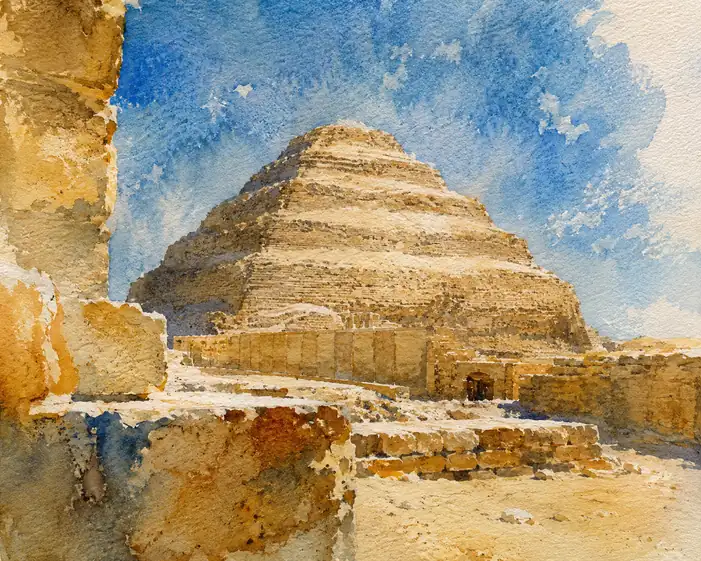 Steps to the Azure Sky
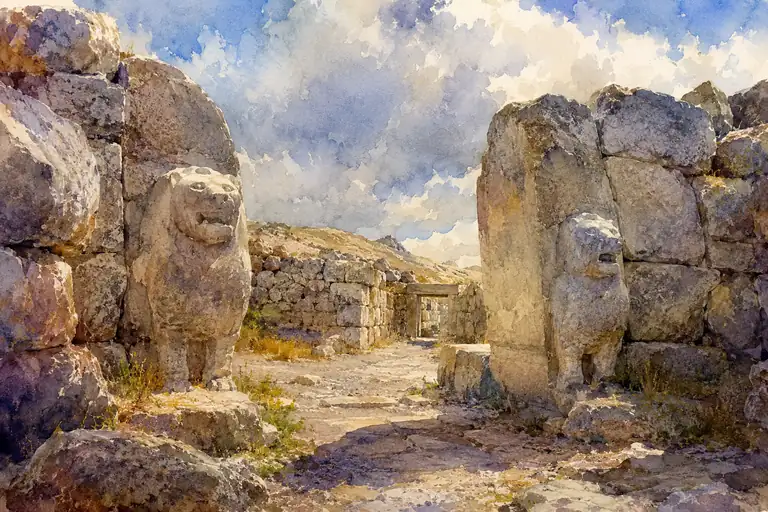 The Silent Roar of Hattusa
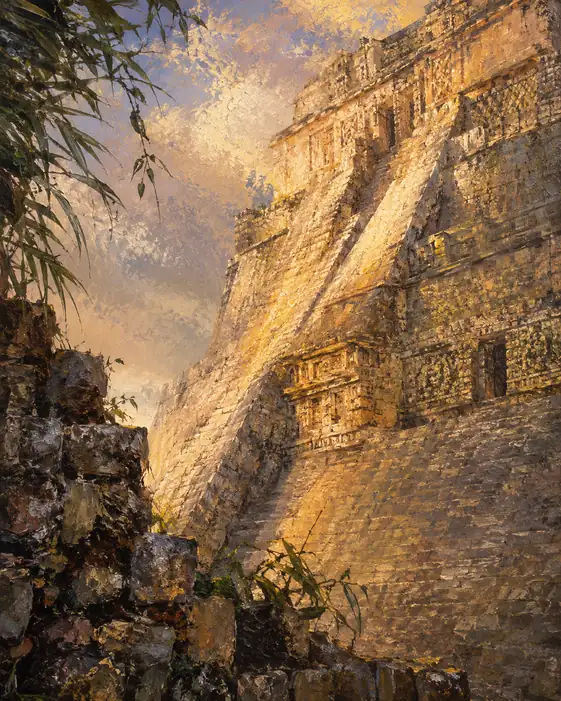 The Last Ray of a Forgotten Empire
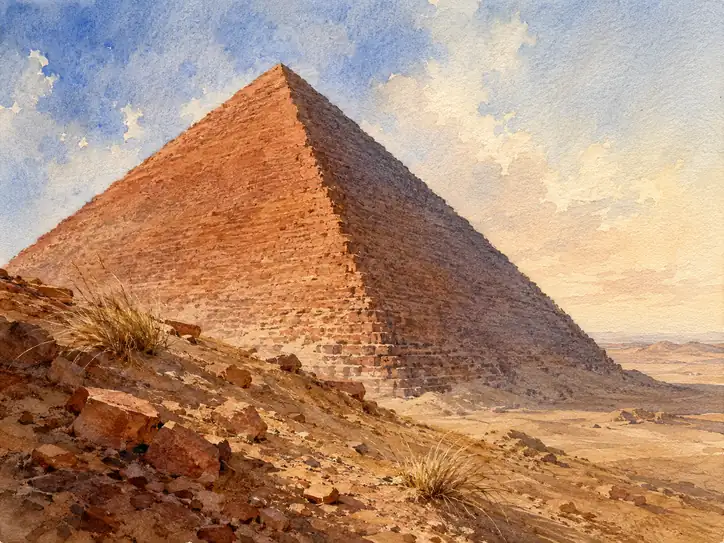 Sand and Sky's Eternal Embrace
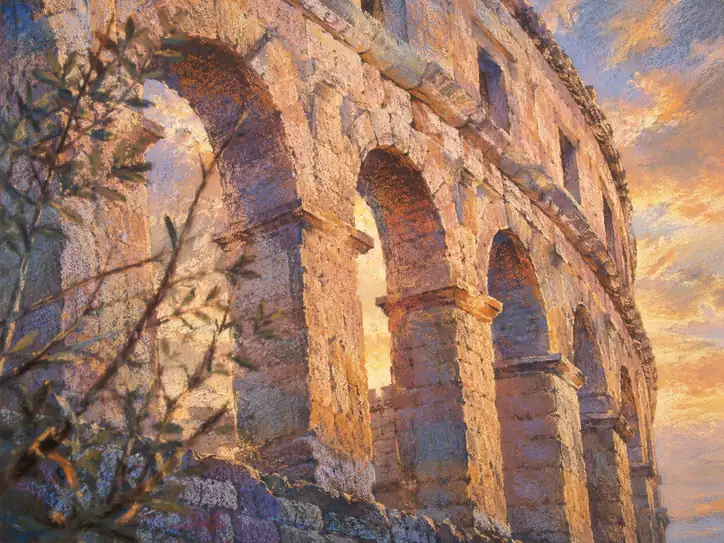 Gold Spilled on Ancient Stone
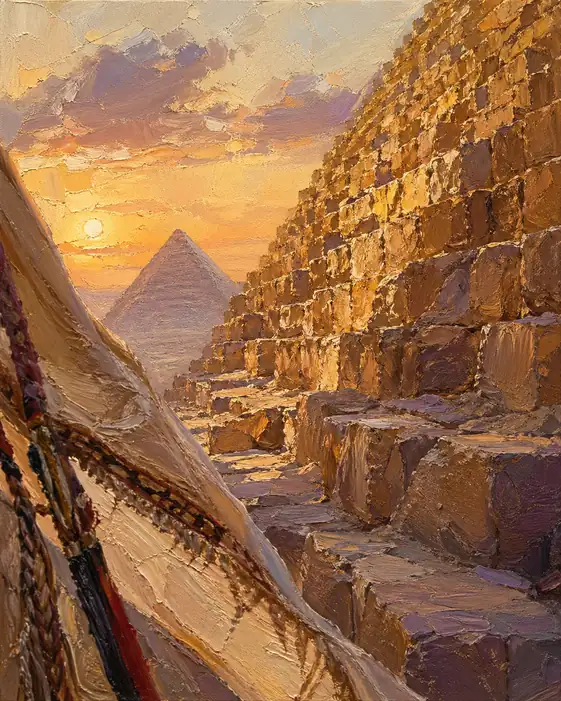 A Prayer Carved in the Sands of Time