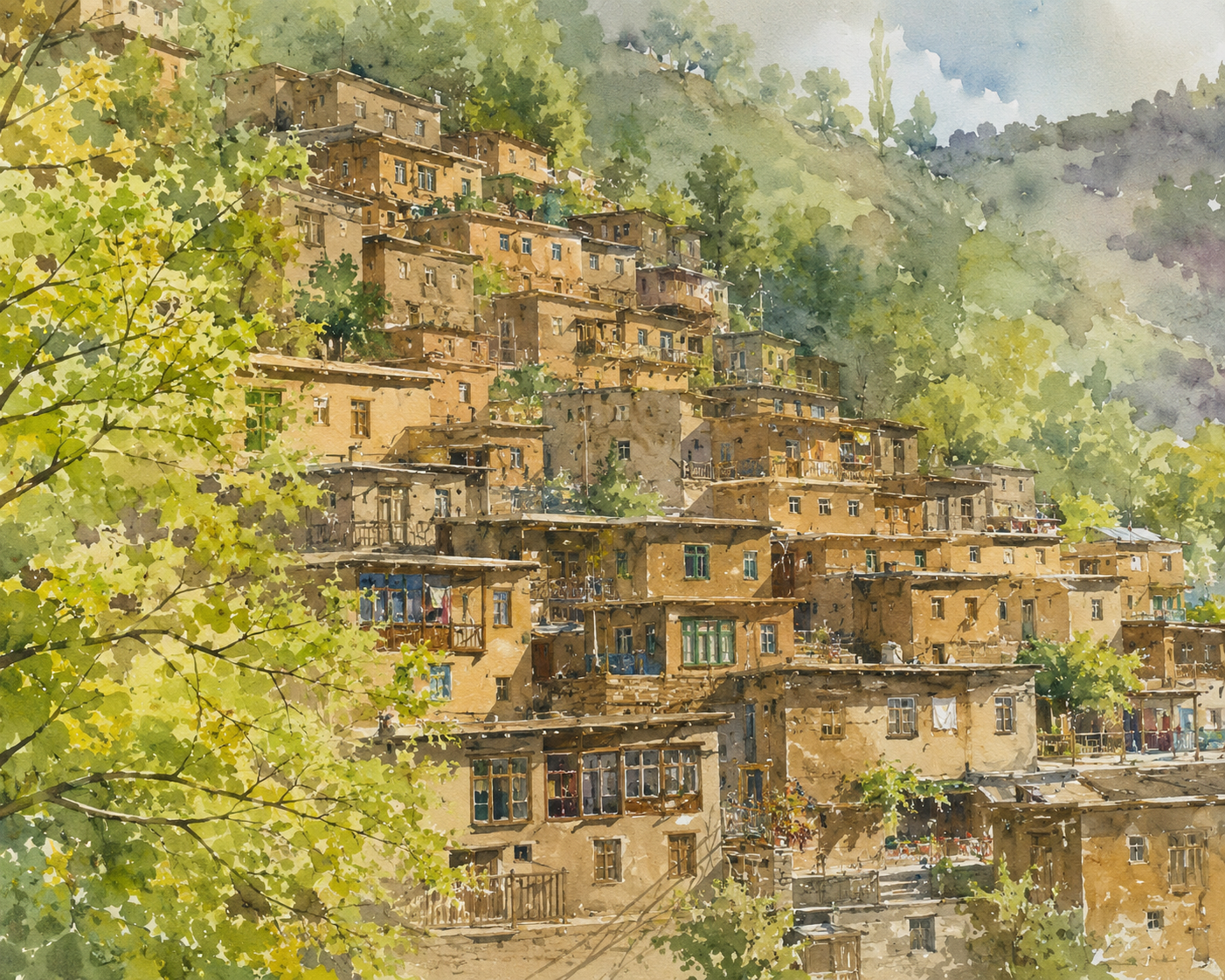
Where Roofs Become Paths
Critique
1. Introduction This watercolor painting depicts a traditional mountain village densely built on a steep slope. The artwork illustrates a stepped urban structure, where roofs serve as pathways. The artist captures the harmonious relationship between the organic houses and the surrounding lush environment. The warm sunlight evokes a serene sense of daily life, presenting a gentle landscape. 2. Description In the foreground, a large tree with vibrant green foliage frames the left side. Multi-story houses with brown mud walls and wooden windows cover the hillside. Some window frames are painted green and blue, while balconies feature domestic items. The misty mountains lie in the background, with clouds drifting in a pale blue sky. 3. Analysis The composition balances the diagonal line of the foreground tree with the repeating pattern of rising houses, creating depth. Warm tones of ochre and brown dominate the scene, contrasting with the tree's yellow-green leaves. Sunlight from the upper-left highlights wall edges, emphasizing three-dimensional form. Soft washes depict the distant atmosphere. 4. Interpretation and Evaluation The artwork symbolizes human adaptability and community in a challenging natural terrain. The complex architectural perspectives demonstrate the artist's superb draftsmanship and technical skill. The integration of organic greenery and earthy structures shows ecological harmony. It transcends record, elevating the simplicity of village life to poetic art. 5. Conclusion Initially looking like a simple study of village life, the painting reveals a deep longing for harmonious living upon closer viewing. Framing the town with foliage invites viewers into a personal journey. Ultimately, the work succeeds in preserving the charm of traditional lifestyles in light. It is a stunning masterpiece that inspires wanderlust.
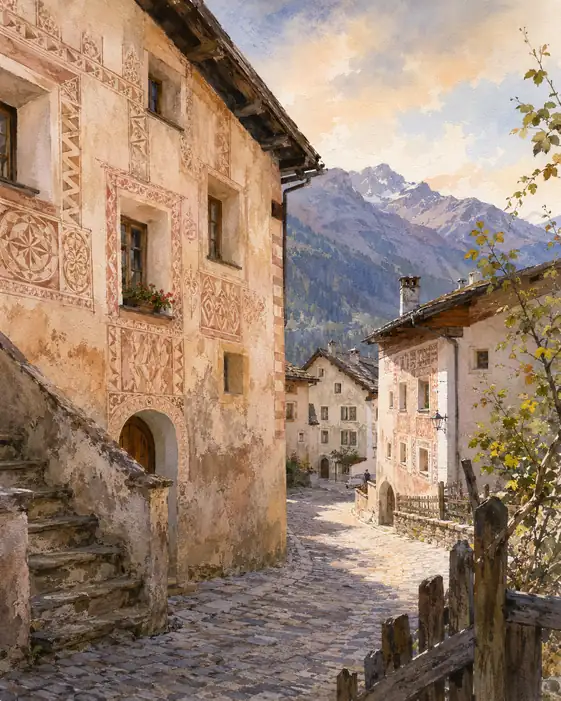 Nostalgia on the Cobblestone Path
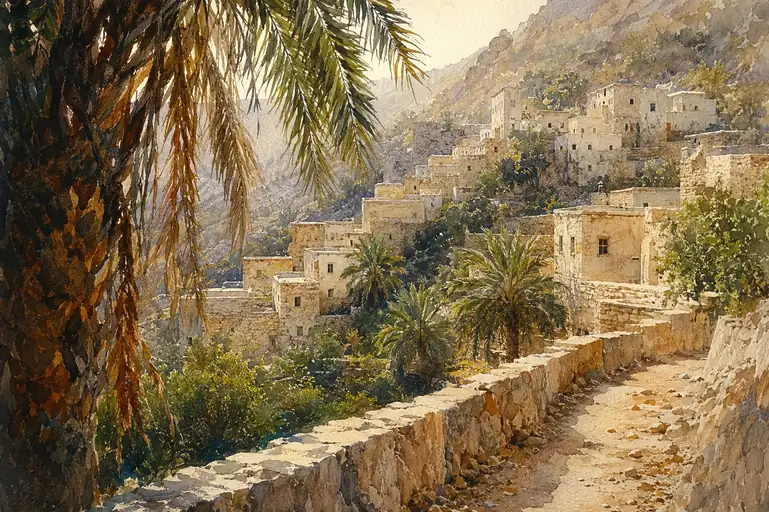 Where the Palms Whisper
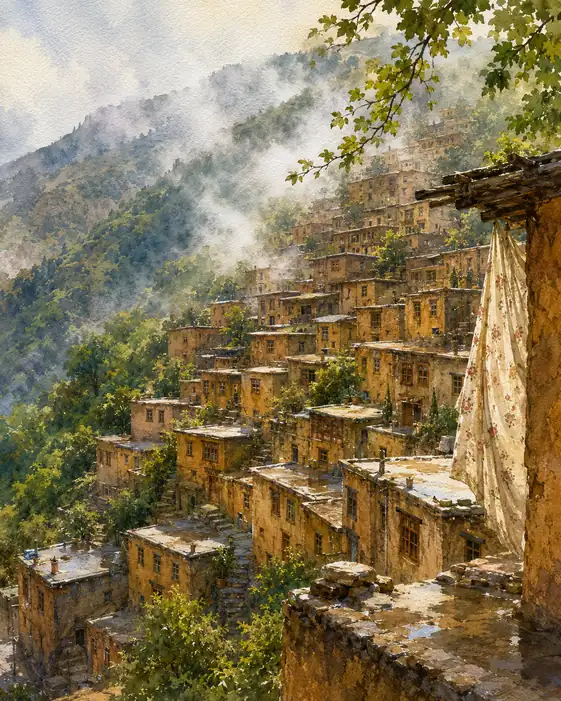 Where the Mountains Breathe
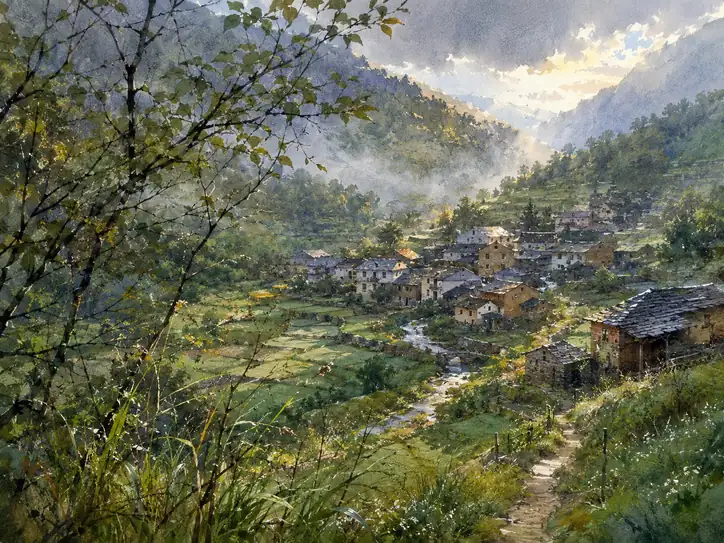 Where the Mist Whispers
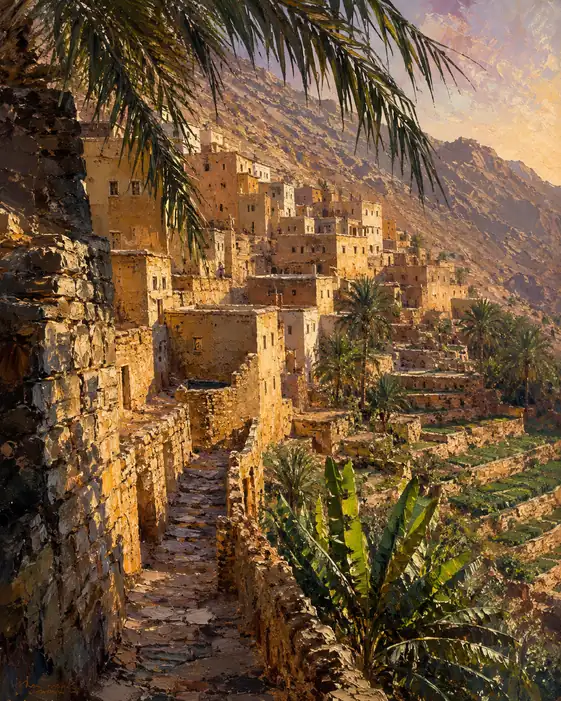 Cradled by the Golden Slopes
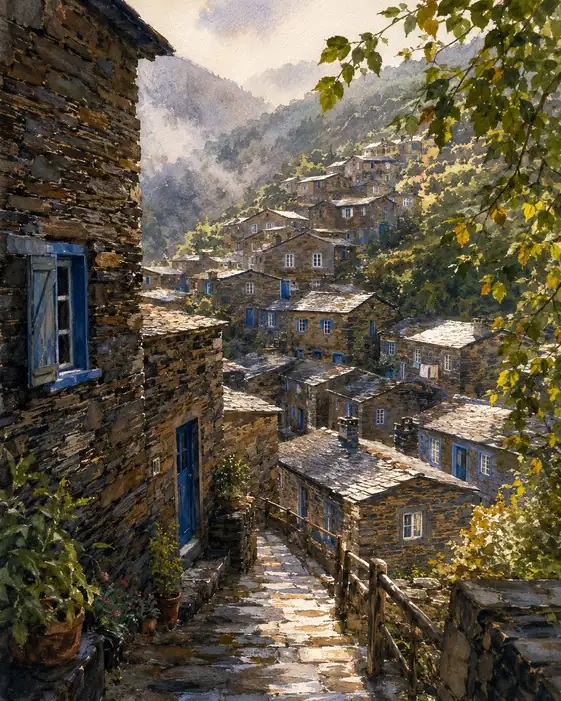 The Blue Door in the Mist
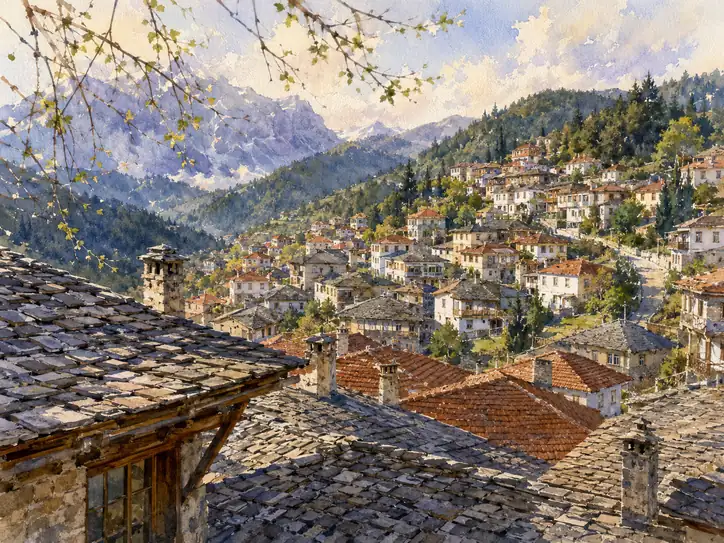 Warmth Beneath the Silent Peaks
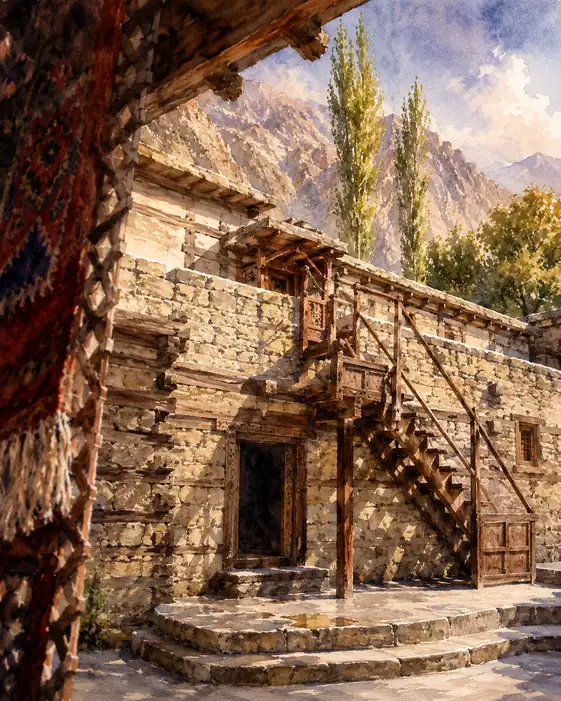 Weaving Memories in the Wind
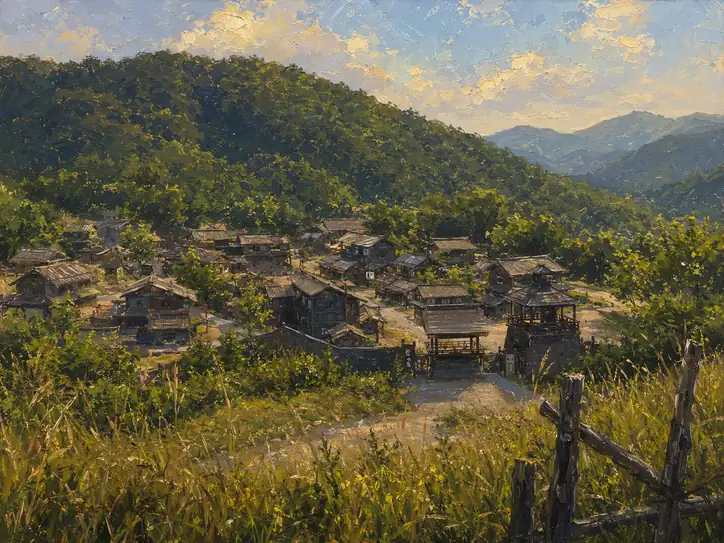 Mountain Village in the Golden Hour
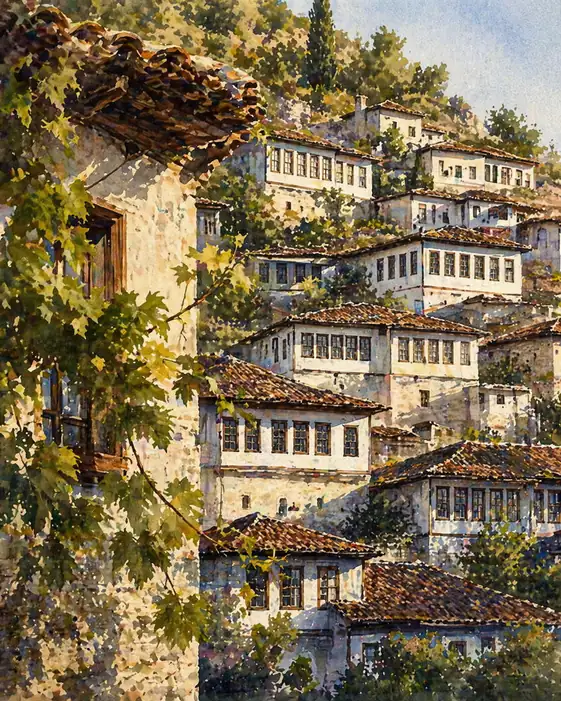 Rhythm of the White Houses
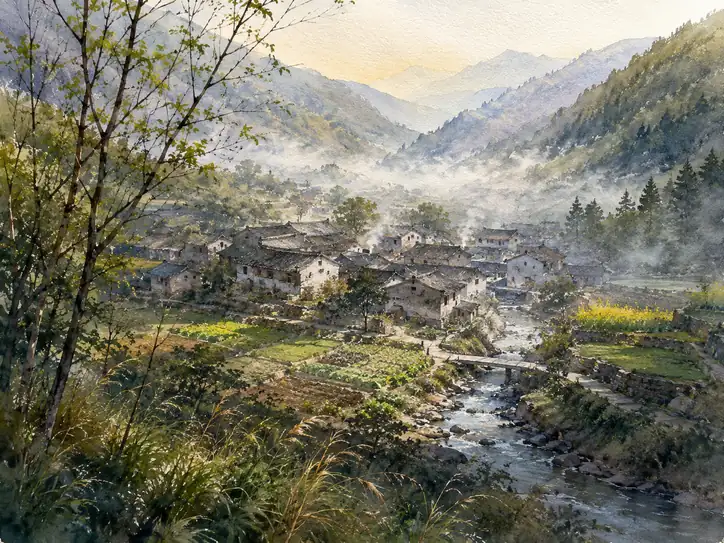 Morning Mist in the Cradle of Mountains