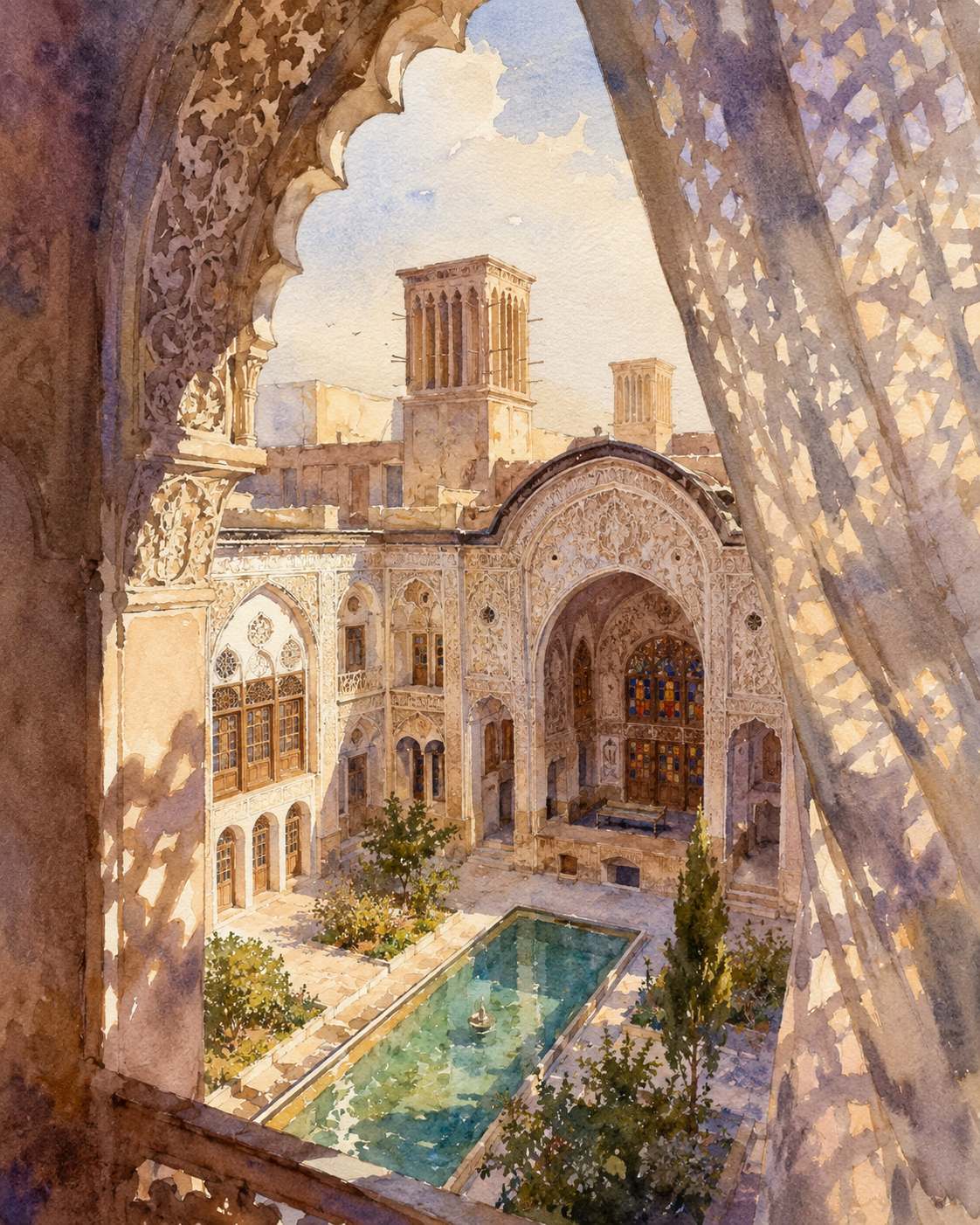
The Hidden Sanctuary
Critique
1. Introduction This watercolor painting depicts a beautiful courtyard inside a traditional Middle Eastern residence. Viewed through a carved arch window, the composition centers on a tranquil pool. The artist captures the geometric elegance and poetic mood of historical architecture through the play of light. The sunlight contrasts with the cool water, conveying a sense of serenity. 2. Description In the foreground, a detailed arch window stands on the left, while a thin curtain with lattice shadows hangs on the right. The courtyard features a rectangular pool with green-blue water, surrounded by neatly manicured trees and shrubs. The walls enclosing the yard are lined with arches, leading to a room with stained glass. A windcatcher is visible in the distance. 3. Analysis The framing elements in the foreground enhance spatial depth, guiding the viewer’s eye toward the central pool. Color contrasts are distinct, pairing the sandy beige walls with the emerald pool and deep green foliage. The play of light is effective; intricate lattice shadows fall on the foreground surface. The watercolor wash captures dry stone textures and transparent water. 4. Interpretation and Evaluation The artwork symbolizes an introspective oasis, isolated from the outside world. The detailed rendering of the stucco carvings reveals the artist’s precise observation and high technical skill. The light-dark contrast emphasizes the coolness of the courtyard, evoking peacefulness. It transcends architectural study, using light to breathe life into historical spaces with great artistic value. 5. Conclusion While initially captivating with its elaborate decoration, the painting reveals a deep harmony of composition upon contemplation. Framing the courtyard creates a sense of mystery, as if viewing a hidden sanctuary. Ultimately, the work succeeds in capturing a universal moment of harmony within traditional architecture. It is a stunning piece that leaves a lasting impression.
 Through the Lavender Veil
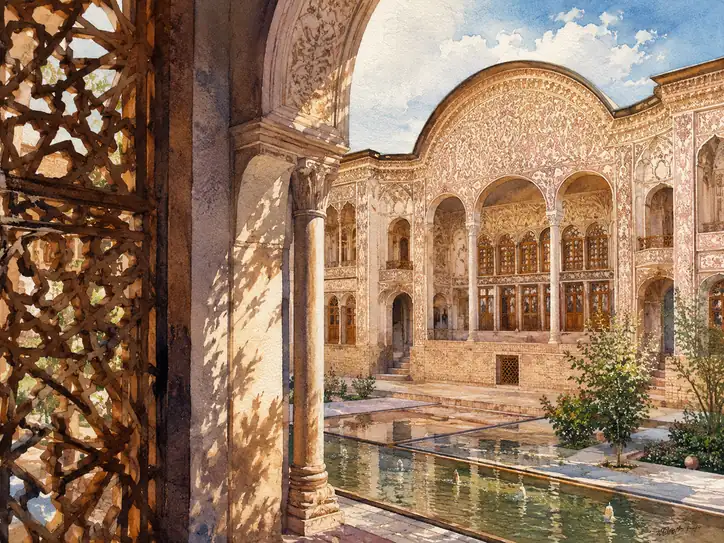 Where Light Dances in the Shadows
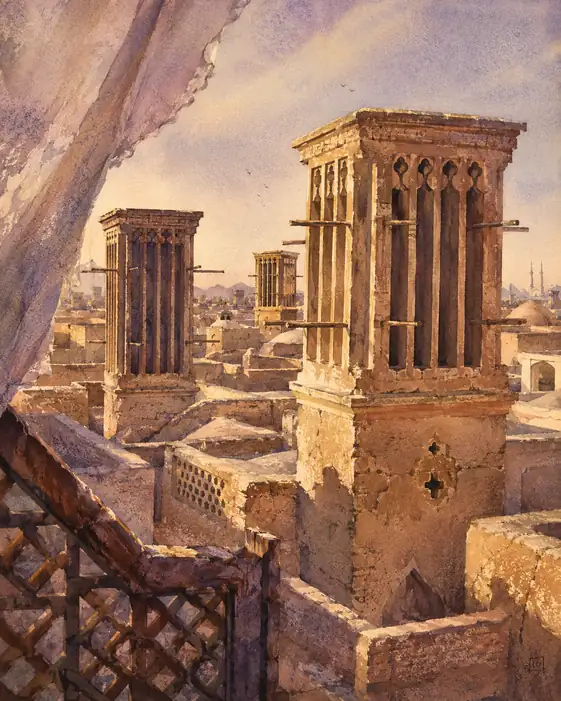 Beyond the Lavender Veil
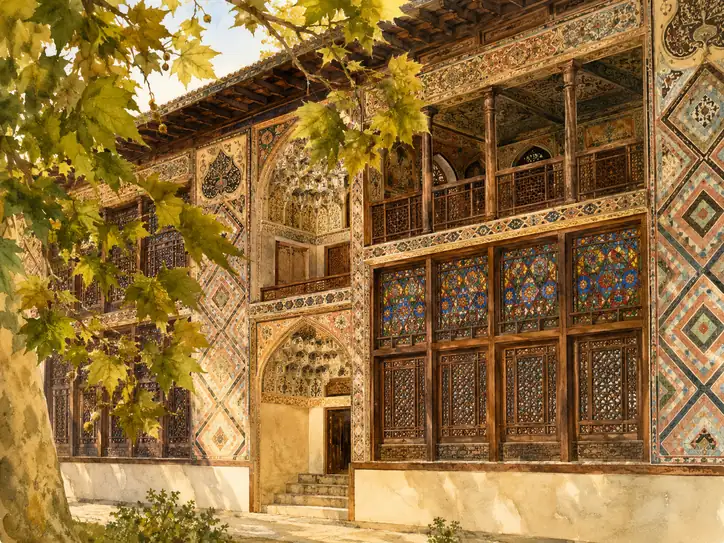 Where Stained Glass Whispers to the Leaves
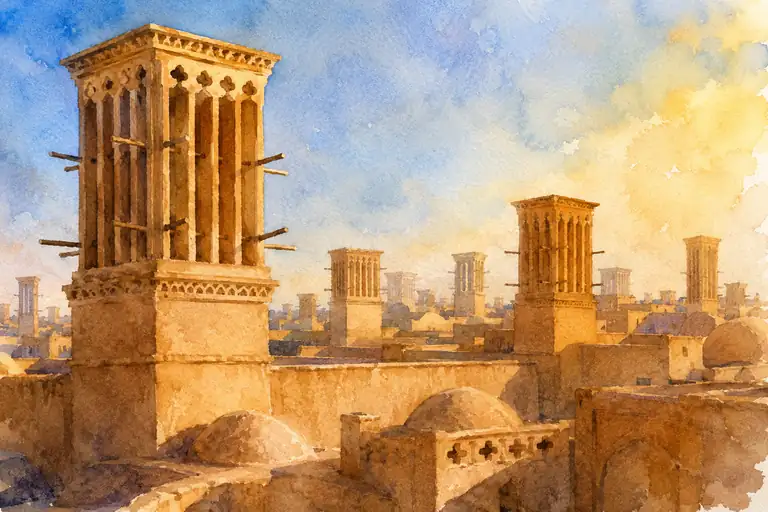 Whispers of the Golden Wind
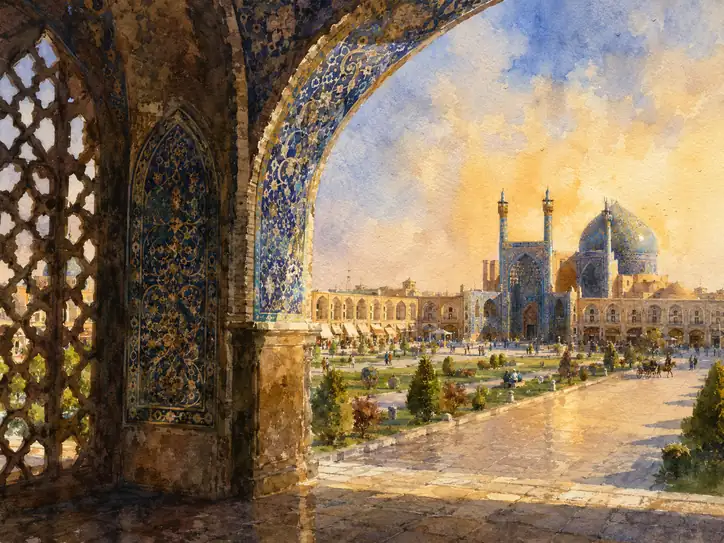 Eternity Beyond the Lattice
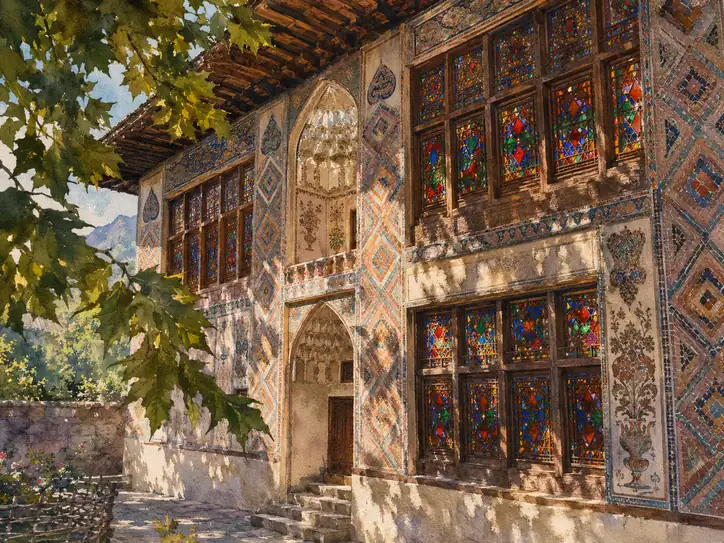 Transient Light on Eternal Glass
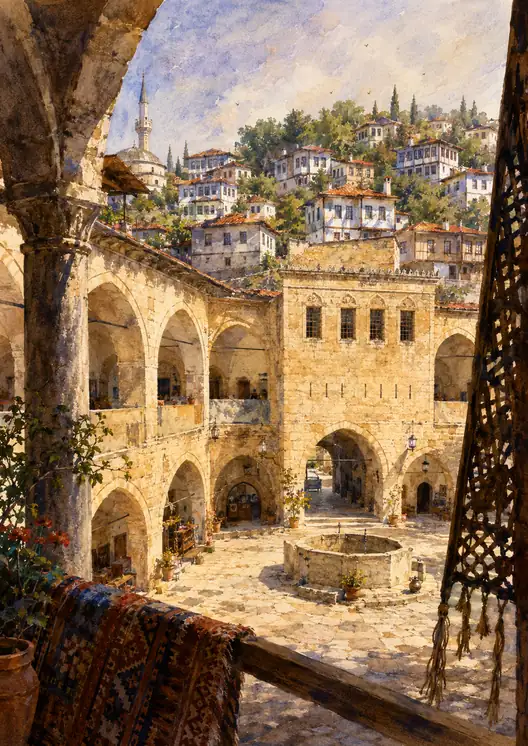 Nostalgia Framed in Red
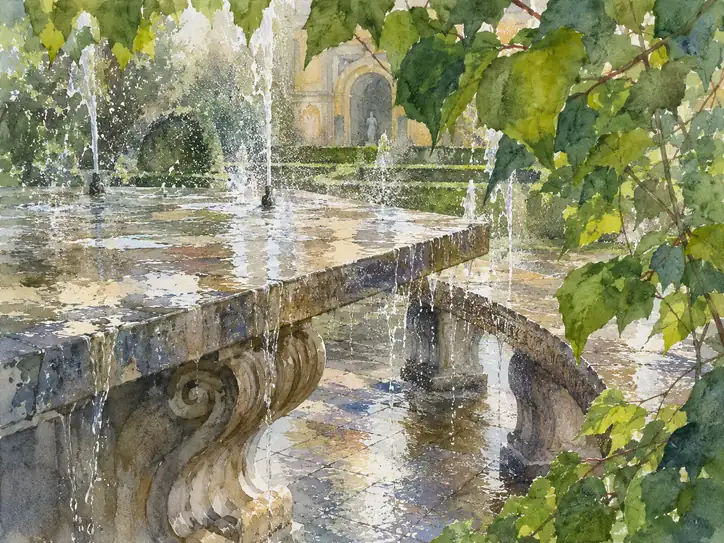 The Symphony of Water and Stone
 The Oasis of Silent Light
 Echoes of a Sunlit Silence