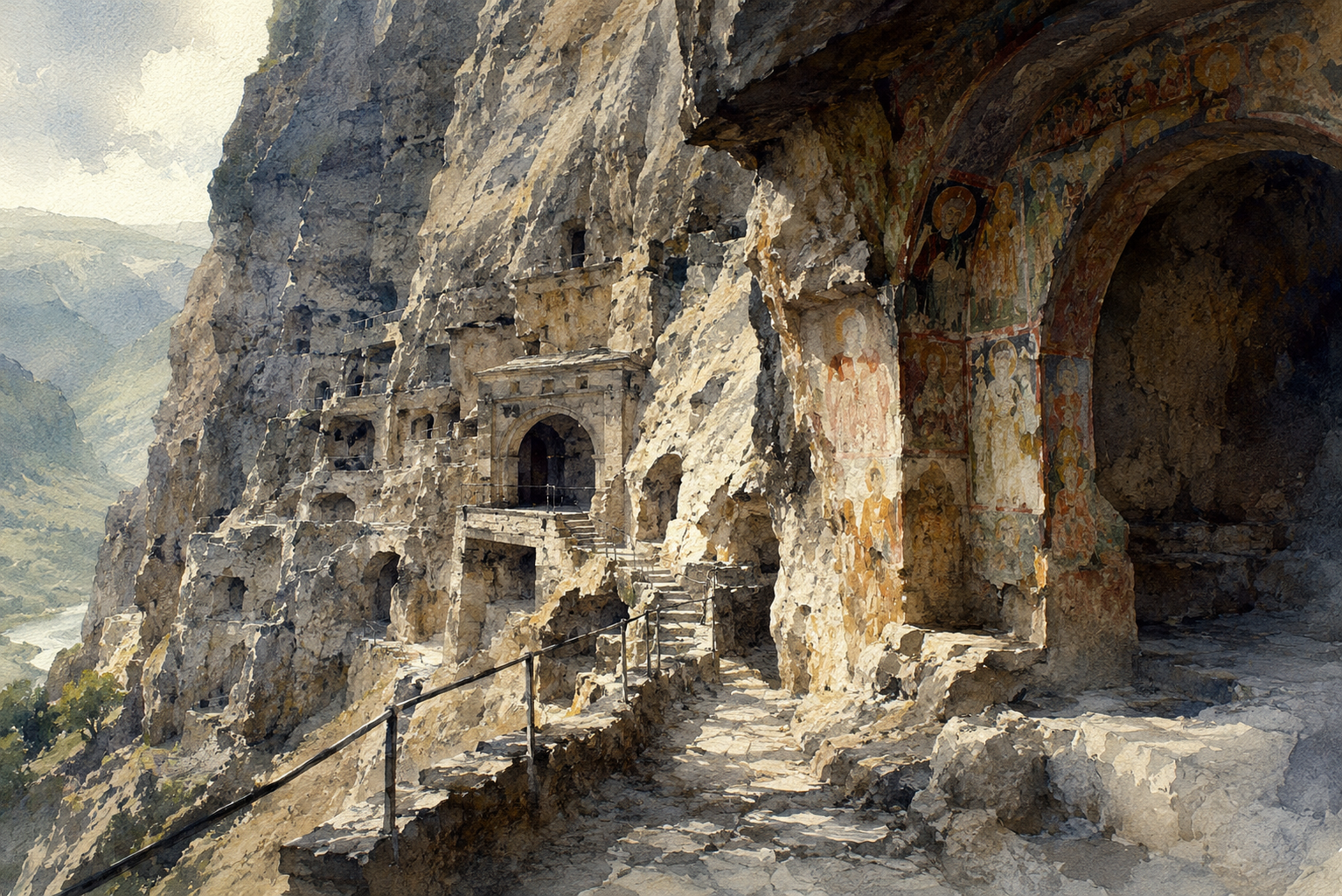
Pathway to the Pilgrim's Dream
Critique
1. Introduction This landscape painting depicts a grand cave temple carved into a steep, rugged cliffside. The exact production year, dimensions, and medium are unconfirmed. However, the delicate layering of colors suggests the use of watercolors. The entire scene is filled with a solemn atmosphere that evokes a sense of sacred history. 2. Description In the right foreground, an arched stone entrance decorated with weathered religious frescoes is positioned. From there, a narrow pathway with a railing extends along the cliff towards the left. Behind it, a massive rock face rises vertically, dotted with numerous openings. In the far distance, a deep valley and a river fade into the mountains. 3. Analysis The artwork generates a strong sense of perspective through the diagonal line of the pathway leading into the distance. The contrast between the sunlit cliffs and the dark cave interiors creates depth. Moreover, the detailed texture of the cracked rock contrasting with the hazy distant view enhances the spatial layout. 4. Interpretation and Evaluation The peeling frescoes and empty chambers symbolize the transience of time and past faith. While the color scheme is dominated by earthy grays and browns, the red and yellow pigments of the frescoes provide visual accents. The harmony between natural grandeur and human spiritual endeavor is beautifully visualized and deserves high praise. 5. Conclusion At first glance, the painting appears to be a mere depiction of a harsh mountainous ruin. Closer examination of the detailed murals and carved windows reveals traces of human intellect. Ultimately, the silent landscape becomes a monument reminding viewers of the fragility of human heritage. It is a highly accomplished work.
Same Subcategory
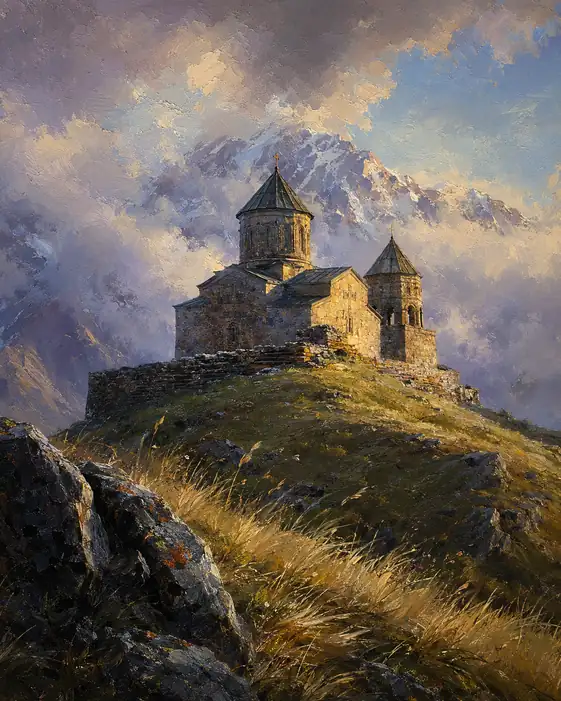 A Sanctuary Reaching for the Heavens
Similar Artworks
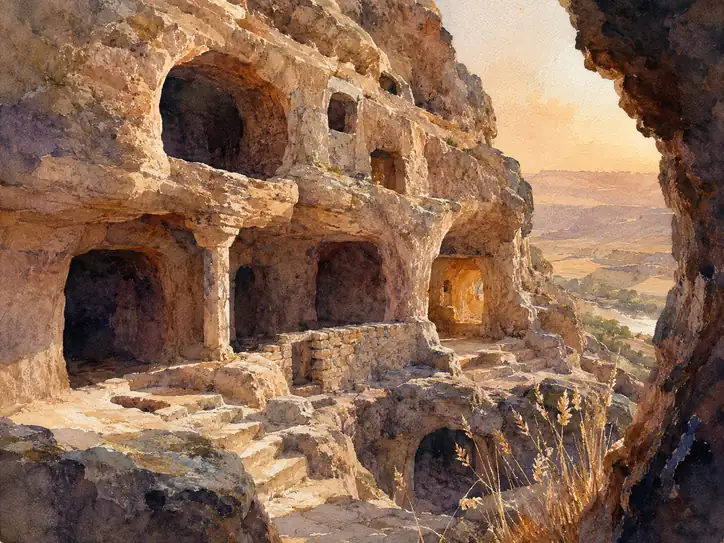 Where the Stone Remembers
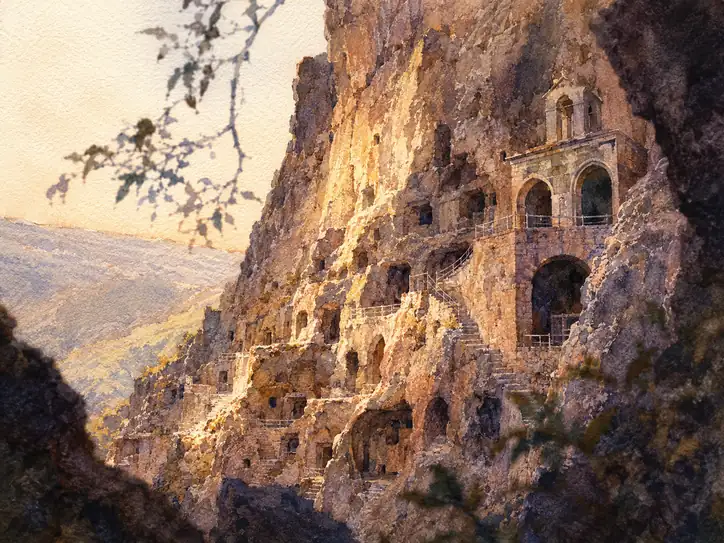 Gilded Passages of the Cliffside Temple
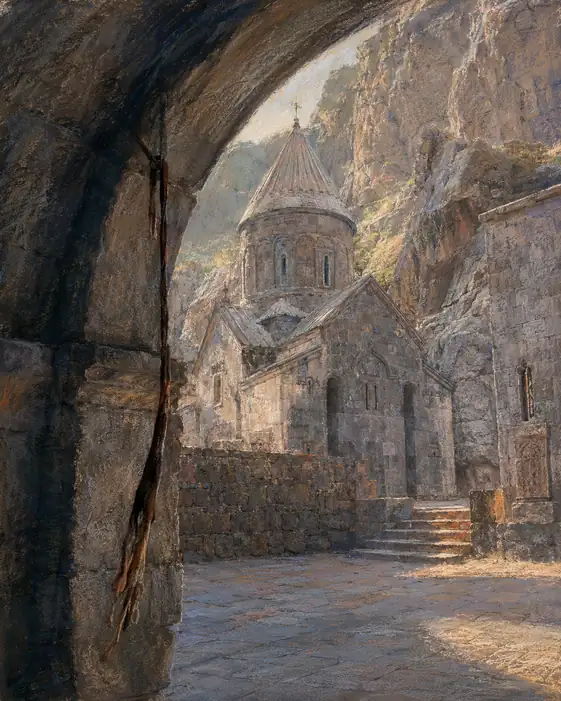 Whispers of the Stone Sanctuary
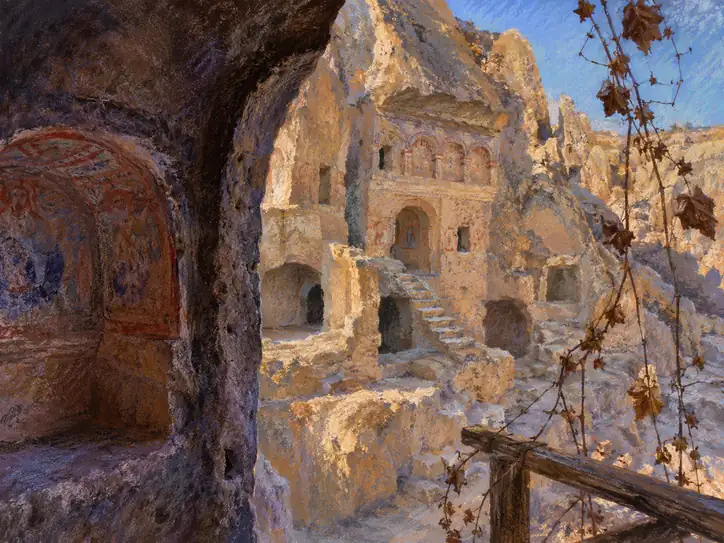 Gazing at the Light from the Depths of Time
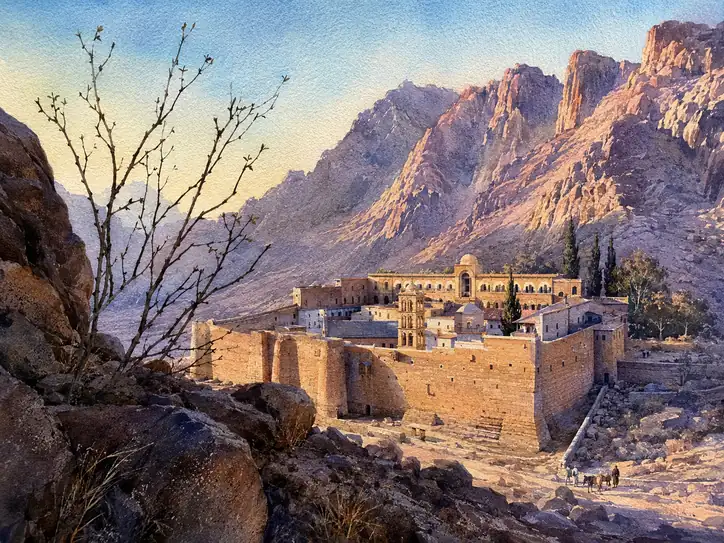 Sanctuary in the Sinai Valley
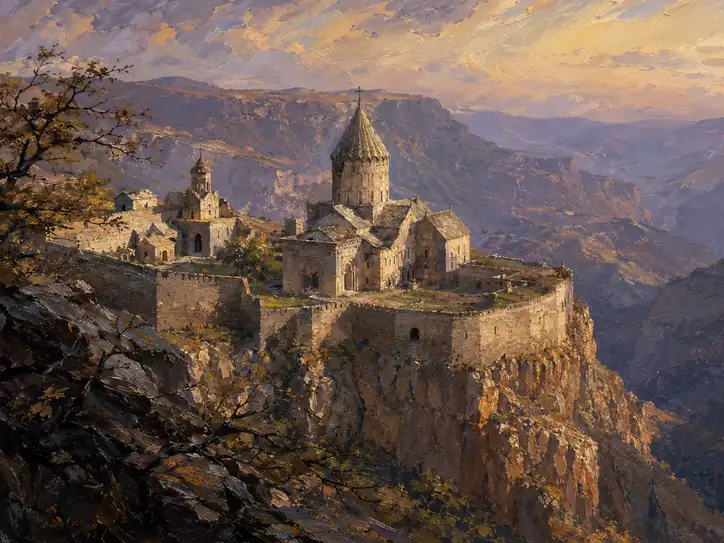 The Fortress of Silent Faith
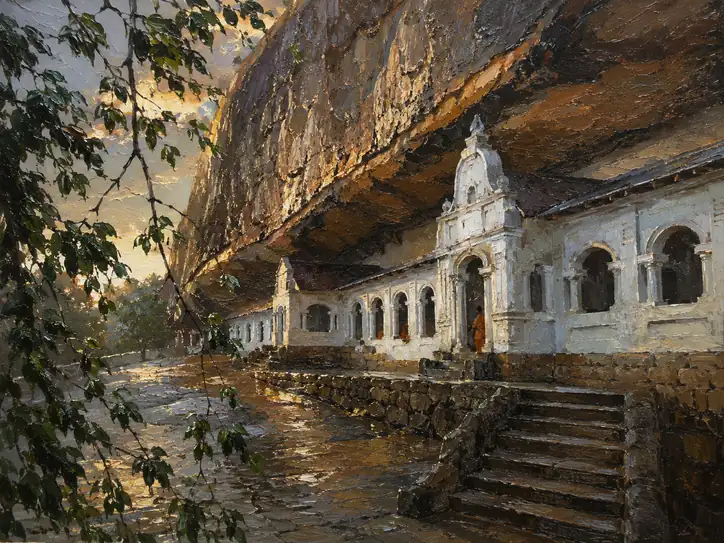 Sanctuary Under the Eternal Cliff
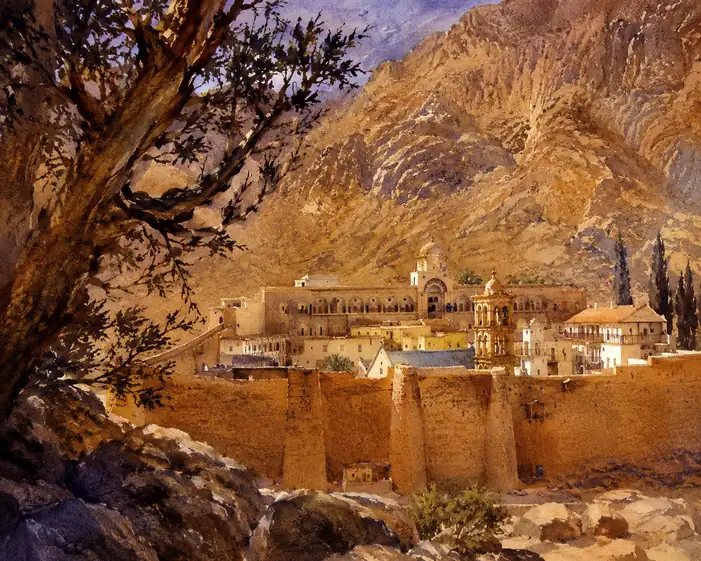 Fortress of Silent Devotion
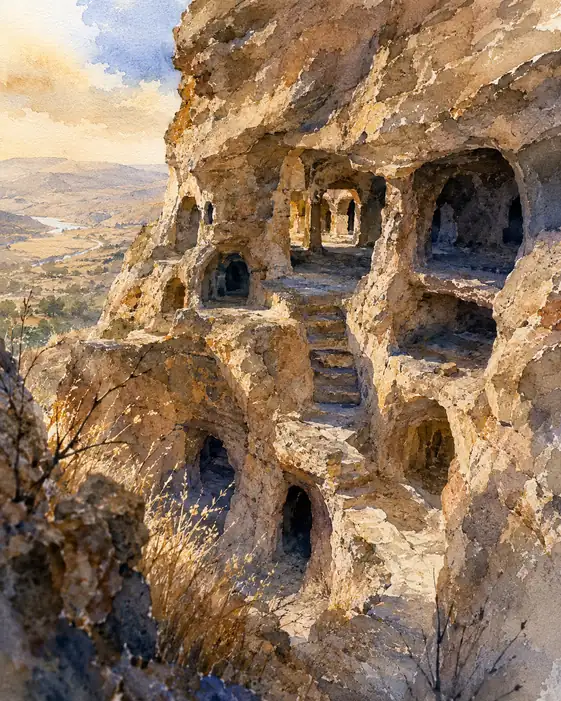 The Vertical Sanctuary of Rock and Wind
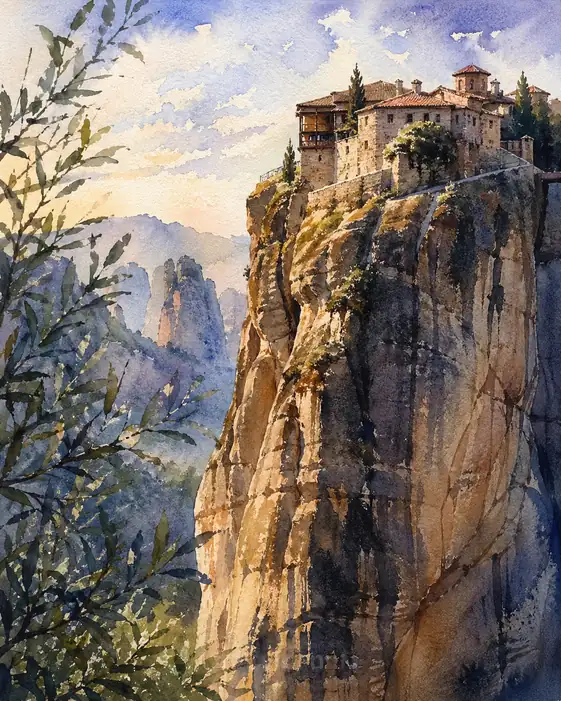 Sanctuary of the Sky-Bound Silence