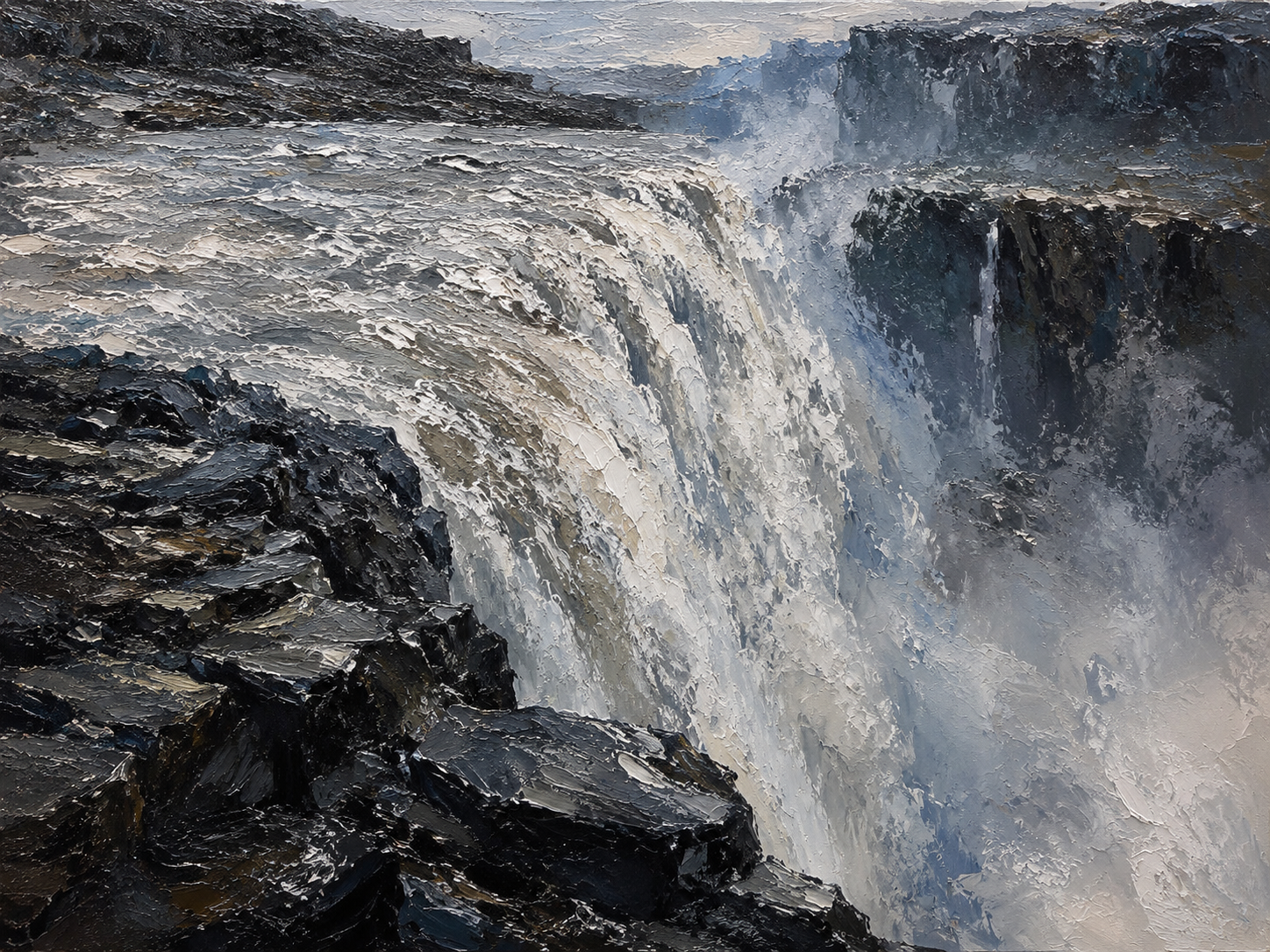
The Roar of the Abyss
Critique
1. Introduction This powerful oil painting depicts a massive waterfall cascading down dark, rugged cliffs. The dynamic rush of water and the thick impasto texture dominate the canvas. It is a masterful composition that captures the raw energy of natural forces. 2. Description On the left foreground, dark, blocky rock formations are rendered with thick, tactile paint. In the center, a torrent of water pours over the edge, depicted in raised white strokes. To the right, another steep cliff rises with a minor stream. White mist and spray rise from the basin, filling the air. 3. Analysis The color palette creates a stark contrast between black rocks and the brilliant white water. The impasto technique allows physical paint to suggest the hardness of stone and water's volume. Bold palette knife strokes establish the velocity of the water. The diagonal boundary between rock and stream emphasizes the depth of the falls. 4. Interpretation and Evaluation The artwork conveys the relentless power of natural flow against the solid resistance of earth. The collision of water and stone symbolizes a fundamental tension within nature. The control over heavy paint textures and dynamic motion is highly commendable, offering a modern perspective on a classic landscape theme. 5. Conclusion Initially appearing as a chaotic depiction of rushing water, closer inspection reveals careful structure. The physical texture of the paint merges with the fluid movement of the falls. The piece successfully grounds the sublime force of nature in material form, leaving a profound artistic impact.
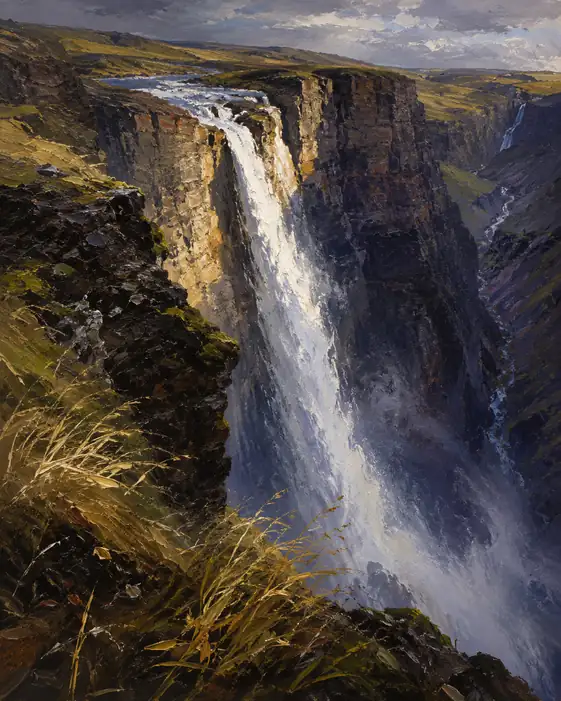 Thunder of the Ancient Gorge
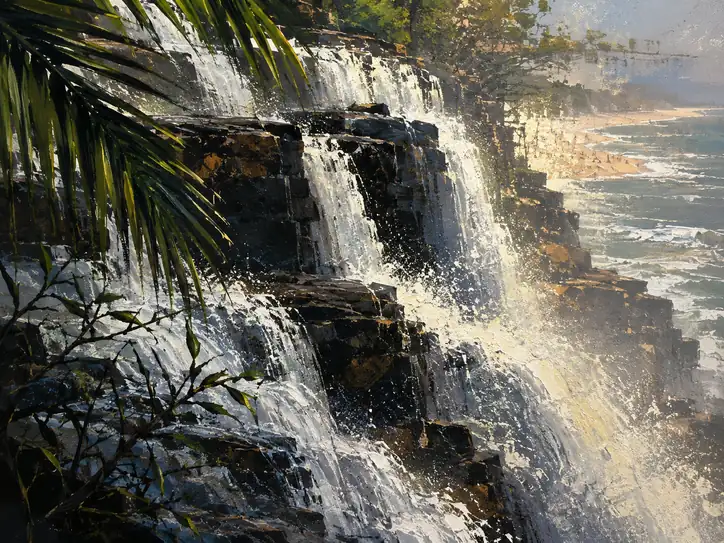 Symphony of Thunder and Calm
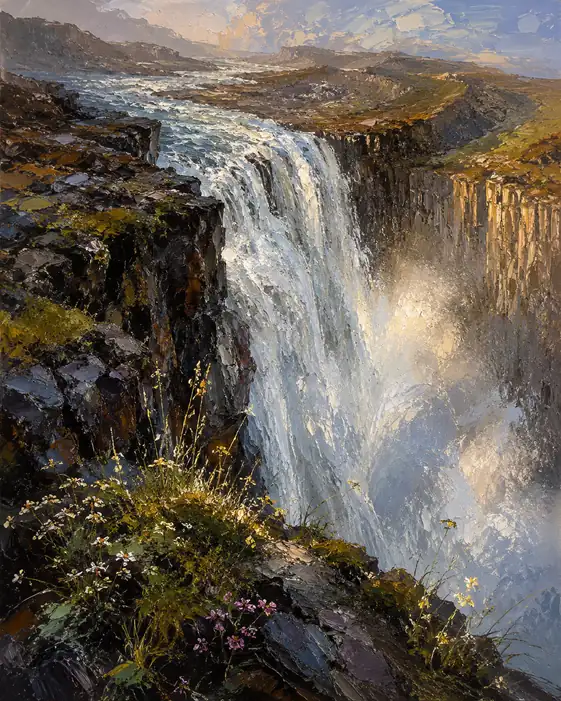 Wildflowers by the Thundering Abyss
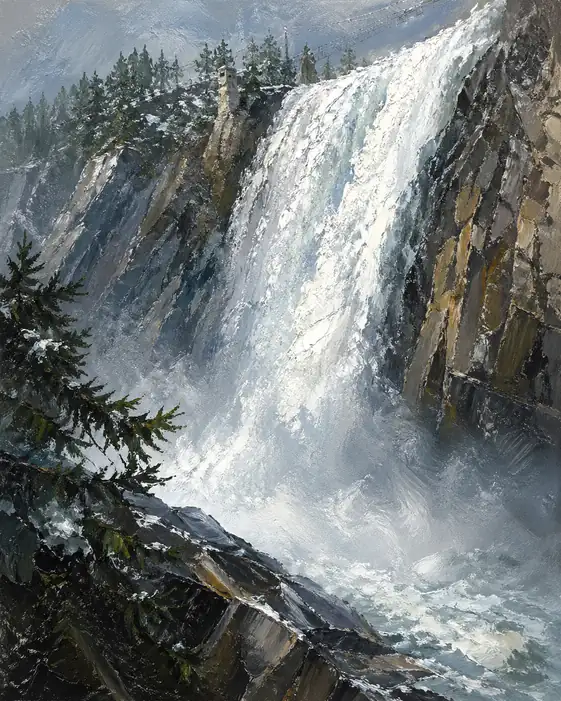 The Roar of Eternity
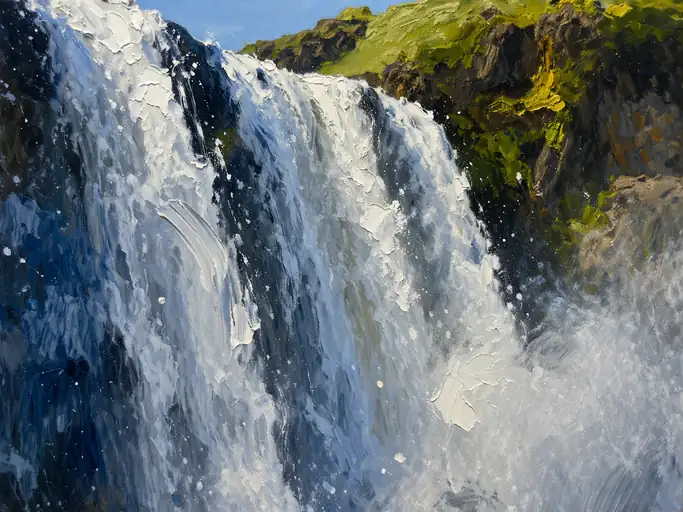 Echoes of the Primal Torrent
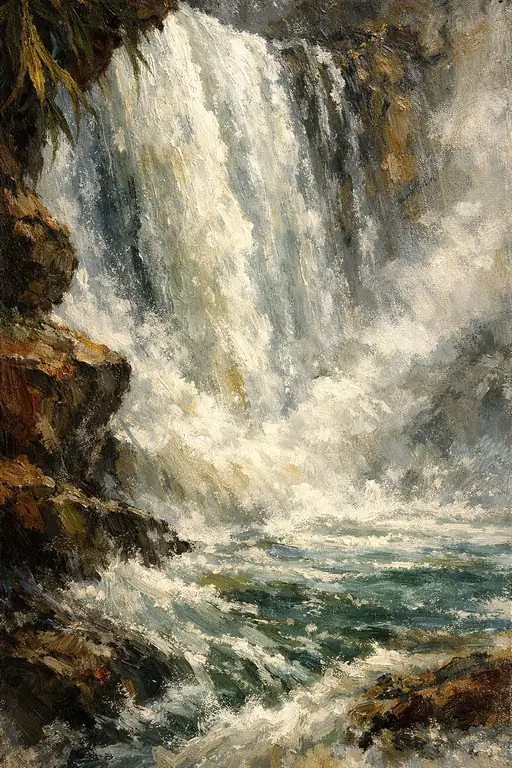 Thunderous Majesty of the Cascade
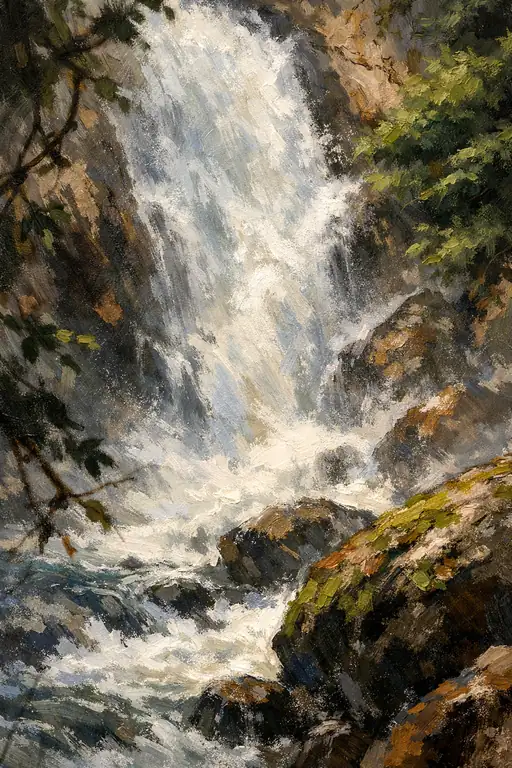 Crashing White Energy
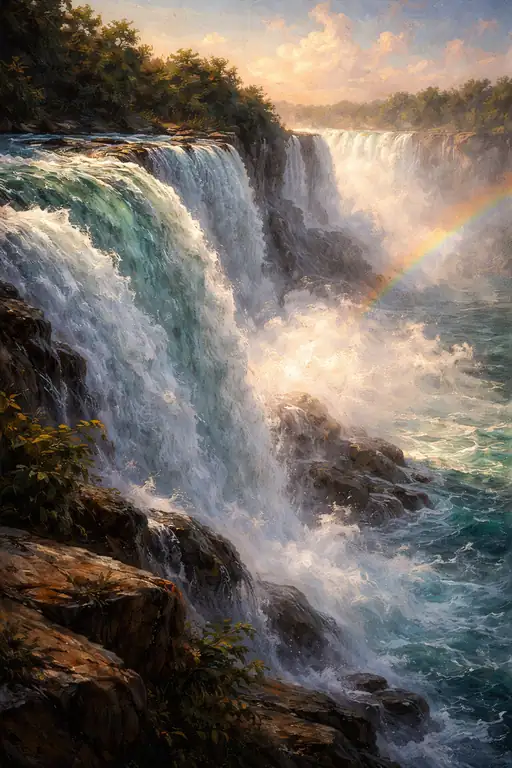 The Eternal Roar and the Fleeting Arch
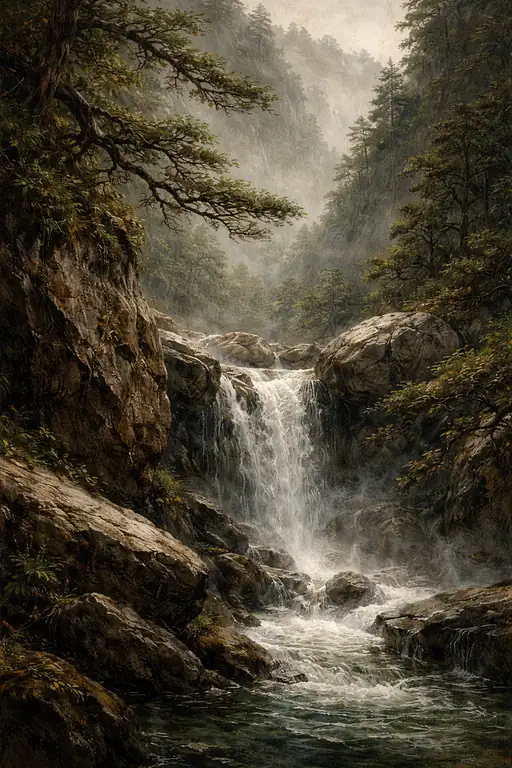 The Roar of Eternity Amidst Timeless Stones
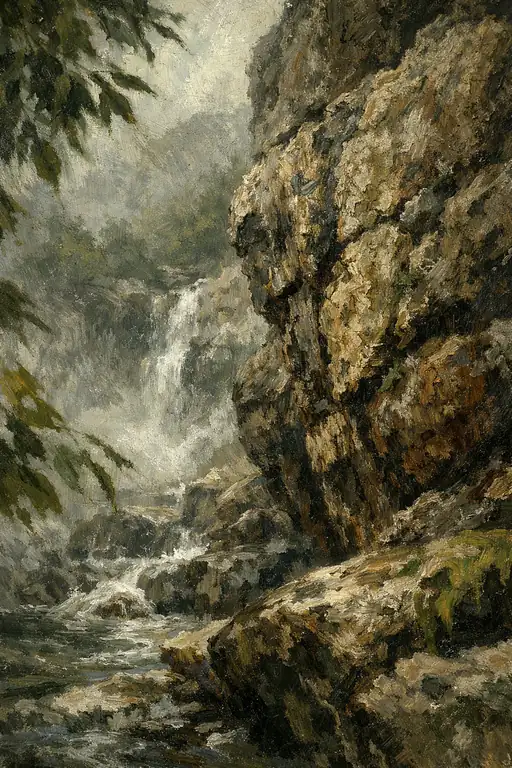 Roar of the Mist
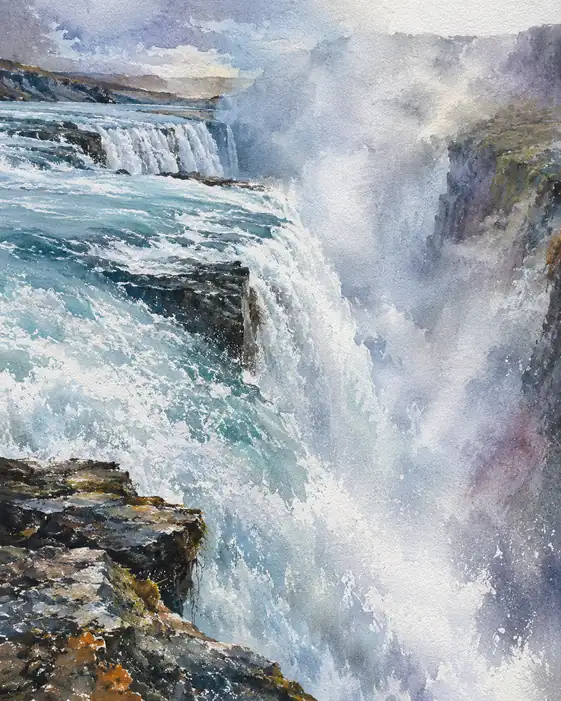 Thunder in the Emerald Mist