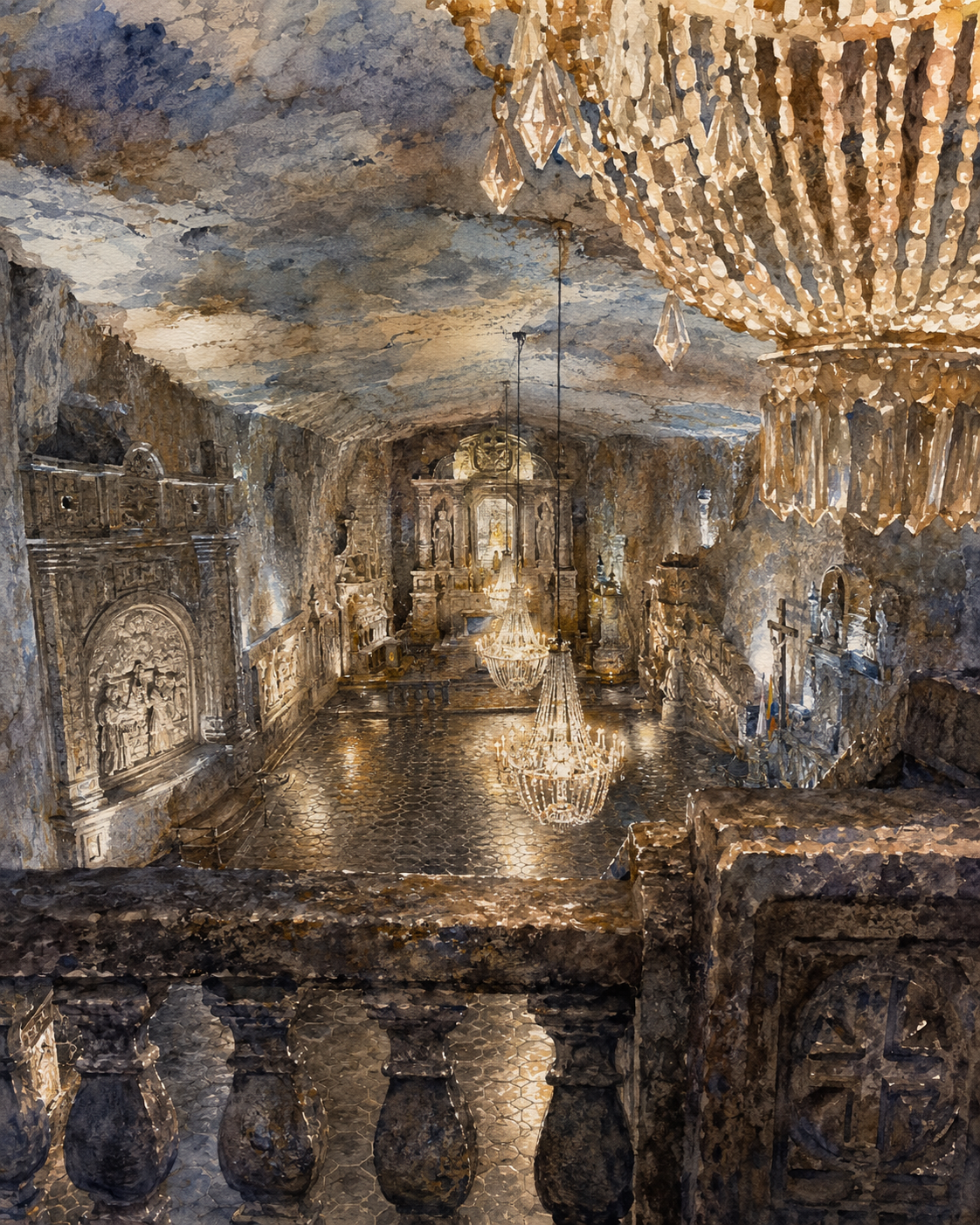
The Cathedral of Salt and Light
Critique
1. Introduction This watercolor painting depicts a magnificent underground chapel carved into dark rock, radiating a solemn atmosphere. The stone balustrade in the foreground provides a vantage point looking down into the expansive subterranean space. While details about the creator remain undocumented, the rendering of light and texture displays an impressive level of artistic control. 2. Description In the lower foreground, a detailed stone railing suggests a balcony view overlooking a vast hall. From the high rock ceiling, several large, glowing chandeliers hang down, illuminating the cavernous interior. At the far end of the hall stands a carved altar, flanked by detailed reliefs on the surrounding walls. The floor reflects the light. 3. Analysis The composition utilizes a strong one-point perspective that guides the viewer's eye from the balcony to the altar. The vertical drop of the chandeliers creates a sense of scale. Fine watercolor layers render the rough, uneven texture of the rock. A contrast exists between warm golden light and cool blue-gray tones. 4. Interpretation and Evaluation The painting symbolizes the resilience of human faith built within the darkness of the cave. The hidden chapel serves as a metaphor for deep self-reflection, while the chandeliers represent hope. The rendering of complex light reflections and deep space is highly commendable. It elevates this place into a sacred visual experience. 5. Conclusion This work captures the quiet mystery of a sacred underground space and the passage of time. Initial observation shows a dark cavern, but closer inspection reveals a delicate interplay of artificial light. It offers a meditative atmosphere that encourages silent reflection. It stands as an accomplished example of watercolor expression.
Same Subcategory
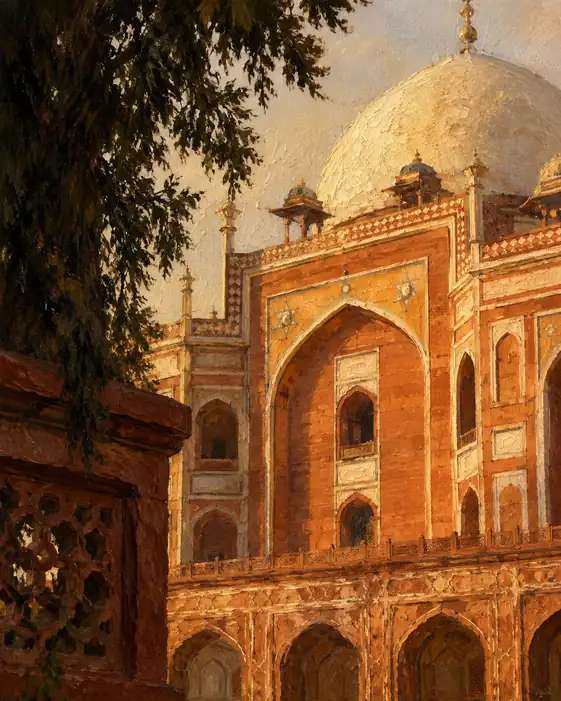 Twilight Glow on the Silent Dome
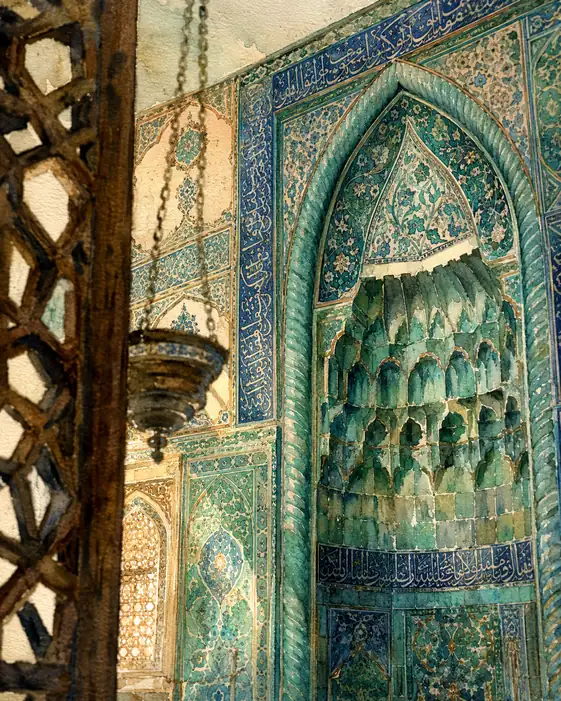 Prayer through the Lattice
Similar Artworks
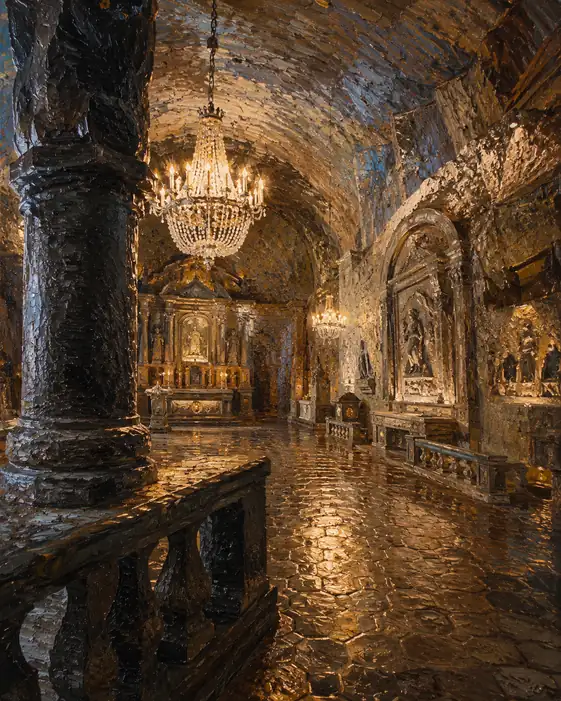 Light Alive in the Sacred Deep
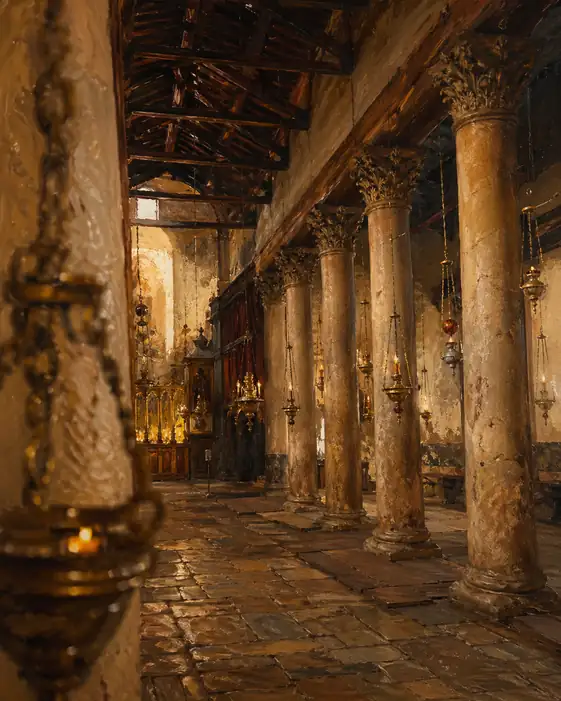 The Echo of Eternal Silence
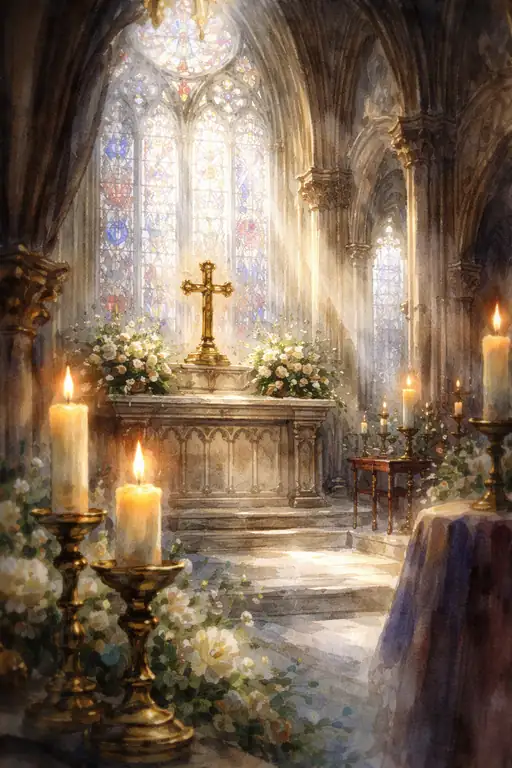 Illumination of the Gothic Rose
 Divine Reflection on the Golden Altar
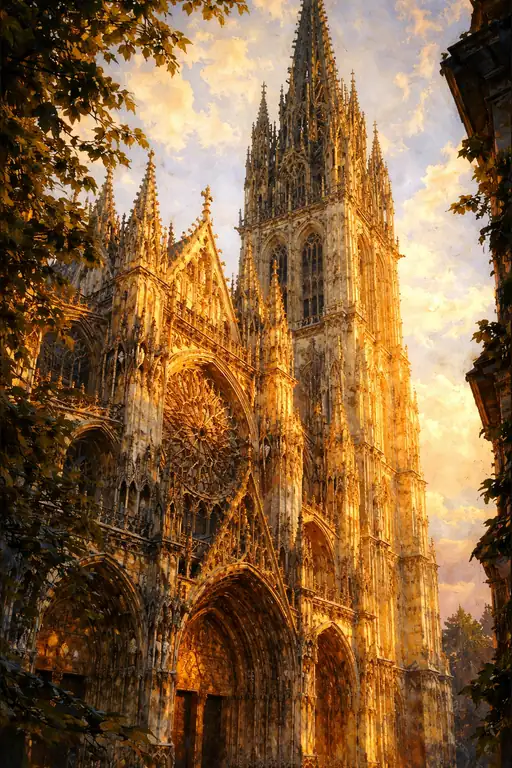 A Golden Requiem for Stone
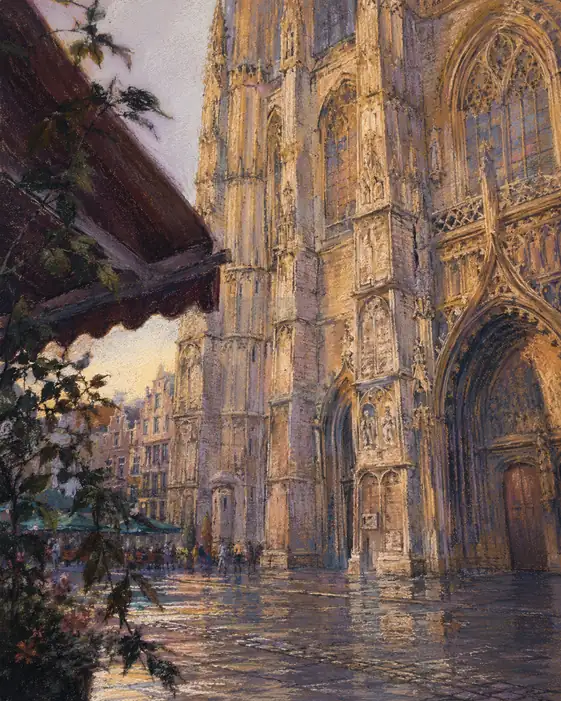 Golden Reverie at the Cathedral Gate
 Where Time Breathes in Gold
 Sanctuary of the Golden Glow
 Divine Light in the Hallowed Halls
 Chromatic Overture in the Sanctuary of Light