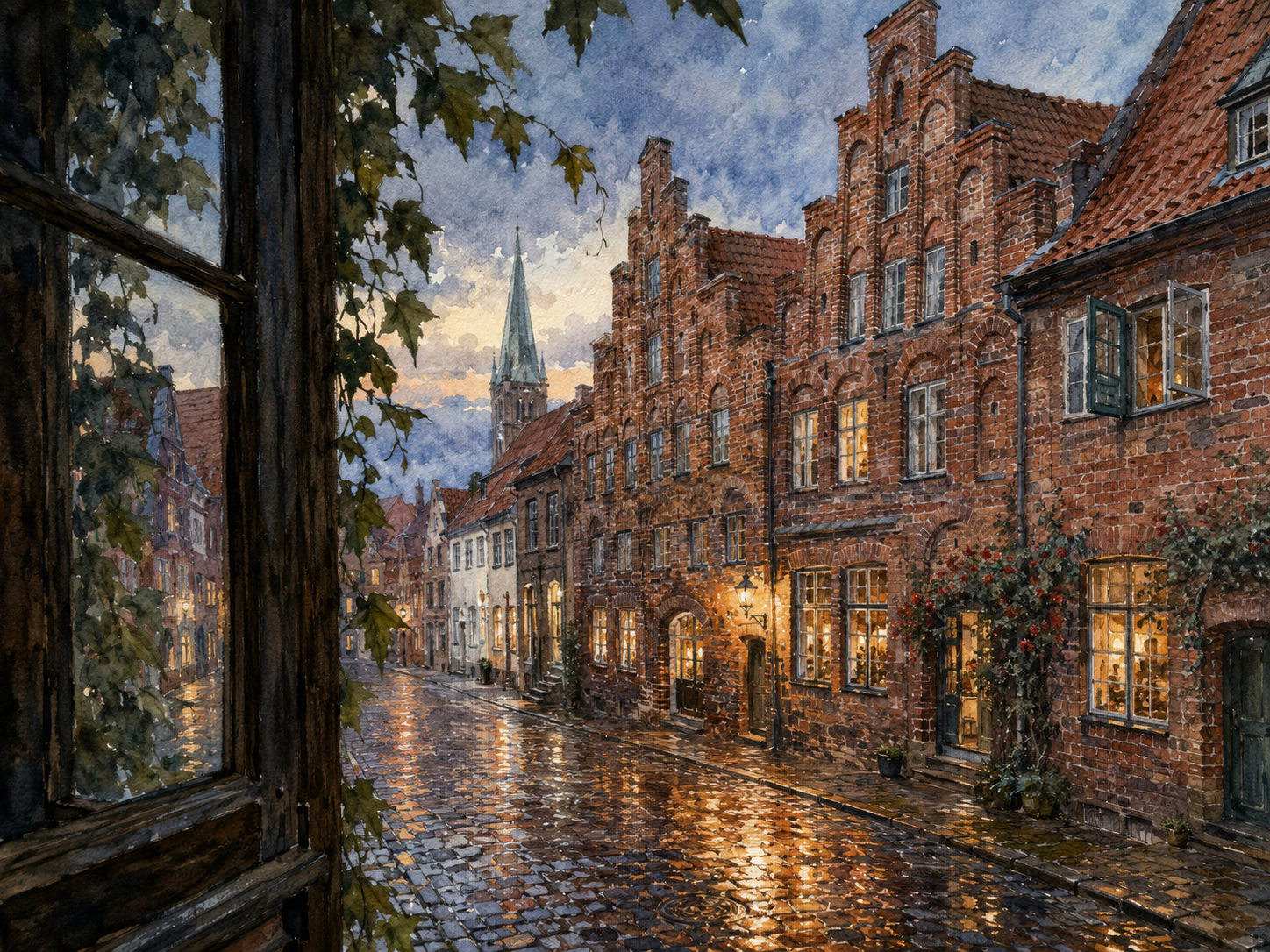
Through the Ivy-Framed Pane
Critique
1. Introduction The watercolor painting "Through the Ivy-Framed Pane" presents a lyrical evening viewed from a window. The composition focuses on a historic European street lined with red-brick houses after rain. The calm atmosphere is conveyed through glowing windows and delicate washes. This critique examines the framing composition and light handling to evaluate its artistic value. 2. Description On the left, a wooden window frame wrapped in green ivy dominates the foreground. Through the pane, faint reflections are visible, while outside, a wet cobblestone street stretches away. To the right, historic red-brick structures feature windows radiating warm orange light. In the background, a tall church spire rises against the twilight sky. 3. Analysis The framing composition using the window creates exceptional spatial depth and a narrative viewpoint. The color palette contrasts the cool blues of the sky with the warm orange light. Light reflects brilliantly on the wet cobblestones, rendered through subtle watercolor washes. The detailed foreground leaves contrast with the softer background. 4. Interpretation and Evaluation This artwork evokes themes of quiet contemplation, placing the viewer in the position of an observer. The ivy-draped window serves as a metaphor for looking at memories. The creator demonstrates superior draftsmanship and command of light. The piece successfully transforms a traditional landscape into an intimate poetic statement through a structured viewpoint. 5. Conclusion In conclusion, the painting synthesizes interior isolation with the vibrant external world. While the radiant brick buildings initially capture the attention, further viewing reveals delicate details in the reflections. Ultimately, the work stands as a powerful testament to the beauty of observation, offering a tranquil and deeply emotional experience.
Same Subcategory
Similar Artworks
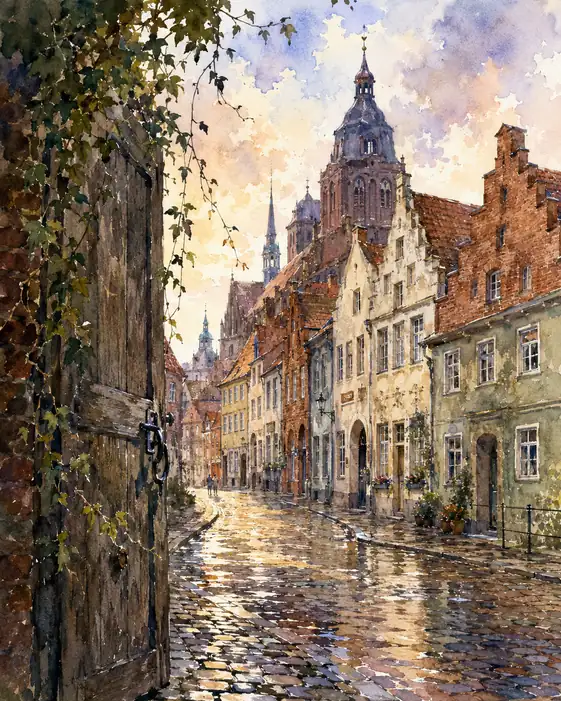 Beyond the Ivy-Clad Door
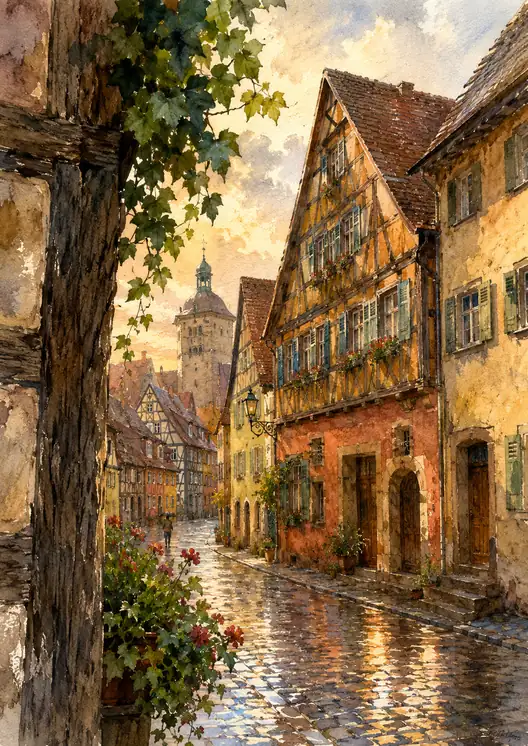 Whispers of a Rain-Washed Evening
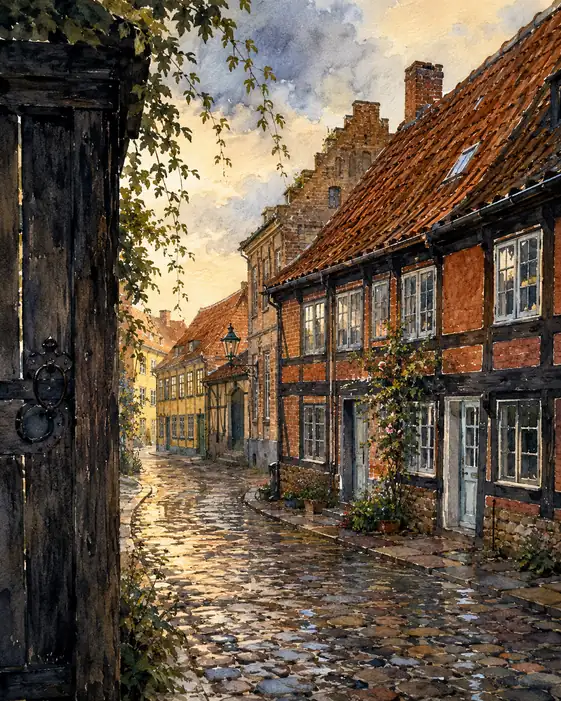 Beyond the Weathered Gate
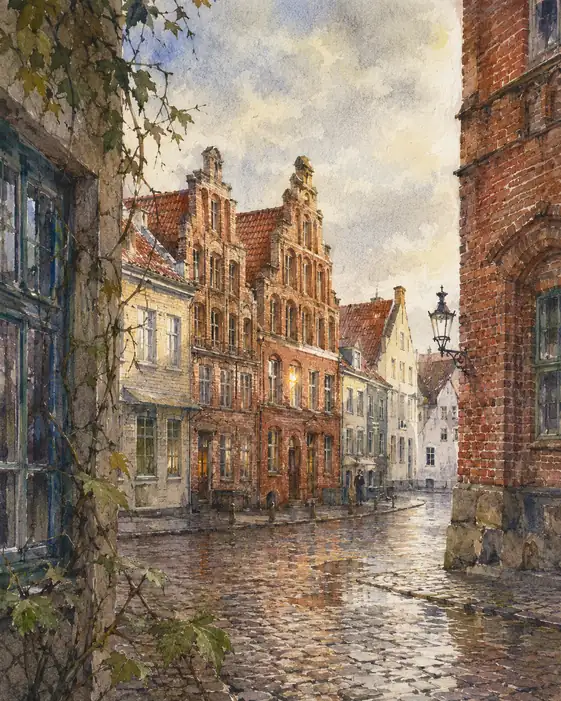 Silent Footsteps on Rain-Washed Stone
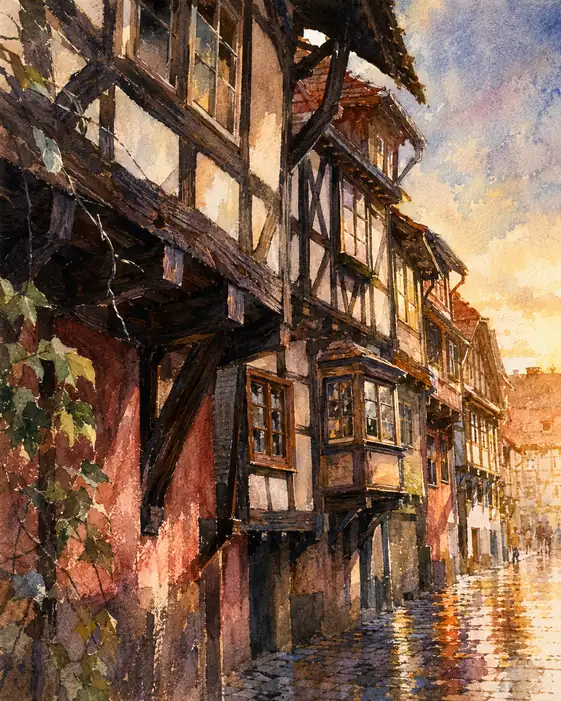 Golden Dusk on Ancient Beams
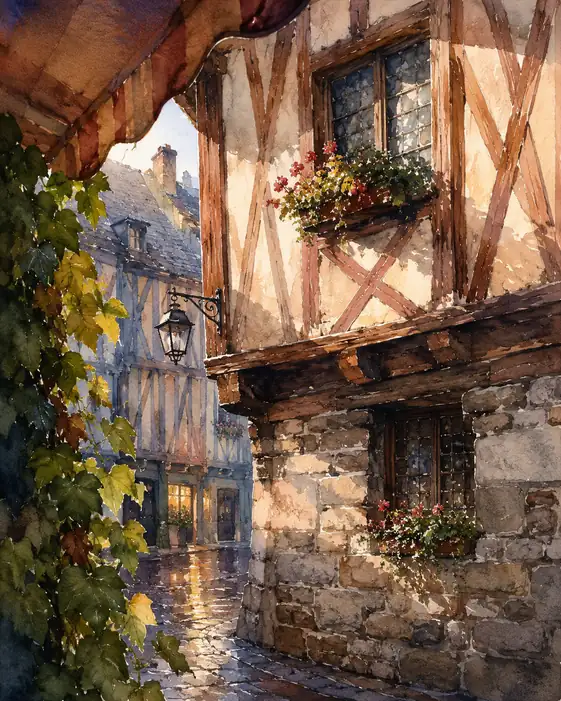 A Welcome in the Shadow
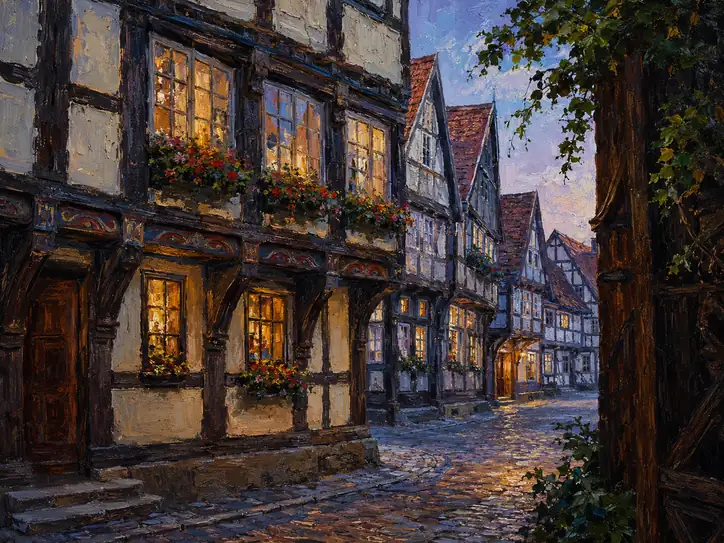 A Pathway of Golden Windows
 The Whispering Road After Rain
 Echoes Toward the Gothic Spire
 Quiet Whispers of the Rain-Slicked Path