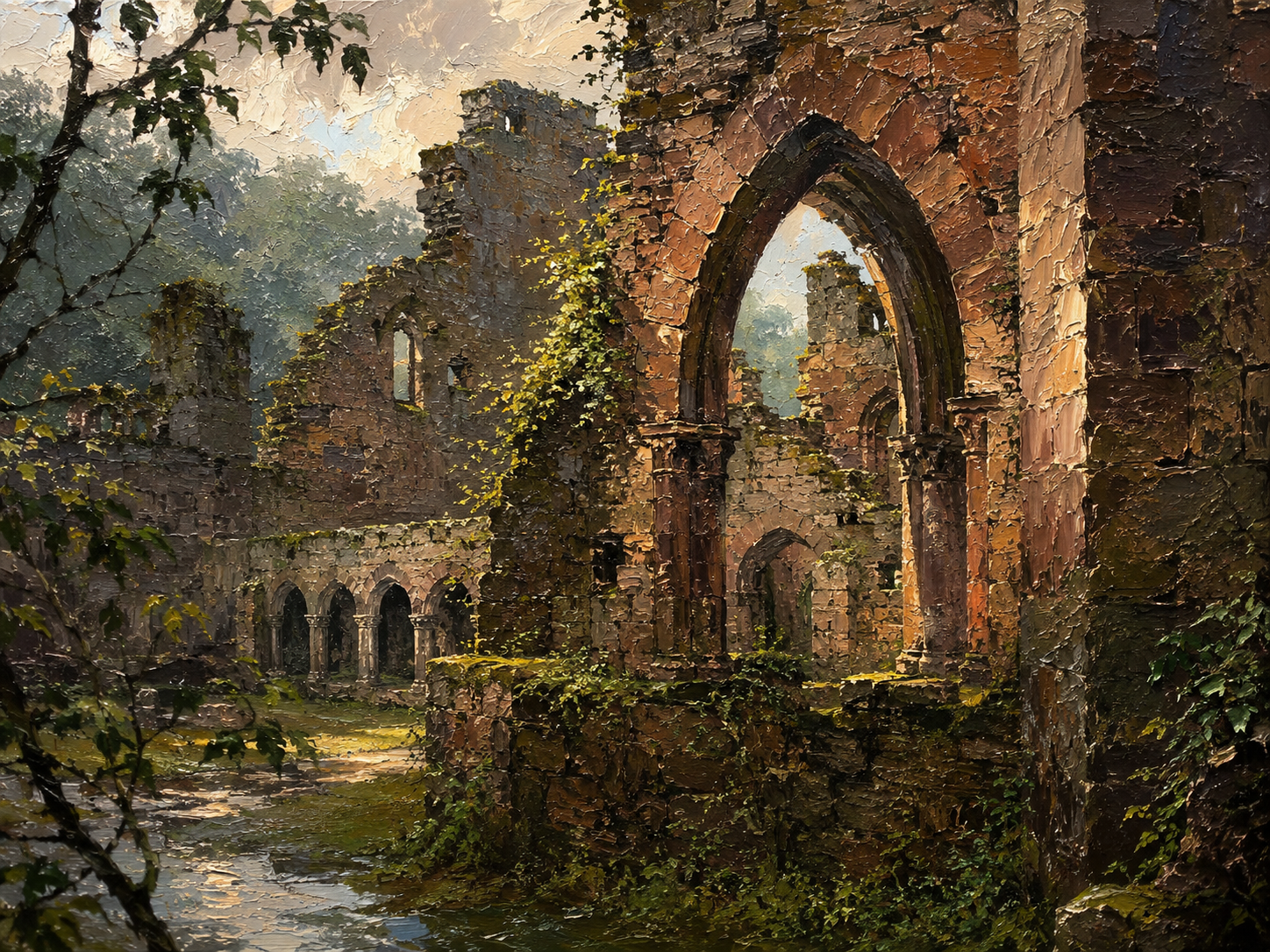
Epitaph of Silent Prayers
Critique
1. Introduction This solemn oil painting masterfully depicts the ruins of a medieval monastery standing quietly in a dense forest. On the right, a massive Gothic stone arch stands prominently, testifying to the long history of the decayed monument. Lush green ivy and moss wrap the weathered walls, representing the persistent power of nature over time. 2. Description Through the main arch, the collapsed nave and a cloister with small arches are rendered in detail. The stone surfaces show erosion from centuries of exposure, with rough textures captured through thick paint application. In the lower left, a gentle stream flows, reflecting the surrounding foliage and soft sunlight filtering through the trees. 3. Analysis The color scheme relies on the earthy browns of the stones contrasted with the vibrant greens of the growing vegetation. An impasto technique with heavy impasto application gives a rich tactile quality to the eroded masonry and leaves. The perspective guides the eye from the foreground arch to the distant cloisters, establishing depth and spatial scale. 4. Interpretation and Evaluation The crumbling architecture covered by plants symbolizes the transience of human creations and the eternity of nature. The silence surrounding the ruins evokes a deep sense of nostalgia for the historical life once lived within these walls. The artist's control of light and the physical weight of oil medium deserve high critical appreciation. 5. Conclusion Initially awed by the collapse of the arch, the viewer eventually feels the gentle vitality of the stream and plants. This painting successfully transforms a melancholic ruin into a sublime space of quiet contemplation and enduring beauty. Ultimately, the harmony of texture and light creates a profound visual experience that resonates deeply in the spectator's mind.
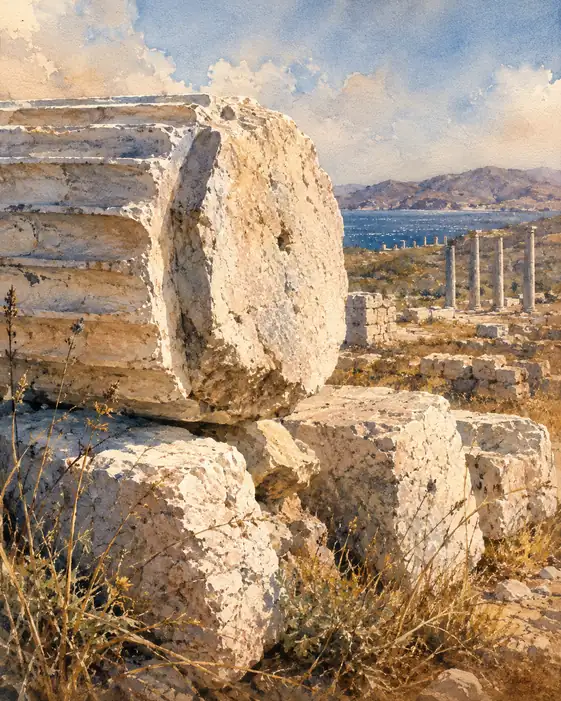 Where Empires Fade into the Blue
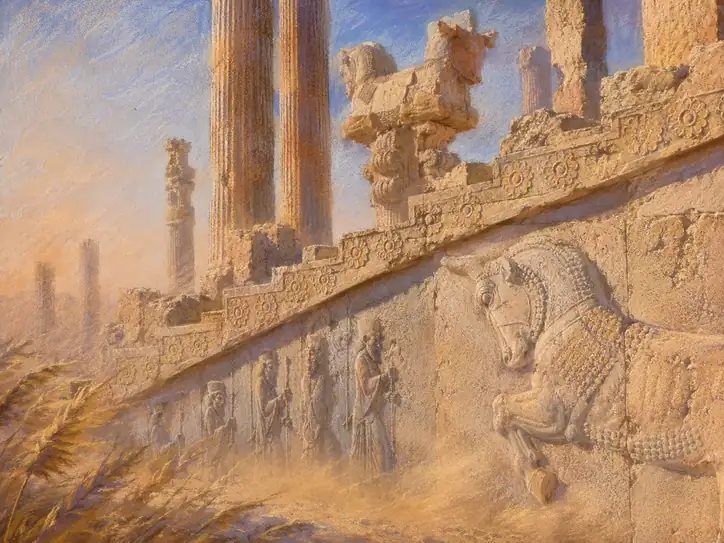 Silent Soldiers in the Golden Dust
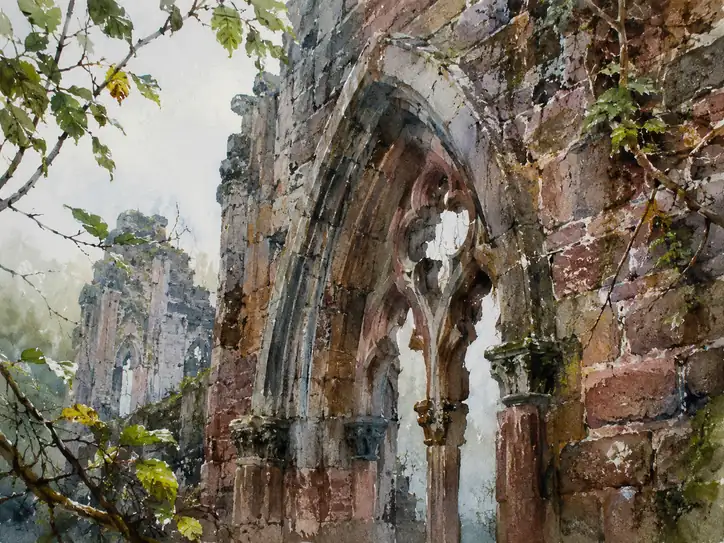 Echoes in the Mist
 Where Time Returns to Earth
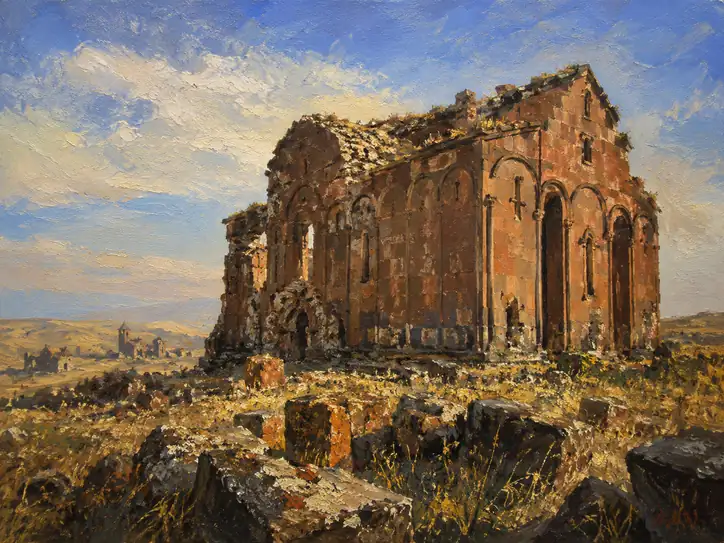 Where the Stone Remembers
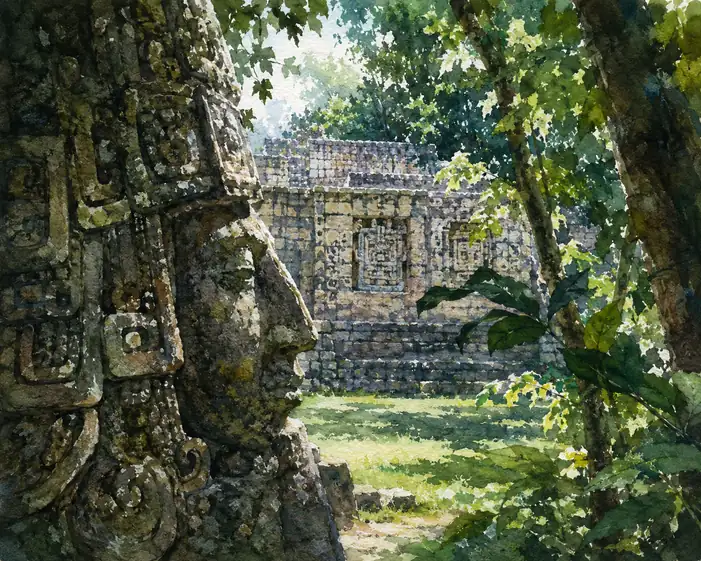 The Silent Profile Dreaming of Eternity
 The Golden Stairway to Oblivion
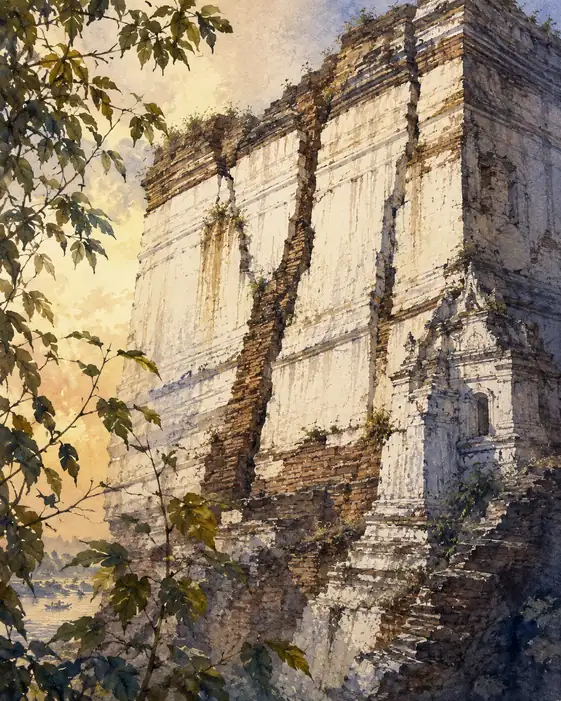 Where Time Splits the Stone
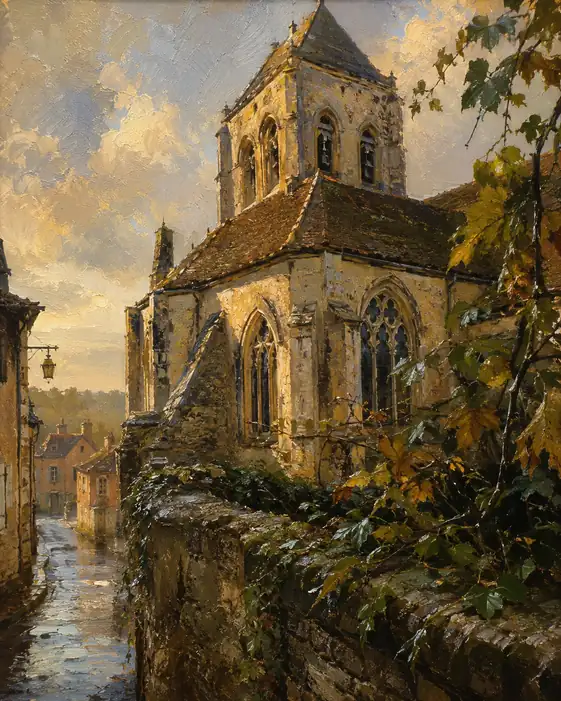 Where Light Whispers of Eternity
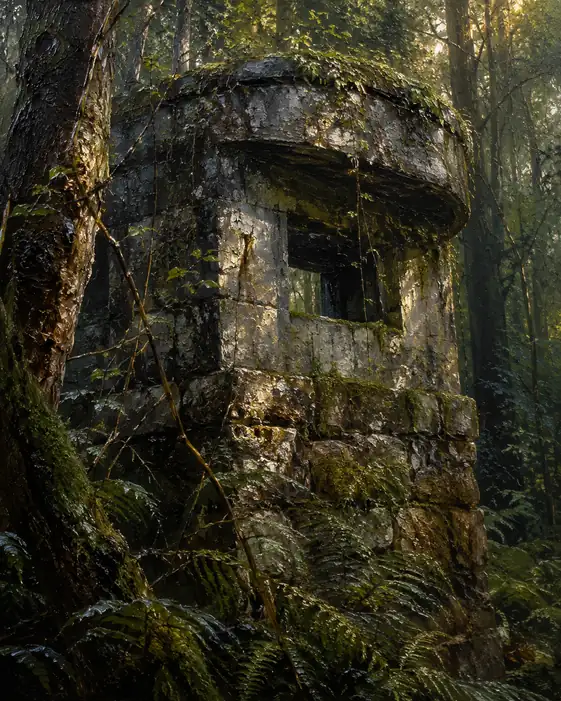 The Forest Reclaims the Watch
 Sentinels of the Golden Hour
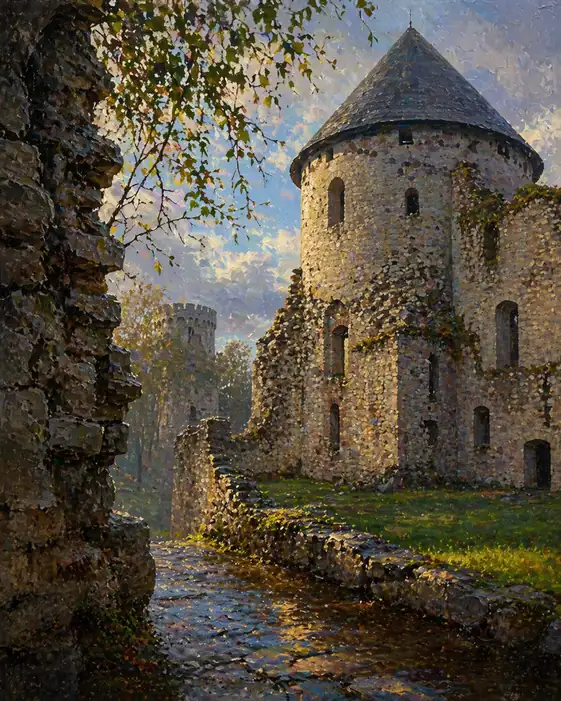 Autumn Light on Forgotten Stones