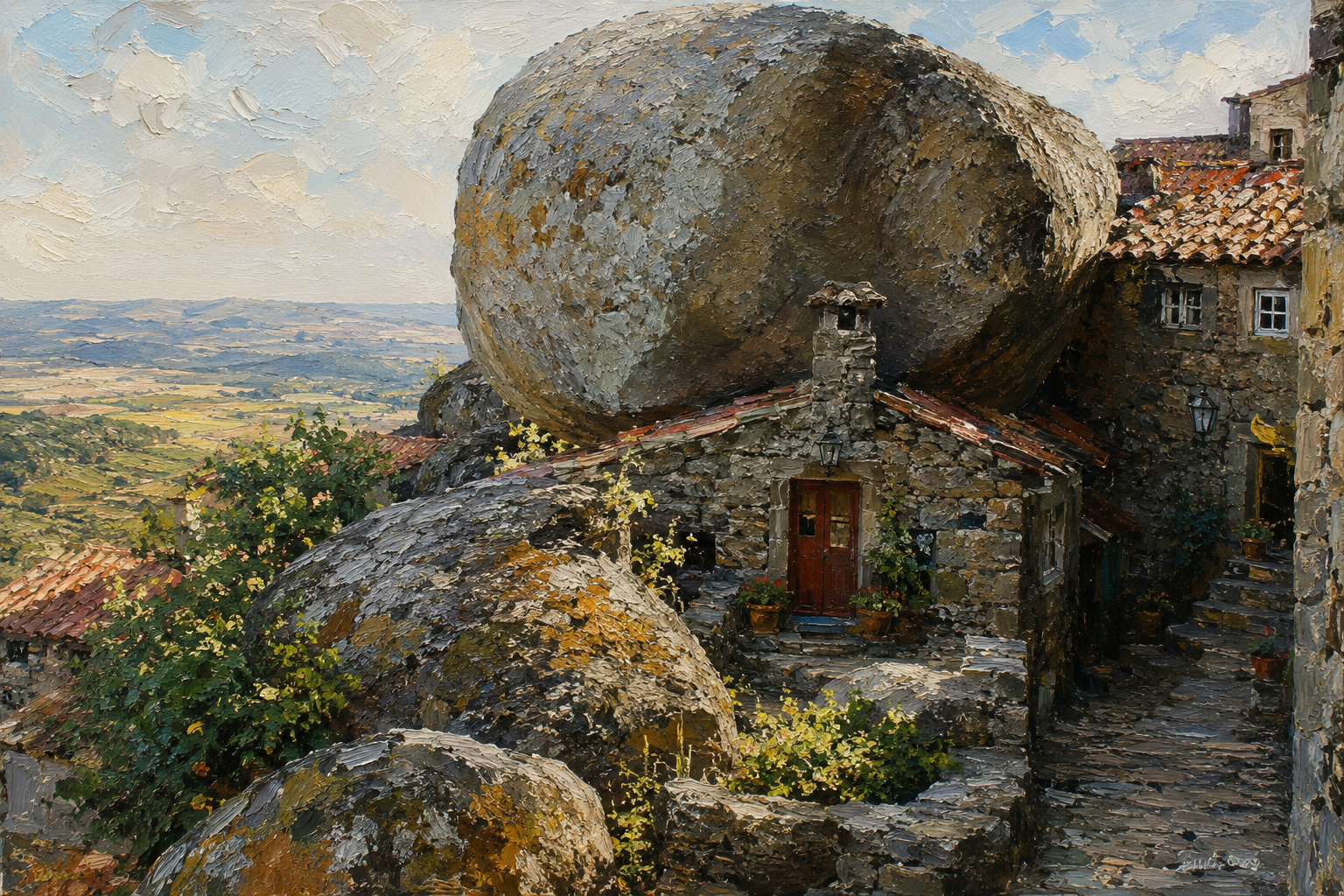
Shelter of the Ancient Boulder
Critique
1. Introduction This oil painting depicts traditional stone houses built among and underneath massive boulders on a rocky hillside. The heavy presence of a gigantic round rock resting above a small cottage dramatically shows the integration of nature and human life. The dynamic impasto technique emphasizes the organic connection between the landscape and architecture. 2. Description In the center, a monumental boulder sits directly atop a small stone cottage featuring a wooden red door and a chimney. To the right of the cottage, a narrow cobblestone path winds past other stone buildings. Moss-covered rocks and bushes fill the left foreground, while a panoramic countryside stretches toward the distant horizon. 3. Analysis Technically, the artist uses a bold impasto technique with a palette knife to create tactile textures. This effectively renders the rough, weathered surface of the boulder and the uneven stonework of the walls. The color palette relies on earthy grays and browns, accented by the red door, green plants, and a light blue sky. 4. Interpretation and Evaluation The painting illustrates the relationship between the scale of nature and human resilience. By incorporating the boulder into their dwelling, the inhabitants demonstrate a harmonious co-existence with the harsh environment. The textured qualities of the paint beautifully translate the physical reality of the landscape, creating a sense of rustic nostalgia. 5. Conclusion A careful reading of the painting reveals how the expressive textures support a balanced composition. Rather than presenting a simple view, the artist materializes the weight of the environment on canvas. The initial impact of the massive boulder eventually gives way to a deeper appreciation of the quiet, enduring life within the stone village.
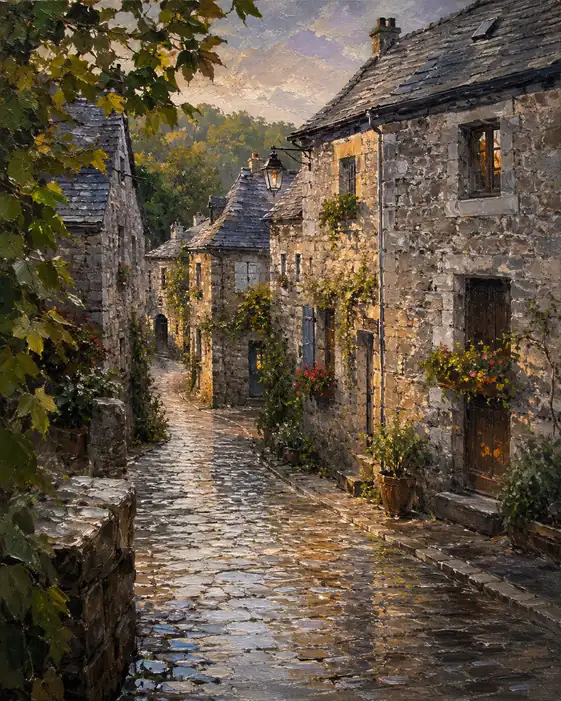 Echoes of the Golden Hour
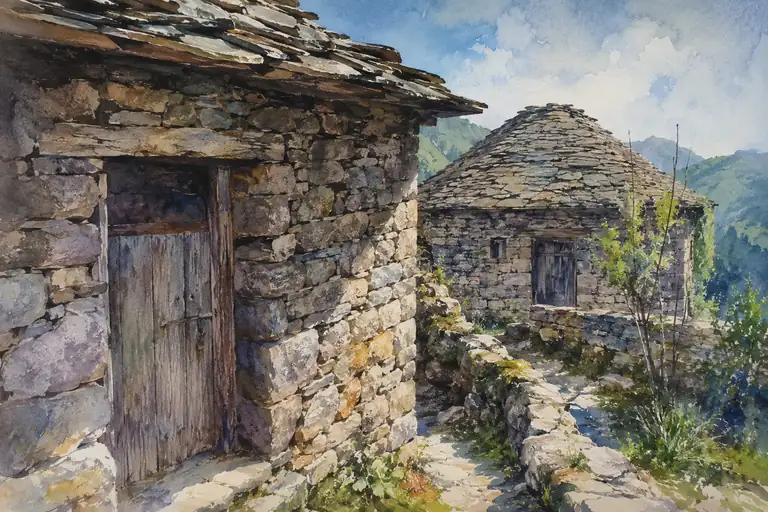 Echoes of a Simple Life
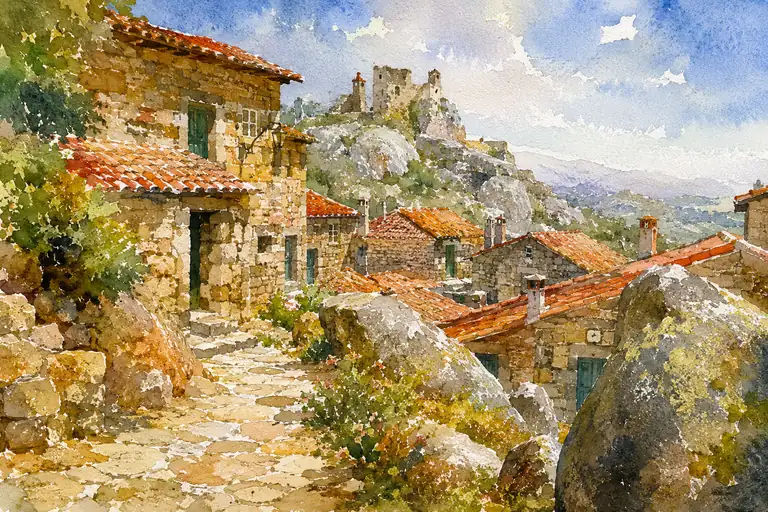 Echoes of the Ancient Keep
 Echoes of Stone, Whispers of the Meadow
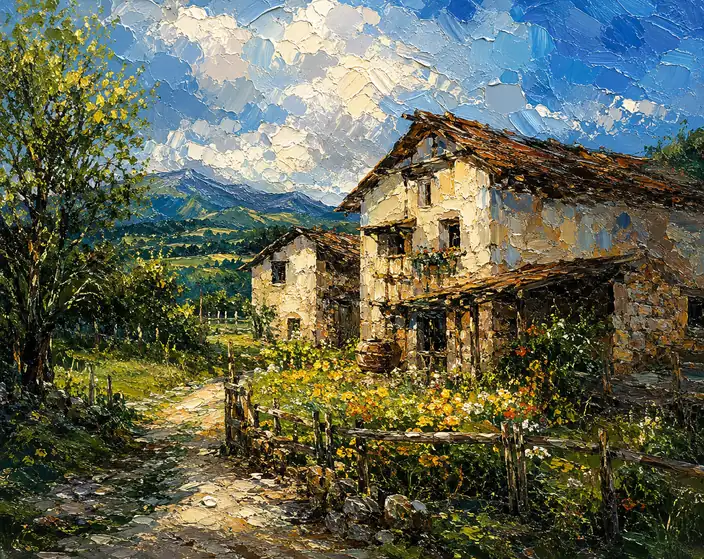 Where Wildflowers Bloom
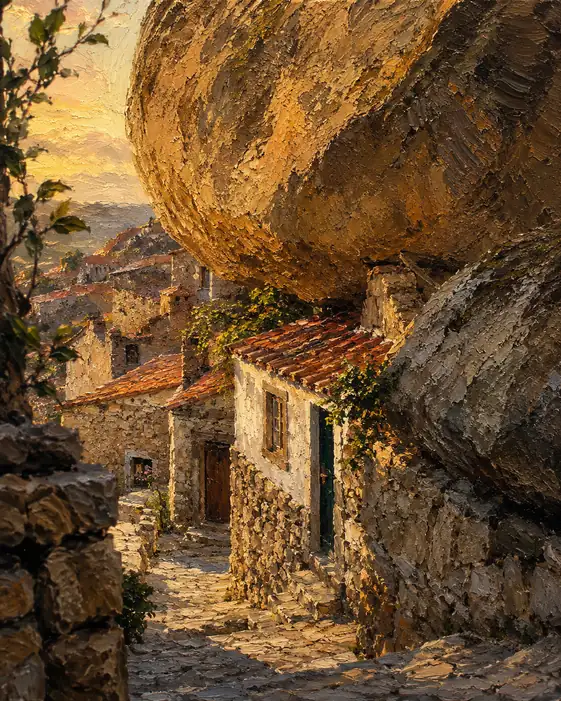 A Village in the Stone's Embrace
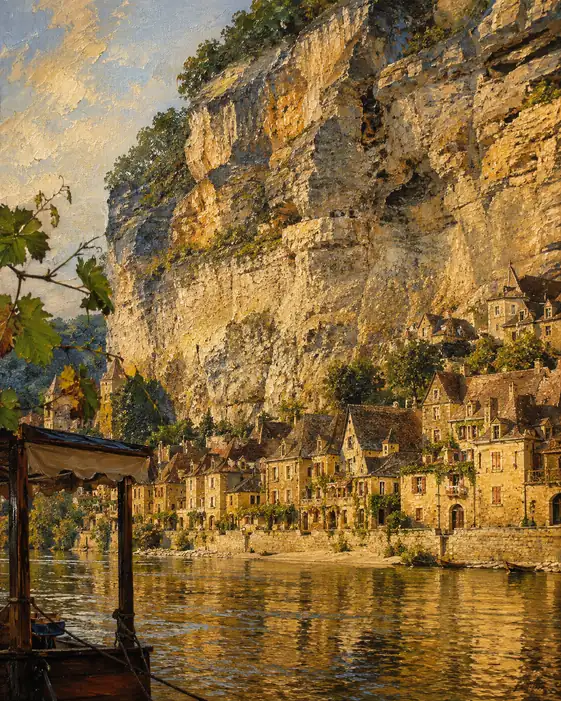 The Haven Under the Golden Cliff
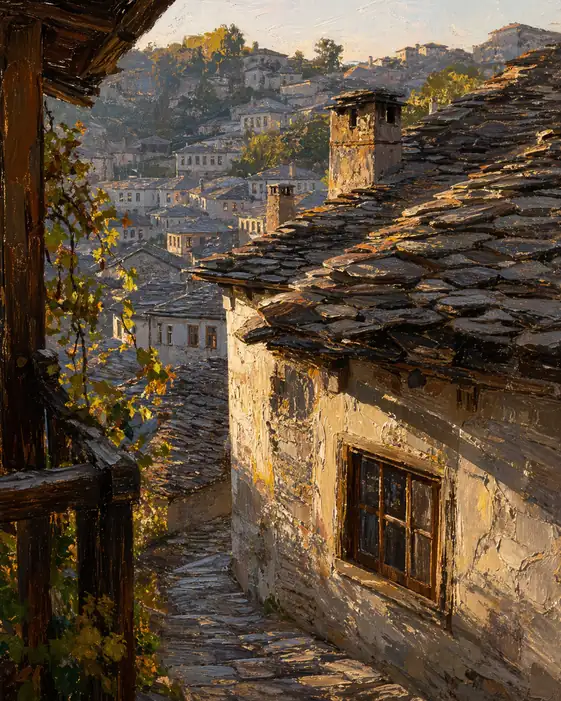 Slumber of the Stone Roofs
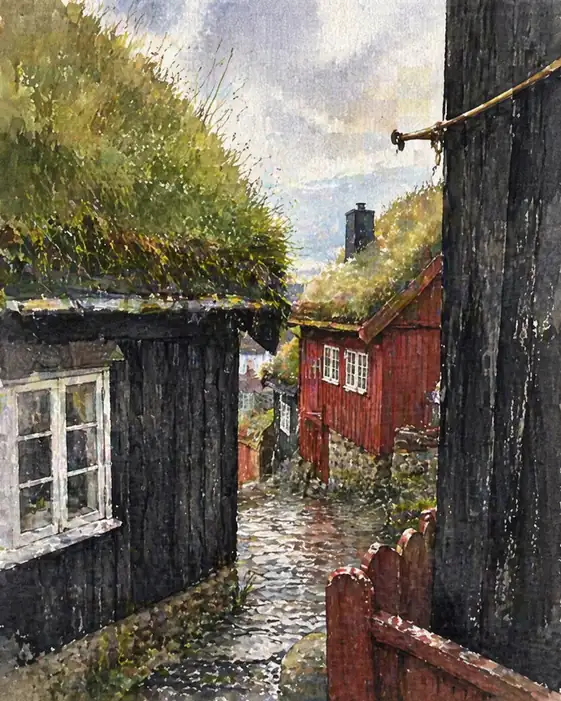 Whispers of the Turf Roof
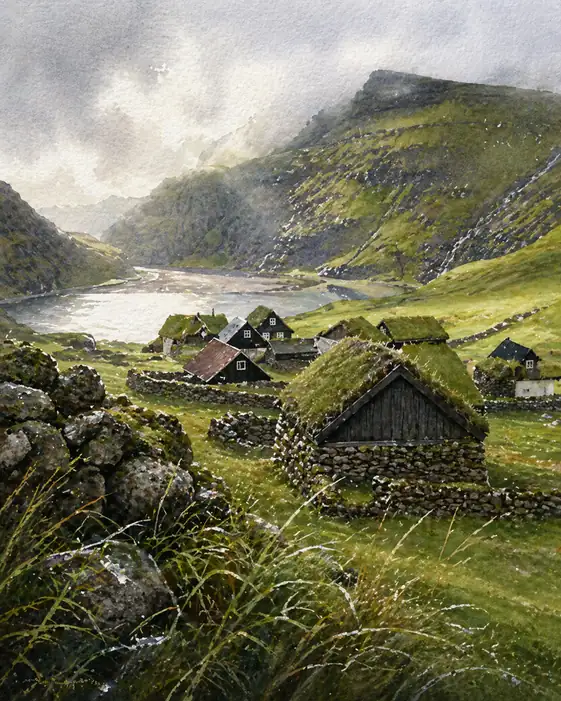 Valley of Quiet Time