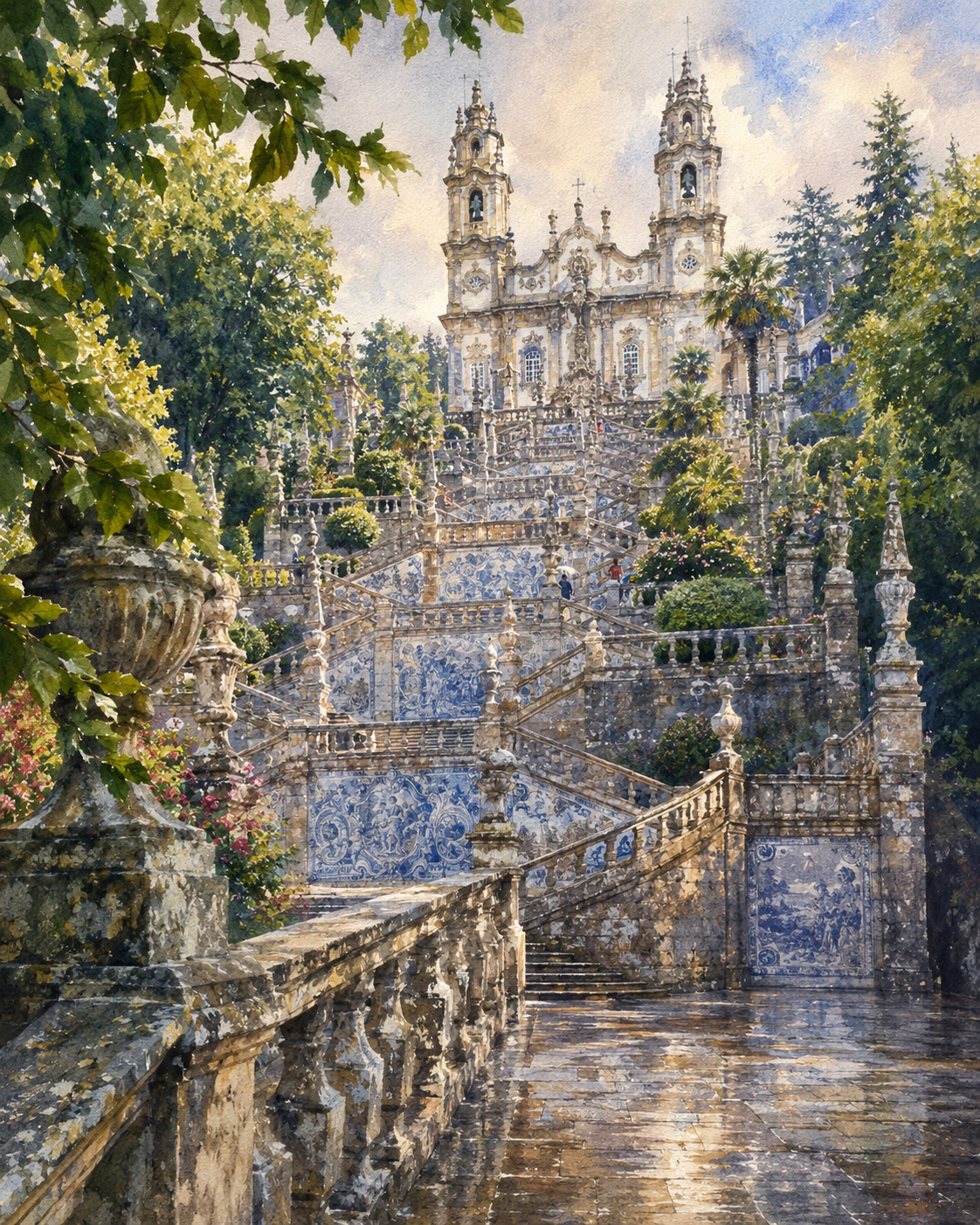
The Blue Path of Pilgrimage
Critique
1. Introduction This watercolor painting depicts a majestic baroque sanctuary built on a steep slope, accessed by a monumental zigzagging staircase. Decorated with blue-and-white tiles known as azulejos, the staircase walls rise toward the twin-towered church. The integration of lush greenery and detailed stonework creates a solemn and spiritual atmosphere. 2. Description In the immediate foreground, a wet stone terrace reflects the light, flanked by a moss-covered balustrade on the left. The middle ground features the grand staircase adorned with intricate blue tile panels, where a few small figures appear. At the summit, a grand basilica stands proud under a blue sky dotted with clouds. 3. Analysis The color palette achieves harmony through the contrast of the vibrant blue tiles, the rich greens of the trees, and the weathered grays of the stone. Meticulous watercolor washes successfully convey the damp texture of the pavement and the growth of moss. The vertical perspective strongly emphasizes the impressive height of the sacred site. 4. Interpretation and Evaluation The artwork represents the physical and spiritual journey of pilgrimage. The sacred blue of the azulejos juxtaposed with the natural vitality of the forest suggests a connection between the earthly and the divine. The sophisticated control of watercolor media to capture light and moisture is technically brilliant, making this a highly successful piece. 5. Conclusion A close study reveals how the grand scale of the painting is supported by minute details. The artist captures tactile qualities, such as wet stone and cold stone carvings, with great precision. The viewer's initial awe at the scale evolves into a quiet appreciation of the historical and spiritual depth embedded in the scene.
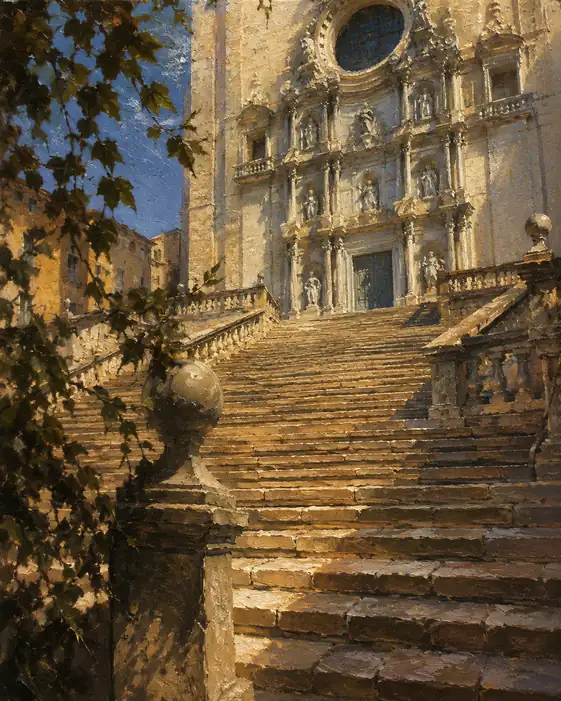 Steps of Silent Pilgrimage
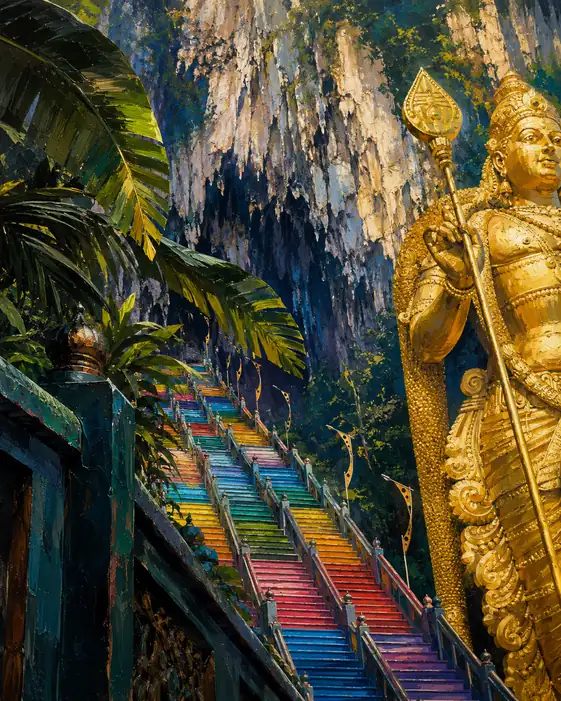 Ascending the Rainbow of Faith
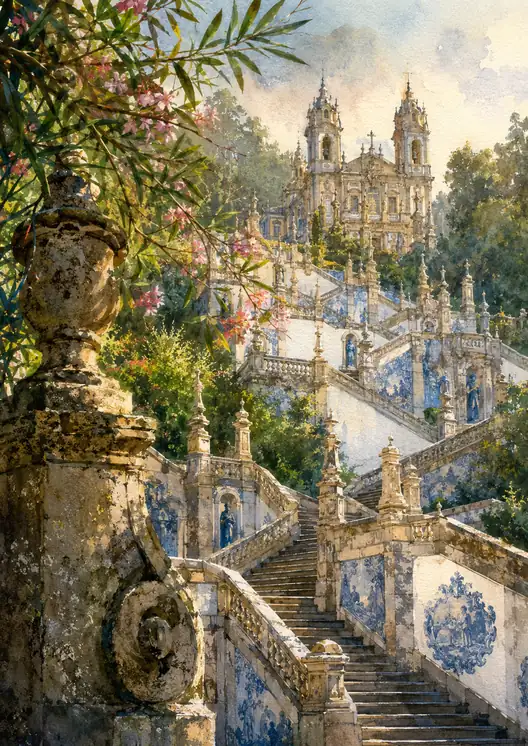 The Stairway of Blue Prayers
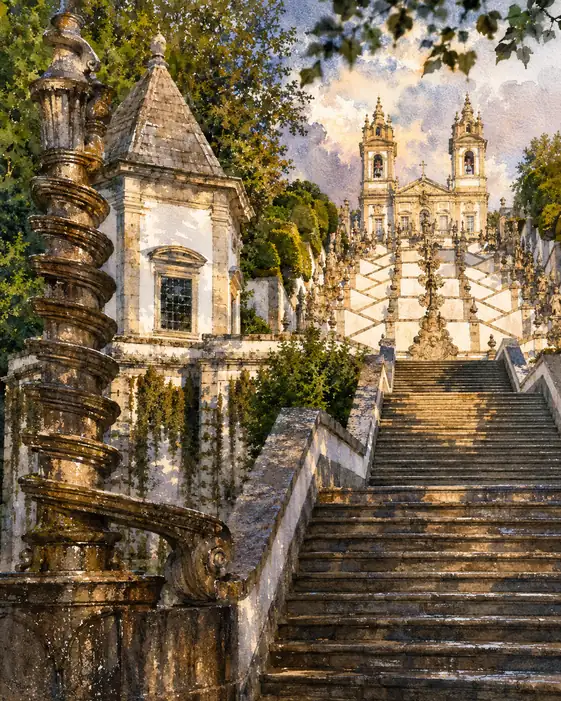 The Radiant Ascent: A Symphony in Stone
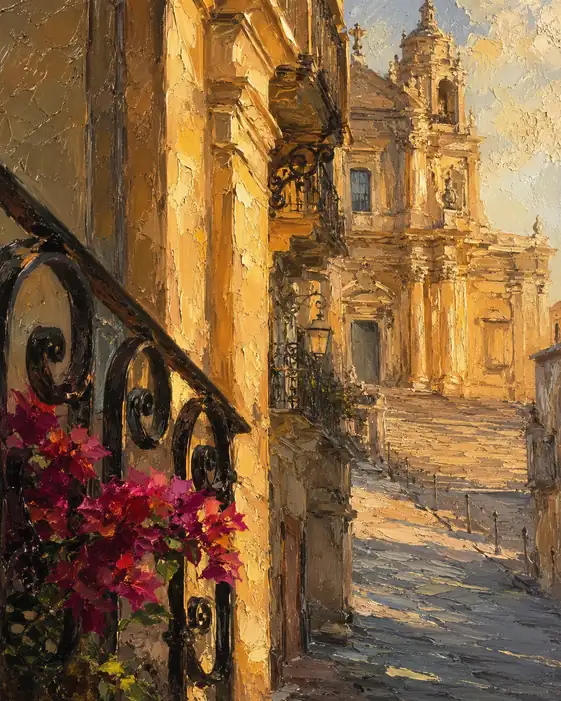 Ascending into the Golden Splendor
 Ascent into the Light
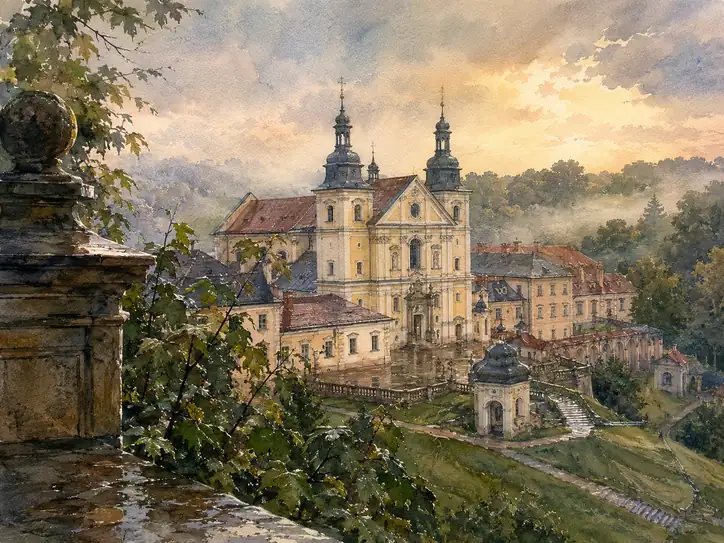 Grace After the Rain
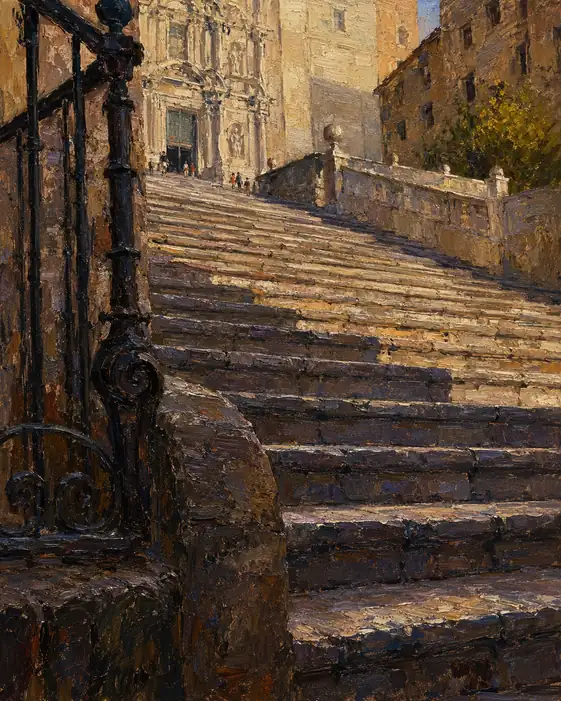 Stairway to the Golden Sanctuary
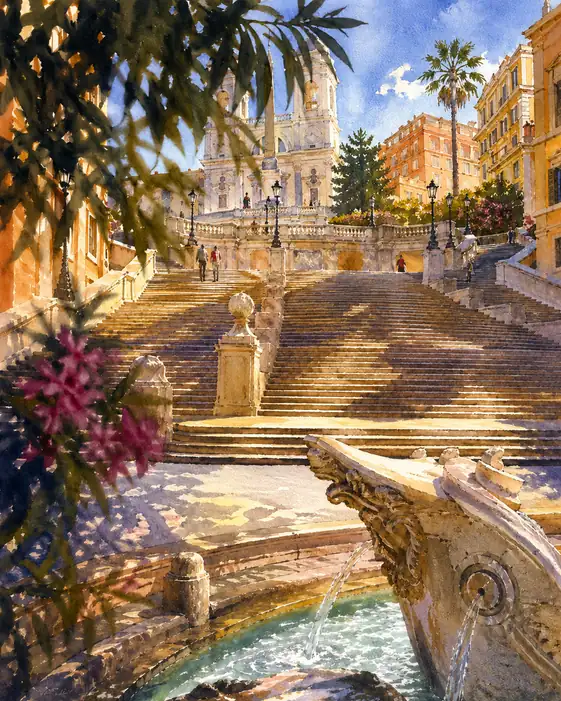 The Sun-Drenched Rhythm of the Steps
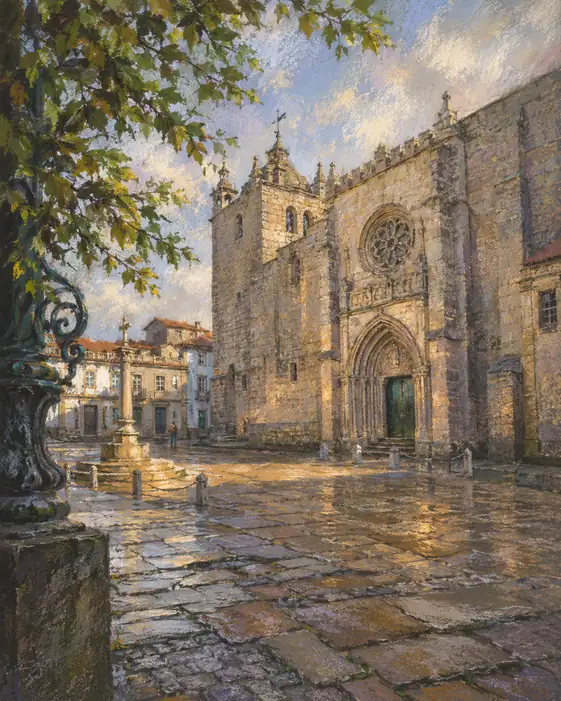 Echoes of Rain on Golden Stone
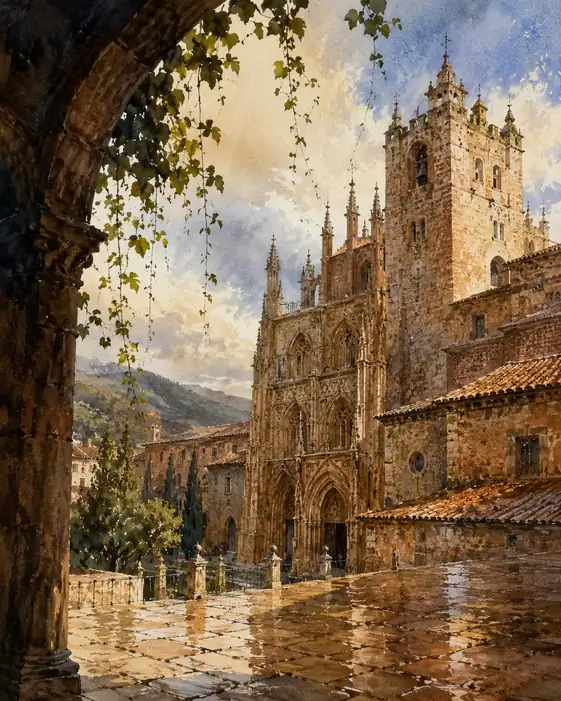 Reflections of Grace