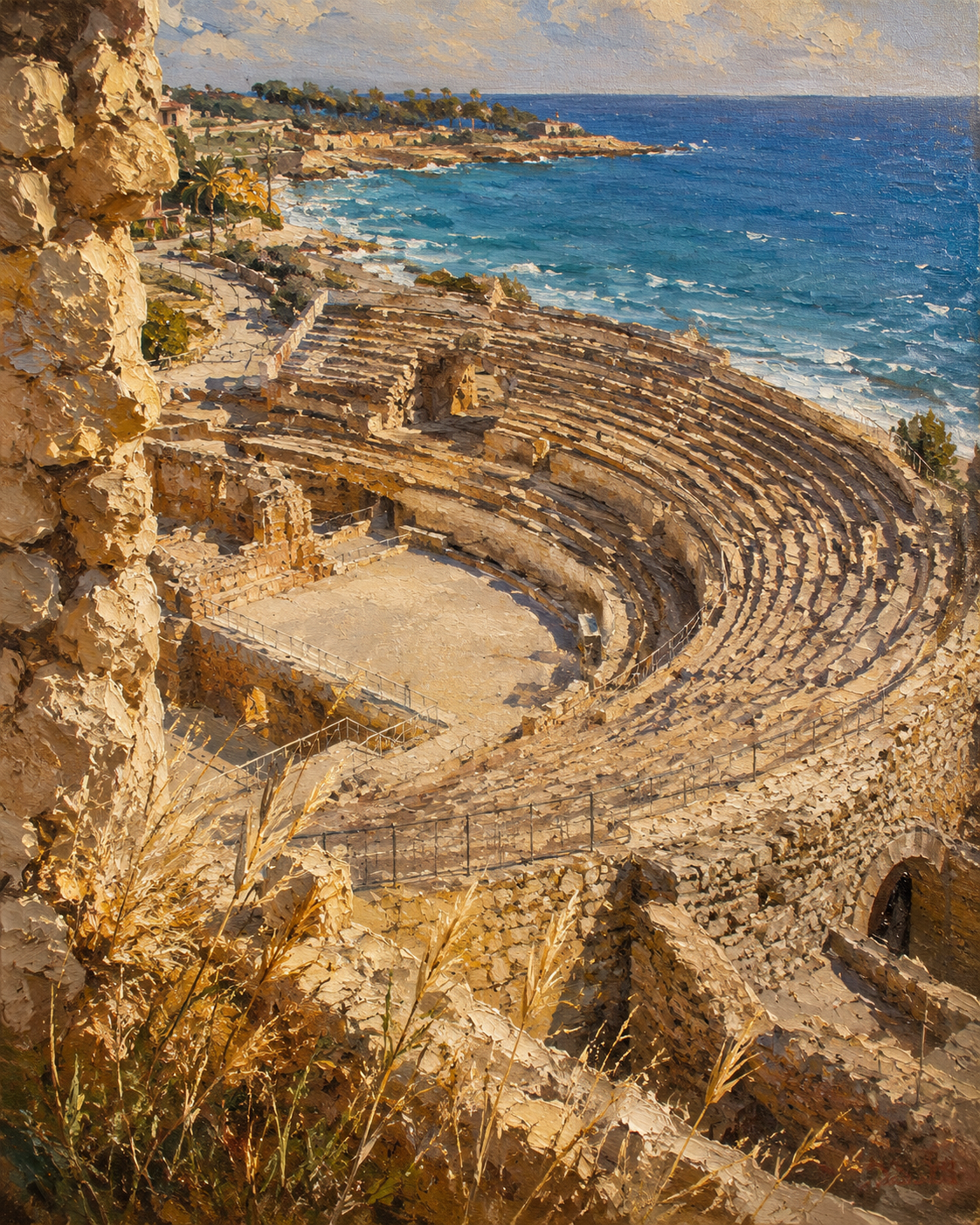
Whispers of the Eternal Stage
Critique
1. Introduction This oil painting showcases the ancient Roman amphitheater in Tarragona, Spain, set against a vast coastal background. The viewer looks down from a high vantage point, guided by a heavy stone wall in the immediate foreground. Bright sunlight illuminates the ruins, highlighting the architectural grandeur of the Roman Empire. 2. Description The semi-circular rows of stone seats curve gracefully across the middle ground of the canvas. To the left, a rough, ancient stone pillar stands tall with dry yellow grasses at its base. Beyond the amphitheater, the deep blue sea meets a curving shoreline with small white waves, under a clear sky. 3. Analysis The artist uses a heavy impasto technique, creating a highly tactile quality on the ruined stone surfaces. The color scheme relies on a vibrant contrast between the warm ochre of the ruins and the cool blue of the sea. The concentric curves of the theater seats create a strong rhythm, balancing the horizon. 4. Interpretation and Evaluation The juxtaposition of the ancient ruins and the eternal sea symbolizes the passage of human history against nature's permanence. The silent, empty stage prompts reflection on the transient nature of empire and time. The accurate rendering of the structure's geometry demonstrates the painter's exceptional technical and observational skill. 5. Conclusion While the brilliant blue of the Mediterranean first captures the eye, the textured details of the ruins invite deeper study. The composition beautifully bridges the archaeological past with the natural present. Ultimately, this work is a powerful representation of historical memory, successfully capturing a nostalgic sense of place.
Same Subcategory
Similar Artworks
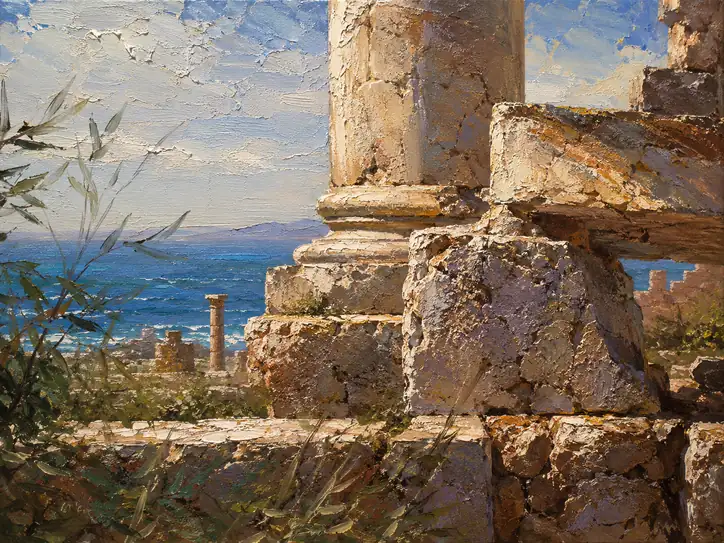 Sentinel of the Eternal Ocean
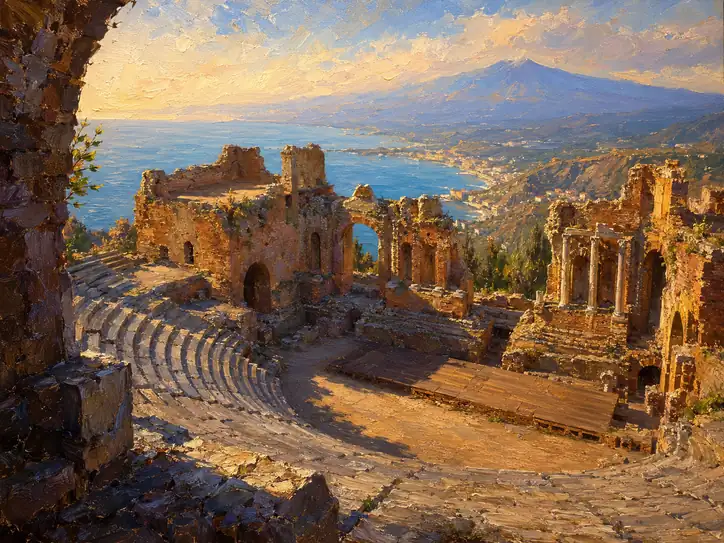 Taormina: The Golden Stage of Antiquity
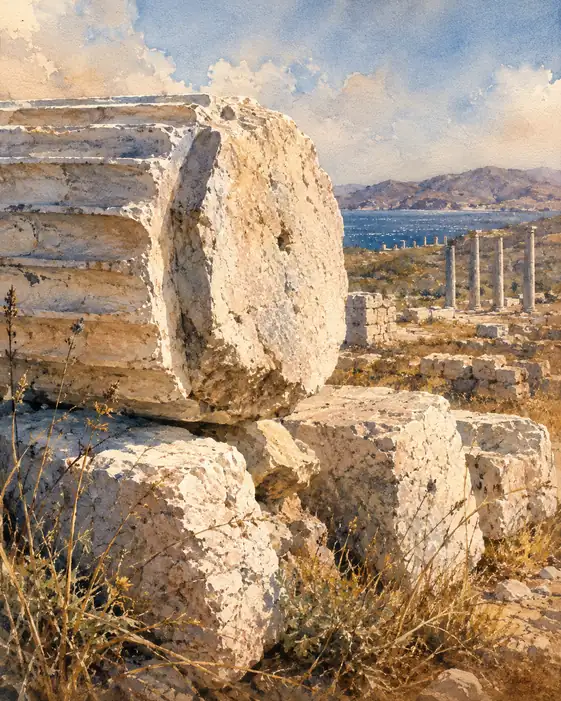 Where Empires Fade into the Blue
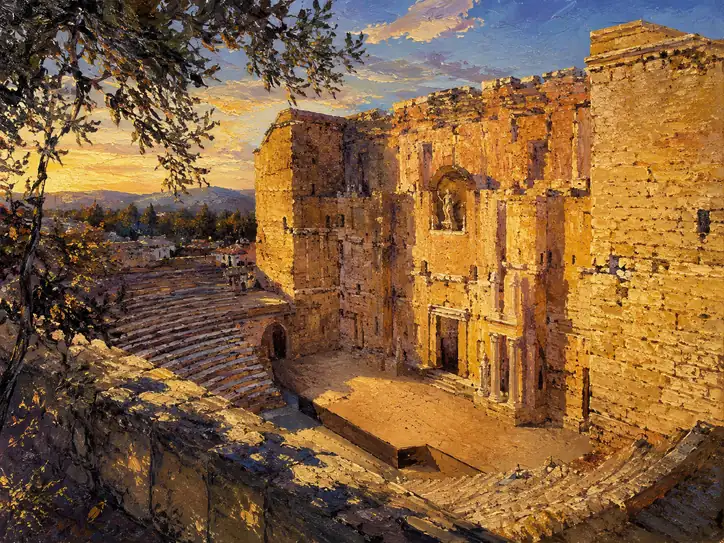 Twilight's Last Ovation
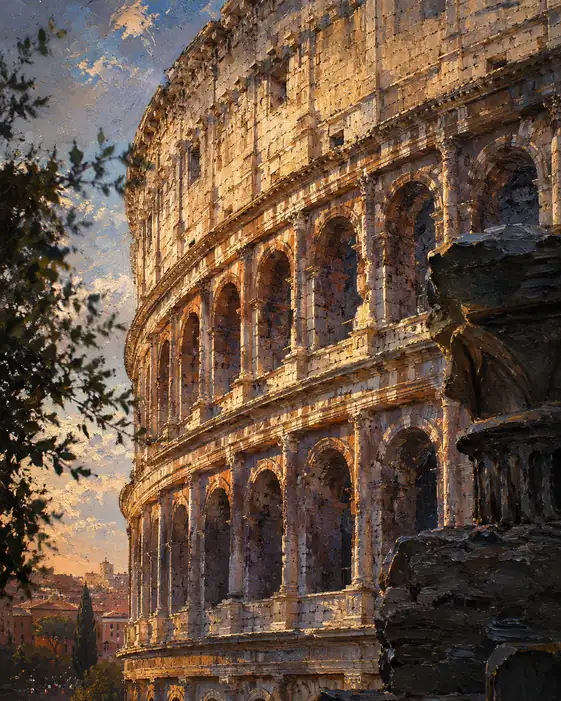 The Stone That Remembers the Sun
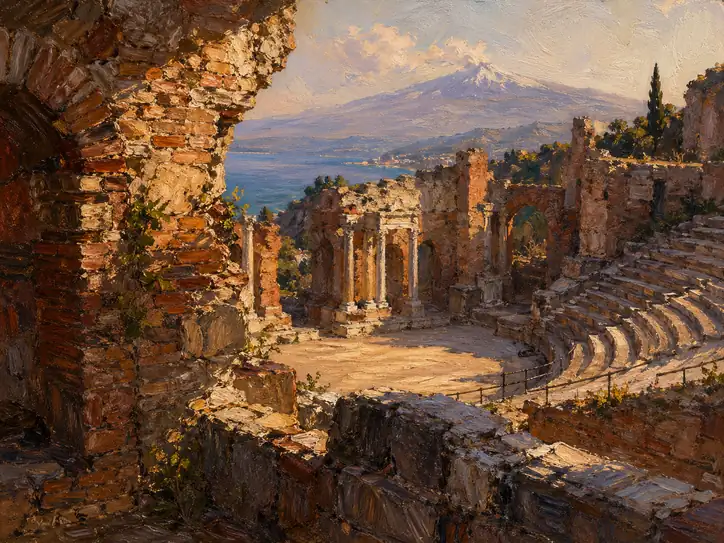 Twilight Over the Eternal Stage
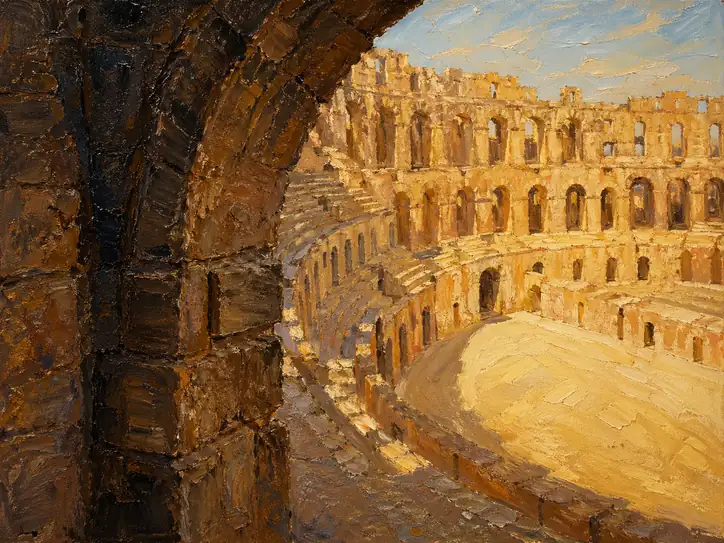 A Requiem of Light for Eternal Stone
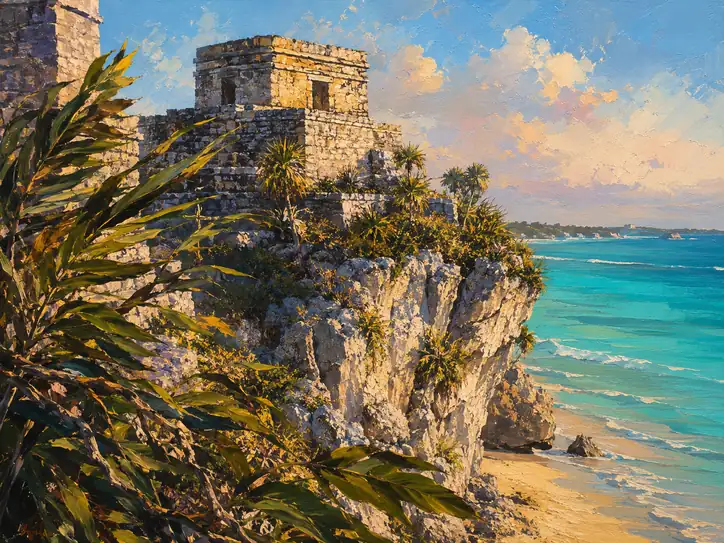 Where the Turquoise Sea Remembers
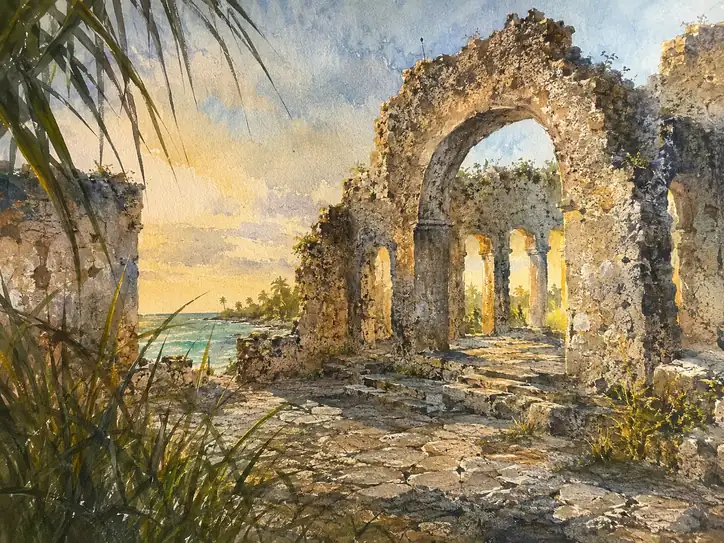 Nostalgia in the Golden Tide
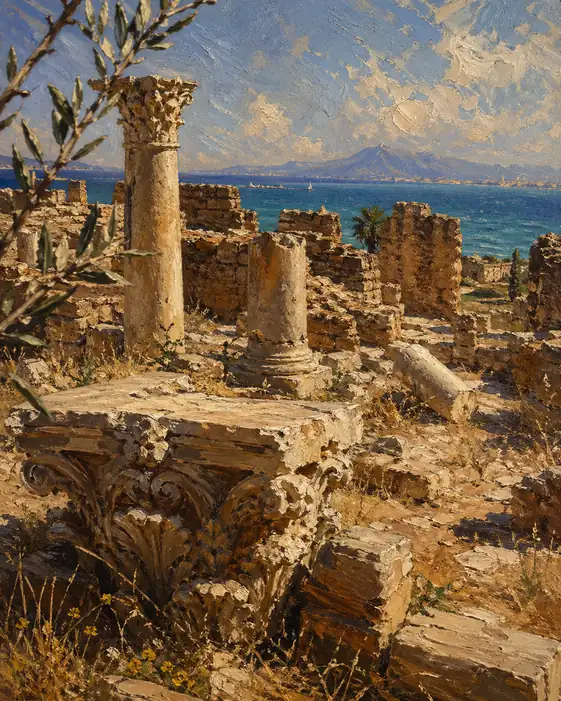 Echoes of Eternity: Where Stone and Sea Unfold