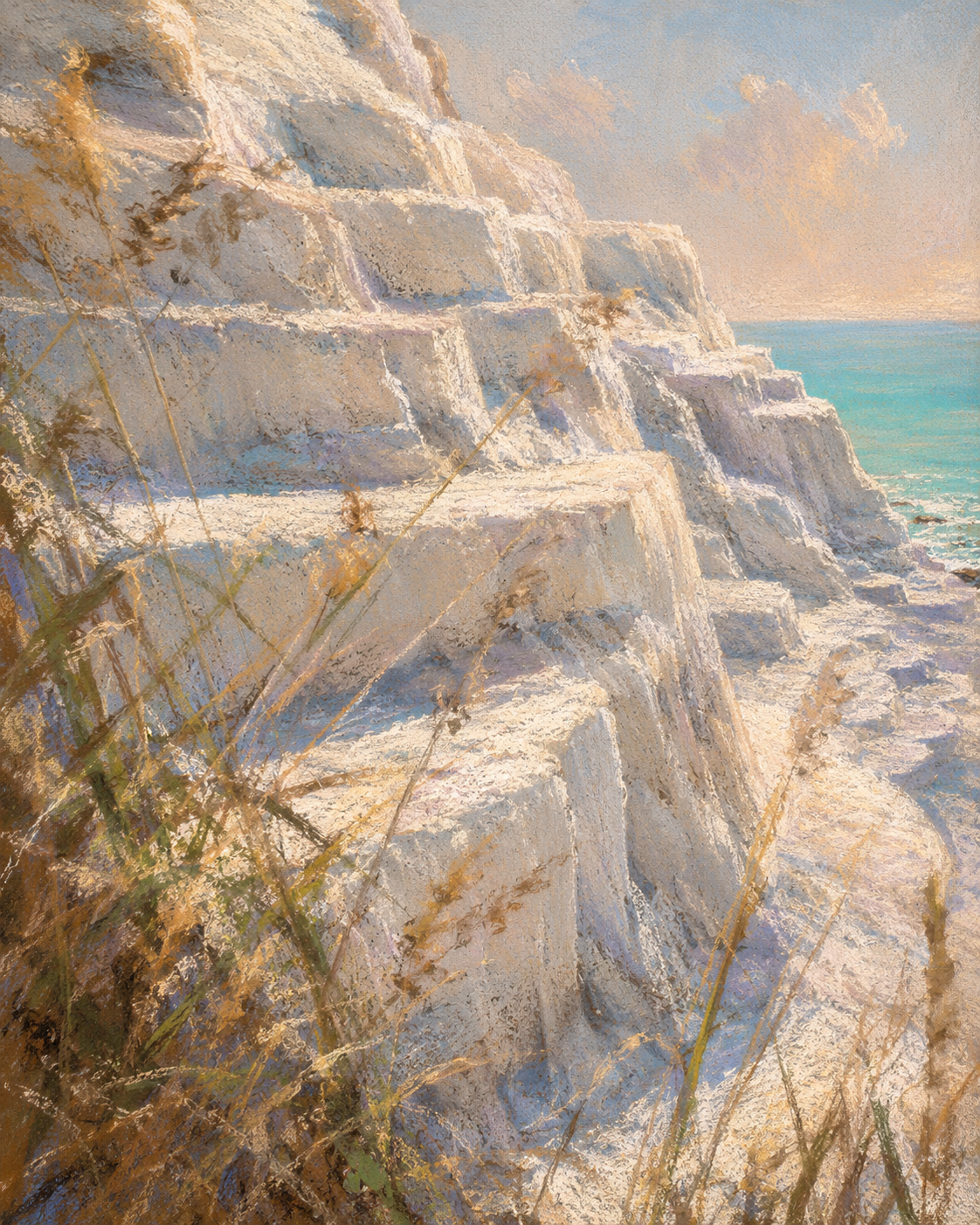
Silent Steps to the Horizon
Critique
1. Introduction This landscape painting depicts a white chalky cliff descending like natural steps toward the sea. The medium appears to be dry pastel or chalk, though its specific material creation details remain unconfirmed. The composition emphasizes the rugged beauty of coastal rock formations under natural light. 2. Description In the foreground, wild grasses and dry stalks rise from the bottom left, partially obscuring the cliff side. The main subject is the massive, tiered white cliff that dominates the left and center of the frame. To the right, a calm turquoise sea stretches to the horizon under a pale sky filled with soft, warm clouds. The rock faces are illuminated on top, casting cool shadows beneath each step. 3. Analysis The artist utilizes a steep diagonal slope of the cliff to guide the viewer’s eye down toward the ocean. The color scheme is built on the contrast between the brilliant white and purple shadows of the rock and the emerald green of the water. A dry, textured technique is applied to mimic the chalky, limestone surface of the cliffs. The lighting suggests late afternoon, creating strong highlights and long cast shadows that define the architectural quality of the stone. 4. Interpretation and Evaluation This work conveys a powerful sense of natural monumentality and quiet solitude. The draftsmanship is notable in the rendering of the complex geometric planes of the stepped rocks. The color choices successfully capture the warm reflection of the sky on the white mineral surfaces. By contrasting the rough textures of the grass and stone with the smooth water, the painting achieves a balanced visual texture. 5. Conclusion In conclusion, the artwork presents a striking study of geological form and coastal light. Initial viewing might focus only on the bright white stone, but further study reveals the delicate interplay of warm sky tones and cool shadows on the cliffs. It stands as a highly successful representation of a unique coastal landform.
Same Subcategory
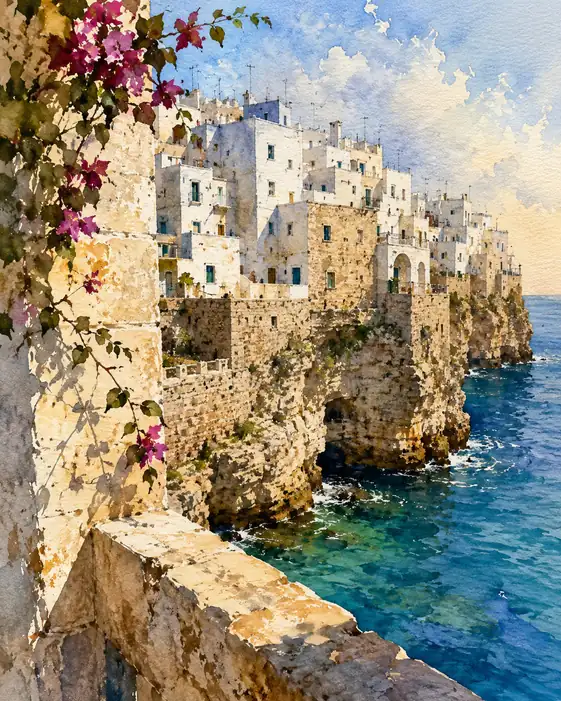 Where White Stone Embraces the Sea
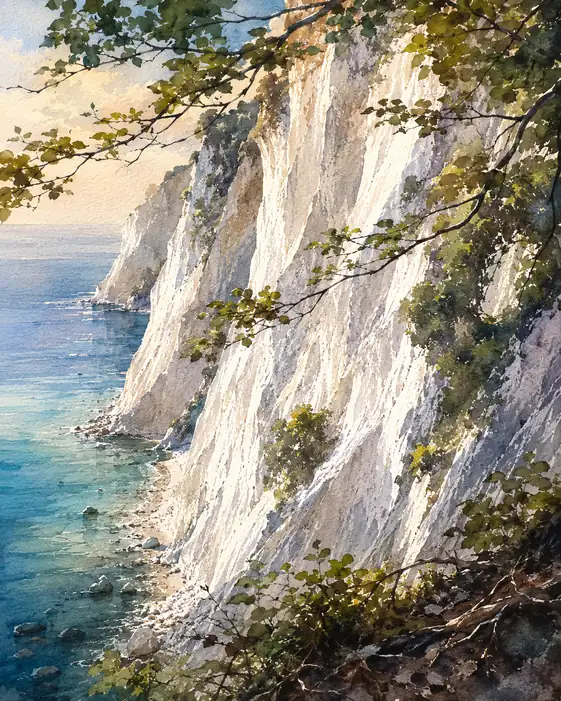 Where the Chalk Cliffs Embrace the Blue
Similar Artworks
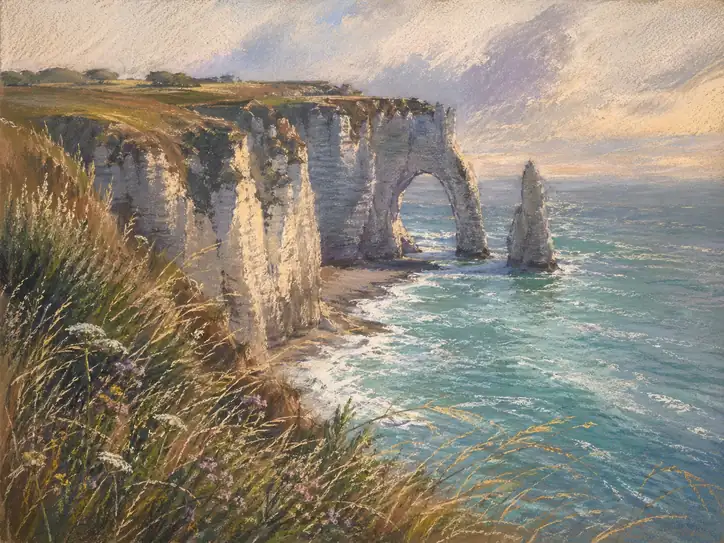 Whispers of the Chalk Gate
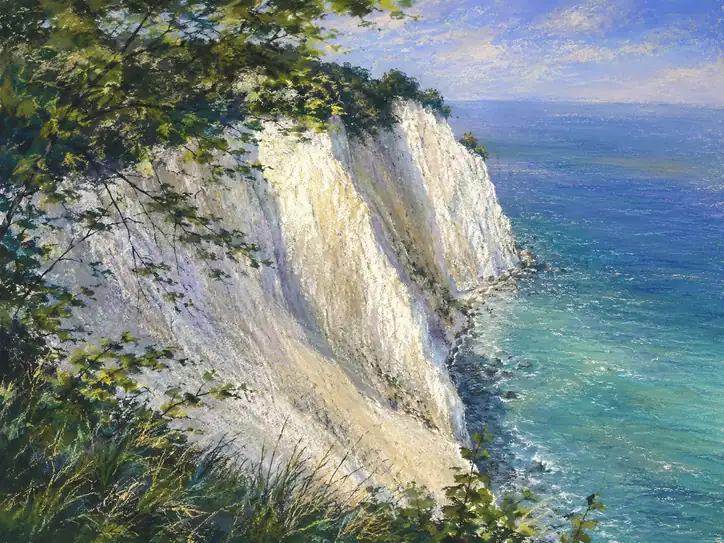 The Silent Giant of the Azure Sea
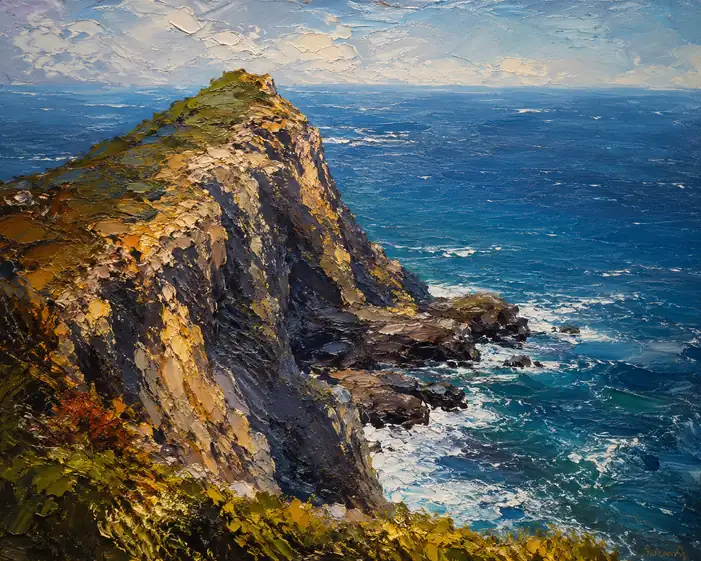 Silent Defiance
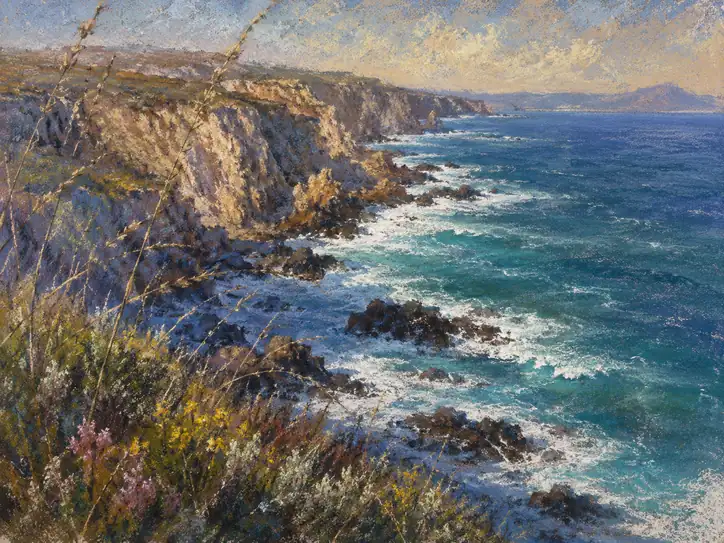 Atlantic waves crash on Portuguese cliffs: wildflowers glow in the coastal light
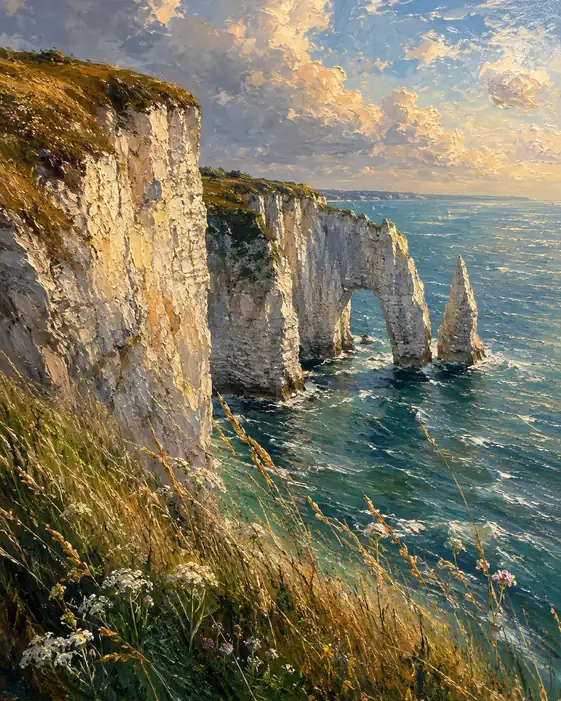 The Alabaster Gate of Golden Dreams
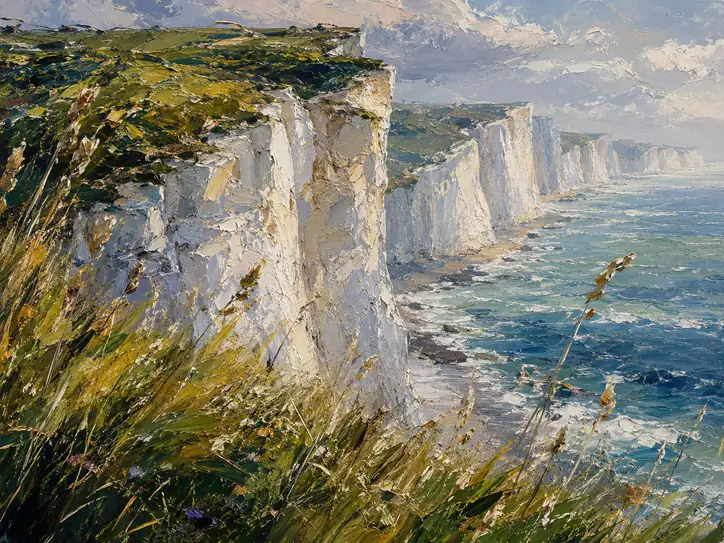 The Earth's White Breath Against the Tide
 The Arching Sea
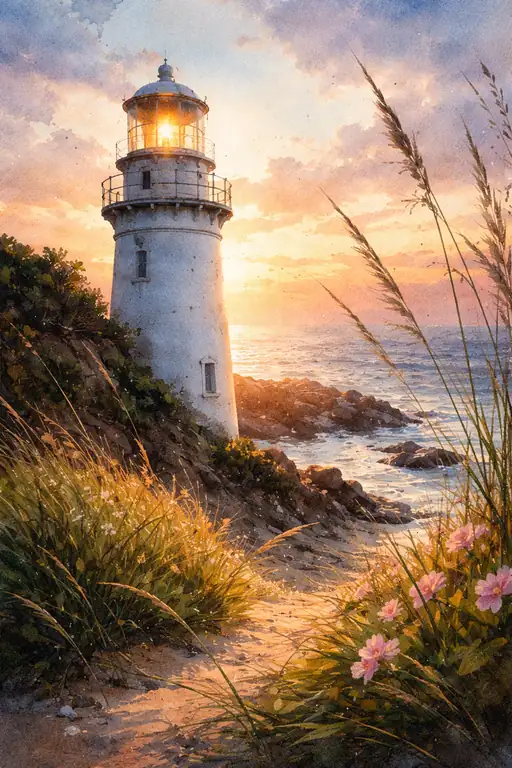 Guiding Light at the End of the World
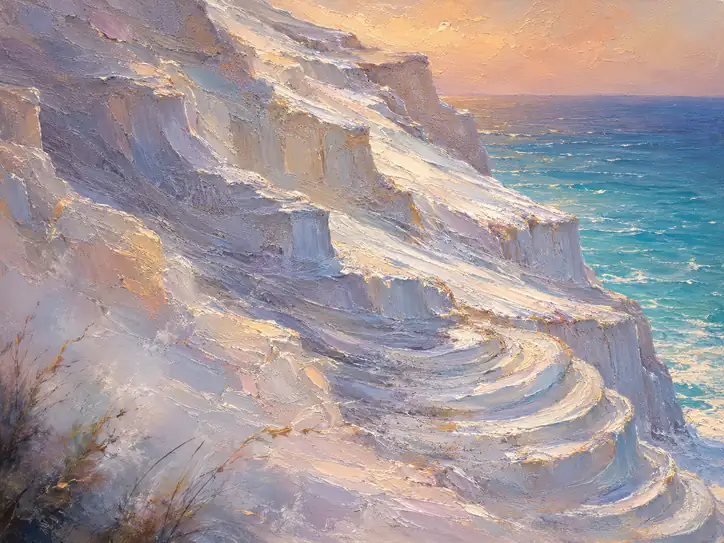 Terraces Sculpted by Light and Tide
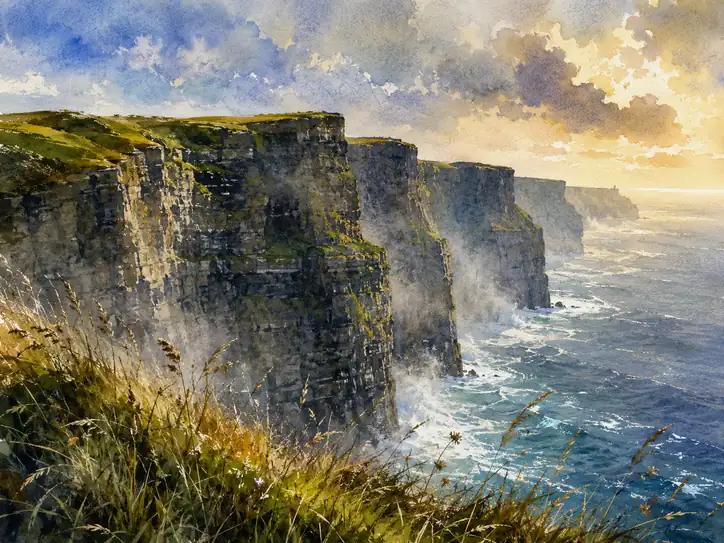 The Eternal Song of the Shore