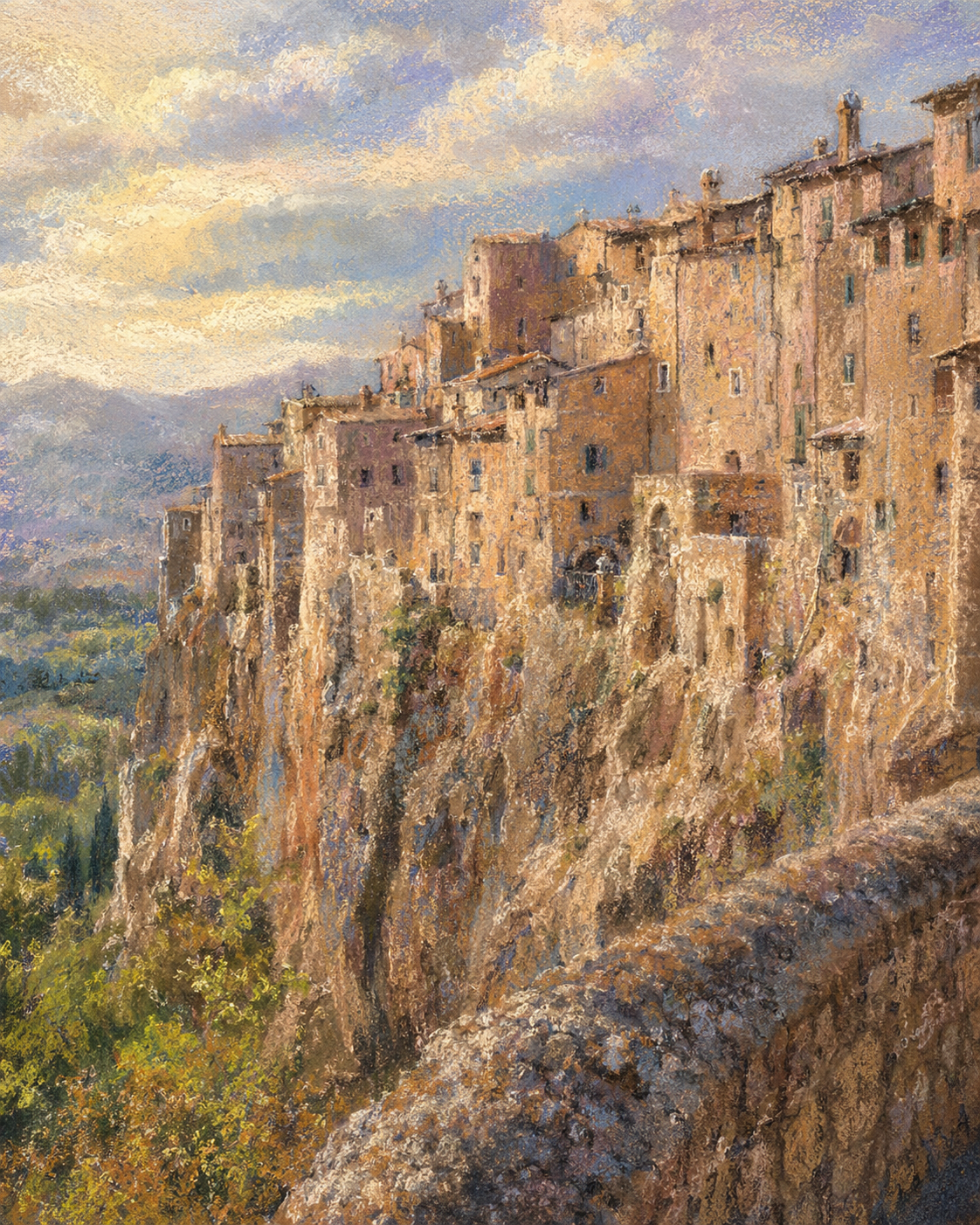
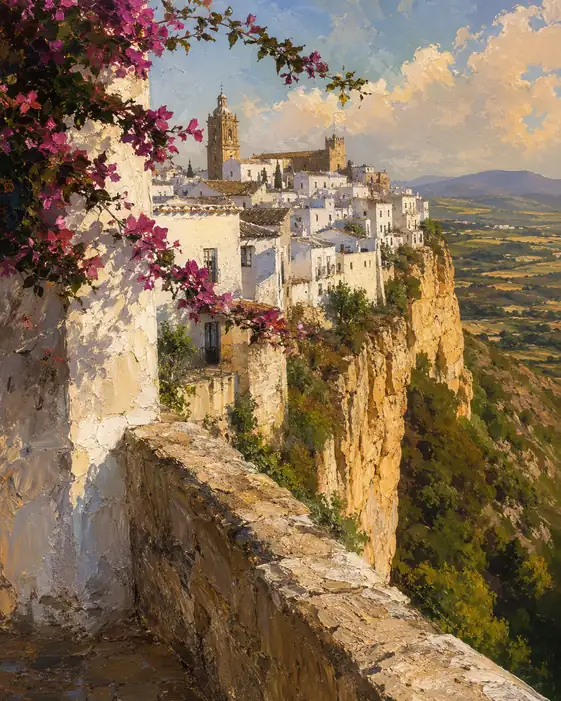
The Golden City on the Edge of Dawn
Critique
1. Introduction This painting presents a lyrical landscape of an ancient medieval town perched atop a steep cliff. The composition views the dramatic cliffside architecture over a stone wall in the foreground. Dappled morning light illuminates the stone facades, creating a quiet and mysterious atmosphere that highlights historical continuity. 2. Description In the right foreground, a sloping stone wall leads the eye toward a massive cliff. Atop this precipice, amber-colored houses and medieval structures are densely packed, appearing to merge with the rock face. To the left, a deep green valley opens up, under a golden sky with soft clouds. 3. Analysis The artwork utilizes the diagonal line of the foreground wall to emphasize the verticality of the cliff and buildings. Tonal contrast is created between the sun-drenched facades and the deep shadows in the valley. Warm earthy tones dominate the scene, while the pastel texture captures the rough rock surfaces. 4. Interpretation and Evaluation The painting addresses the theme of human habitation adapting to a rugged natural environment, symbolizing strength and harmony. Technically, the artist's use of soft pastel textures to define the cliff faces is highly successful. The seamless blending of architecture and rock evokes a nostalgic sense of history and permanence. 5. Conclusion Closer study reveals that the imposing landscape is softened by the gentle, golden play of light. The warm glow on the historic stones suggests a comforting connection to the past. Ultimately, this painting serves as a beautiful testament to human resilience, leaving a lasting impression of peace and quiet harmony.
Same Subcategory
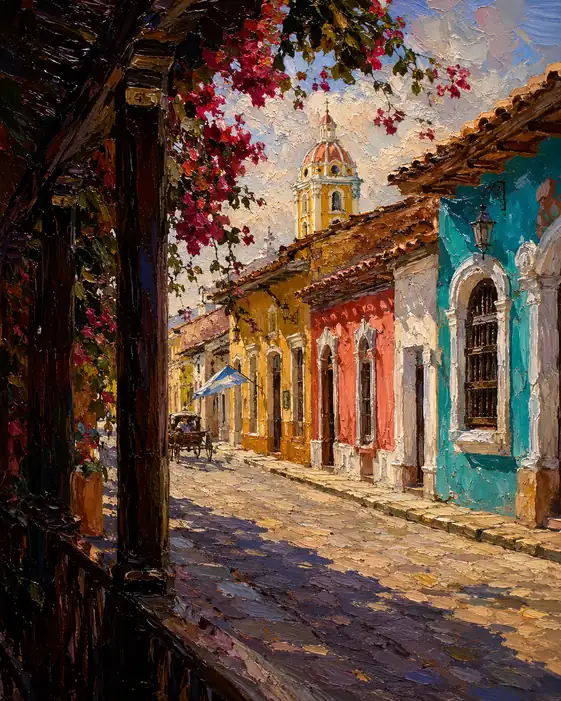 Under the Bougainvillea Sun
Similar Artworks
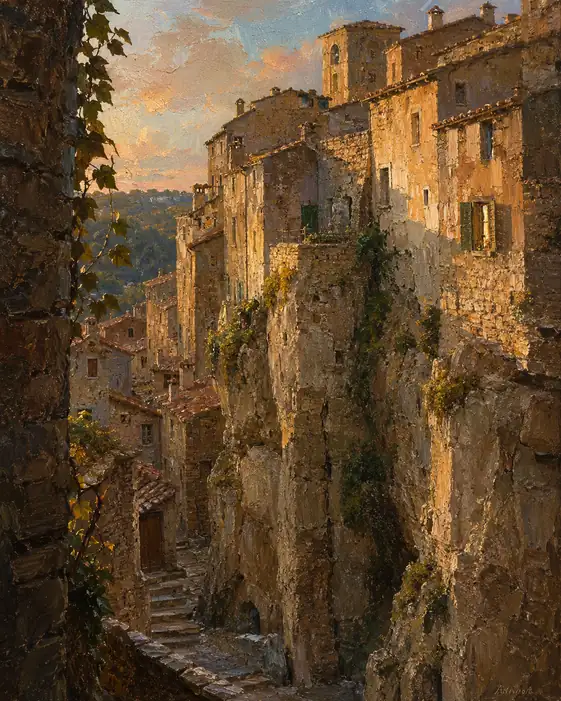 A Citadel Drenched in Sunset
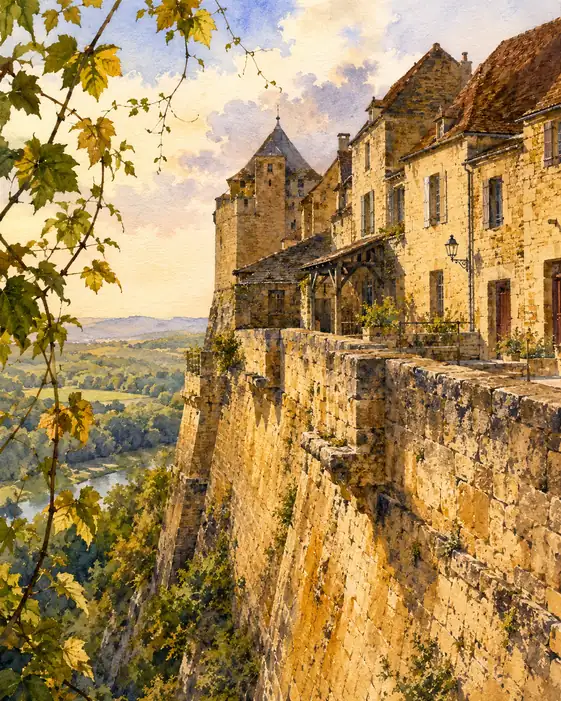 Citadel Overlooking Eternity
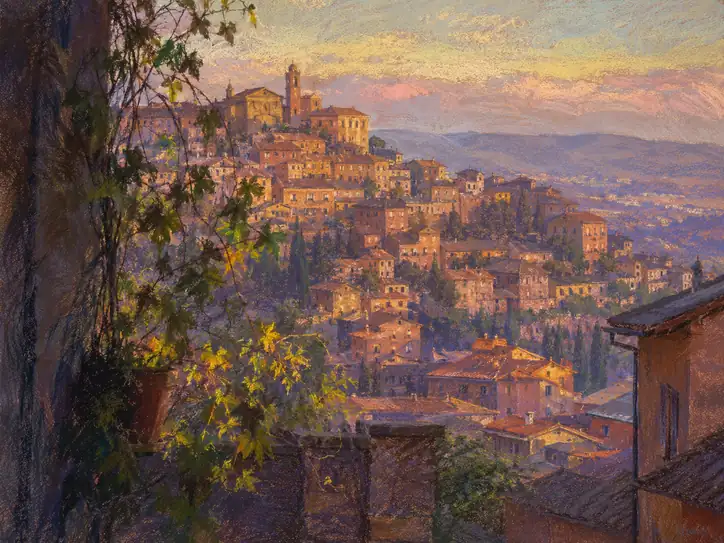 Resonance of the Golden Hillside
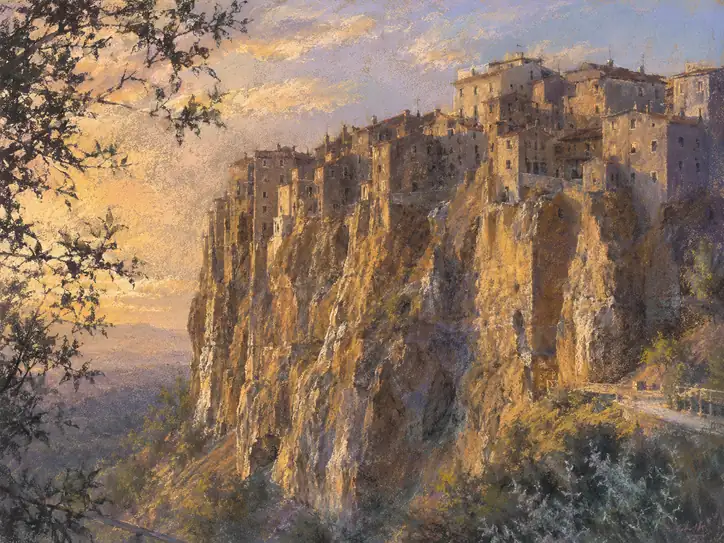 Where the Cliff Touches the Sky
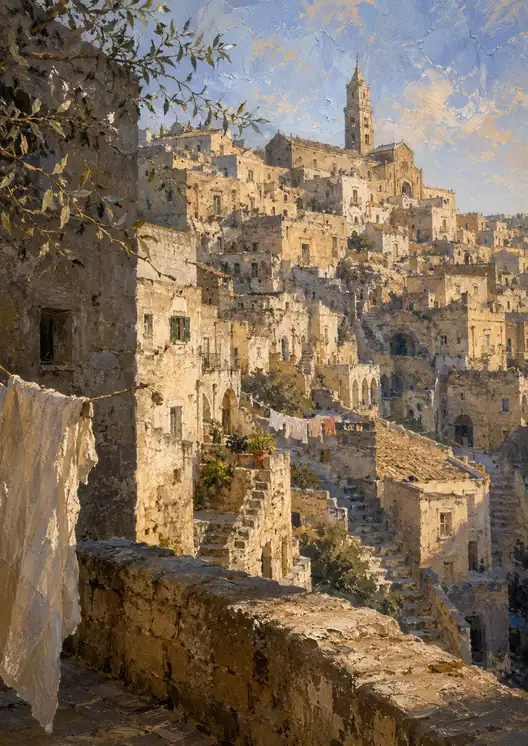 Matera: A Symphony in Golden Stone
 The Dying Town's Last Light
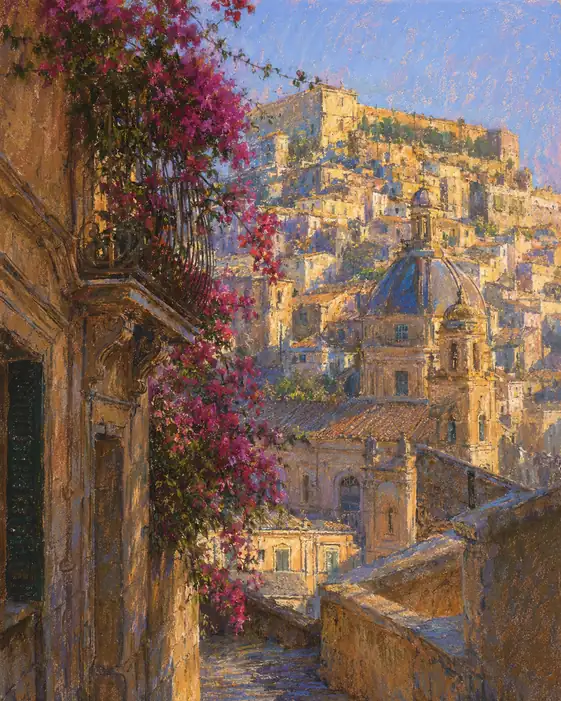 The Poem of the Slope Spun by Stone and Flower
 Between Sky and Earth
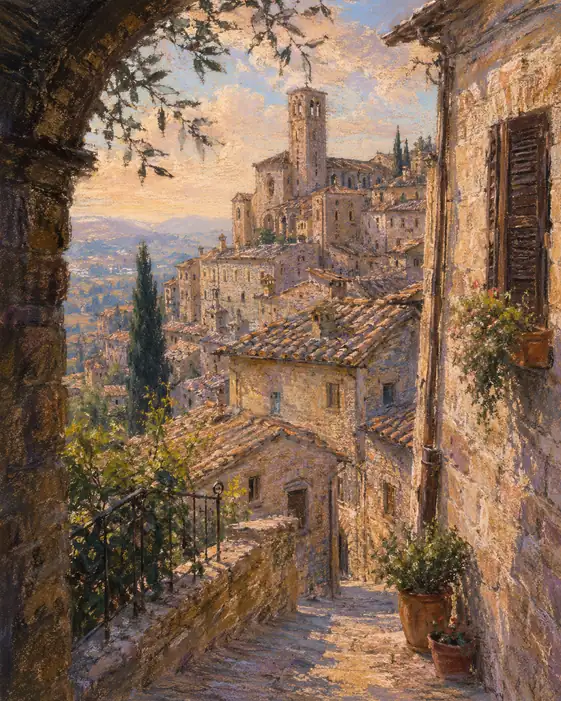 The Golden Gate to Assisi
 Suspended Serenity Above the Ravine