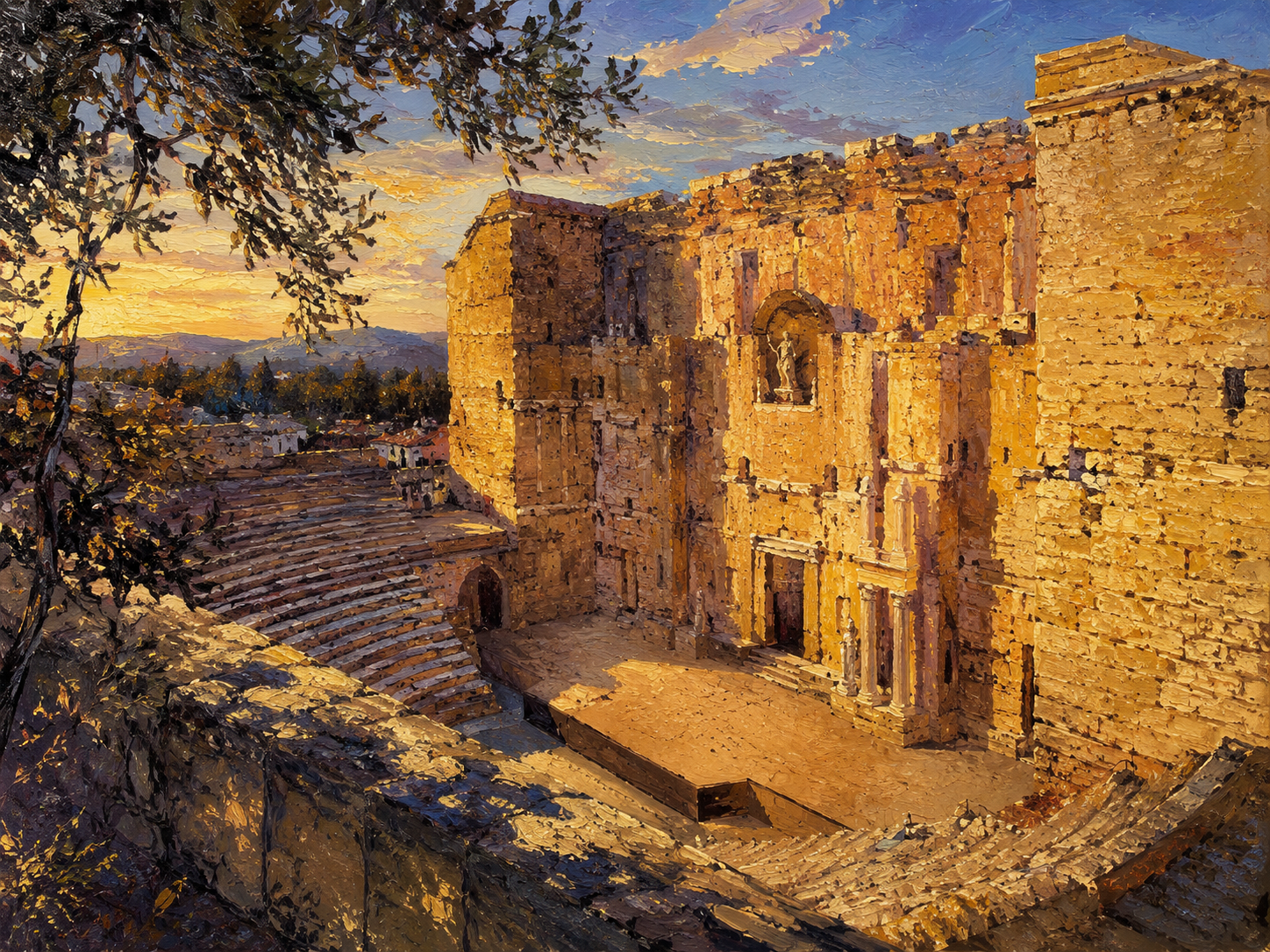
Twilight's Last Ovation
Critique
1. Introduction This oil painting depicts ancient Roman theater ruins bathed in sunset light. The massive stage wall on the right and the semicircular seating on the left clearly reveal the structure of the ruined performance space. Golden light and long shadows evoke memory and stillness lingering in the former theater. 2. Description On the right, a tall stone wall with columns and statues rises. To the left, the curved stone seating steps down toward the stage. In the background, a golden sunset glows over distant blue mountains. Dark stones and shadowed branches frame the top and foreground. 3. Analysis The thick impasto technique emphasizes the rough texture of the weathered ruins. The contrast between the brilliant orange light and cool shadows provides three-dimensional depth. Semicircular seating lines intersect with vertical walls, creating structural harmony. The dark foreground acts as a frame to emphasize the background light. 4. Interpretation and Evaluation The painting represents the dialogue between historical heritage and natural light. The evening sun functions as a gentle blanket, bringing warmth to the cold stone. The artist's ability to balance complex architecture with dramatic lighting shows excellent technical execution. This scenery evokes a sense of nostalgia and the passage of time. 5. Conclusion The artwork successfully connects human history with natural beauty. While the scale of the theater first captures the eye, the color harmony reveals a delicate emotion. It is an outstanding painting that shows the power of textured paint and light.
Same Subcategory
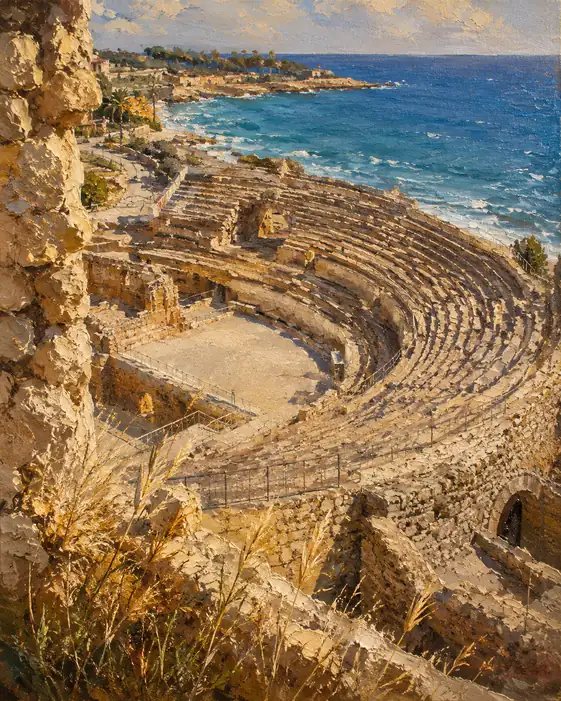 Whispers of the Eternal Stage
Similar Artworks
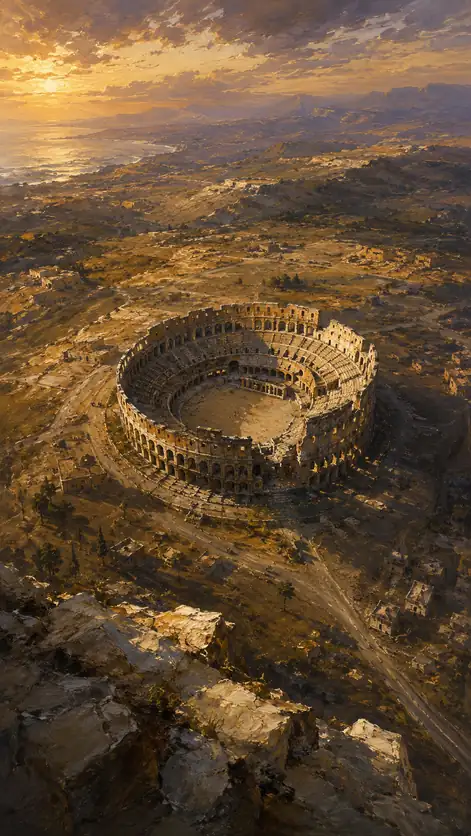 Echoes of a Forgotten Empire
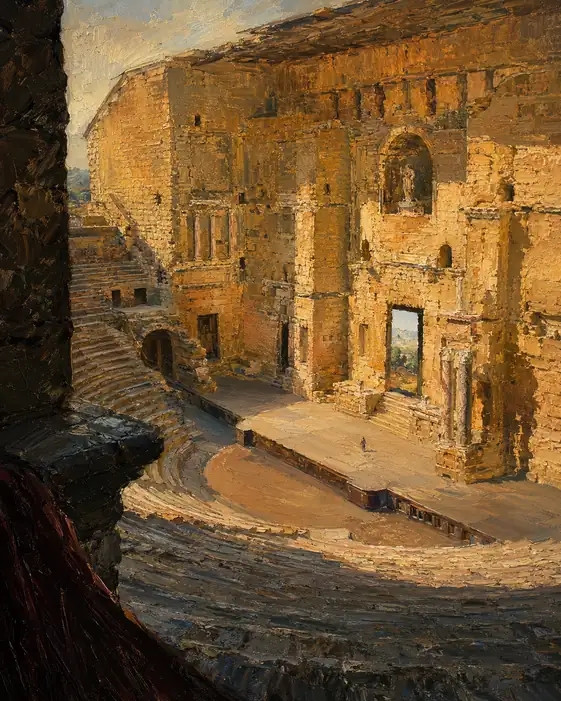 Solitude on the Golden Stage
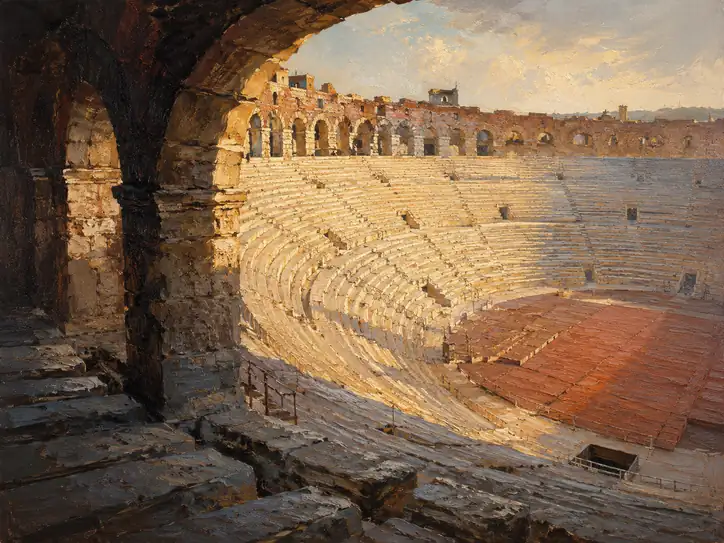 Echoes in the Golden Silence
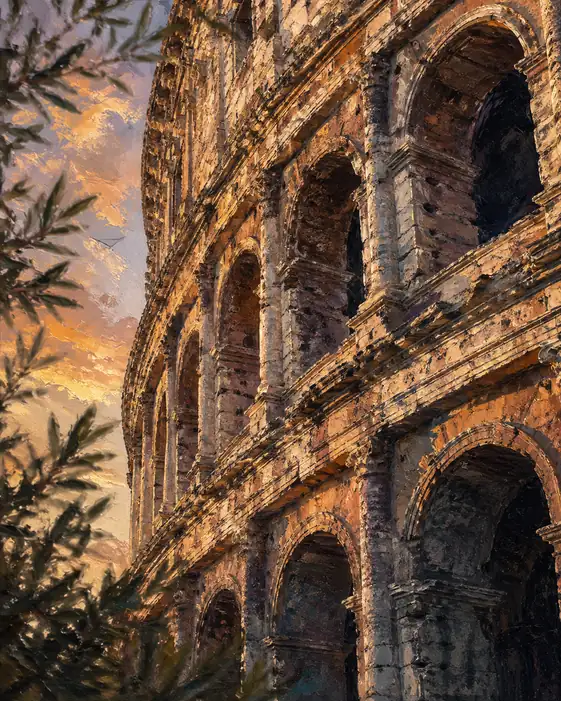 Stone of the Ages, Light of the Moment
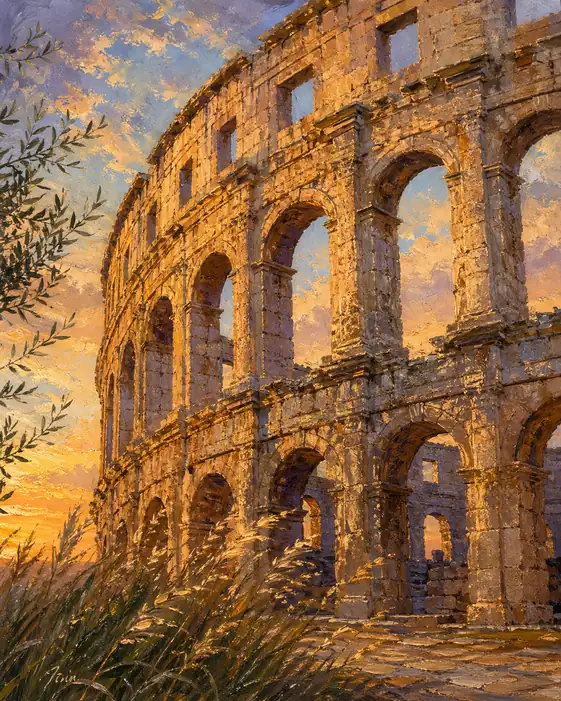 Echoes of Empire in the Golden Hour
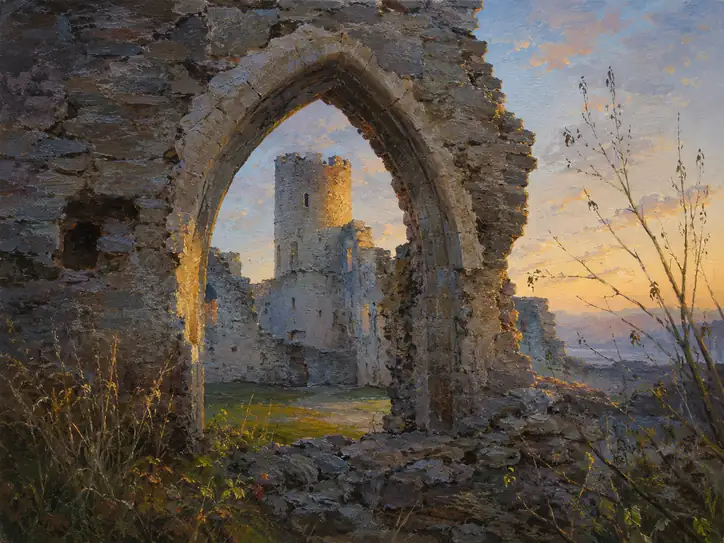 Silent Sentinel of the Golden Hour
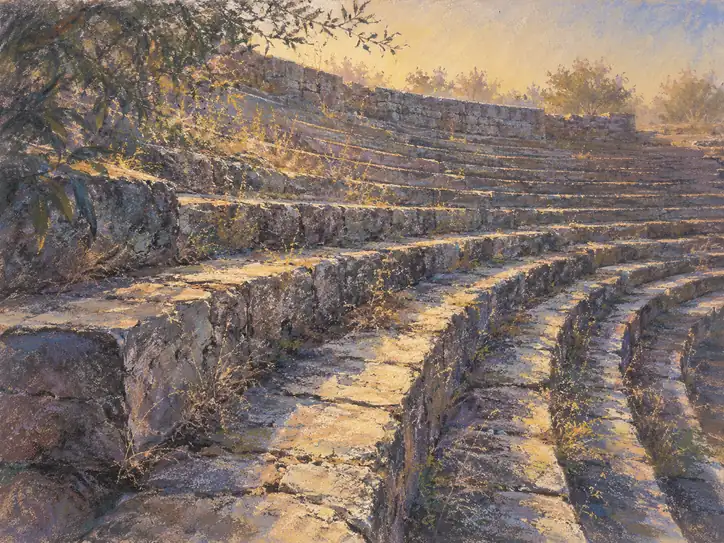 Where Time Reclaims the Stone
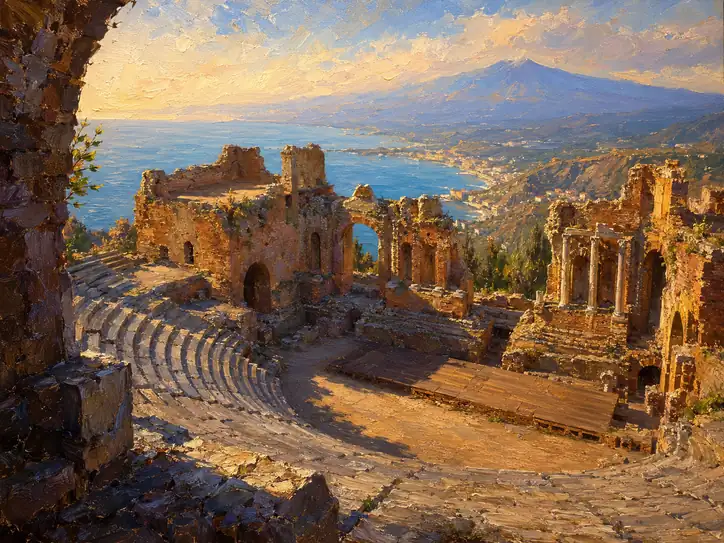 Taormina: The Golden Stage of Antiquity
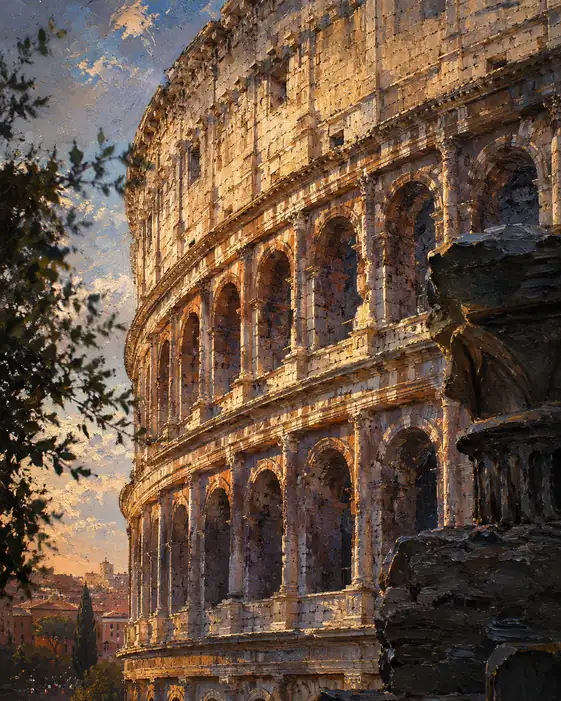 The Stone That Remembers the Sun
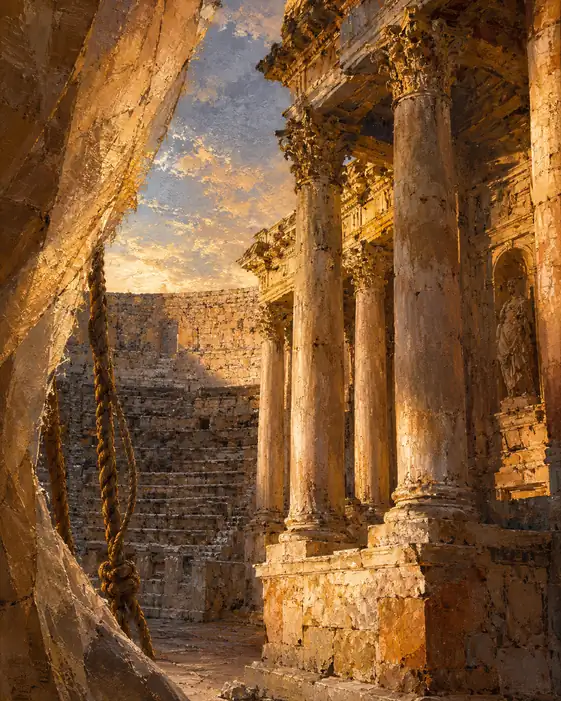 Echoes of the Eternal Theater