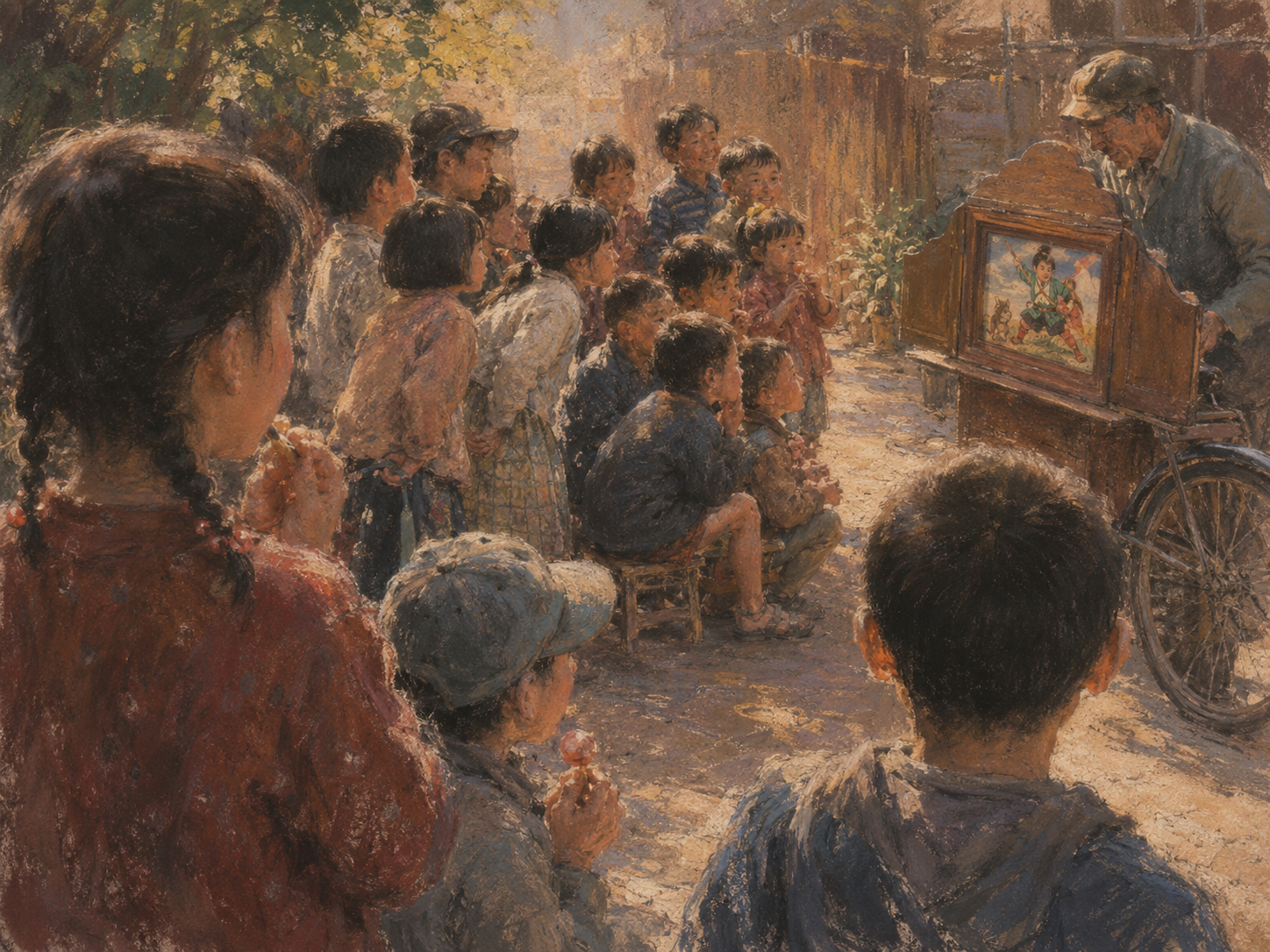
Once Upon a Golden Afternoon
Critique
1. Introduction This nostalgic painting depicts children gathered around a street kamishibai, a traditional paper play. The wooden stage on a bicycle and the eager faces create a scene of community warmth. The artist recreates a simple form of historical entertainment with sepia-toned colors. This work celebrates the timeless magic of storytelling. 2. Description On the right, a man performs the paper play mounted on his bicycle. The illustrated card features Momotaro, a hero from Japanese folklore. In the middle ground, a dozen children crowd together, staring at the stage. The foreground displays the backs of a braided girl and a capped boy with a lollipop. 3. Analysis The canvas features heavy brushstrokes that contribute to a rustic, aged feel. The color palette is dominated by warm sepia and ochre tones, suggesting late afternoon. Sunlight filters from the background, highlighting the children’s profiles. Placing large figures in the foreground creates depth, drawing the viewer into the crowd. 4. Interpretation and Evaluation This artwork symbolizes communal spaces of the past and the simple joys of oral storytelling. Technically, the artist demonstrates skill in managing a complex crowd while individualizing each child's expression. The illustration within the stage focuses the narrative. The painting successfully evokes a collective nostalgia for a more connected era. 5. Conclusion Initially, the scene presents a historical street view, but deeper reflection reveals a sophisticated light design. The connection shared between the storyteller and the children reminds us of human warmth. Ultimately, the work preserves a precious moment of shared imagination. It leaves the viewer with a comforting sense of peace.
Same Subcategory
 My Little Universe
 Laughter in the Frost
Similar Artworks
 Before the Streetlights Glow
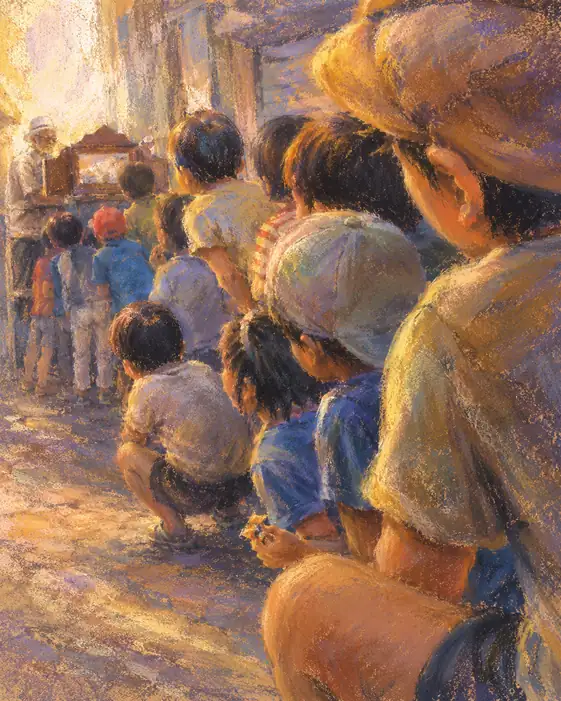 Sunset Whispers and the Wooden Stage
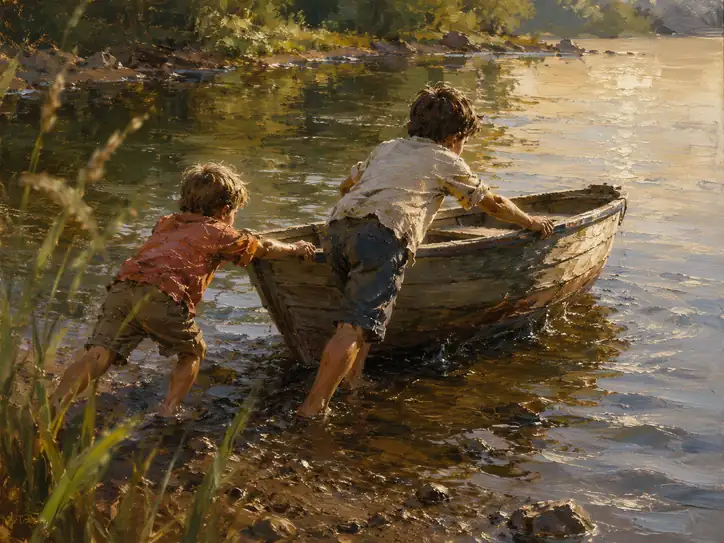 Our First Voyage
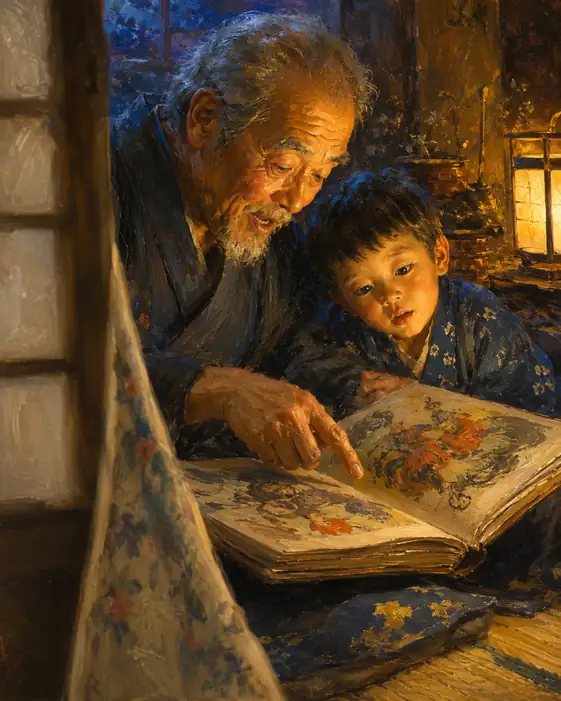 Tales Spun in the Lantern's Glow
 Chasing Tomorrow on a Glistening Path
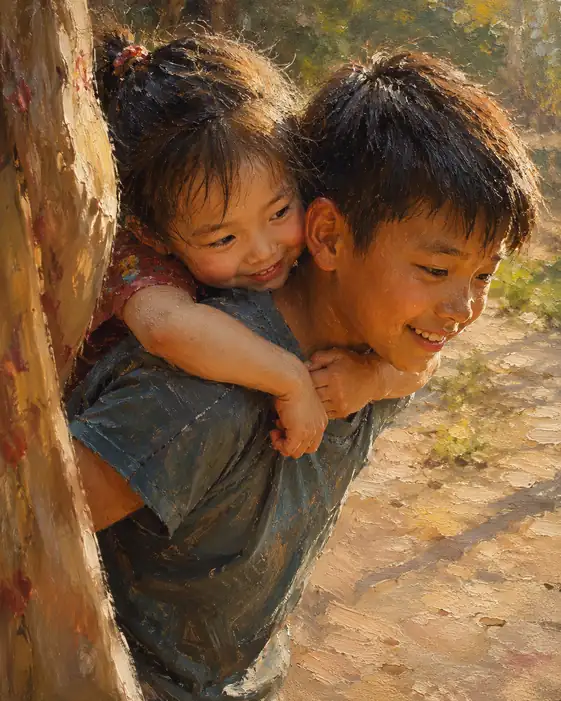 Muddy Cheeks, Golden Smiles
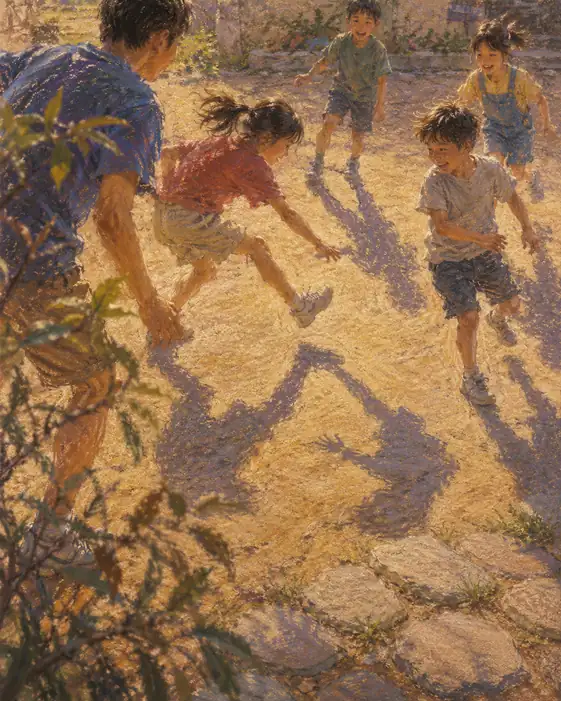 Don't Catch Me Yet, Under the Golden Sky
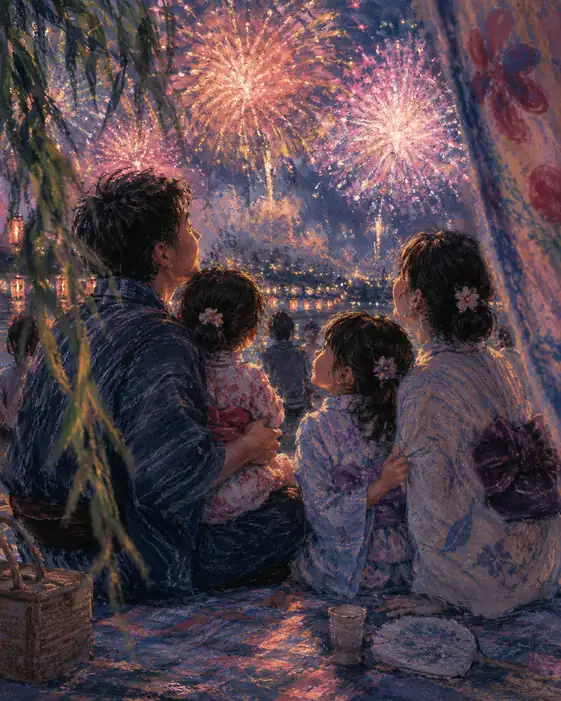 Fleeting Sparks, Eternal Warmth
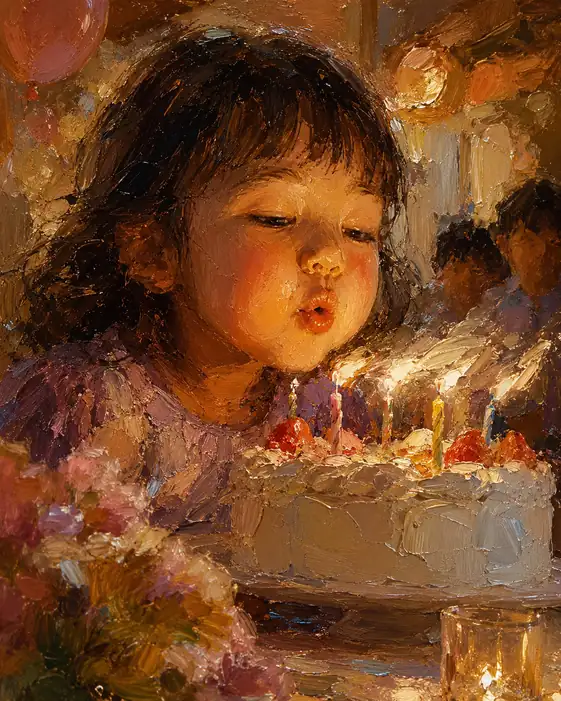 The Moment a Wish Takes Flight
 Dancing Through the Forest's Golden Rain