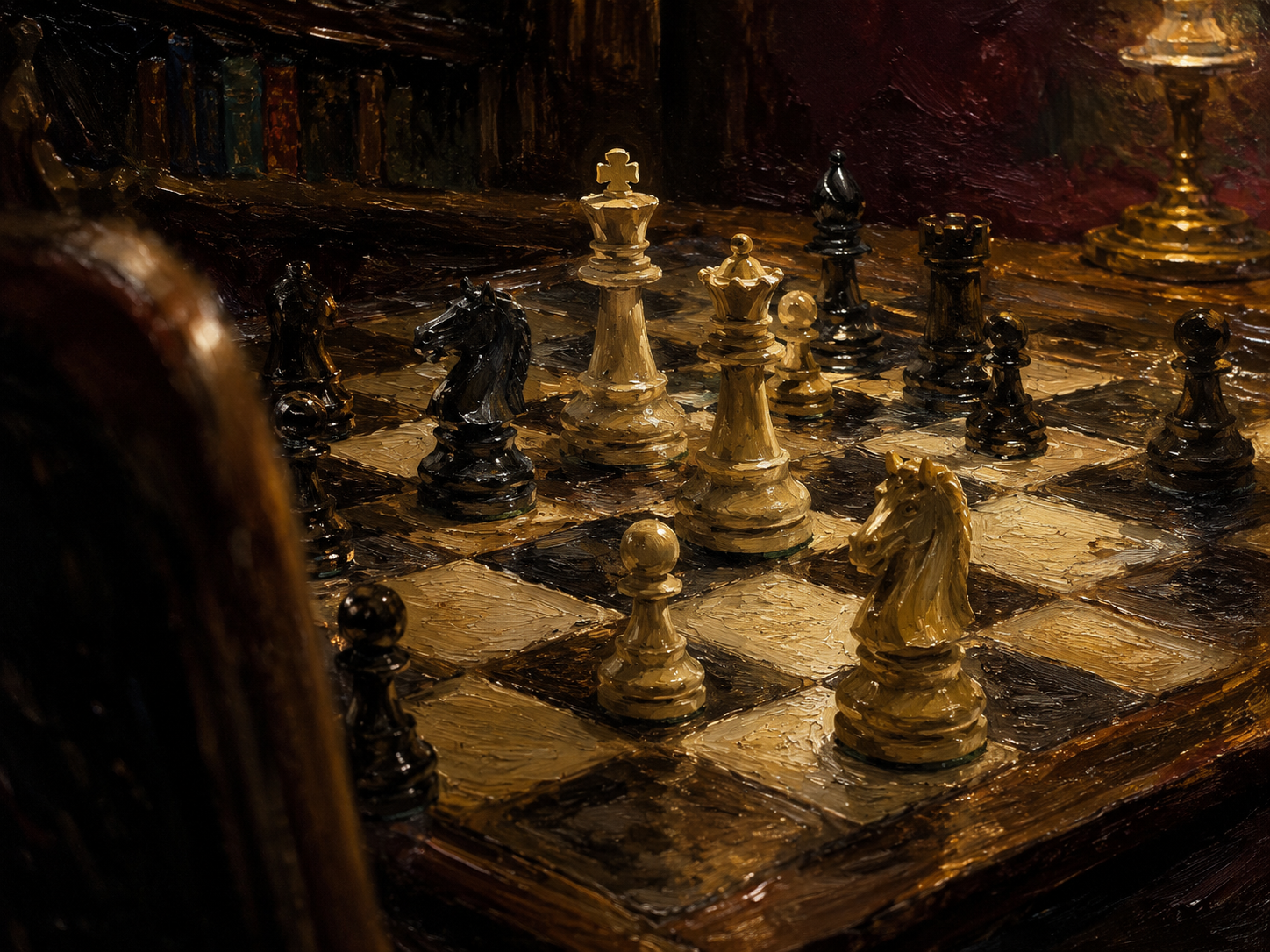
The Unfinished Game
Critique
1. Introduction This oil painting presents a quiet, dramatic depiction of a chessboard set in a dimly lit room. The composition immediately captures attention through its rich, classical atmosphere and heavy paint texture. 2. Description A warm, golden light source from the upper right illuminates the scene, highlighting the detailed surfaces of the chess pieces. A white knight and pawn are sharply focused in the foreground, showing thick impasto strokes. In the background, dark books rest on a shelf, while a blurry chair back in the left foreground adds dramatic depth. 3. Analysis The artist utilizes a strong diagonal perspective to guide the viewer’s eye across the checkerboard. The heavy, tactile brushwork gives the wooden elements a tangible weight and presence. Furthermore, the stark contrast between the luminous highlights on the white pieces and the deep shadows surrounding them enhances the dramatic tension. 4. Interpretation and Evaluation This arrangement of pieces suggests an ongoing intellectual battle or a moment of deep contemplation. By omitting human figures, the work invites viewers to imagine themselves as participants in this silent conflict. The mastery of texture and light successfully elevates a simple game into a symbolic stage of human strategy. 5. Conclusion Ultimately, the initial impression of textured surfaces gives way to a deeper appreciation of the quiet narrative hidden within the shadows. The painting stands as a powerful study of light, form, and suspense.
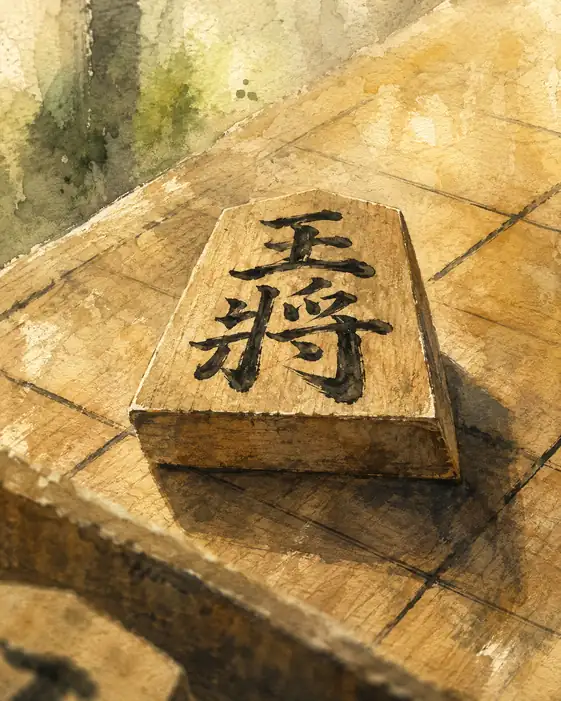 A Crown of Shadow
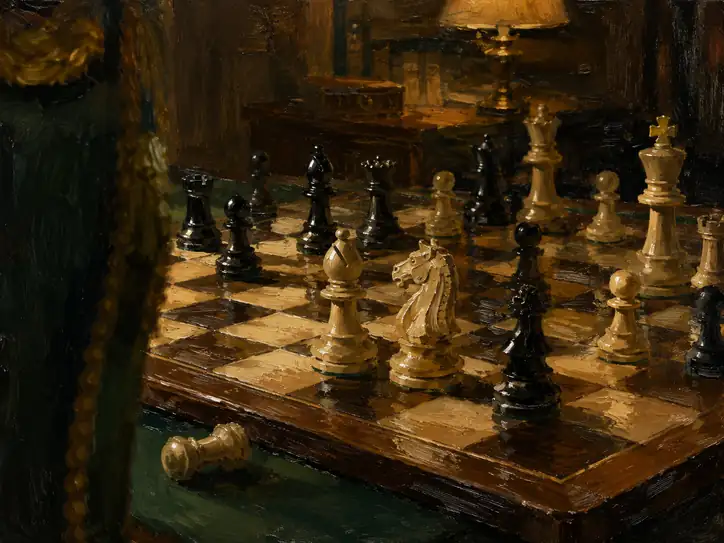 Decisions in the Warm Shadow
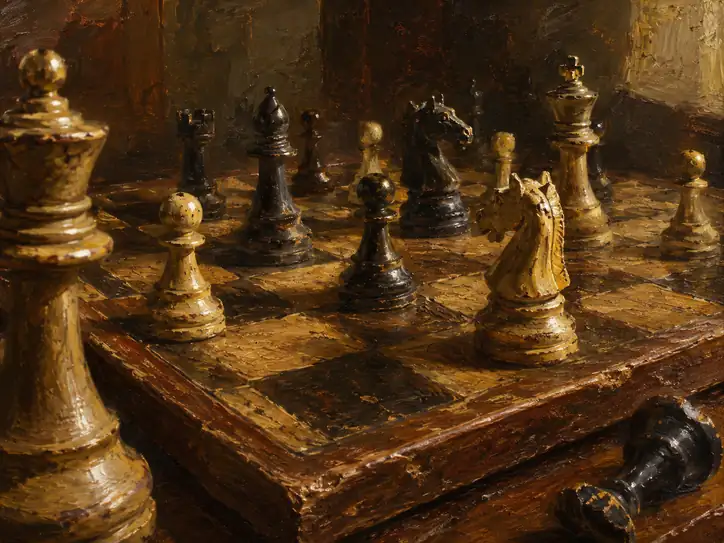 The Silent Duel of Fate
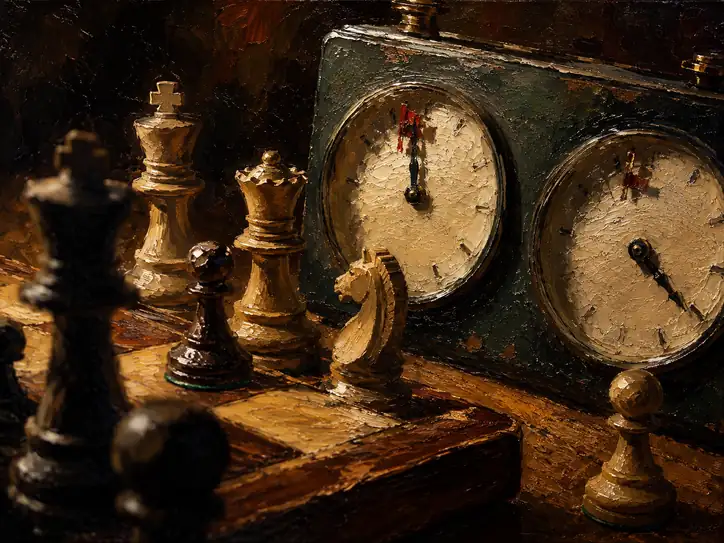 A Breath Before the Fall
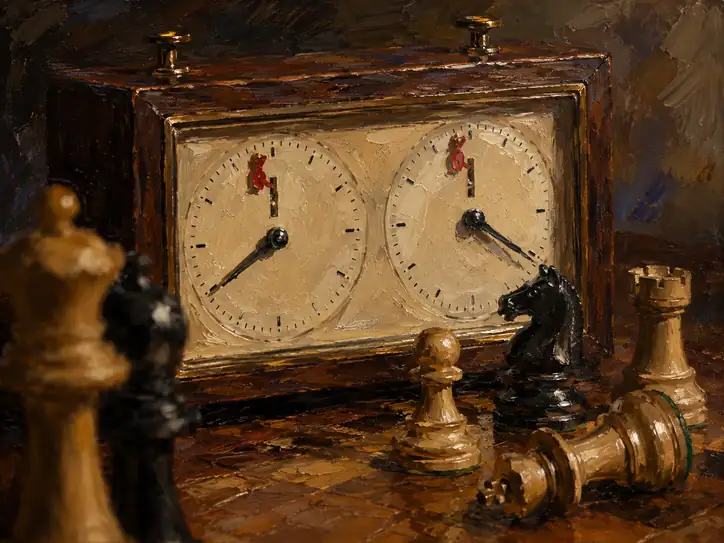 The Silent Resignation
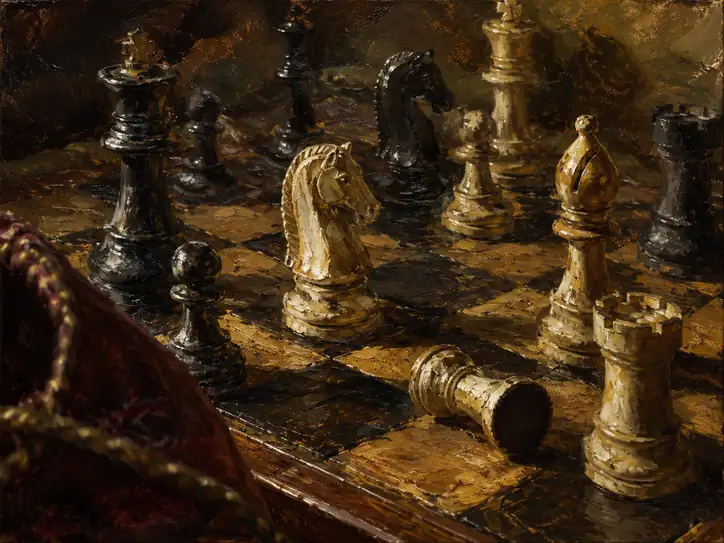 Fate Decided in Silence
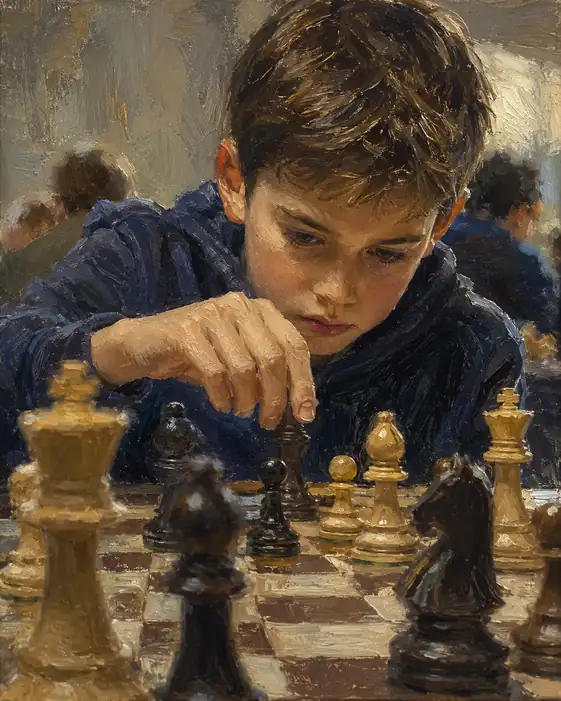 A Quiet Storm Within
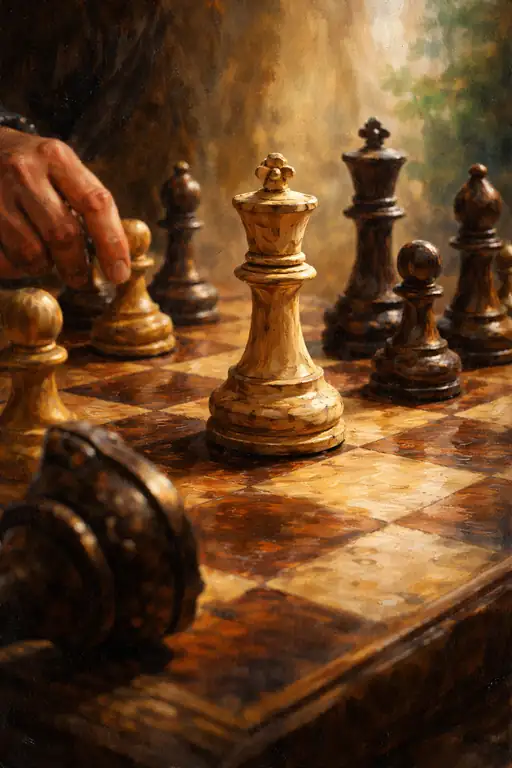 Silence Before the Storm
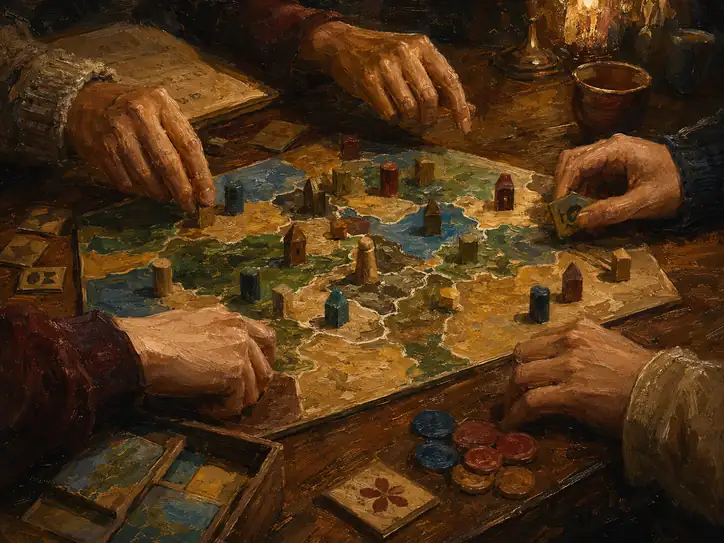 Silent Negotiators
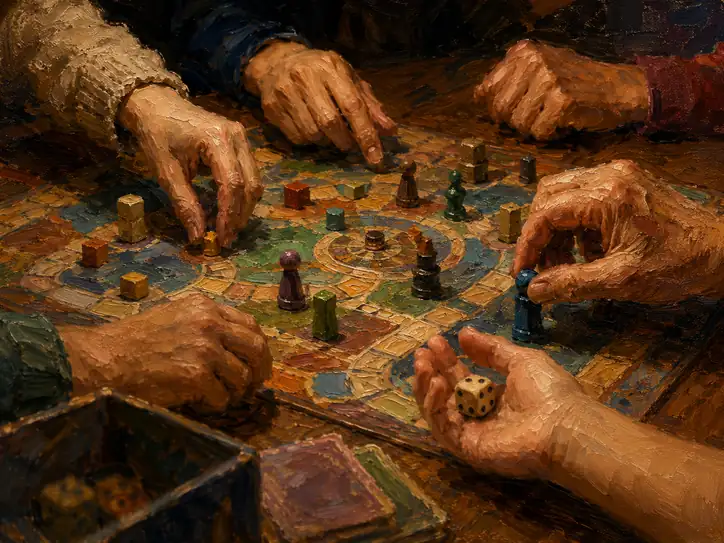 The Silent Dialogue
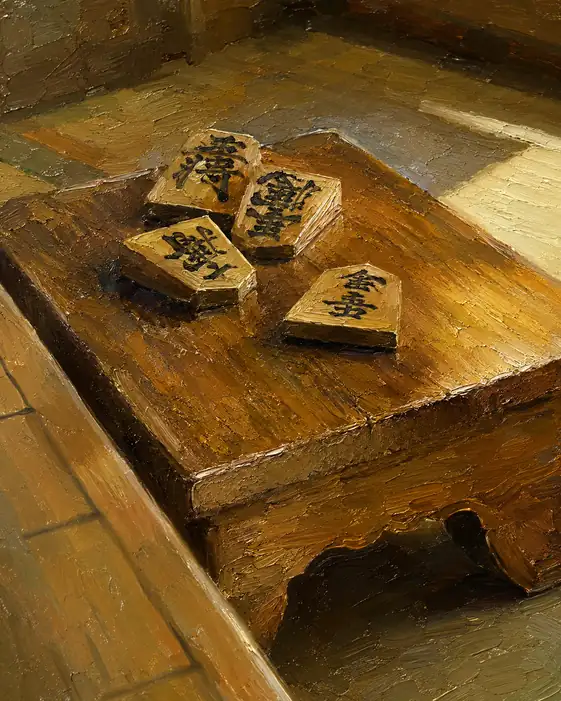 Echoes of a Silent Battle